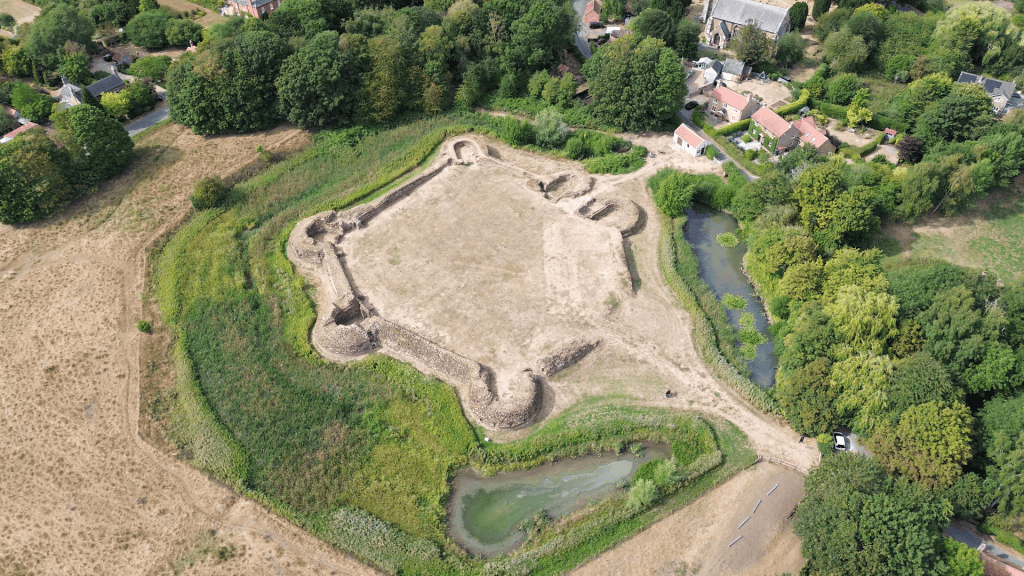
Tucked into a tranquil dip of the rolling Lincolnshire Wolds lies Old Bolingbroke—a village so quiet that its historical weight feels almost unimaginable. Here, where sheep graze lazily along green earthworks and wild grass sways over sunken stone, rest the ruins of Bolingbroke Castle.
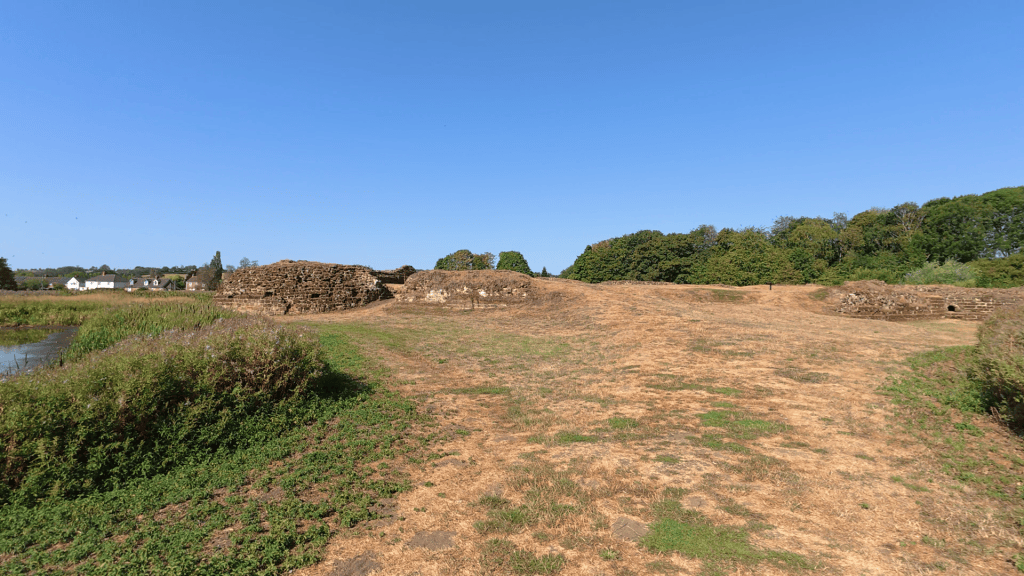
To the casual observer today, Bolingbroke resembles a peaceful countryside park—an evocative ring of green banks and stone foundations surrounded by water. Yet, beneath this rural serenity lies a fortress that was once a nerve center of royal power, the birthplace of an English king who seized the throne, a bloody battleground of the English Civil War, and the origin of one of Eastern England’s most curious ghost stories.
The story of Bolingbroke Castle begins in the early 13th century, around 1220, when it was founded by Ranulf de Blondeville, Earl of Chester and Lincoln. Upon returning from the Fifth Crusade, Ranulf sought to consolidate his immense territorial holdings across Lincolnshire. Unlike traditional Norman motte-and-bailey castles built on high artificial hills, Bolingbroke was constructed on low-lying ground, relying heavily on a sophisticated system of wet moats fed by local streams for its defense.
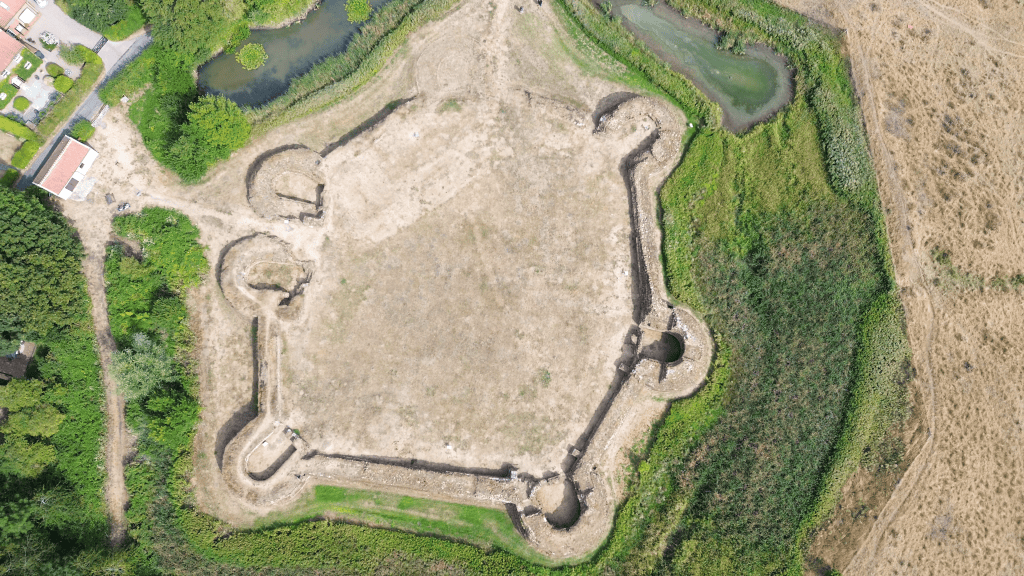
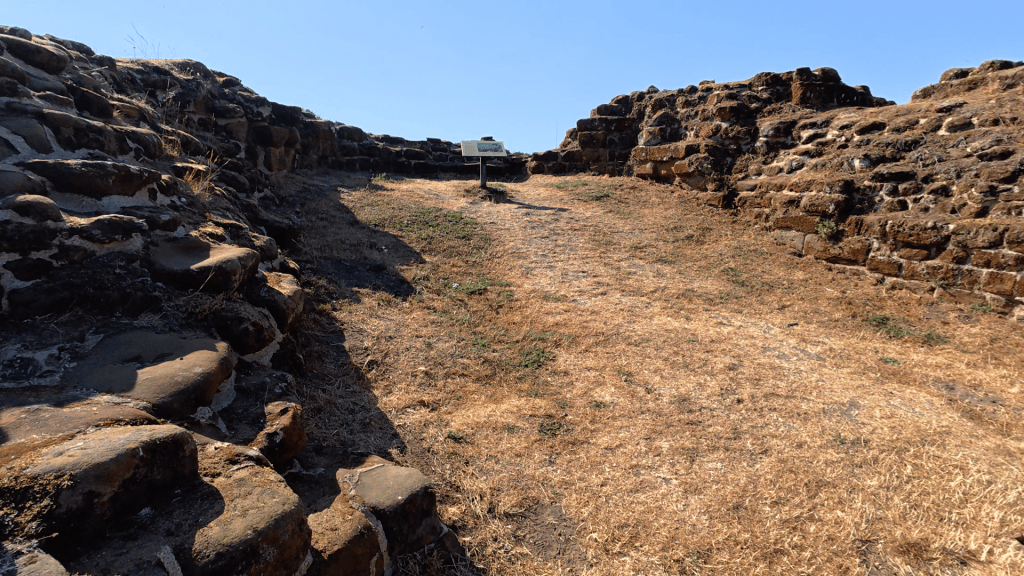
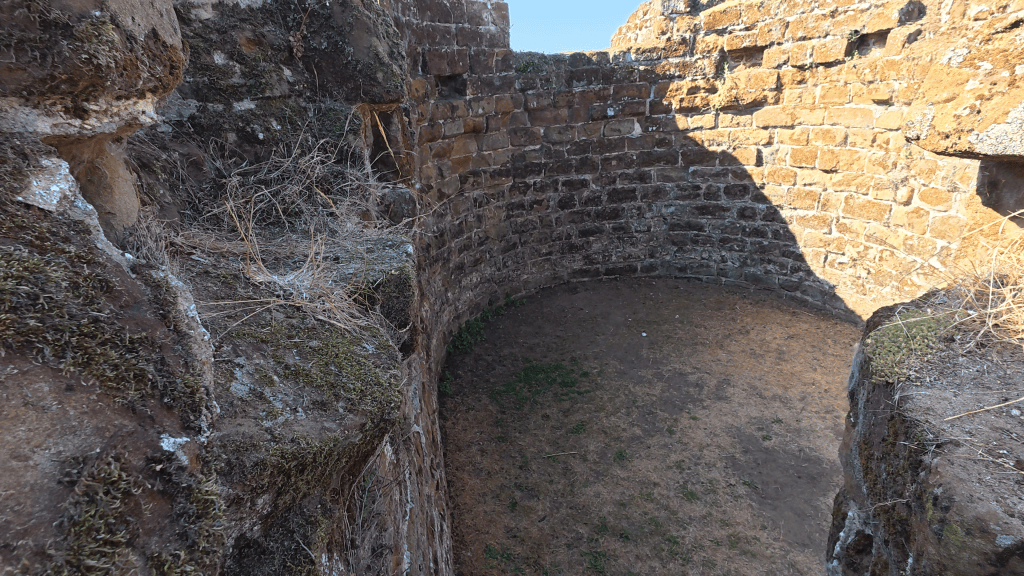
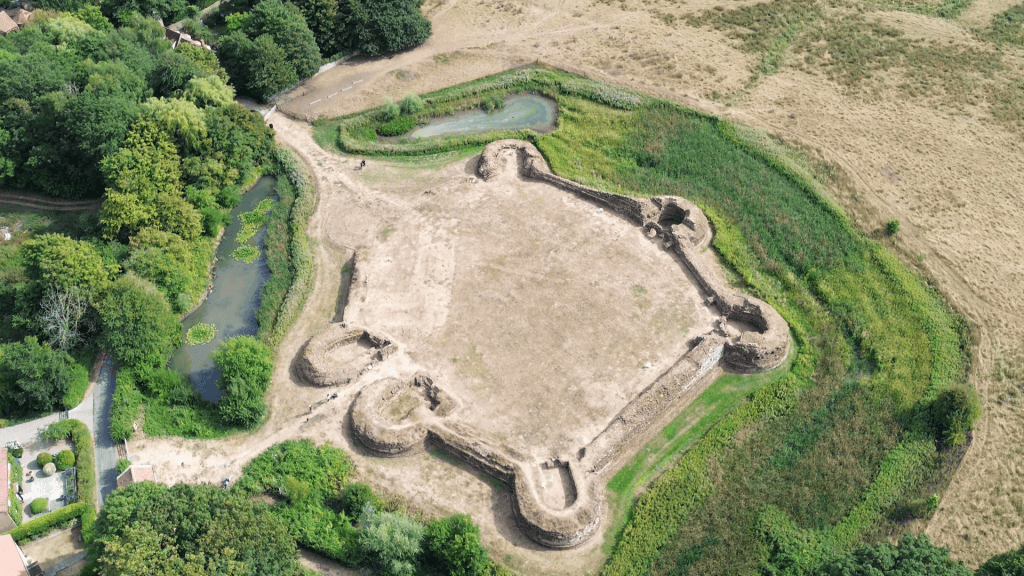
The castle was designed in a unique hexagonal shape, featuring five stout towers connected by thick curtain walls and anchored by a formidable twin-towered gatehouse on its eastern side. What made Bolingbroke visually and structurally distinct was its building material: Spilsby sandstone. Quarried locally, this stone is famous for its distinctive greenish-brown hue. When freshly cut and wet from the surrounding marshy soil, the fortress rose out of the landscape like an emerald-tinted monolith, earning a reputation as both a defensive shield and a striking symbol of aristocratic wealth.
In the mid-14th century, Bolingbroke passed through inheritance and marriage into the hands of John of Gaunt, Duke of Lancaster—the third surviving son of King Edward III and arguably the richest, most powerful noble in Western Europe. Under Gaunt’s stewardship, Bolingbroke was transformed from a cold military garrison into a palatial Lancastrian residence, complete with grand halls, luxury chambers, and expansive hunting grounds.
On April 3, 1367, inside the castle’s royal apartments, Blanche of Lancaster gave birth to a son. In accordance with medieval noble custom, the boy took his surname from his birthplace, becoming known to history as Henry of Bolingbroke.
Henry’s early life at Bolingbroke prepared him for the complex world of royal court politics. However, his relationship with his cousin, King Richard II, deteriorated into bitter rivalry. When Richard exiled Henry and confiscated the vast Lancastrian estates upon John of Gaunt’s death in 1399, Henry returned from Europe with an army to reclaim his birthright. What began as a campaign to recover his inheritance rapidly turned into a full-scale revolution. Henry deposed Richard II and was crowned King Henry IV in October 1399, becoming the first monarch of the royal House of Lancaster.
By seizing the crown, the boy born in this quiet Lincolnshire castle set in motion a dynastic line that produced Henry V—hero of Agincourt—and ultimately ignited the catastrophic 15th-century civil wars known as the Wars of the Roses.
For over two centuries following the Lancastrian rise, Bolingbroke remained an administrative center for the Duchy of Lancaster. However, its most violent chapter arrived in the 17th century during the English Civil War, when the castle was refortified as a Royalist stronghold guarding the approaches to the port of Boston and the agricultural heartland of Lincolnshire.
In September 1643, Parliamentary forces under the Earl of Manchester, supported by Sir Thomas Fairfax and a rising cavalry commander named Oliver Cromwell, moved to clear Lincolnshire of Royalist resistance. They laid siege to Bolingbroke Castle, ringing the moats with artillery and infantry. On October 11, 1643, a large Royalist relief force marched from Lincoln to break the siege. Leaving a skeleton force to maintain the blockade at Bolingbroke, Cromwell and Fairfax rode out to meet the advancing Royalists on the high ground near the nearby village of Winceby.
The resulting Battle of Winceby was brief, bloody, but decisive. Cromwell’s horse was shot from under him during the initial charge, nearly costing him his life, but the disciplined Parliamentarian cavalry shattered the Royalist infantry, driving them into a narrow lane now known historically as Slash Lane. Deprived of hope, the garrison inside Bolingbroke Castle surrendered the following morning.
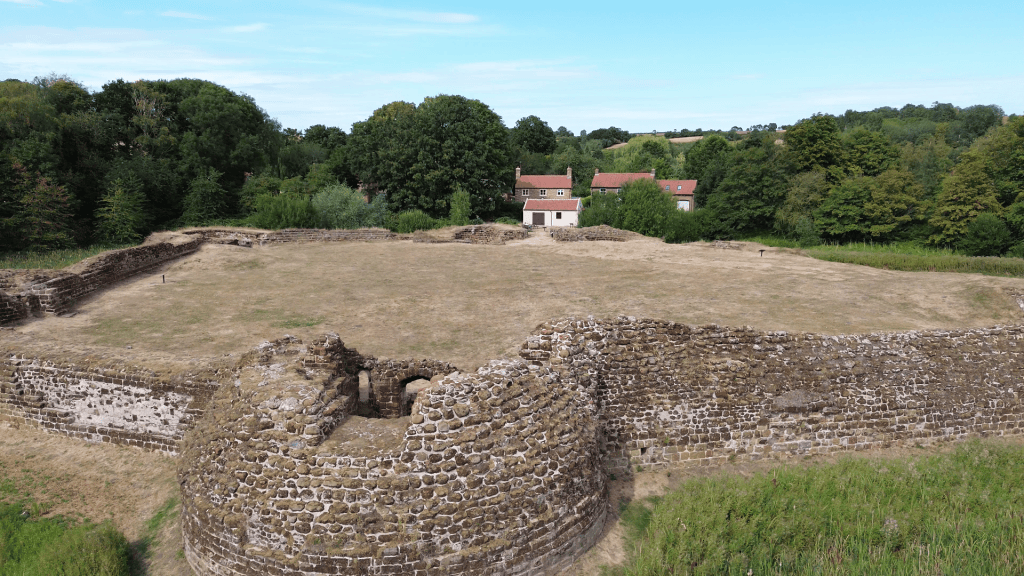
To ensure the fortress could never again be used to defy Parliament, Oliver Cromwell ordered the castle to be slighted—its curtain walls were dismantled, its gatehouses pulled down, and its towers breached. Over the following century, local villagers salvaged the soft Spilsby sandstone to build houses, barns, and garden walls throughout Old Bolingbroke, leaving only the lower foundations intact.
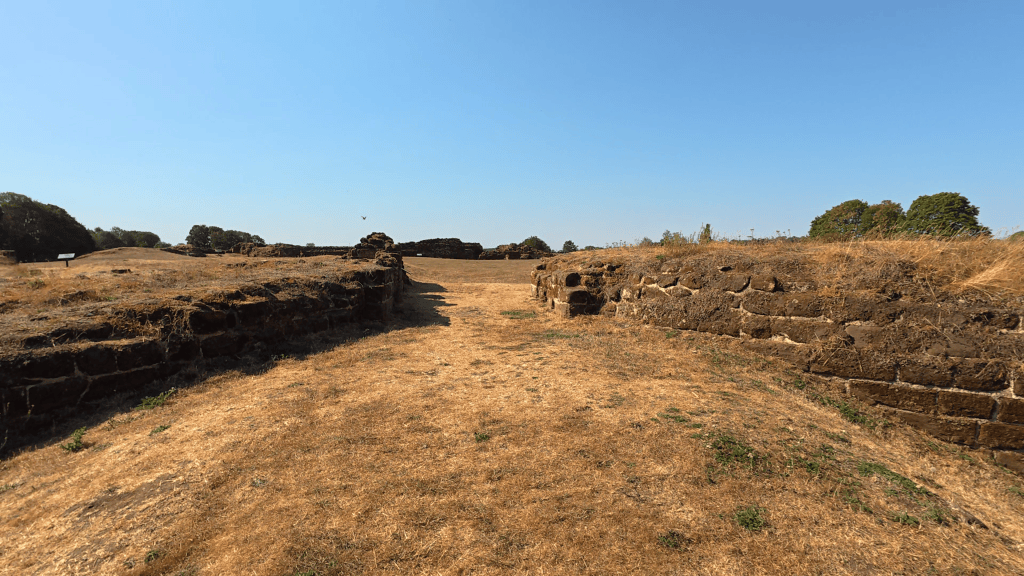
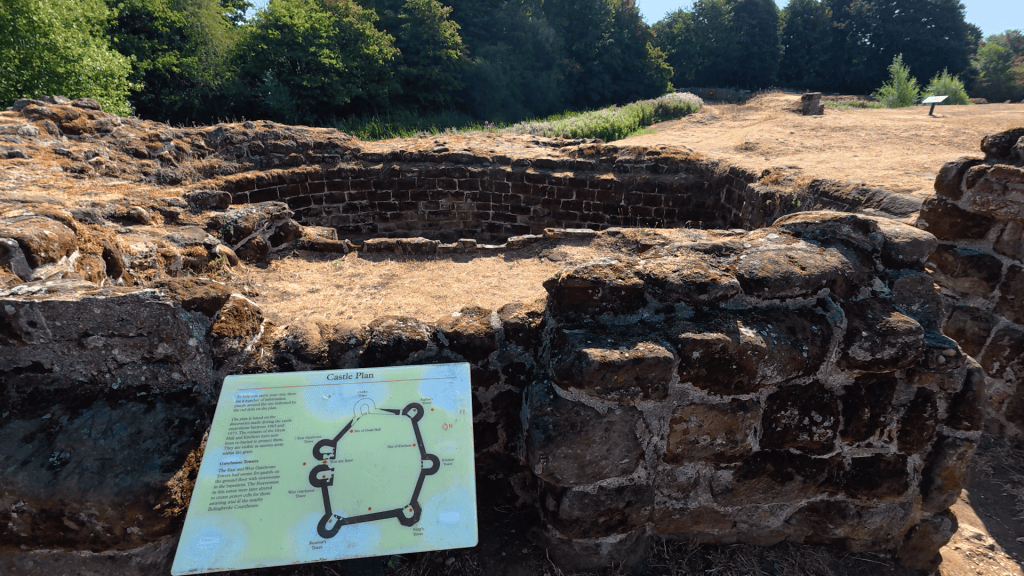
In recent times, Bolingbroke Castle is managed by Heritage Lincolnshire in partnership with English Heritage. Though the roof and upper chambers are long gone, extensive archaeological excavations carried out in the 1960s and 1970s revealed the clear layout of the original 13th-century hexagonal fortress.
You can walk along the dry moats, trace the perimeter of the five main towers, stand within the inner courtyard where Henry IV spent his childhood, and view display panels detailing the castle’s medieval heyday and its Civil War destruction.
Bolingbroke Castle shows the dramatic shifts of English history. It is a site where medieval crusade wealth built a greenstone fortress, where a royal dynasty was born in a secluded chamber, and where the clash of Civil War iron forever altered the British monarchy. Though time and cannon fire have reduced its soaring towers to quiet grass-covered foundations, the spirit of Bolingbroke endures quietly here in the heart of the Lincolnshire Wolds.
For us, there is nothing more beautiful than exploring a gentle, absorbing ruin inside a beautiful setting. It’s completely free to visit, historically rich, and perfect for a slow wander. Our advice is to bring some sturdy shoes and a sense of curiosity.
If you liked the blog please hit that like button, watch the full video below and consider subscribing if you haven’t already.
Till Next Time!


Leave a Reply