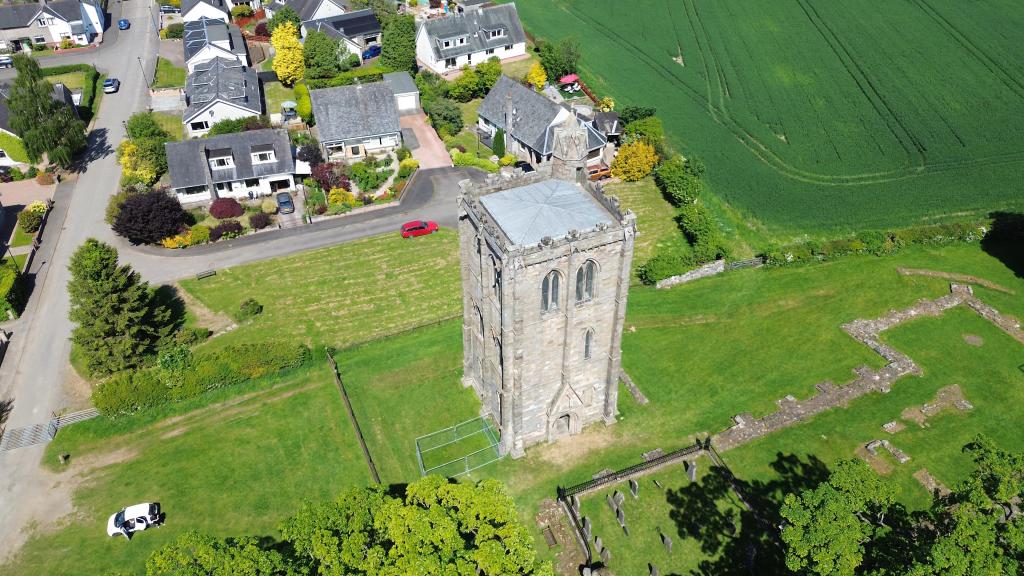
In this week’s post, we are still in Scotland and visiting a lesser-known historical gem but a worthy one. The remains of this 12th-century Augustinian abbey are situated to the east of Stirling City. The abbey was founded by a king, yet it is the resting place of King James III and his wife Queen Margaret who lay peacefully in the shadow of the mighty Stirling Castle. Eerie, peaceful and atmospheric, Cambuskenneth is one of Scotland’s most mysterious abbeys, so why not join us here for a wander.
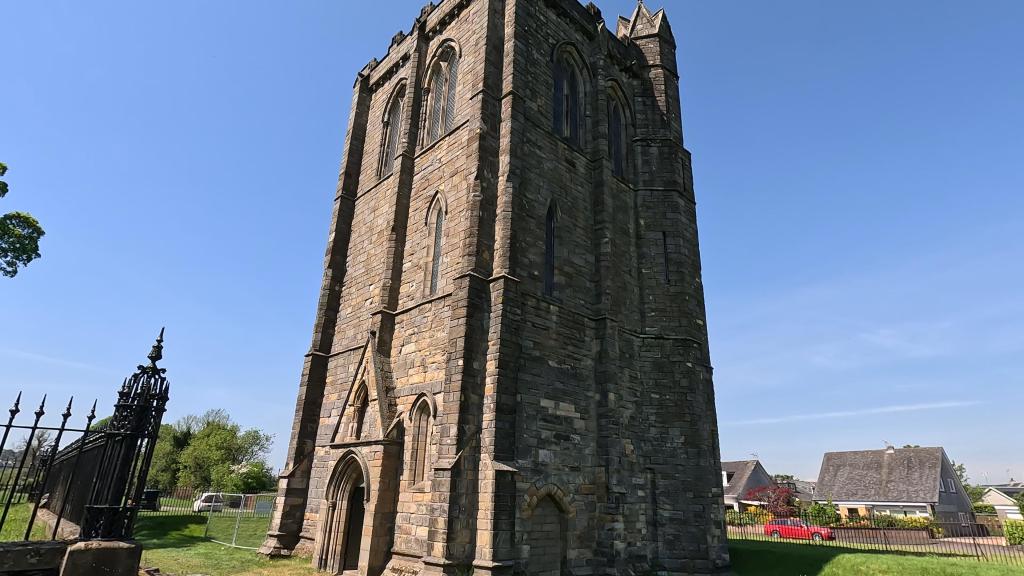
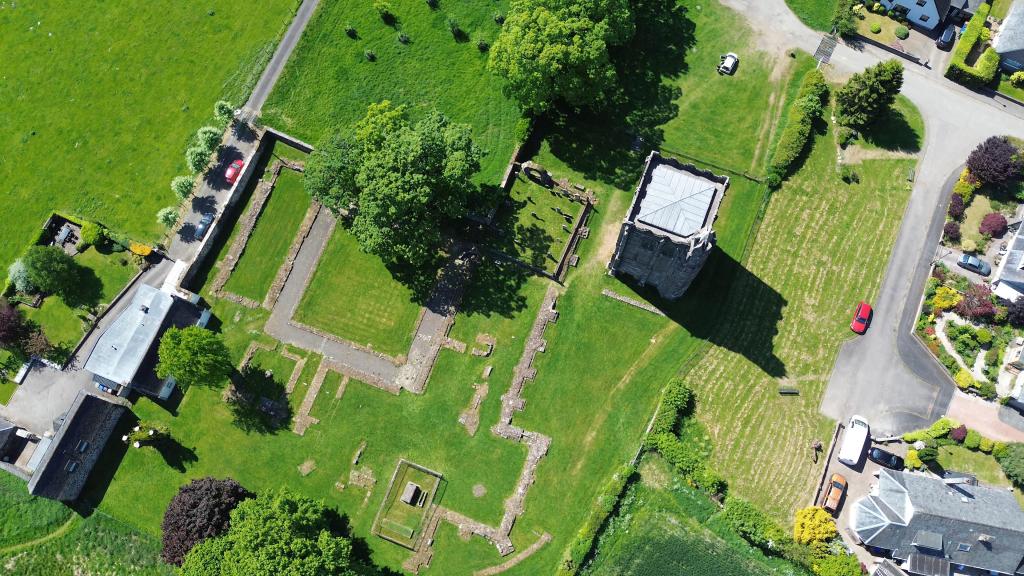
The only standing building is the abbey’s bell tower, probably built in the 1300s and heavily restored in the 1860s. The tower itself is a remarkable piece of medieval architecture, showcasing fine craftsmanship characteristic of the period. Its tall, square form, punctuated by elegant lancet windows and decorative arcading, is said to be unparalleled in Scotland. Such bell towers, or campaniles, were not merely functional structures for housing bells; they were symbols of the abbey’s prestige and vital for signaling the hours of prayer.
The survival of the tower, when the rest of the abbey was largely “cast down” during the Scottish Reformation of 1560, is a story in itself. While much of the stone was subsequently quarried for other buildings in Stirling—most notably Mar’s Wark—the tower’s sheer mass and structural integrity likely made it too formidable to dismantle completely.
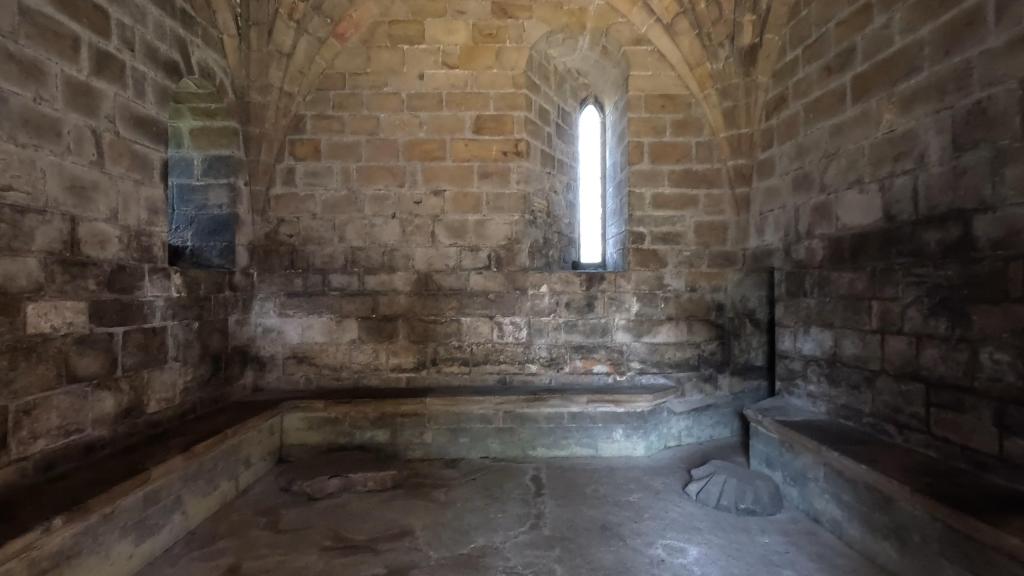
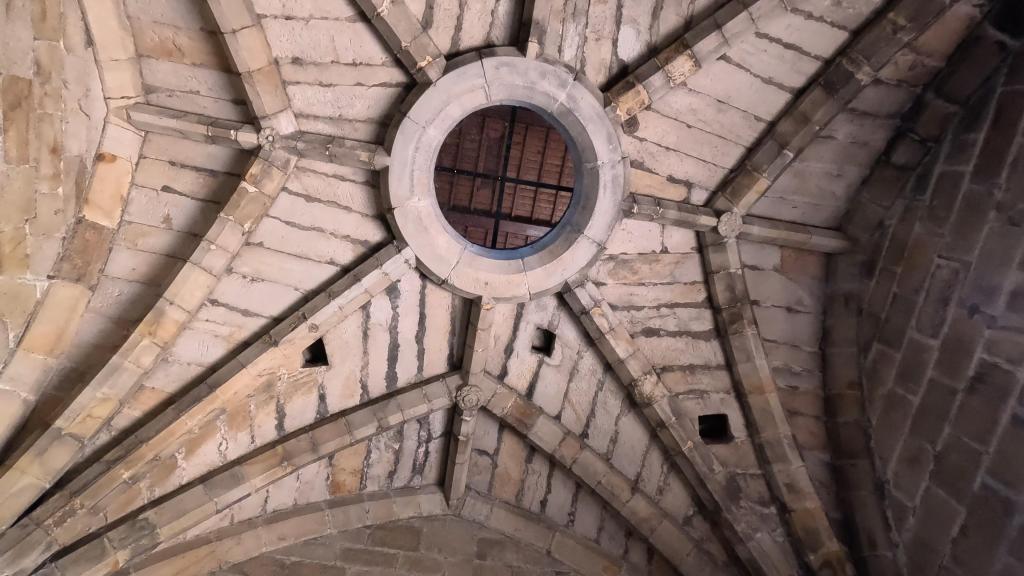
Cambuskenneth’s origins began in 1140, with King David I founding an abbey of Arrouaisian canons beside the River Forth. Originally known as the Abbey of St Mary or the Abbey of Stirling, it rapidly gathered wealth and influence due to royal patronage. At its height at the end of the 1200s,
Cambuskenneth comprised an extensive complex including a large abbey church some 60m long, a cloister, and domestic buildings. The canons’ role was to pray for the soul of their patron, the King of Scotland, and his family, while also undertaking administrative roles in the royal court.
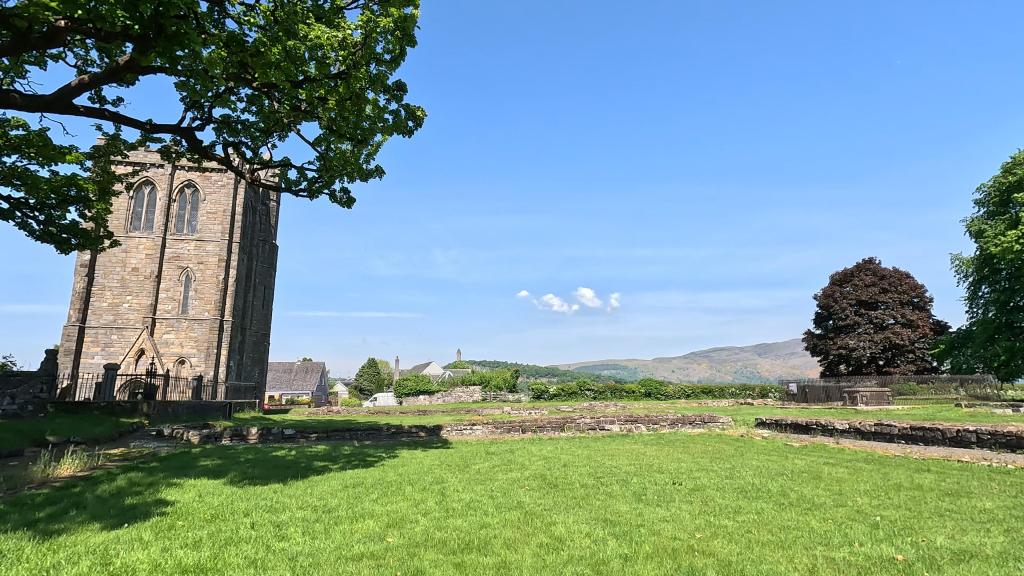
The abbey’s closeness to Stirling Castle made it a frequent target for English armies. In 1308, Robert the Bruce received oaths of fealty from leading nobles over the high altar here, and in 1314 he held a parliament at the abbey following his victory at the Battle of Bannockburn. However, by 1383, the abbey was largely destroyed by the army of King Richard II of England. It was rebuilt during the early 1400s and once again used by Scotland’s royalty.
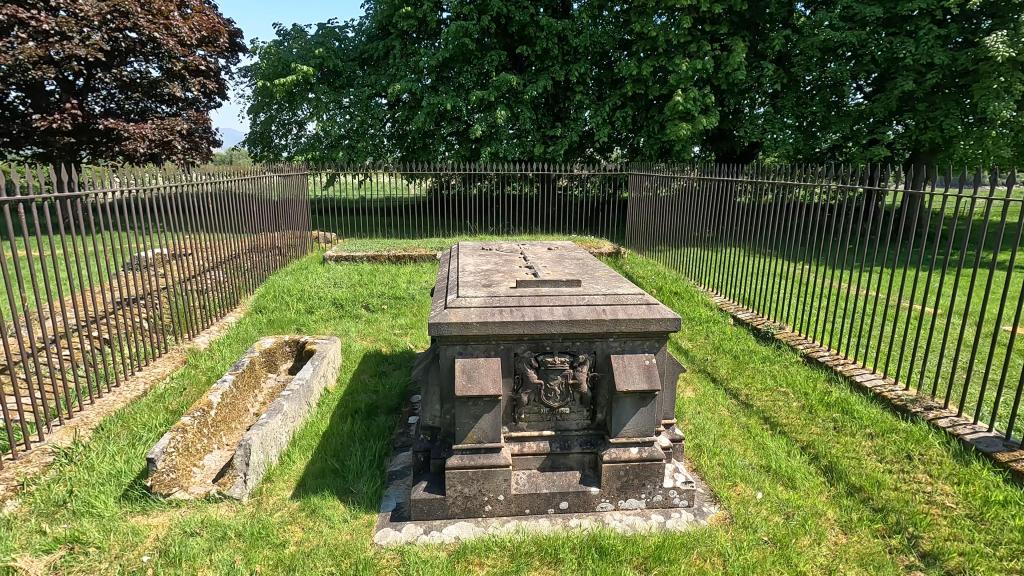
The most famous episode in the abbey’s history occurred in 1488 following the Battle of Sauchieburn. James III was murdered while fleeing the field, and his body was brought to Cambuskenneth to be buried in front of the high altar alongside his Queen, Margaret of Denmark. Today, their resting place is marked by a fine tomb surrounded by railings, paid for by Queen Victoria following the discovery of their remains in the 19th century.
Beyond the history, the abbey is steeped in folklore. One legend persists that some of William Wallace’s remains were secretly brought here by sympathetic monks for a Christian burial. Another darker tale involves the “Curse of the Earl of Mar.” It is said that an abbot cursed the Erskine family for dismantling the abbey stones to build their townhouse; to this day, Mar’s Wark in Stirling remains an unfinished ruin, often cited as evidence of the curse’s power.
If you liked the blog please hit that like button, watch the full video below and consider subscribing if you haven’t already.
Till Next Time!
 Pinned on Places
Leave a comment