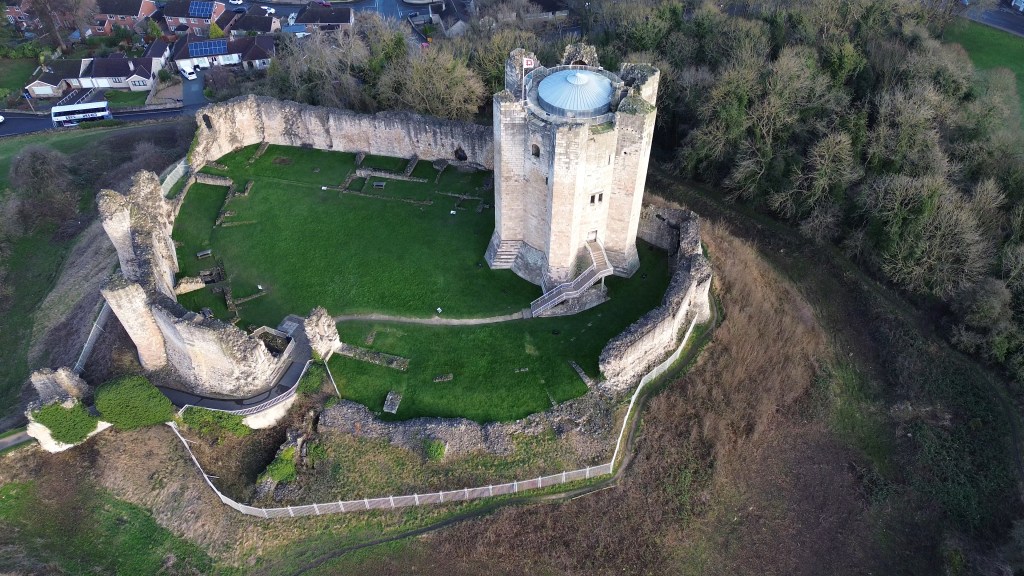
The castle here at Conisbrough near Doncaster has stood at the centre of Norman rule for almost a thousand years. Housed within a stunning picturesque landscape and perched strikingly above the Don Valley in a naturally defensive position, is it any wonder that Sir Walter Scott supposedly chose it as the inspiration for the castle in his novel, Ivanhoe. So why not join us as we explore the remains of mighty Conisbrough castle.


Likely a royal estate and minster of the Anglian kings of Northumbria, Conisbrough, though today a mere town, was once a significant settlement. And that would only grow following the 1066 Norman Conquest, as William the Conqueror presented the honour of Conisbrough to formidable noble, William de Warenne. At this time, the site likely comprised a timber palisade perched upon a bailey. It is Earl Hamelin Plantagenet, Henry II’s half-brother, who we should thank for the stark white circular limestone stone keep which is probably the first example of a circular stone keep in England that still remains, which has been dated to the 1170s or 1180s, the embracing curtain wall and inhabited buildings which lined within, likely followed soon after.
The spectacular white keep of Conisbrough Castle, is built of magnesian limestone, as you approach it from the bottom of the steep hill, raising your head to take in the imposing structure, it becomes both more impressive to the modern eye, and more oppressive to the medieval one, as you imagine the inhabitants of the village of long ago would scurry around its edges about their daily business. Although stone from the outer walls has long since been robbed, the keep remains tall and smooth and virtually whole, a testament to the awe in which it was held.


The great stone keep, which dates from around 1180, is unique in its design in this country, being cylindrical but with six huge buttresses around it which give it a polygonal shape. This would make it immensely strong in the case of any attack either from men or from the stone-throwing siege machinery of the time, and even to the modern eye the keep is clearly built with defence rather than display in mind. It has very few windows, and these only small and high up in the walls; the entrance is at first-floor level via a wooden staircase which could be burnt in times of trouble, leaving attackers with no means of entrance.
The lowest two storeys were deliberately made more or less derelict: the room at entrance level has no windows and no fireplace, while the vault below it is completely dark with the only access through an opening in the centre of its vault. Another reason why Conisbrough is unique is for its lack of English comparison in regards to the keep, although it is loosely similar in design to Henry II’s polygonal keep at Orford Castle which is one of the first things I thought of when visiting here is how similar in design the keep is, but it relates more closely to William de Warenne’s cylindrical and polygonal donjons in France, Normandy.


The room would have been used by the de Warenne lords when they were staying in Conisbrough. It looks cold and bare today, but it would once have contained a number of fine objects and silverware, painted furniture, beds with feather mattresses with colourful rugs on the floor and tapestries on the walls to keep out the cold. A long trestle would have been used for meals, feasts and banquets and so on.
A wide fireplace, with a joggled lintel and possibly a colourful hood, would have thrown heat into the room. A door leads into a latrine and there is an alcove with a window overlooking the entrance to the tower. The spaces would have been filled with wall hangings and furniture that the lord and lady brought with them as they travelled through their estate, creating a more comfortable home than the cold stone interiors you can visit today. The steward managed the estate throughout the year, and attended to Hamelin and Isabel while they were in Conisbrough.
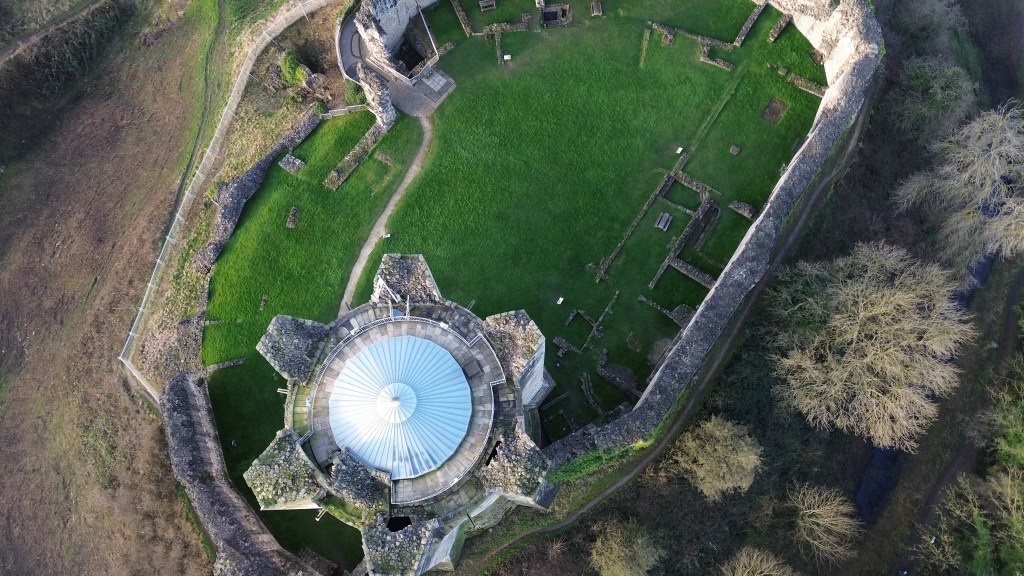
The polygonal shape may have been popular in the mid-12th century, but if that style was made fashionable by Henry, Hamelin and Isabel’s adoption of the style made the statement that they were dutifully following later on. Conisbrough Castle is not just a home, but a symbol of political ties, familial power, and wealth.
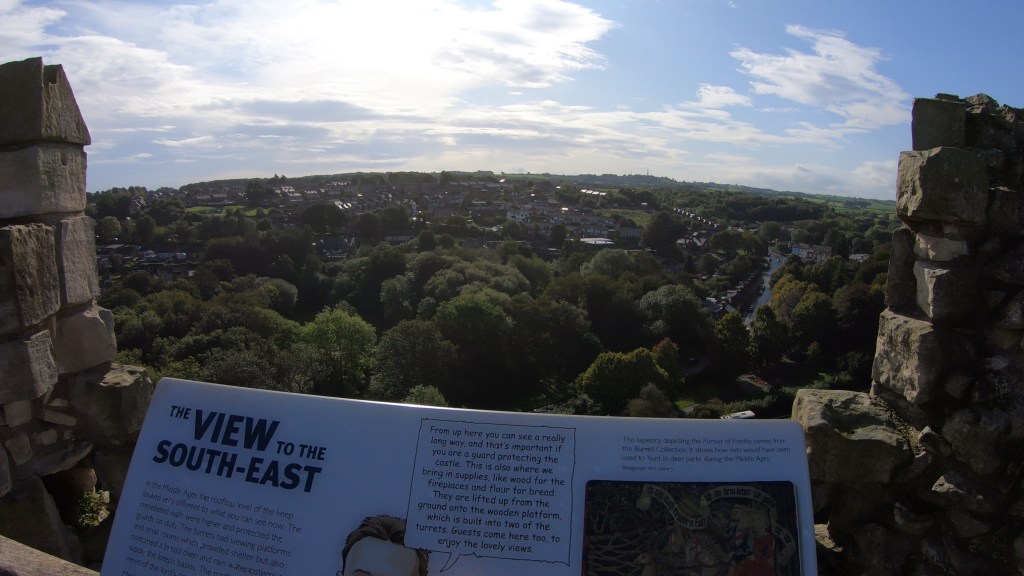
The rooftop forms the fifth floor. Originally it looked quite different to how it looks today. It is thought that at some time there was a room surrounded by an enclosed wall passage, as part of the wall and a door jamb survive. Of the six buttresses that extended above the battlements as turrets, two of them were solid. The other four seem to have functioned as two water tanks, a bread oven and a dovecote. But on a good day like we experienced, you can see for miles and soak in the feelings of a lord back in the 12th century, scouring the area and looking at his estate.
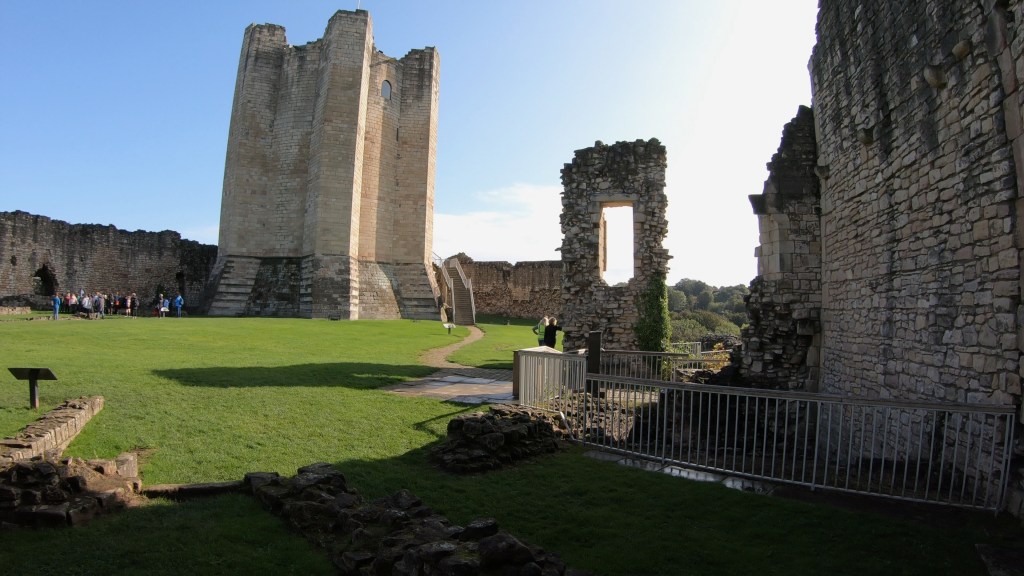
We’ve really enjoyed our time here at Conisbrough, even with its bare walls it does give the opportunity to be able to imagine life back then and you get to experience a real medieval castle, but of course the English Heritage have dotted interactive and informative information around to give a great idea too of the rooms, the history and some of the things you might find inside a castle, this is in a separate building though where you purchase your ticket for entrance, you are able to enjoy a small but very interesting museum .
If you liked the blog please hit that like button, watch the full video below and consider subscribing if you haven’t already.
Till Next Time!
 Pinned on Places
Leave a comment