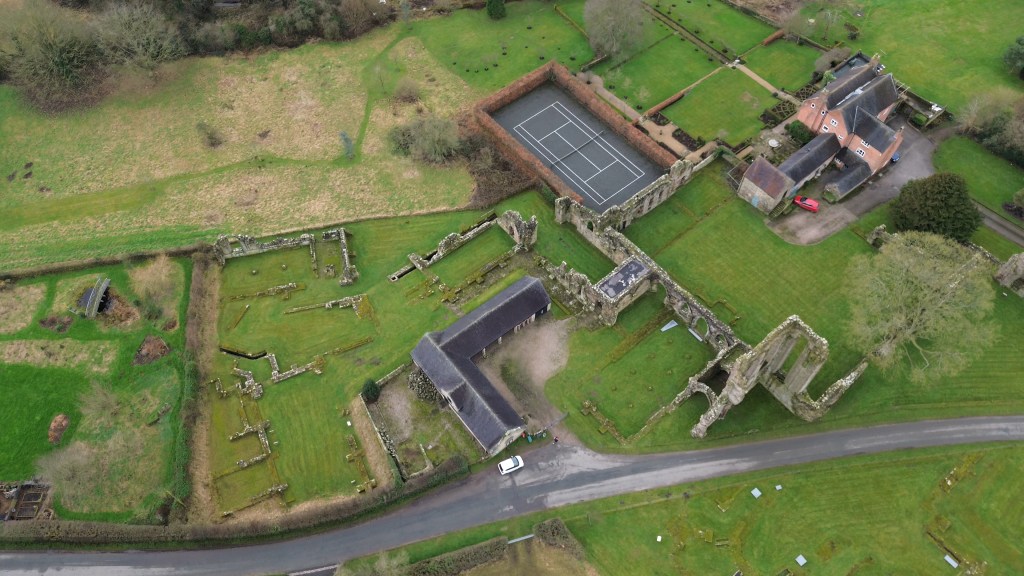
At its peak in the 13th century, Croxden Abbey, which is also known as the Abbey of the Vale of St. Mary of Croxden quietly lies in Staffordshire, England and was once home to 70 monks. After its suppression in 1538, the abbey complex was converted into a farm. The church roof was removed, leaving the rest of the structure open to the elements. Despite that, there is still a lot to be seen. With centuries of history, lying in the southwest corner of the peak district, the surviving parts even now are breath-taking and give a clear picture of how imposing the complex would have once been. So why not join us for a wander around Croxden Abbey.
The Abbey was built by Bertram III de Verdun who was the sheriff of both Warwickshire and Leicestershire and a close friend of King Henry II. Bertram was the lord of nearby Alton and Alton castle, although this is not open to public, but it dates to the 12th century and are also part of Bertram’s building schemes. Like many noblemen, Bertram founded the abbey with the prerequisite that the monks would hold mass for his family’s souls. As with many wealthy lords in Britain, Bertram was concerned by not only how he was viewed in society but also the fate to his soul.
Originally, Bertram bought over 12 Cistercian monks from Aunay-sur-Odon in Normandy. These were Catholic monks that closely followed the rule of Saint Benedict. The Abbey was granted large areas of surrounding lands and became very prosperous. In the mid-14th century the abbey was supplying more wool to Europe than any other religious house with transactions being recorded with Florentine merchants well into the 1420s. The abbey’s wealth is reflected in the purchase of a house in London by abbot William of Over for £20. The abbey was modelled on the mother church in Aunay-sur-Odon and was considered very elaborate compared to other churches of the period. At its peak, there were more than 70 monks practising here.


Croxden is the oldest of Staffordshire’s Cistercian houses. There were twelve monks and their abbot, an English man known as Thomas of Woodstock. They acquired endowments in Staffordshire, Leicestershire and in Hartshorne in Derbyshire amongst other locations from Bertram. The land at Hartshorne was known as Lees and measured as a carucate. A carucate is of Norse origin and it signifies the amount of land that can be ploughed by one plough team of eight oxen in a season.
The choice of Croxden fits with the site selection that is almost uniform to Cistercian monasteries, that is that they should be near a river, Croxden is next to the River Churnet, so that ticked the box, Usually the monks looked for a bend in the river where they had been granted land. This method of siting the monastery meant that on most occasions the land was level and that there was agricultural land nearby as well as the opportunity for fish and the creation of fish ponds. Another selection was that it would be in a valley and thirdly that it would be remote and this area in the Staffordshire moorlands was pretty remote and isolated.
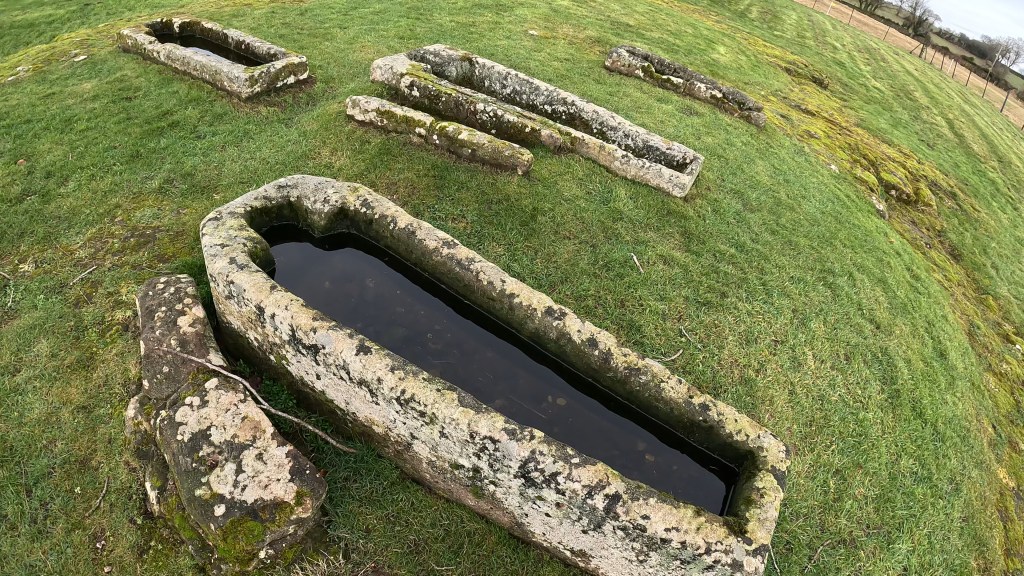
As well as life at the abbey, Death inevitably also features in the chronicle. There are the descriptions of the burials of the Verdun family including that of Lady Joan Furnival, eldest daughter and heir of Theobald de Verdun, who on October 2nd 1334, “was taken by untimely death in childbirth; for on the day she died she was only thirty years and almost two months” and was “buried near her ancestors between Lord Nicholas de Verdun, son of the founder, and her ancestor and Lord John de Verdun, her great-grandfather”. Their now empty stone coffins can be seen alongside the ruins at the east end of the church.
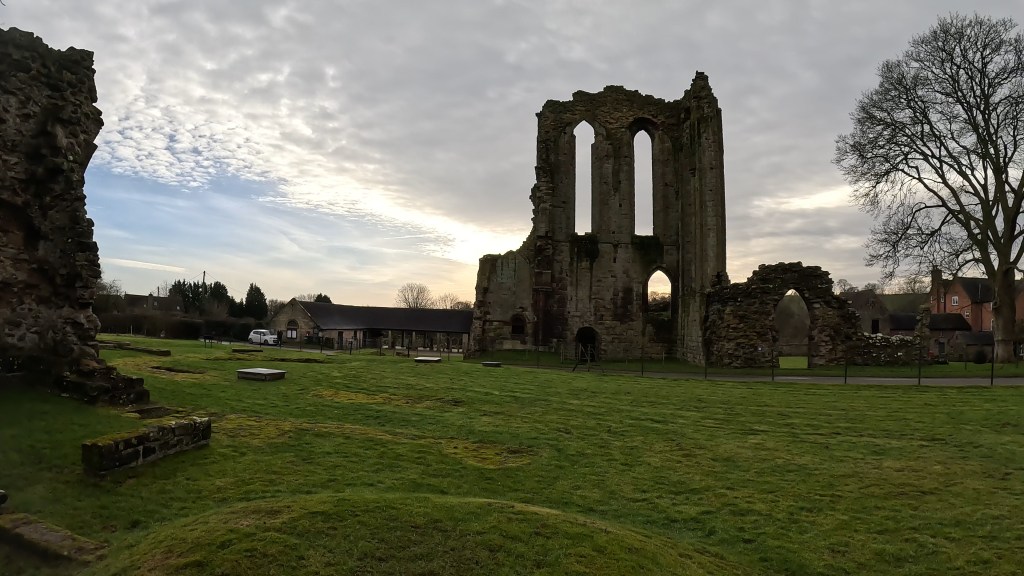
The design of the church was based on the abbey’s mother church in Aunay-sur-Odon and is considered more elaborate than most Cistercian architecture. The west wall, including two doorways and lancet windows above them, is still almost complete.
Croxdens church was more elaborate than many in the area, being modelled on the mother church and designed to a full length of 240 feet after the imposing western front, little now remains on the eastern side. The high alter, considered the most important point in the church, has now gone. But amongst the churche’s rich surrounding chapels which radiate from this end are a series of tombs which once belonged to the abbots and patrons here. It’s very unusual to see these tombs, empty and out in the elements and can be quite a morbid sight, but it’s so interesting also.
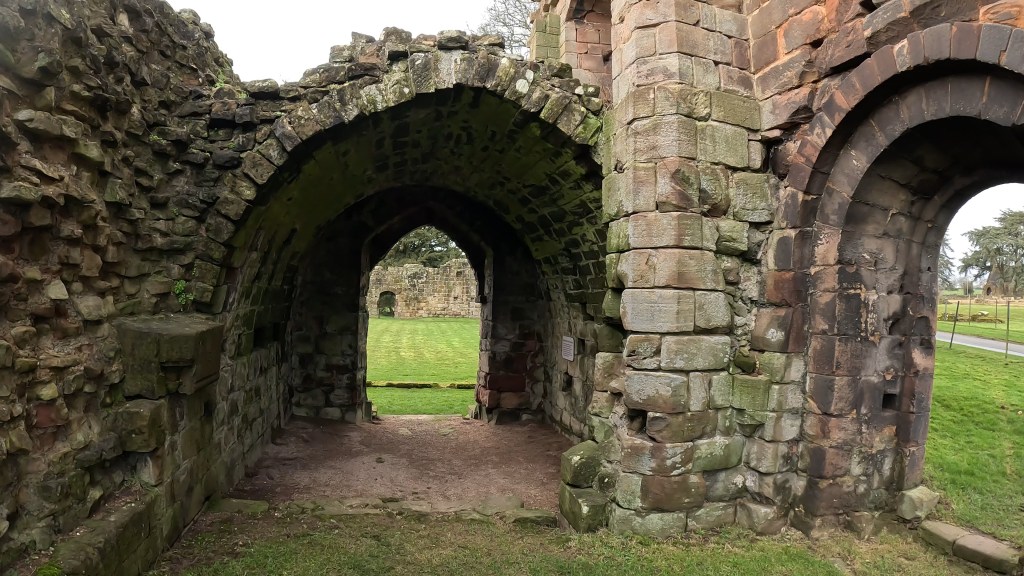

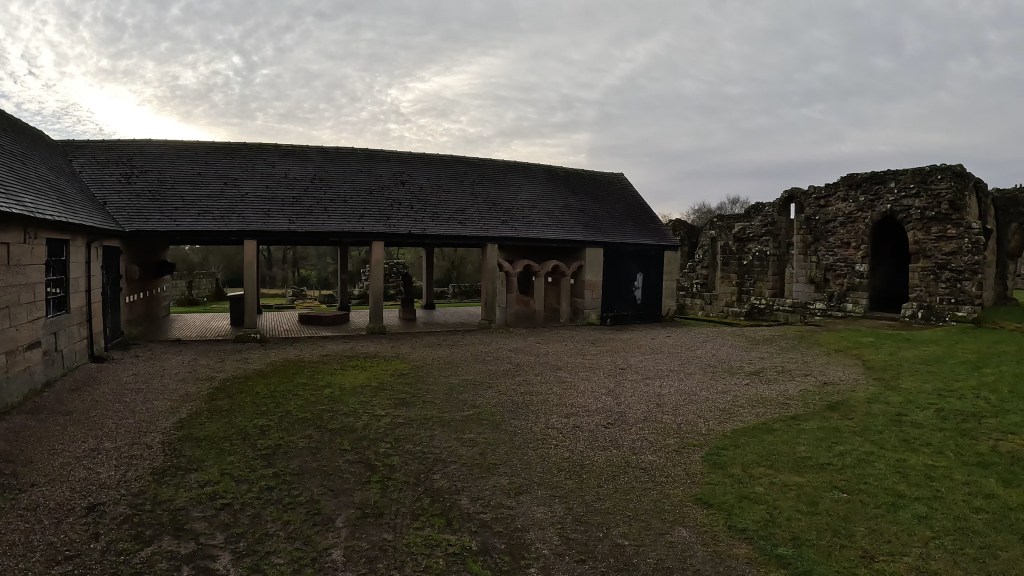
We passed through a stunning vaulted corridor and it’s always so interesting to gaze up at the stonework above. Above here would have been the monks dormitories where they would have slept. The worn cobbles on the floor and the dark, cold ceiling you can picture that this would have been a busy passageway throughout the day as monks went to and from the cloister for the daily studies and readings.
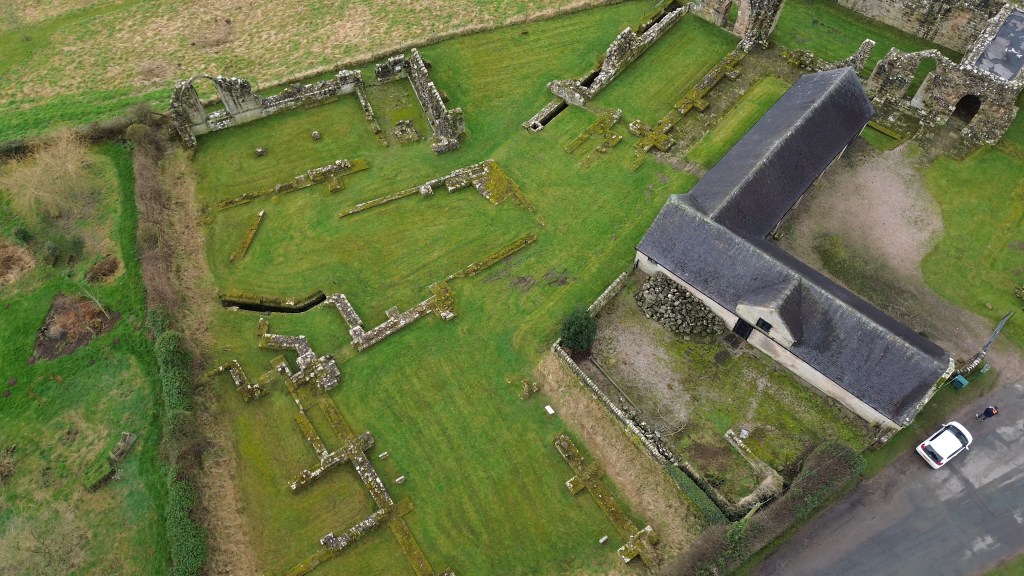
I’m always curious, walking the remains, imagining what went on in each of these ancient rooms and what stories they could tell of the days of the men who lived and worked here over 8 centuries ago. The ruins cast the most striking and otherworldly shadows over the beautiful green grass, particularly that of the large west window of the old abbey church.
We think a visit to Croxden abbey is worth putting on your map. What’s great is that here at Croxden you can really learn about the history and significance of what was once a revered centre of spiritual life and agricultural innovation.
If you liked the blog please hit that like button, watch the full video below and consider subscribing if you haven’t already.
Till Next Time!
 Pinned on Places
Leave a comment