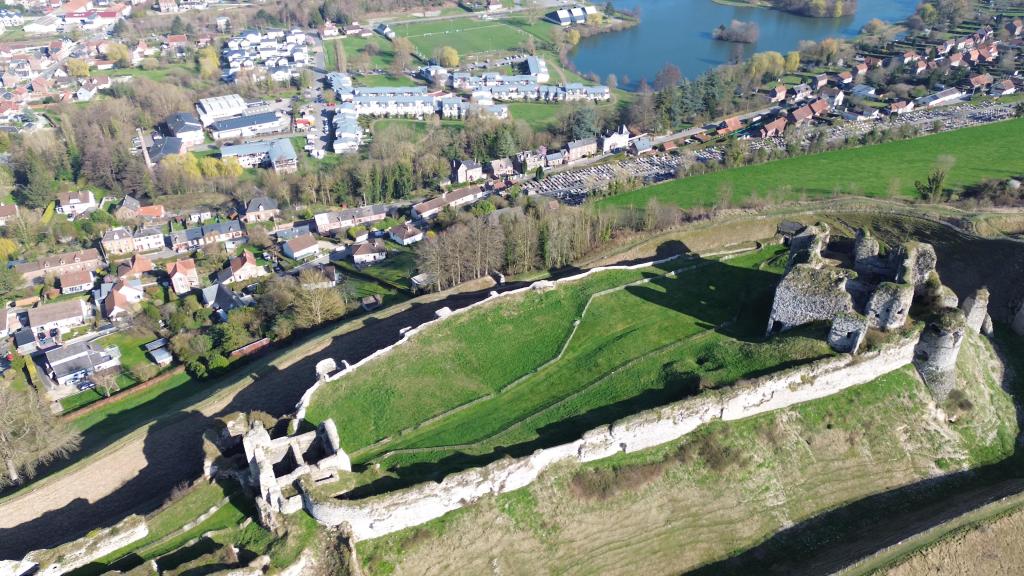
In this post, we’re heading to the outskirts of Dieppe to a rocky promontory where the river valleys converge. The Château d’Arques-la-Bataille remains one of Normandy’s most haunting and structurally significant ruins. It is a masterclass in medieval military engineering, defined by familial rebellion and the backdrop for one of the most pivotal military victories in French history.
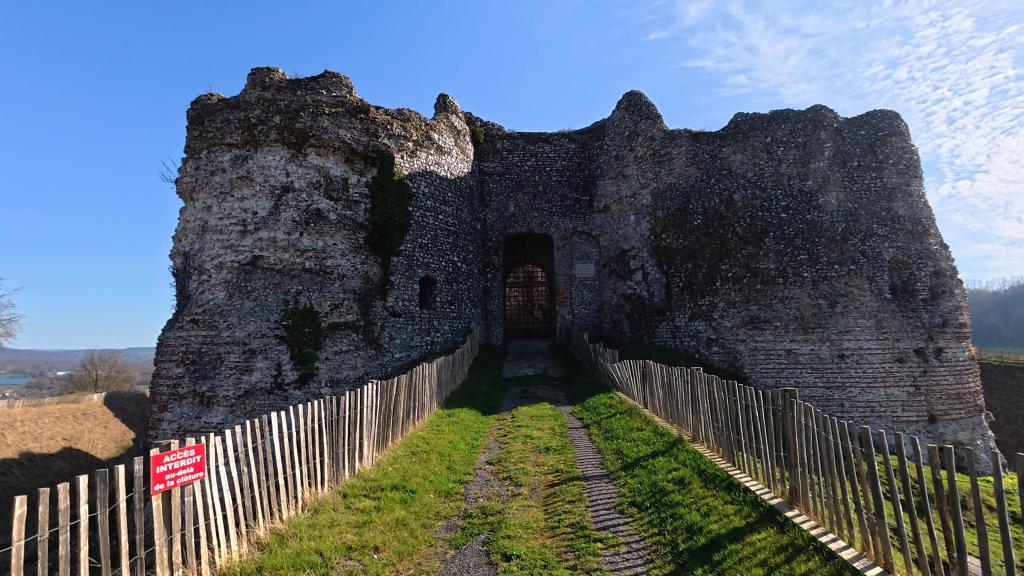
The story of Arques begins in the mid-11th century with William of Arques, who built this stone fortress between 1040 and 1053 to challenge the rising power of his nephew—the future William the Conqueror. The design was revolutionary; rather than a simple wooden motte-and-bailey, it featured a massive square keep (donjon) protected by a dry moat carved directly into the chalk hillside. The ditch was so steep that it forced a young William the Conqueror to resort to a year-long siege by starvation to reclaim the site.
The castle is shaped like an elongated almond, perfectly following the natural ridge of the hill. A unique “safety valve” design divided the massive keep into two sections with a thick internal wall, allowing defenders to retreat into one half even if the other had been breached. Throughout the centuries, it was bitterly contested by the French and English. In 1204, it earned the distinction of being the last Norman fortress to surrender to the French King Philippe Auguste.
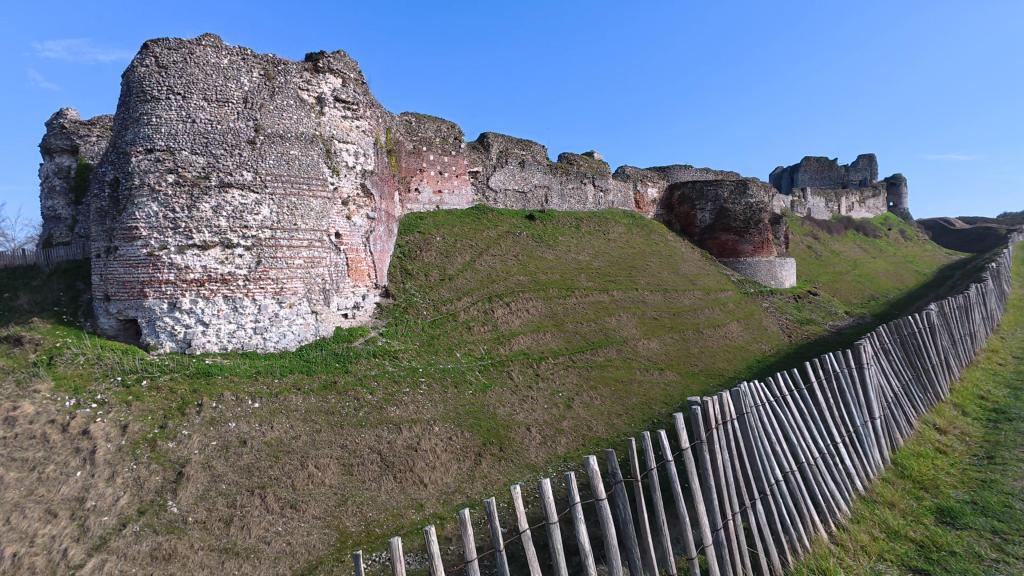
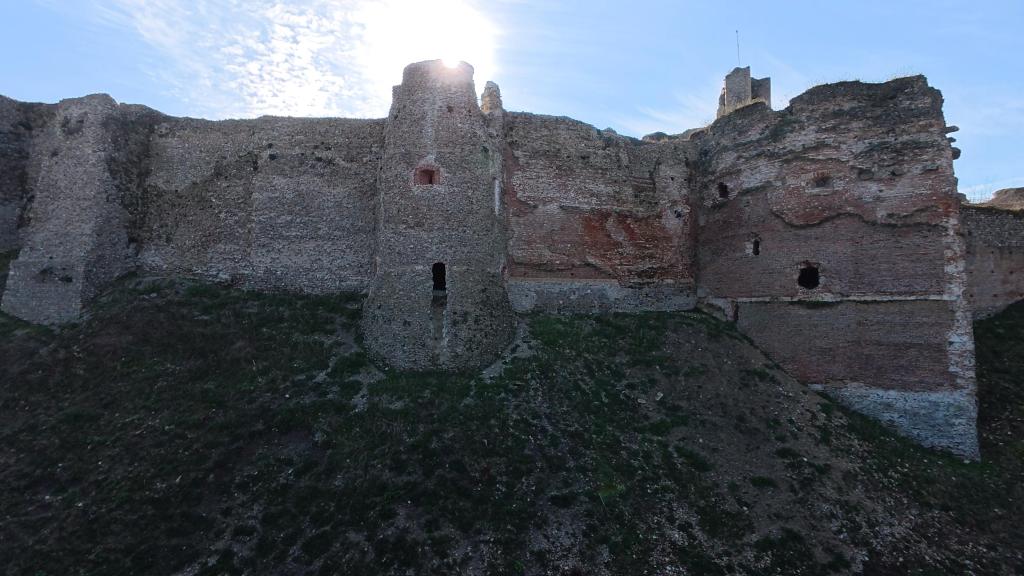
Arques is perhaps most famous for the battle that gave it its name. In September 1589, during the French Wars of Religion, King Henri IV was backed against the coast with only 7,000 men against a force of 30,000. Henri utilized the castle’s elevated position as a force multiplier. As the enemy became bogged down in the valley’s thick fog, the castle’s heavy artillery opened fire from the ramparts, shattering the opposing ranks and securing Henri’s claim to the throne.
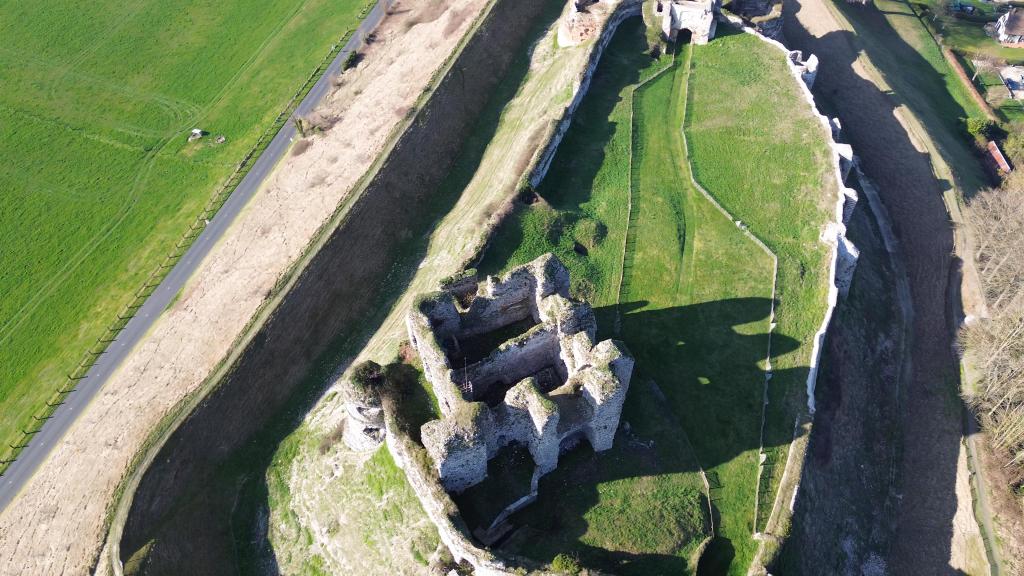
The fortress has hosted legendary figures throughout time, including Joan of Arc, who was held here in 1431 before her trial in Rouen. However, by the late 17th century, the advent of modern gunpowder made these stone walls obsolete. The castle was decommissioned and later pillaged for building materials. During World War II, the ruins saw one final chapter of conflict when German forces installed anti-aircraft guns within the walls, eventually blowing up their ammunition stores as they retreated at the war’s end.
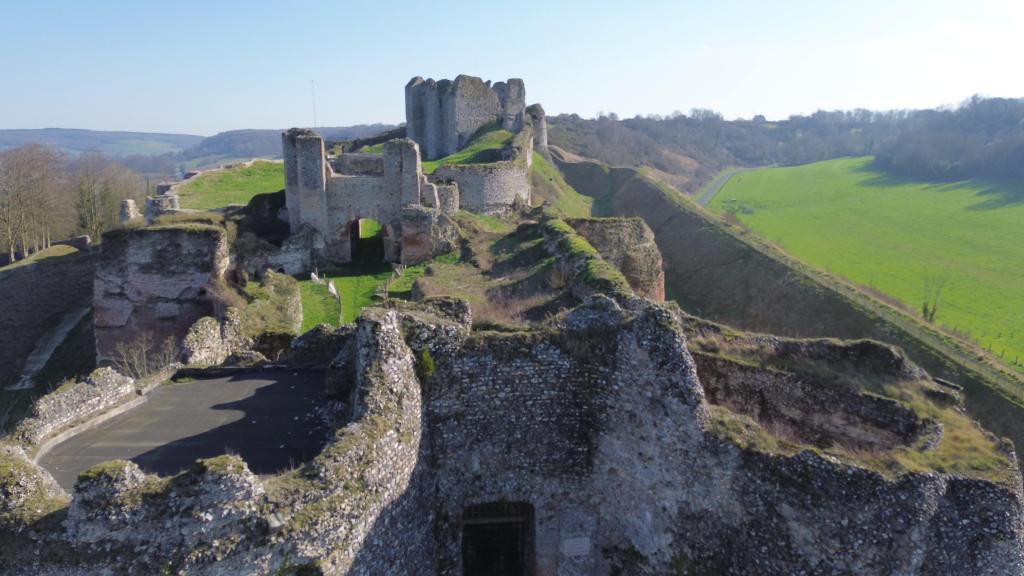
Arques-la-Bataille is a protected monument historique. Unlike “fairytale” castles, it offers a raw, tactile connection to the past. While the interior is currently closed for safety reasons, the walk around the massive exterior earthworks is an adventure in itself. It’s a steep climb from the village below, but standing beneath the jagged outlines of the keep provides a silent testament to the centuries of conflict that shaped modern France.
If you liked the blog please hit that like button, watch the full video below and consider subscribing if you haven’t already.
Till Next Time!
 Pinned on Places
Leave a comment