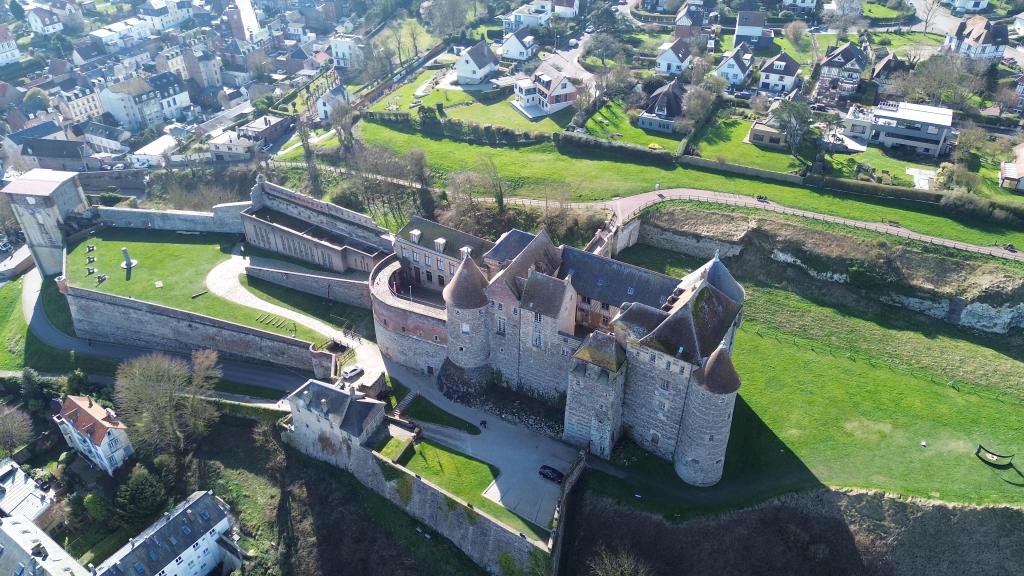
In this post, we are kicking off a new series in Northern France, discovering Normandy and the powerful blend of dramatic natural beauty and world-shaping history. Perched like a heavy crown on the western cliff, the Château de Dieppe is a massive, salt-crusted fortress that seems less built and more cut directly from the chalky white Alabaster Coast. This is Norman grit rendered in stone—a muscular, defiant structure that has spent six centuries absorbing the spray of the English Channel.
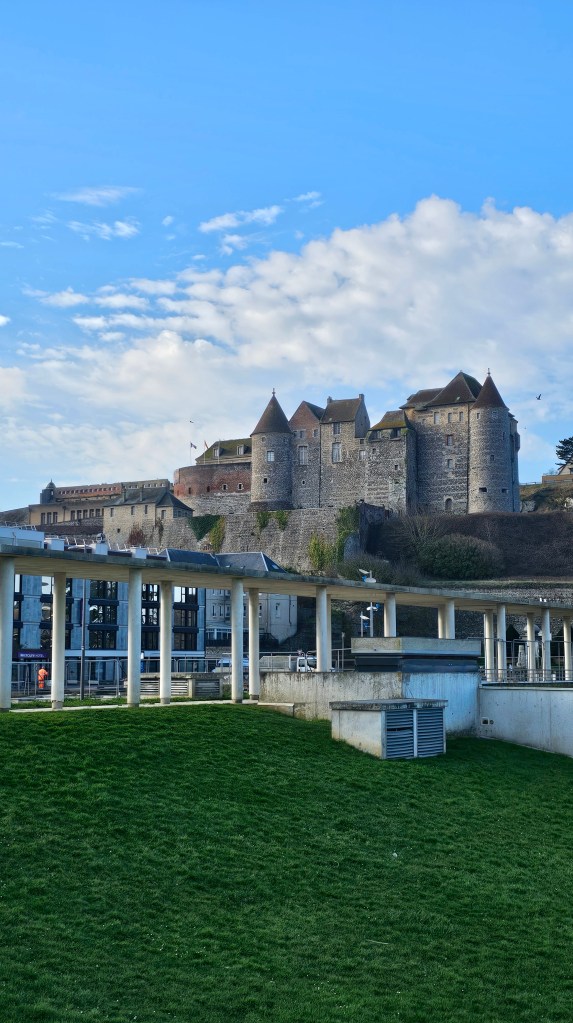
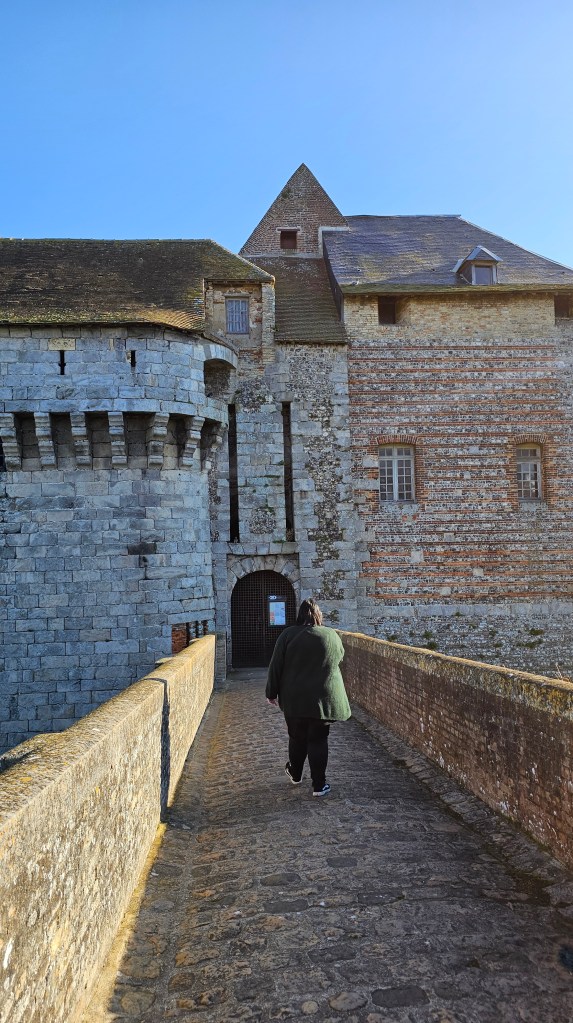
The castle we see today was born out of necessity in 1433 when King Charles VII commissioned a fortress that could take a punch from the English. Its design is fascinatingly chaotic; because it was repaired and expanded over centuries, it is something of an architectural Frankenstein. If you walk the steep path from the town, look closely at the walls—the dark, glassy stones are flint. One of the hardest natural materials on earth, this flint is the reason the castle survived the “Great Fire” of 1694, when an English fleet leveled almost every wooden house in the town below.
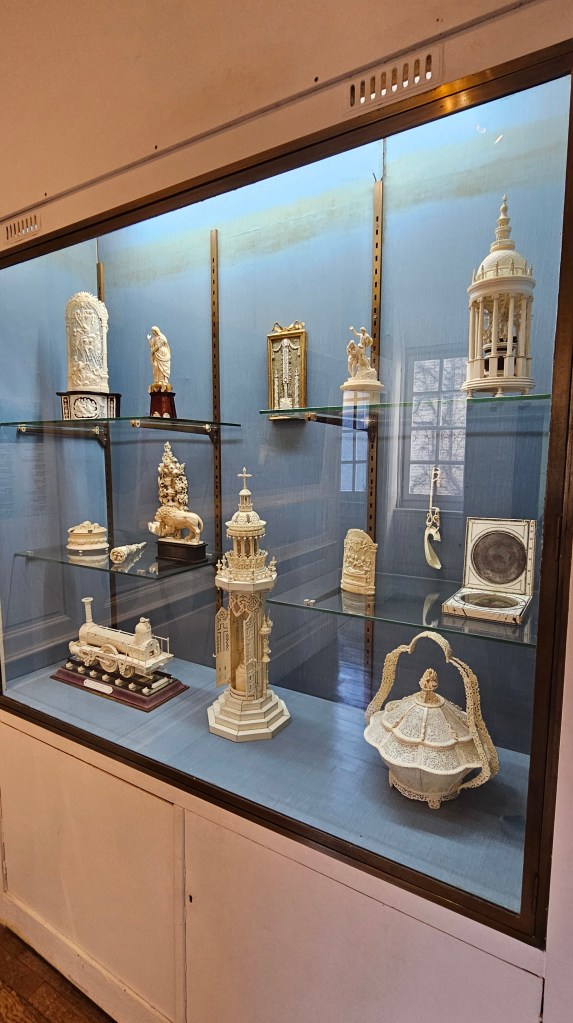
While the exterior speaks of war, the interior houses one of France’s most eclectic municipal museums. Occupying the former barracks and residential quarters, the Musée de Dieppe offers a journey through the town’s golden age as a maritime powerhouse. Because Dieppe was a major port for explorers returning from Africa, it became the ivory-carving capital of Europe. The collection inside is staggering, featuring over 1,500 pieces, including “Miracle Balls”—spheres within spheres carved from a single piece of tusk—and legendary ivory ship models with rigging as thin as human hair.
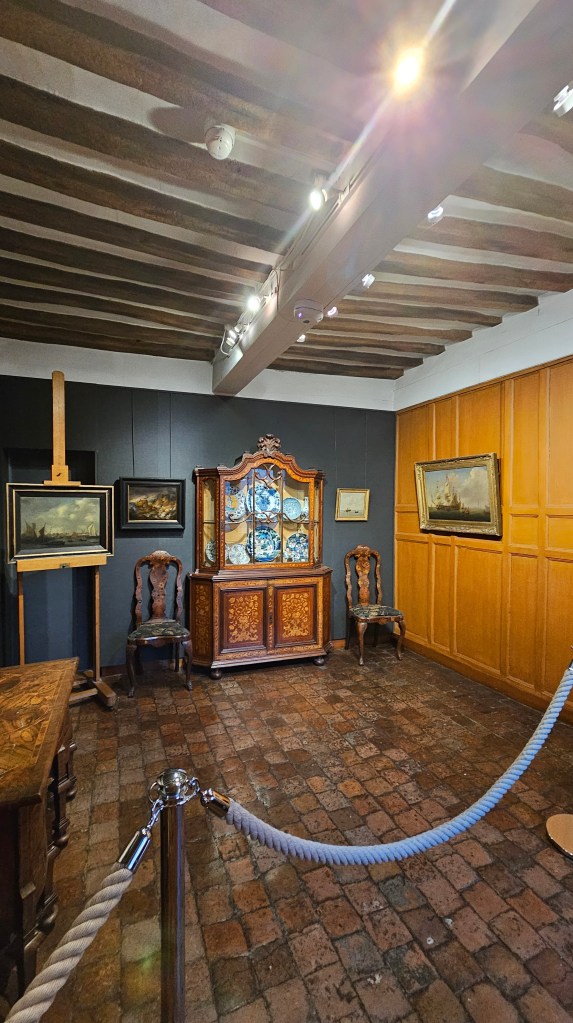
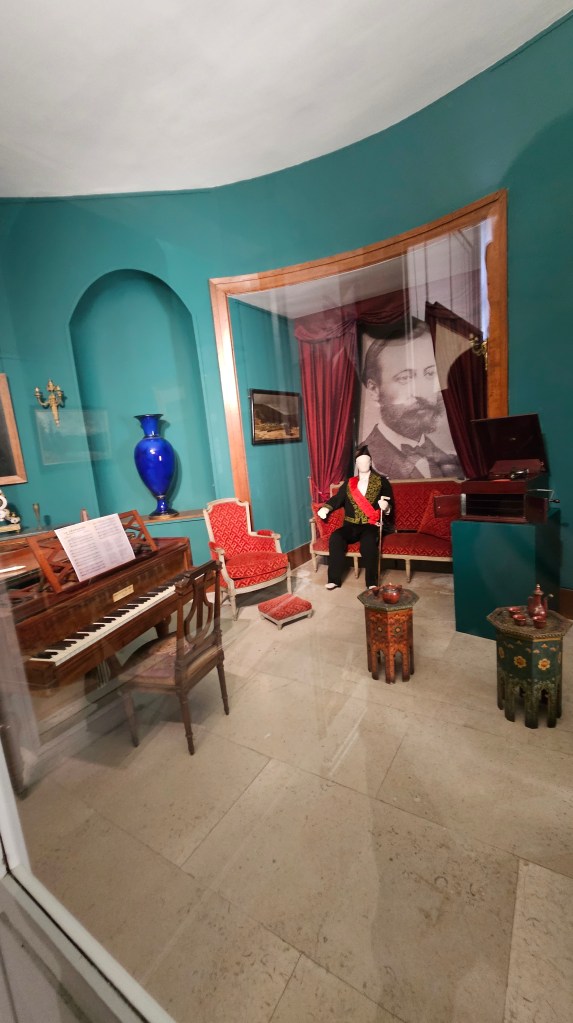
The museum also celebrates Dieppe’s role as France’s first seaside resort. The Impressionist Gallery features works by Camille Pissarro, Pierre-Auguste Renoir, and Eugène Boudin, all of whom were obsessed with the shifting grey-blue skies of the Normandy coast. A surprising highlight is the space dedicated to the composer Camille Saint-Saëns, who donated his personal piano and scores to the town. As you move between the galleries, the windows perfectly frame the English Channel, allowing you to see the real-world inspiration for the paintings hanging just inches away.
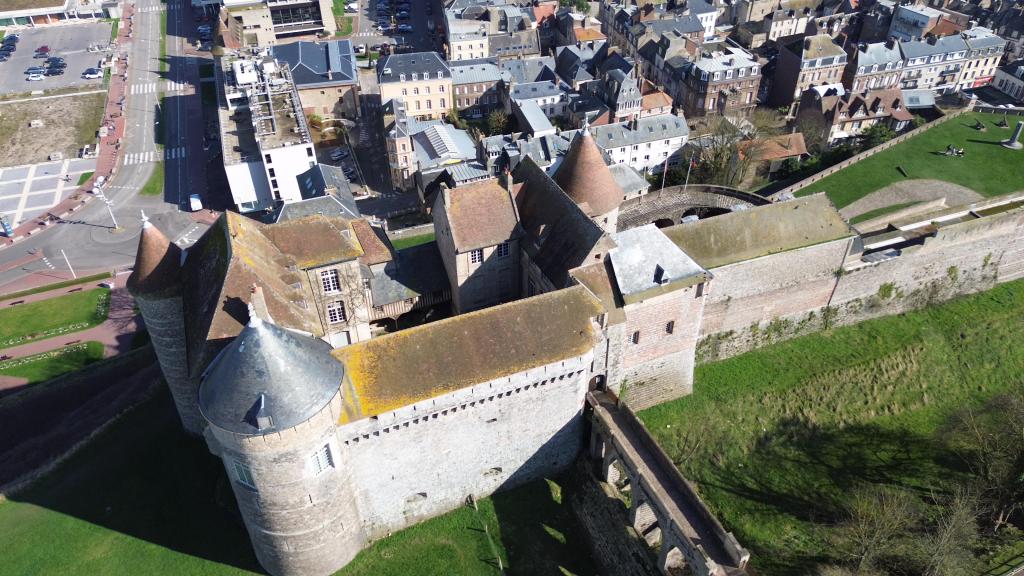
Today, the Château de Dieppe remains a place to linger and understand the intersection of maritime wealth, artistic obsession, and the brutal reality of war. It is a fortress that was never supposed to survive, yet somehow became the ultimate survivor of the French coast.
If you liked the blog please hit that like button, watch the full video below and consider subscribing if you haven’t already.
Till Next Time!
 Pinned on Places
Leave a comment