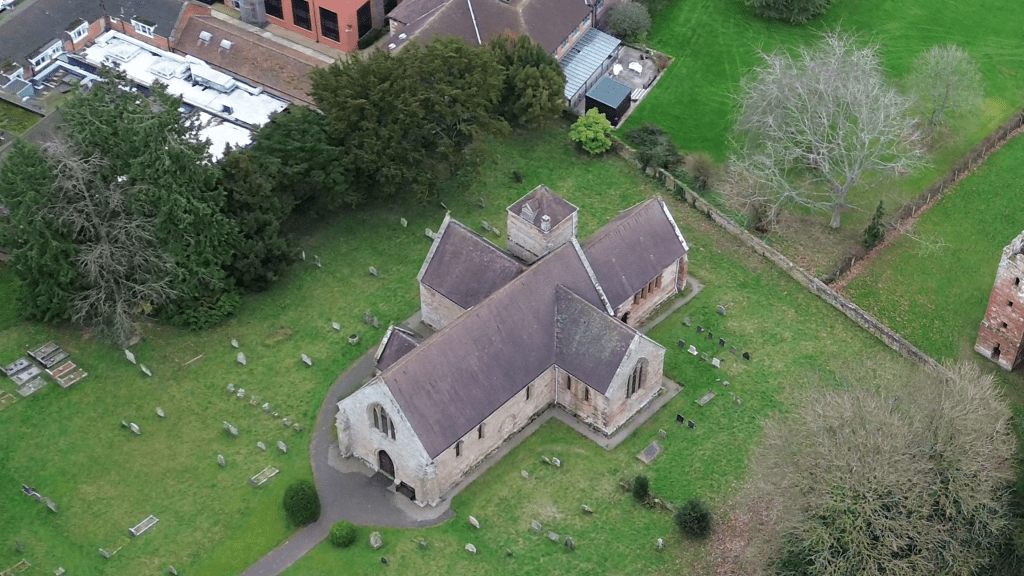
In this week’s post, we find ourselves in the quiet Shropshire village of Acton Burnell. Where the air often feels heavy with the scent of damp stone and ancient history stands St Mary’s Church. This lovely, quiet site feels less like a local parish and more like a private chapel of the high medieval elite—a nod to Robert Burnell, one of the 13th century’s most formidable men.
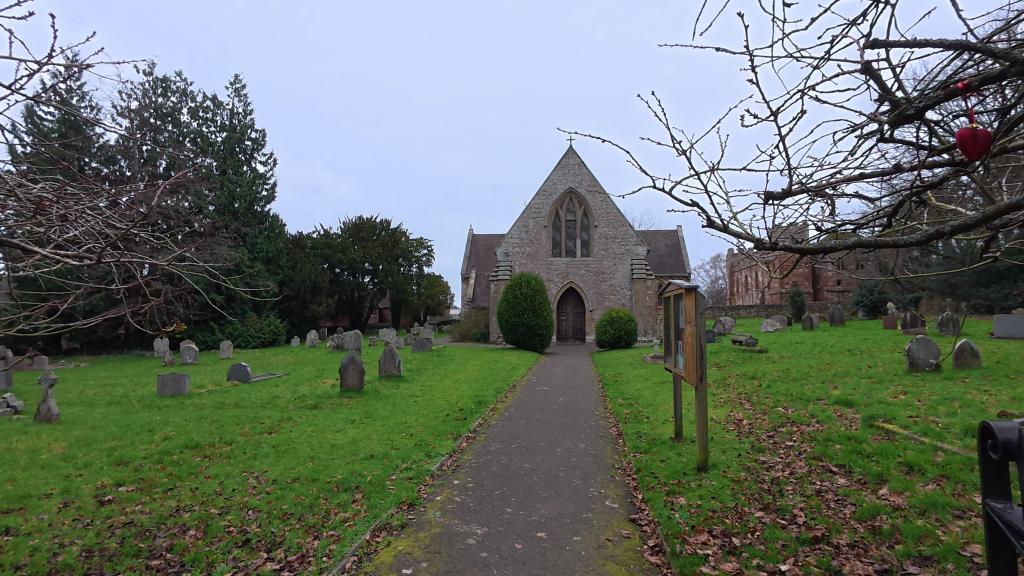
Robert Burnell wasn’t just a local lord; he was the Lord Chancellor of England, the Bishop of Bath and Wells, and the right-hand man to King Edward I. His immense wealth is written into every joint of the church’s red sandstone masonry. Built between 1275 and 1280, the church was designed to be the spiritual anchor for his adjacent castle. Because Burnell was the Lord Chancellor, he had access to the very best craftsmen in the country, which shows in every shadow and stone.
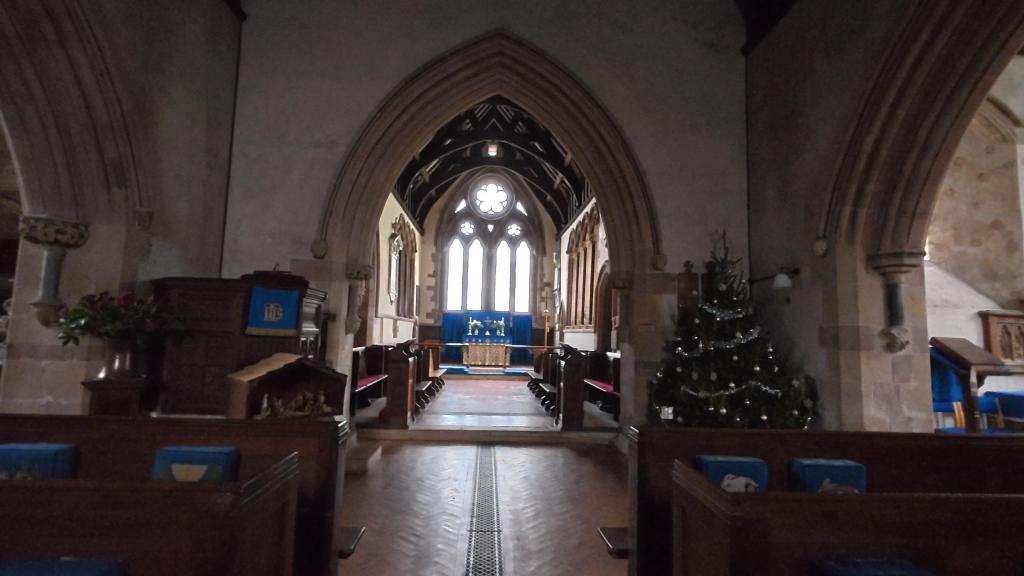
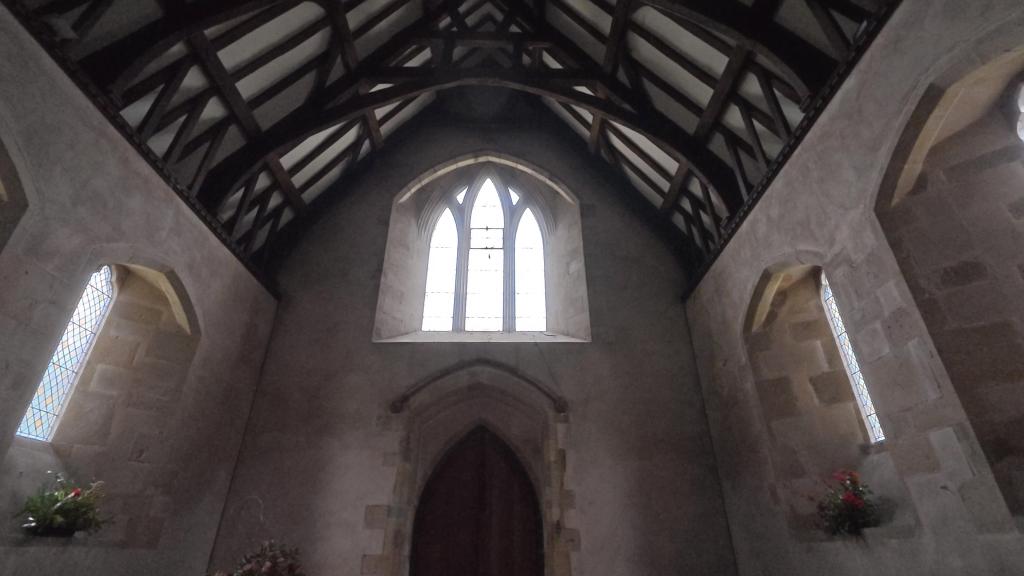
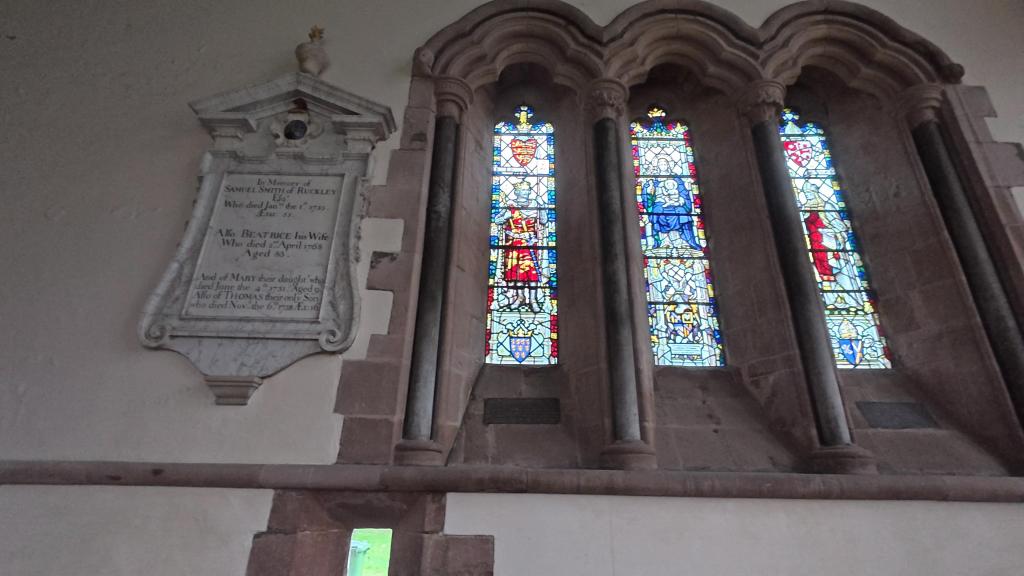
The architecture here is a masterclass in the Early English style, transitioning into the decorative flourishes of the later medieval period. A clear sign of the Bishop’s wealth is the east window, featuring slender Purbeck marble brought all the way from Dorset. Beneath your feet in the north transept, you’ll find original 13th-century floor tiles worn smooth by 700 years of footsteps, while the south transept offers a glimpse of ghostly red rosettes—remnants of medieval wall paintings that once made this space feel alive.
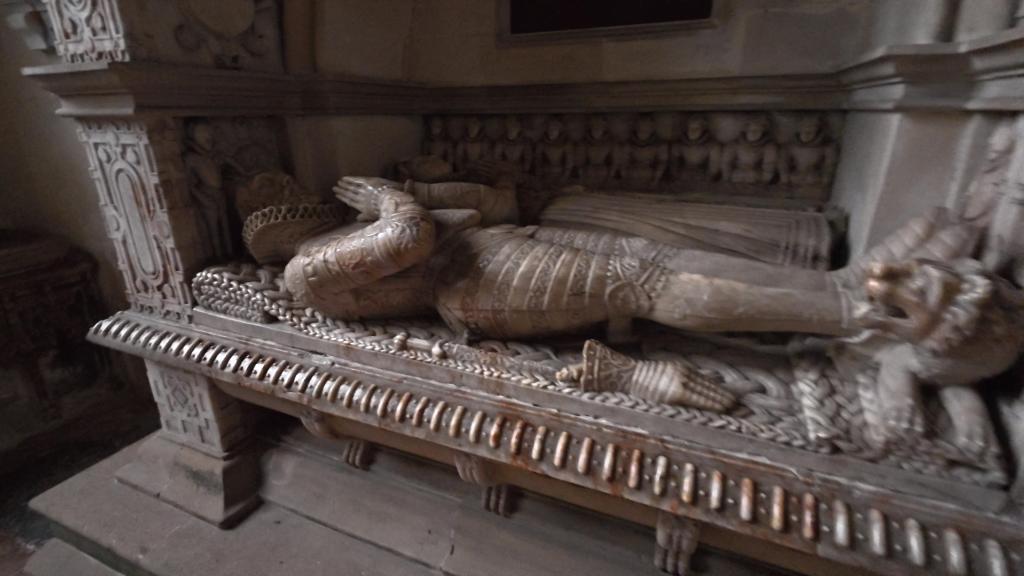
The interior serves as a gallery of Shropshire’s historical heavyweights. In the north transept lies the tomb of Sir Nicholas Burnell, which holds what many consider the finest monumental brass in the county—a life-sized image of a knight in plate armor with his feet resting on a lion. On the opposite wall, the vibe shifts to the Elizabethan era with the massive, colorful alabaster tomb of Sir Richard Lee. Interestingly, Sir Richard was an ancestor of the American Civil War General Robert E. Lee, making this a site of pilgrimage for many American historians.
St Mary’s also hides smaller, intimate marks of human presence. If you run your hands along the nave, you can feel the individual signatures of medieval stonemasons—geometric crosses, stars, and triangles carved into the stone so the craftsmen could ensure they were paid. You might also notice a “squint”—a small square opening in the chancel wall that allowed those excluded from the main service, such as lepers, to view the elevation of the host during Mass.
The chancel is disproportionately grand for a village church because it was essentially Robert Burnell’s private stage. It features sedilia (stone seats for priests) carved with classic 13th-century dog-tooth molding. When Burnell entertained King Edward I at the castle next door, the King likely sat within these very walls. Because Acton Burnell never grew into a major town, the church was never heavily altered, leaving it as a perfectly preserved 13th-century time capsule.
If you liked the blog please hit that like button, watch the full video below and consider subscribing if you haven’t already.
Till Next Time!
 Pinned on Places
Leave a comment