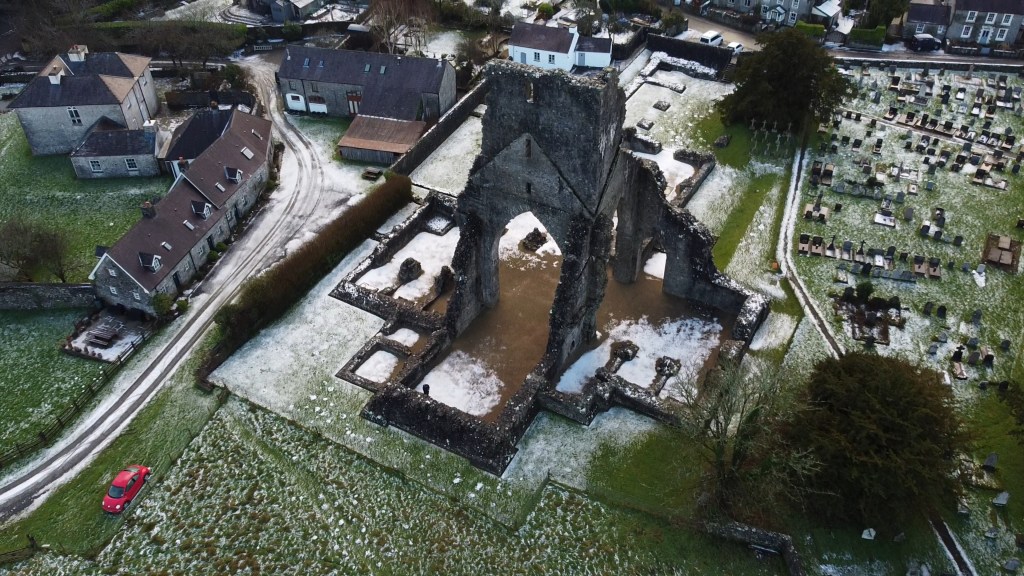
In this week’s post, we continue through the south of Wales to the quiet, quaint village of Talley. Tucked into the hilly lands just west of the Brecon Beacons, the majestic ruins of Talley Abbey emerge from a scenic rural setting. Founded in 1185 by The Lord Rhys, the native Prince of Wales, this house was built for the monks of the Premonstratensian order—often called the “White Canons” for the color of their robes.
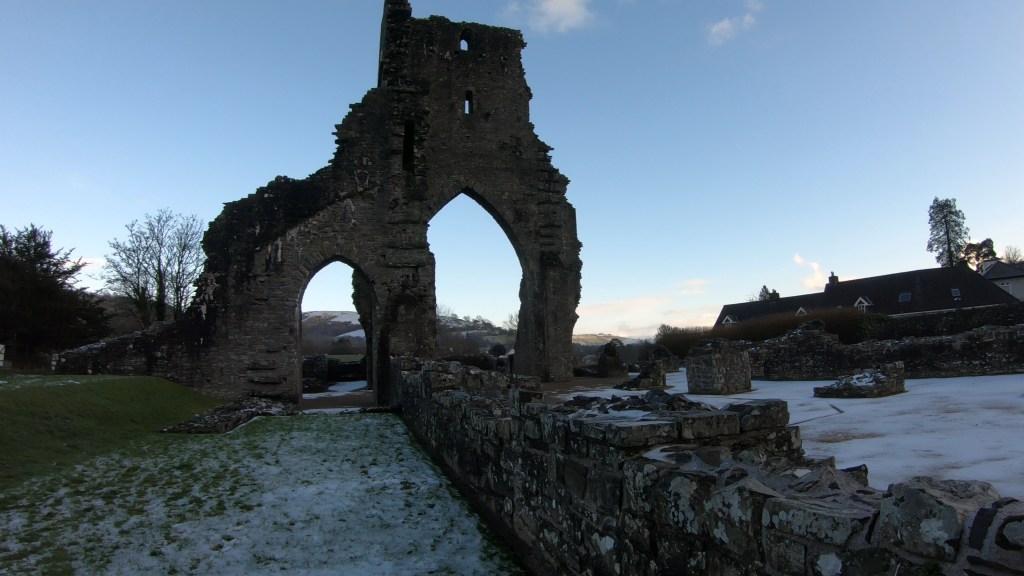
Talley holds a unique place in history as the only Premonstratensian house ever founded in Wales. However, the order was never as wealthy or powerful as the Cistercians. From the beginning, the abbey struggled with a lack of funds and a location that offered little arable land for crops. Their primary lifeline was the nearby twin lakes, which the monks used for sophisticated fish farming to support the community. The village name itself, Tàl-y-llychau, translates to “the head of the lakes,” a nod to the water that once sustained the monastery.
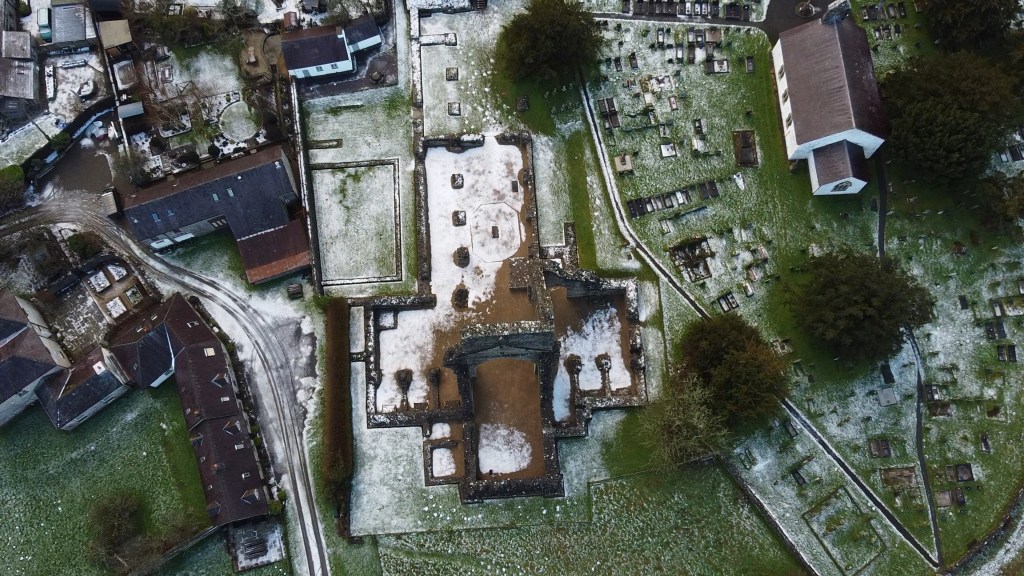
The abbey’s story is one of ambitious dreams curtailed by reality. Drone footage reveals the original vision: a massive, 73-meter-long church designed in a Latin cross shape. Had it been finished, it would have featured an eight-bay nave and twin aisles. Instead, due to constant money troubles and a lengthy, expensive lawsuit with Whitland Abbey, much of the nave was never completed beyond its foundation levels. Today, you can follow the outlines of these bases, which serve as a silent map of the grandeur that was intended.
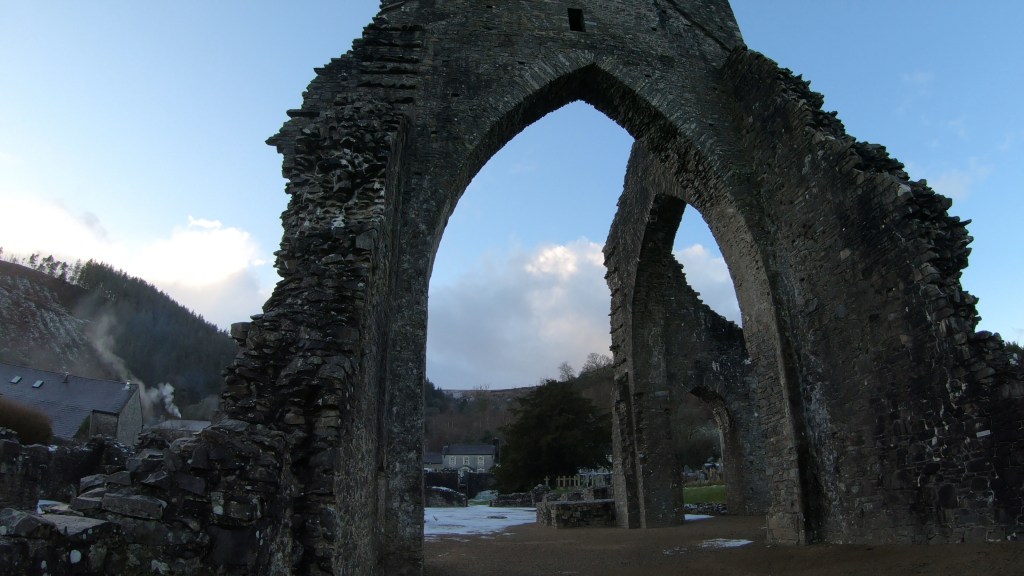
Talley’s proximity to the native Welsh dynasty also made it a target during the anti-Welsh campaigns of King Edward I in 1277. Following the conflict, the abbey was placed under unwanted royal supervision by English abbots. The 14th century brought further hardship with the arrival of the Black Death, which decimated the number of monks and workers. Eventually, the abbey was dissolved by Henry VIII in 1536, and the structure was “mined” by local villagers, who used the stone to build much of the present-day village and the chapel adjacent to the ruins.
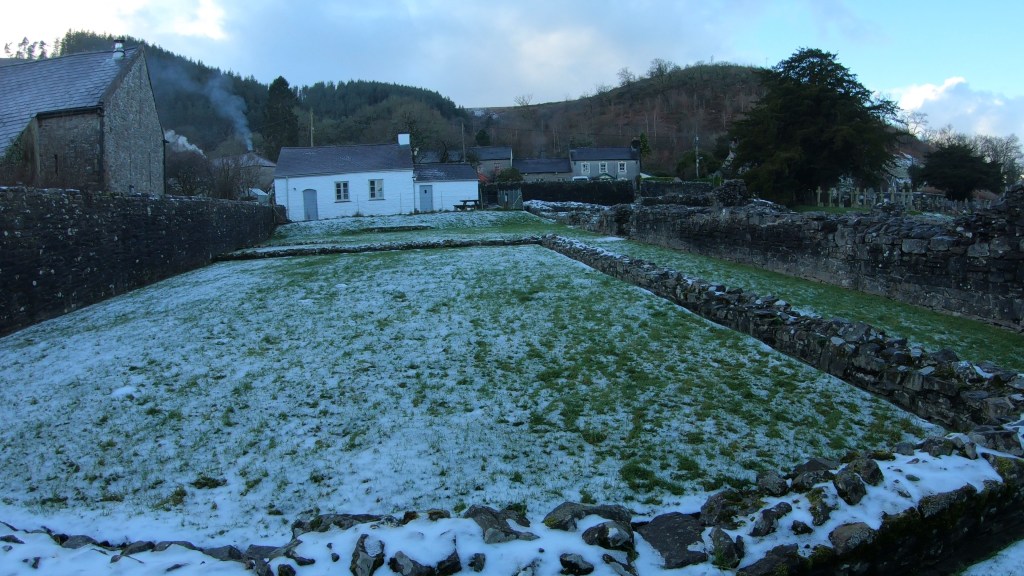
What remains today is hauntingly beautiful and atmospheric. The most striking feature is the massive archway and the remains of the central tower, where you can still see the upper passages that once ran through the high walls. The abbey church actually remained in use for the parish until the 1770s, when it was replaced by the current white parish church. Walking among the old gravestones leads you down to the lovely blue twin lakes, which look particularly spectacular on a frosty morning.
Managed by Cadw, the site is free to explore and offers a rare, peaceful slice of the Welsh valleys. It is a place where you can feel the weight of a vision that was never quite realized, yet remains standing in quiet defiance of time.
If you liked the blog please hit that like button, watch the full video below and consider subscribing if you haven’t already.
Till Next Time!
 Pinned on Places
Leave a comment