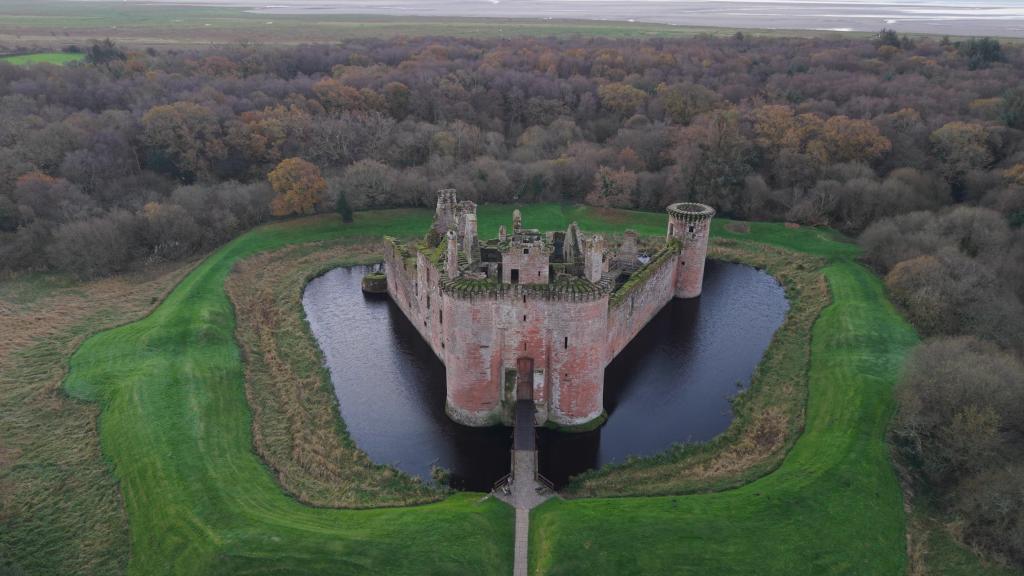
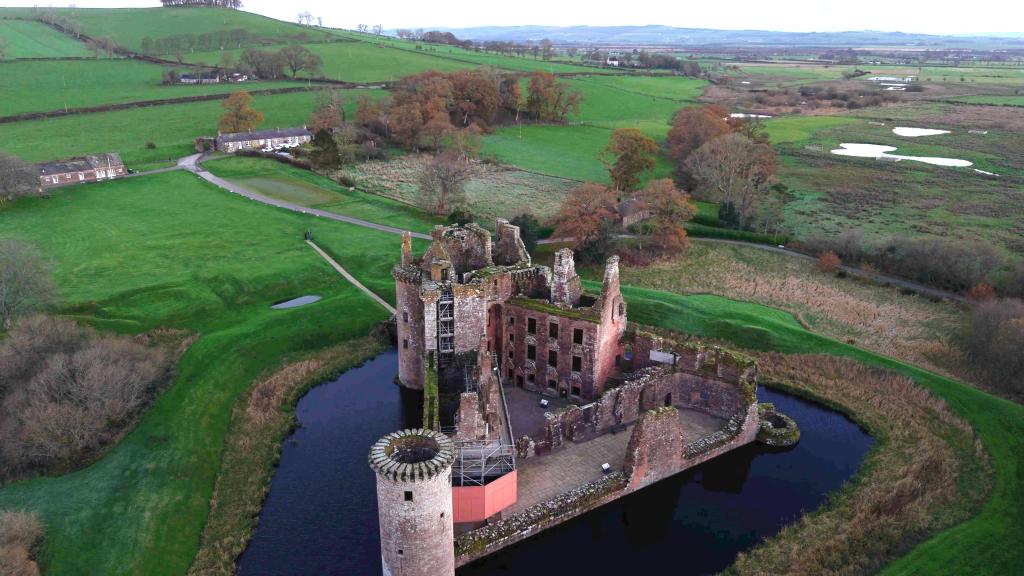
In this week’s post, we’ve dug out from the archives our visit to Caerlaverock Castle, located in Dumfries and Galloway. This unique and historically significant fortress is instantly recognizable by its distinctive triangular shape. Unlike many Scottish castles perched on high crags, Caerlaverock sits on a low-lying site, once surrounded by a moat and marshland, making its defenses reliant on water and strategic design rather than elevation.
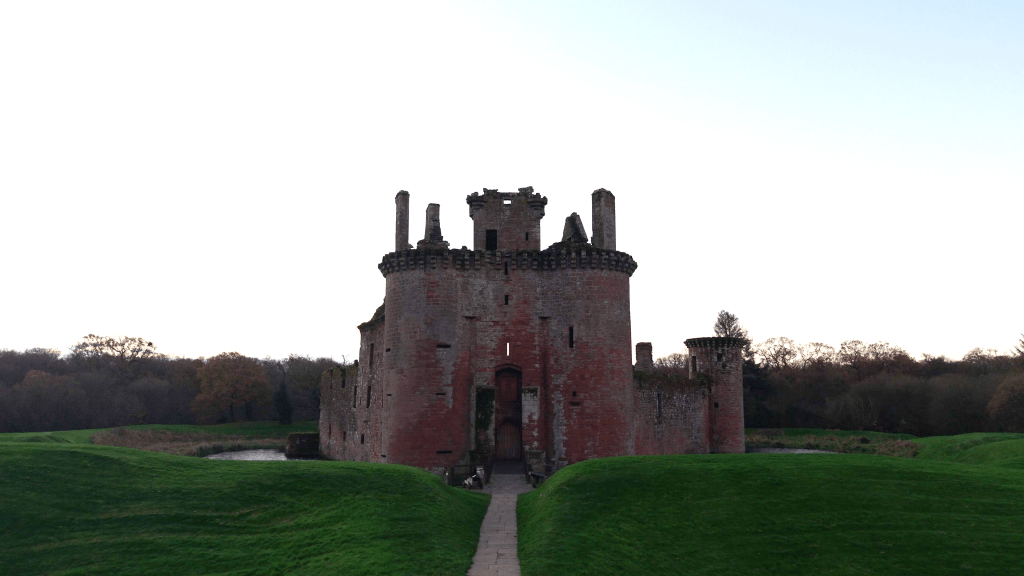
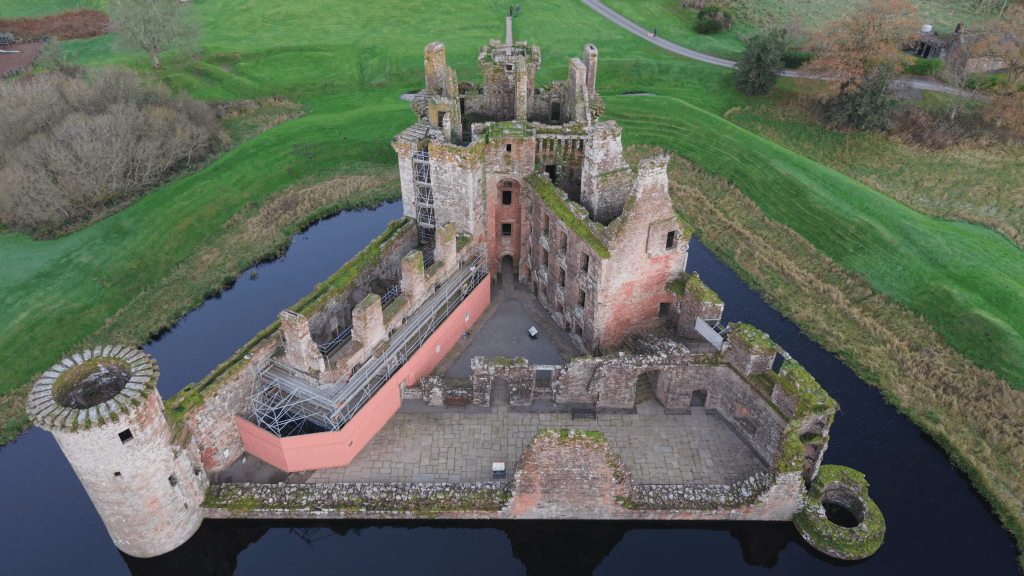
The castle’s origins trace back to the 13th century and the Maxwell family, who held it for centuries. Its triangular plan—a rarity in British castle design—was a clever adaptation to its marshy surroundings. This geometry wasn’t just for show; it allowed for robust corner towers and a powerful gatehouse, all built upon a raised clay platform to keep the foundations stable in the swamp. The impressive twin-towered gatehouse, later known as the “Nithsdale Tower,” reflects the castle’s 17th-century evolution from a purely defensive stronghold to a more elaborate Renaissance residence.
Caerlaverock’s strategic importance lay in its proximity to the Solway Firth and the English border. It served as a crucial guardian against incursions and a base for Scottish raids into northern England. Daily life within the walls was a bustling microcosm of medieval society, housing the Maxwell family, their soldiers, and servants. The inner courtyard, or ward, was the heart of the castle, once filled with workshops, bakeries, and kitchens that ensured the garrison remained self-sufficient during the constant threat of border warfare.
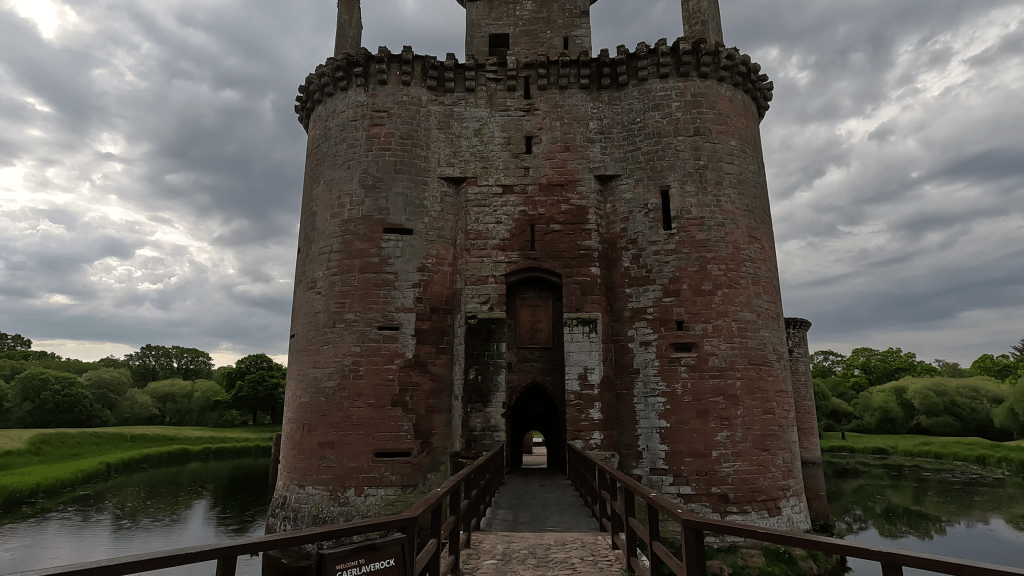
The castle’s history is punctuated by brutal sieges, most notably in 1300 when a massive English army led by King Edward I attacked. Despite a small garrison, the castle resisted for weeks. This event was so significant it was documented in the “Siege of Caerlaverock Roll of Arms,” a contemporary poem that provides a rare look into medieval heraldry. The castle changed hands many times during the Wars of Scottish Independence and was eventually “slighted” (rendered unusable) by the Covenanters in 1640, marking the end of its military life.
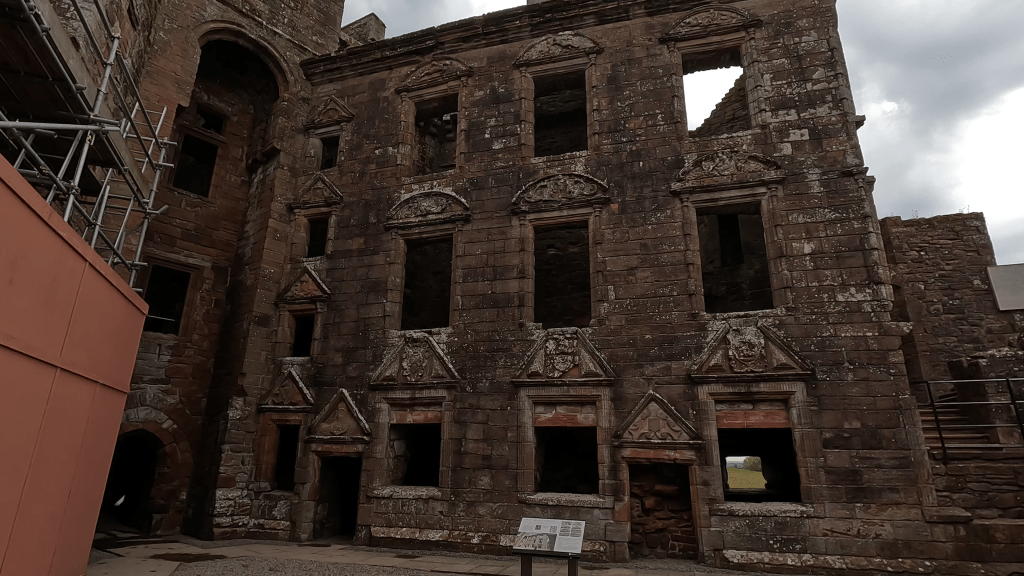
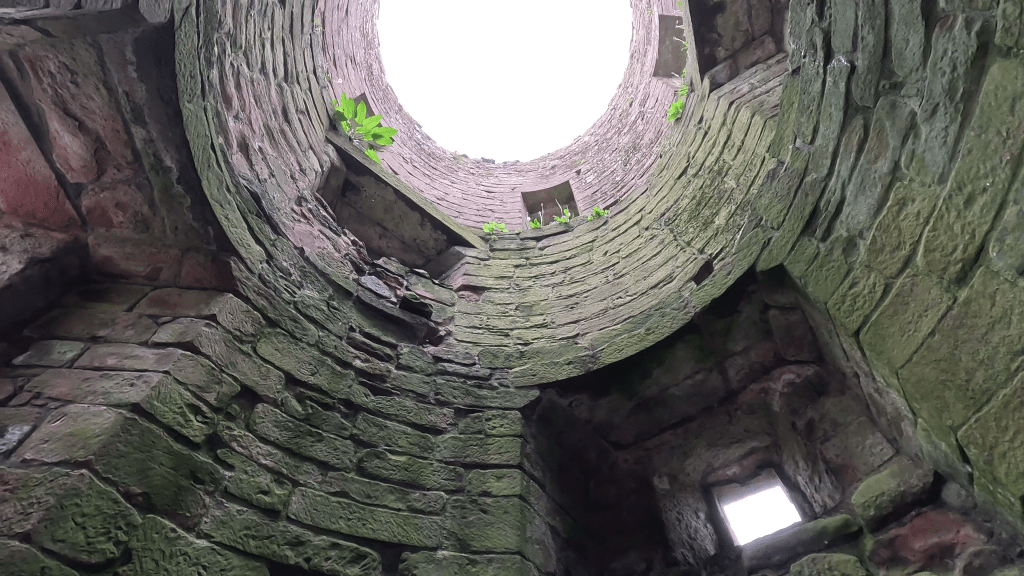
Stepping through the imposing gatehouse today, you can still explore the ruins of the Great Hall and the multi-functional corner towers. The East and South-West towers didn’t just provide defensive coverage; they contained private apartments for the Lord and his family, featuring fireplaces and windows overlooking the marsh. The Nithsdale Tower, built by the 1st Earl of Nithsdale, showcased the family’s wealth with decorative stonework and refined living quarters that contrasted with the rugged, thick-walled defenses of the 13th century.
As with any stronghold with such a violent past, whispers of the supernatural linger. Visitors and staff have reported fleeting shadows and a sense of unease, particularly around the older ruins. Some legends speak of the spirits of fallen soldiers from the 1300 siege, forever bound to the ground where they fought. Today, cared for by Historic Environment Scotland, Caerlaverock remains a powerful symbol of Scottish resilience and architectural ingenuity.
If you liked the blog please hit that like button, watch the full video below and consider subscribing if you haven’t already.
Till Next Time!
 Pinned on Places
Leave a comment