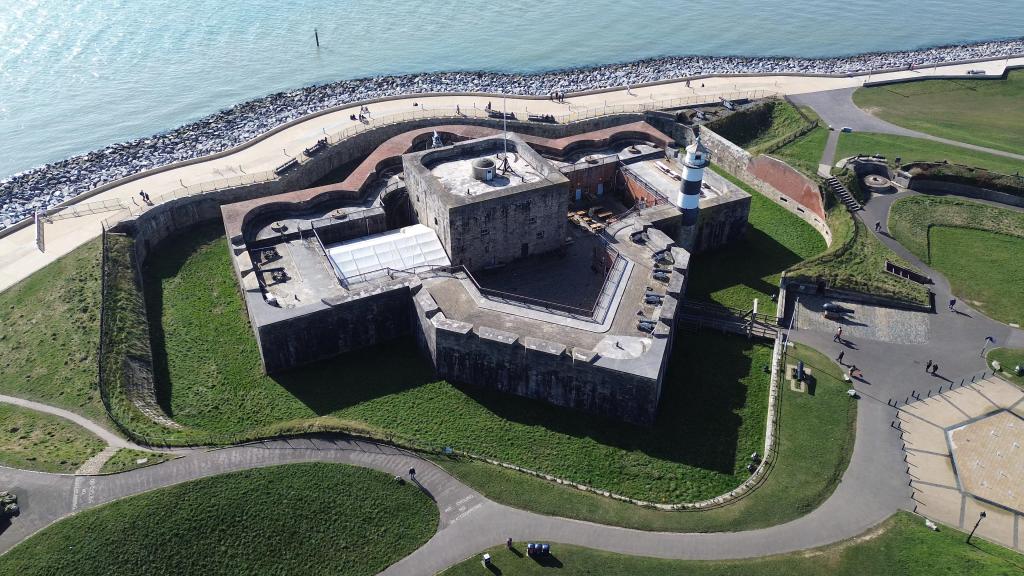
In this post, we’re exploring our hometown of Portsmouth. Standing right on the coastline, Southsea Castle isn’t your typical grand, medieval palace. It’s a no-nonsense, hardworking fort that has spent almost 500 years defending one of England’s most important harbors. Its story is tied to the sea itself; it’s where a heartbroken king watched his dreams sink and where defenses constantly evolved to meet the threats of the day.
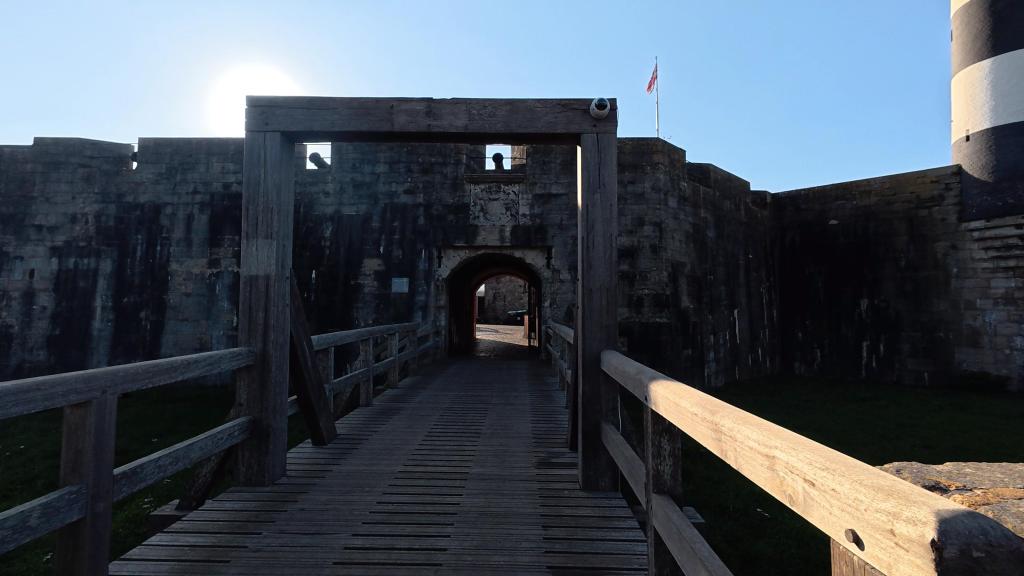
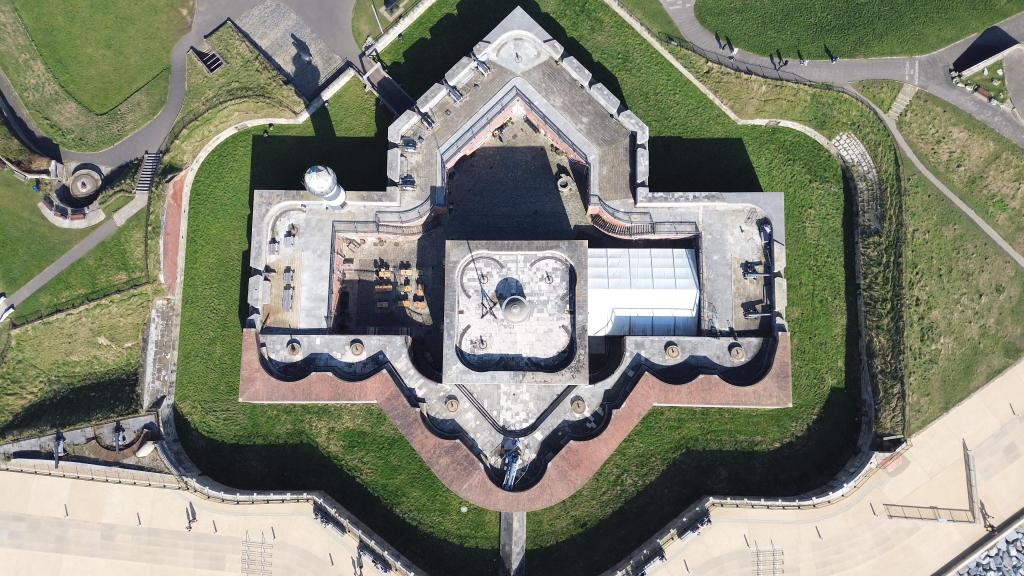
Imagine the scene in 1544: King Henry VIII was paranoid about a French invasion. To protect his cherished naval base, he ordered a series of coastal “Device Forts” to be built. Remarkably, Henry designed the layout of Southsea Castle himself. It was a cutting-edge piece of military engineering—a low-slung, star-shaped fortress designed to deflect cannon fire. The key feature was the “angled bastion,” a triangular wall that eliminated blind spots and allowed guns to fire along the entire length of the castle walls.
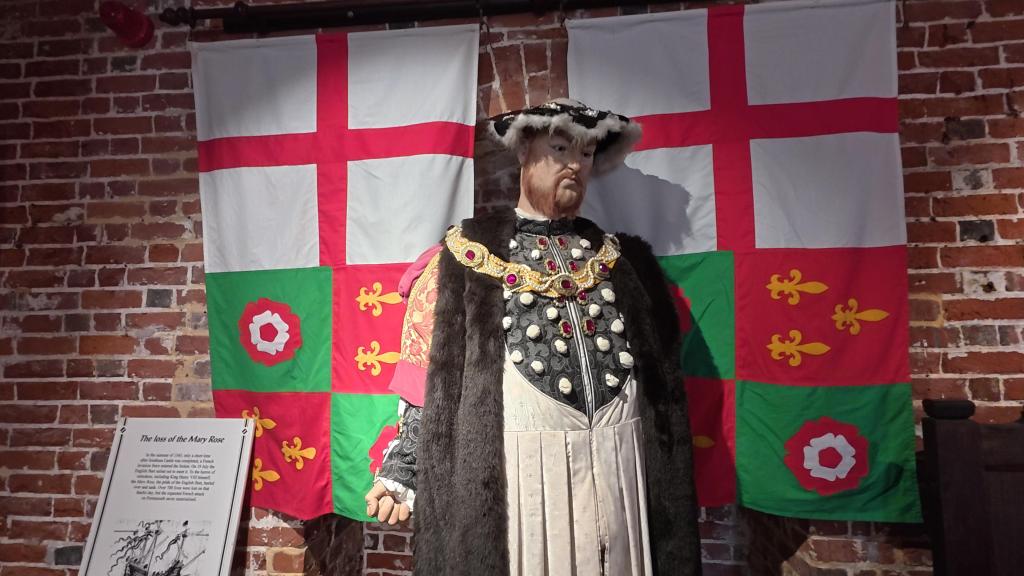
A year after its completion, the fort was put to the ultimate test. On July 19, 1545, a French fleet of over 200 ships appeared in the Solent. From these very ramparts, Henry VIII watched the chaos of the Battle of the Solent unfold. However, instead of a glorious victory, he witnessed the terrifying sinking of his beloved flagship, the Mary Rose. The ship suddenly rolled over, water rushed into its open gunports, and it vanished beneath the waves, taking hundreds of sailors with it. Standing on the battlements today, you can still feel the weight of that tragic moment.
Southsea Castle never “retired”; it simply adapted. During the English Civil War, it was a strategic prize captured by Parliamentarian forces. Later, during the Napoleonic Wars, the castle’s defenses were beefed up with massive new guns. Its final military transformation came in the Victorian era as part of the “Palmerston Forts” network. The original Tudor structure was practically encased in earthworks and concrete, with old gun loops replaced by reinforced casemates to house enormous rifled cannons.
The castle’s history is also marked by a near-disaster in 1759, when sparks from a cooking fire reached a gunpowder store, causing a massive explosion that killed 17 people. The building was in such bad condition that authorities considered demolishing it, but the persistent threat of French invasion saved it. By 1814, the north wall was rebuilt further out, creating space for a larger garrison to live within the walls.
Local legends add a layer of mystery to the flint and stone. Many speak of a secret tunnel connecting the castle to the nearby Royal Garrison Church, and some claim the spirit of a military officer haunts the lighthouse tower. This “silent guardian” is said to appear as a shadowy figure still standing watch over the coastline he once defended.
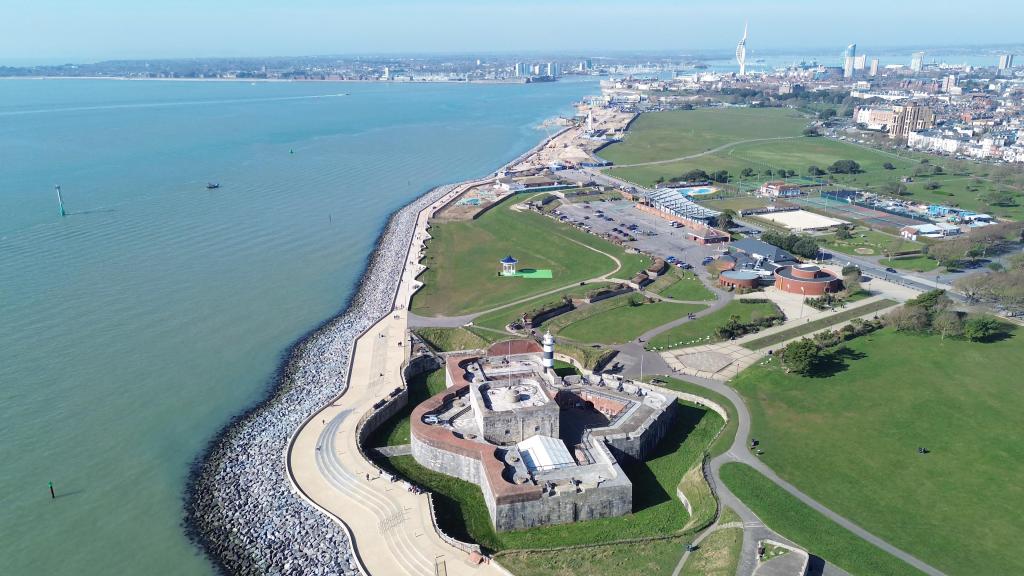
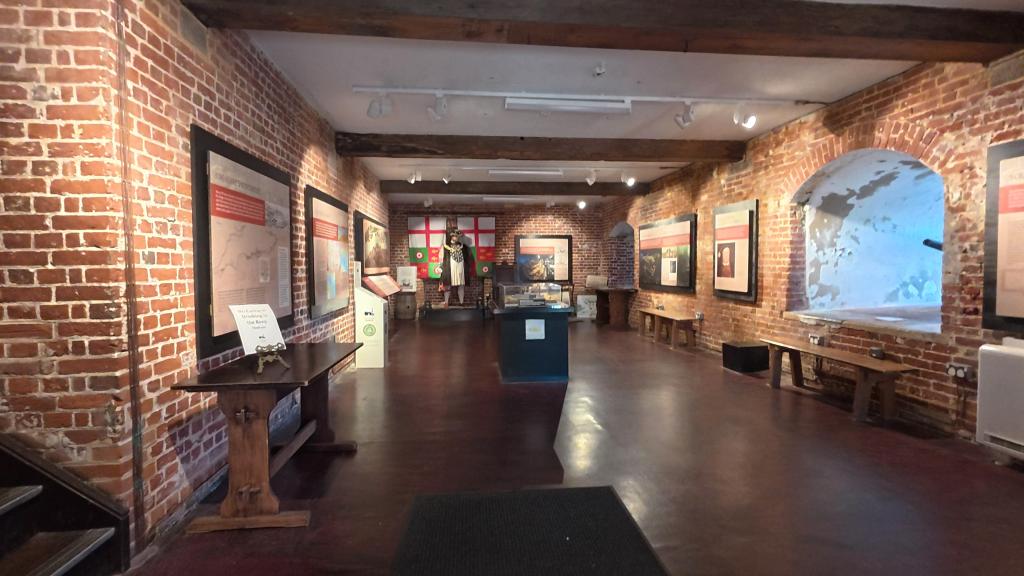
Today, Southsea Castle is a glorious local gem with free entry. You can wander through centuries of military evolution in one compact space, stepping from a narrow Tudor passage directly into a vast Victorian gun emplacement. The panoramic views from the top are spectacular, offering a perfect shot of the Solent and the Isle of Wight. It’s a place of quiet reflection where you can grab a coffee at the on-site cafe and watch modern warships pass the exact spot where the Mary Rose went down.
If you liked the blog please hit that like button, watch the full video below and consider subscribing if you haven’t already.
Till Next Time!
 Pinned on Places
Leave a comment