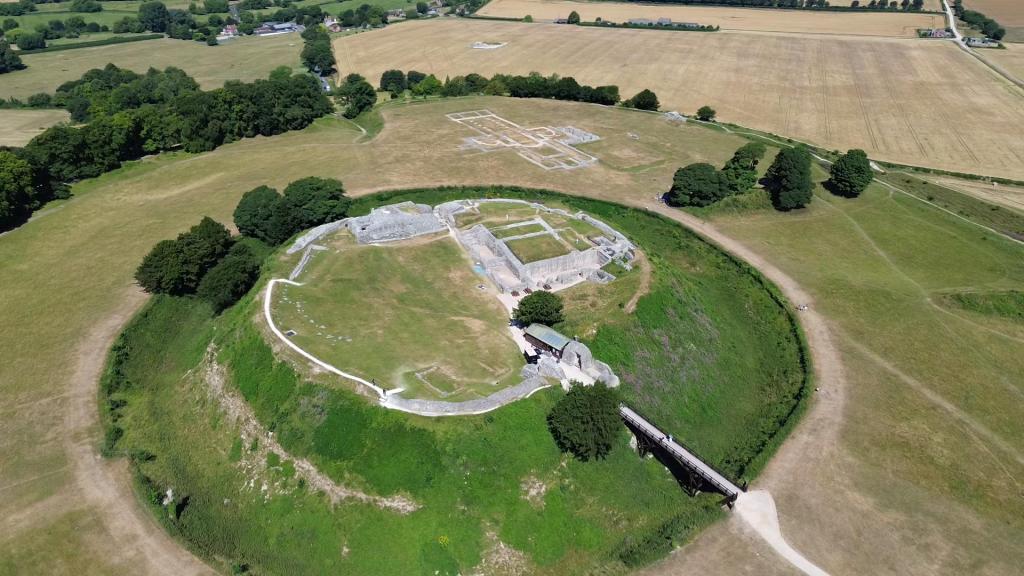
Old Sarum stands not as a ruin, but as the ghost of a city. Unlike many historical sites that preserve a single era, this layered hillfort in Wiltshire tells a much longer story, spanning millennia from the Iron Age to the modern day. Today, as you walk across the empty, grassy fields, you are treading over the foundations of what was once a thriving medieval center, a place where royal power and religious devotion clashed on a windswept hilltop.
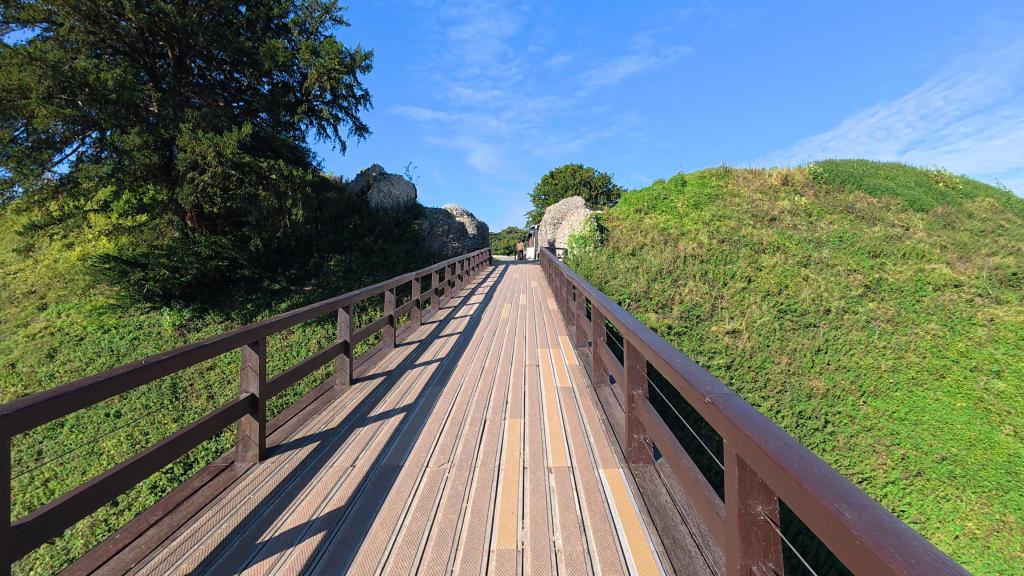
The story begins long before the Normans. As early as 400 BC, the site was a strategic Iron Age hillfort, its massive concentric rings providing natural defense for local tribes. After the Roman conquest, the site—known as Sorviodunum—became a key junction on the road network. Its high elevation offered unmatched views, ensuring its importance for centuries. Following the Romans, the Saxons occupied the fort, establishing a significant borough and even a mint, showing the site’s enduring value as a seat of authority.
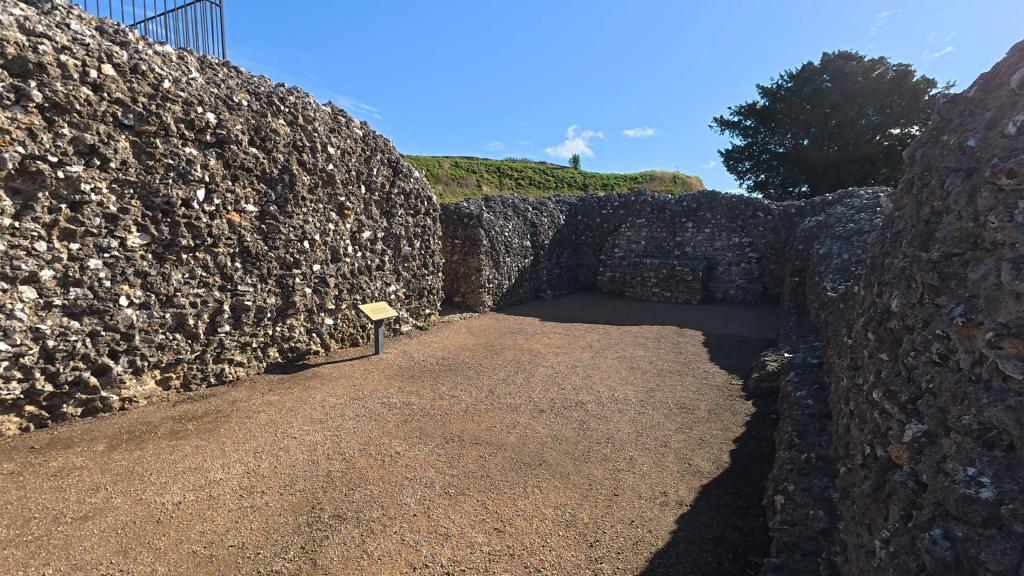
Old Sarum reached its peak after 1066. William the Conqueror chose this spot for a formidable motte-and-bailey castle, and in 1086, he famously gathered his nobles here to receive their oaths of allegiance and witness the completion of the Domesday Book. This coexistence of a powerful castle and a grand cathedral, built by Bishop Osmund, made Old Sarum a dynamic center of both military and religious authority. However, life on the hill was difficult; it was bitterly cold, exposed, and lacked a reliable water source.
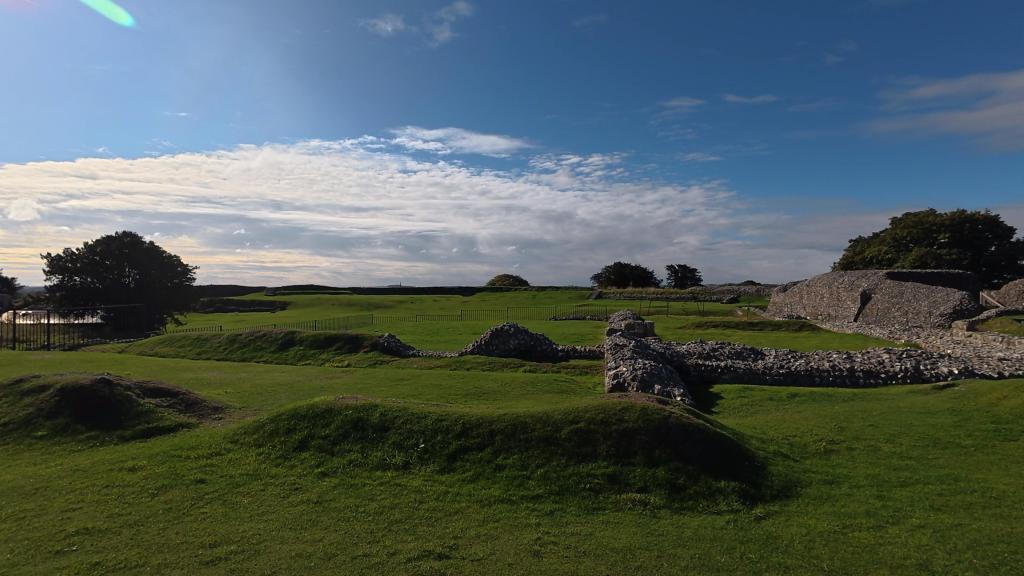
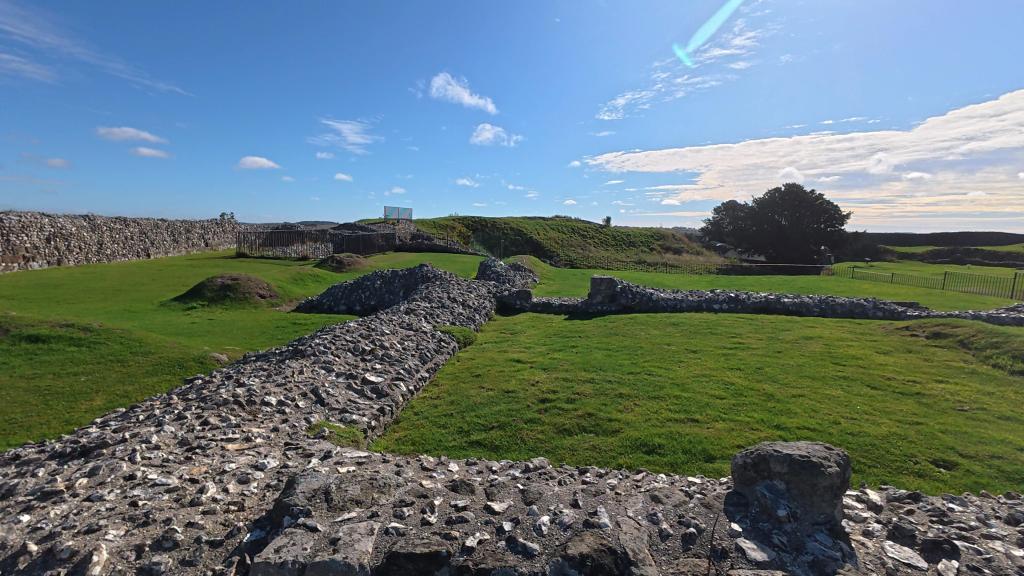
The final straw came from constant friction between the soldiers and the clergy. These tensions, combined with the practical difficulties of the hilltop, led Bishop Richard Poore to move the cathedral to the valley below in 1220. This new settlement grew into the city of Salisbury, while Old Sarum was slowly dismantled, its stones carted away to build its modern counterpart. By 1514, the castle was officially abandoned, leaving behind only the “ghosts” of its streets in the form of foundational outlines.
One of Old Sarum’s most fascinating legacies is its life as a “rotten borough.” For centuries after it was deserted, the site retained the right to elect two Members of Parliament. With no resident voters, a few privileged landowners (including the Pitt family) controlled the seats, leading to the famous description of the borough as “a wall with two niches.” This undemocratic system was finally abolished by the Reform Act of 1832, marking the official end of Old Sarum’s long and strange political career.
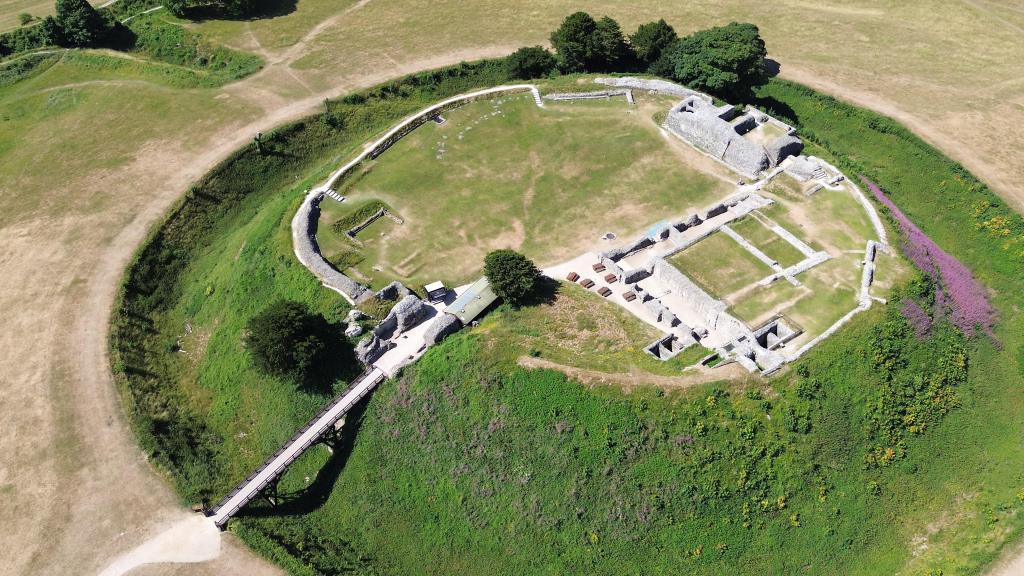
In local folklore, the move to Salisbury is captured by the legend of an archer who shot an arrow from the hill to mark the new cathedral’s site; the arrow reportedly hit a deer that ran to the spot where Salisbury Cathedral stands today. Other tales suggest that on moonlit nights, a ghostly procession of monks and a noblewoman on a bay horse can be seen riding along the ramparts. Today, with over 2,000 years of history beneath your feet, Old Sarum remains a favorite spot for walkers to take in unrivaled views across the Wiltshire countryside.
If you liked the blog please hit that like button, watch the full video below and consider subscribing if you haven’t already.
Till Next Time!
 Pinned on Places
Leave a comment