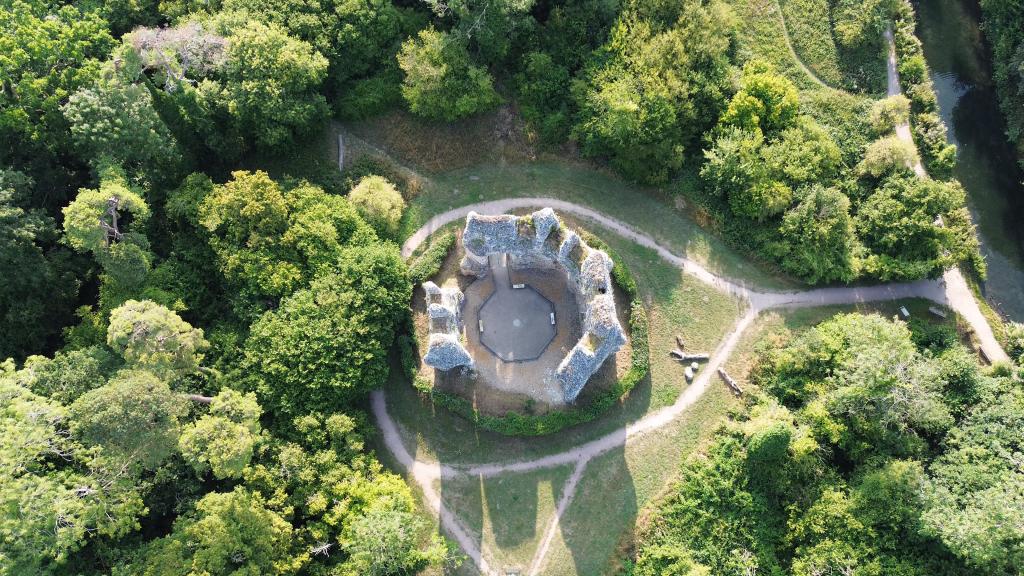
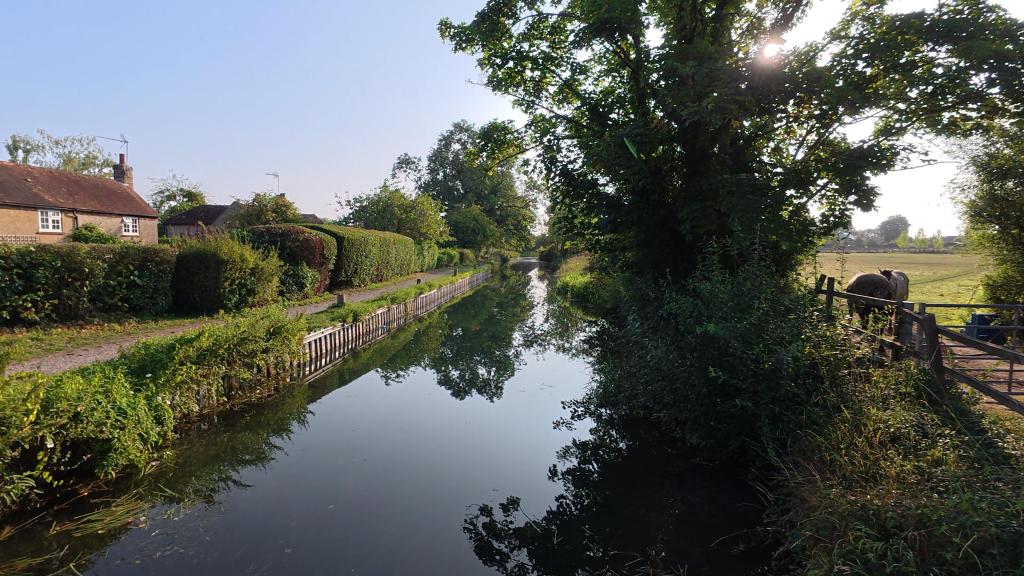
In this week’s post, we’re stepping off the well-trodden paths of grand cathedrals to explore a more secluded, yet incredibly significant, historical site: Odiham Castle in Hampshire. Often referred to as “King John’s Castle,” these picturesque ruins hold centuries of stories, from royal intrigue to whispers of lingering spirits. Getting to the castle is half the fun; it is reached via a wonderful walk along the Basingstoke Canal towpath, passing horses, ducks, and vibrant aquatic plants.
Odiham was one of only three royal castles built during King John’s 17-year reign. Its location was no accident, sitting conveniently between his strongholds at Winchester and Windsor. Originally designed as a grand hunting lodge reflecting John’s passion for the chase, it cost over £1,000—an astronomical sum for the early 13th century. Its unique octagonal keep was a rare and innovative design for the period, marking it as a modern and formidable structure.
Despite its leisure origins, the castle quickly found itself on the front lines of history. In 1216, during the First Barons’ War, a tiny royal garrison of just 13 men bravely held out against a massive French army for two weeks. Their tenacity was so remarkable that when they finally surrendered, they were allowed to depart with their freedom and horses—a rare honor. This feat is recorded as one of the most significant battlefields in the story of the fight for the Magna Carta.
The castle later became a significant center of power under Eleanor of Pembrokeshire and her husband, the famous rebel Simon de Montfort. In the 14th century, it took on a different role as a royal prison. King David II of Scotland was held here for 11 years following his capture at the Battle of Neville’s Cross. Interestingly, his captivity was quite comfortable; he maintained his own household and was even allowed a minstrel for entertainment.
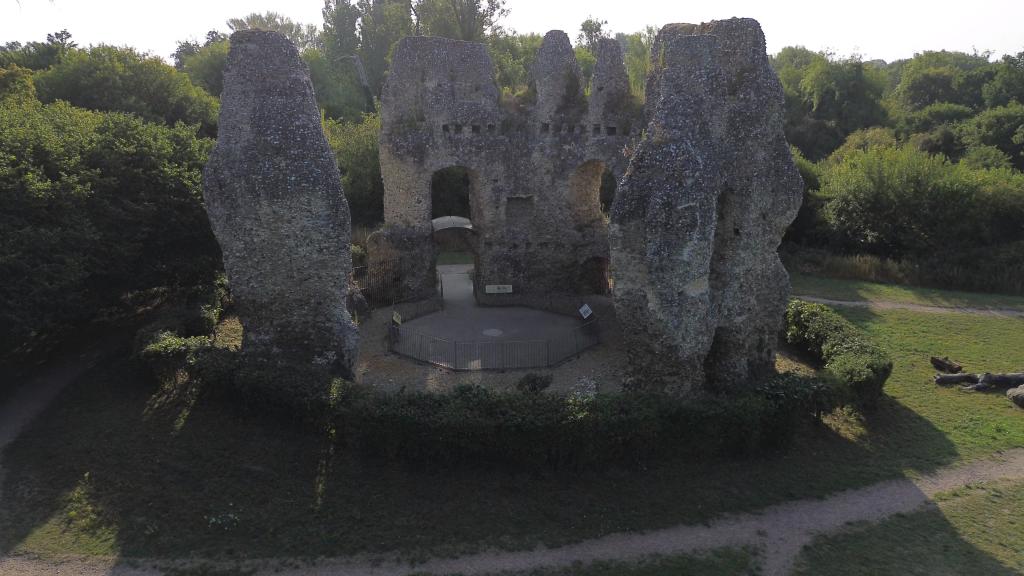
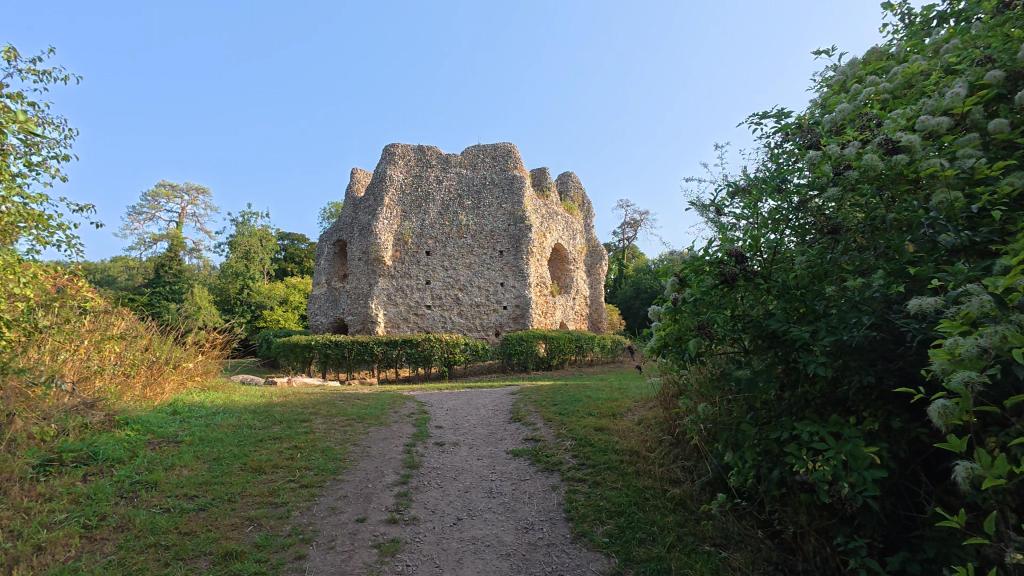
Today, the keep stands in a ruinous state, but enough remains to show it once stood three stories high. You can still see the joist holes that supported the timber floors radiating from a central column. In the center of the ruins lies a circular memorial commemorating the 800th anniversary of the Magna Carta, which King John issued an Anglo-Norman translation of from this very site in June 1215.
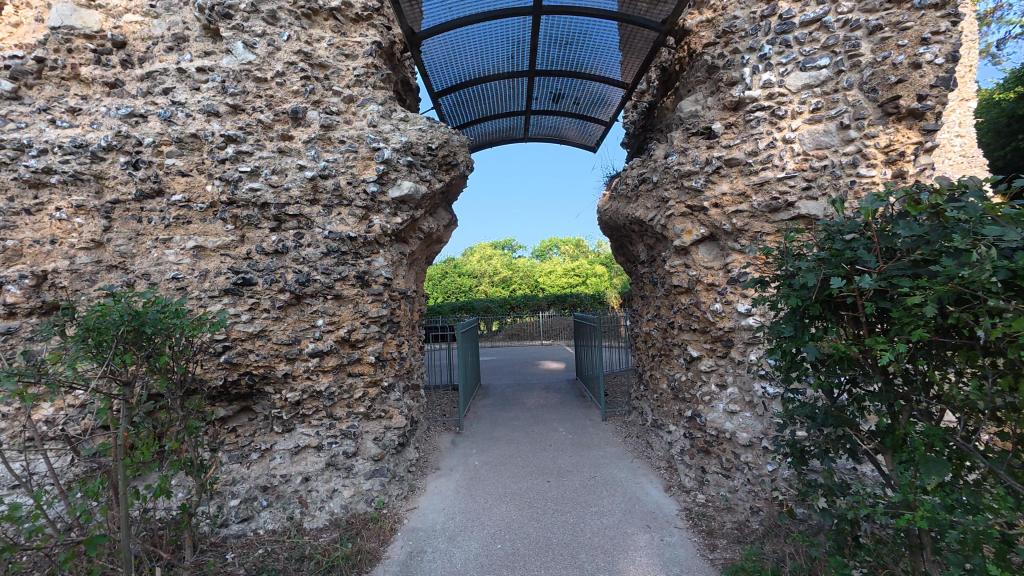
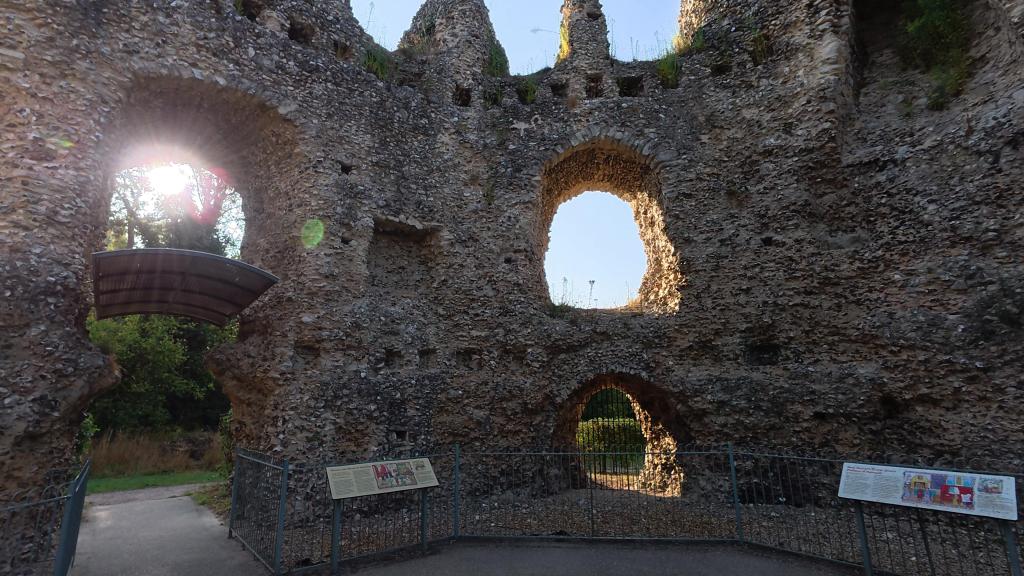
With such a dramatic past, it is no surprise that supernatural tales cling to the stones. Many visitors report hearing an “ancient song” accompanied by the notes of a lute, often attributed to the spectral minstrel who once entertained the captive Scottish king. Others speak of a phantom guard still maintaining his watch over the flint walls. By 1605, the castle was already a ruin, its dressed stone stripped away by locals, leaving the rugged flint core we see today.
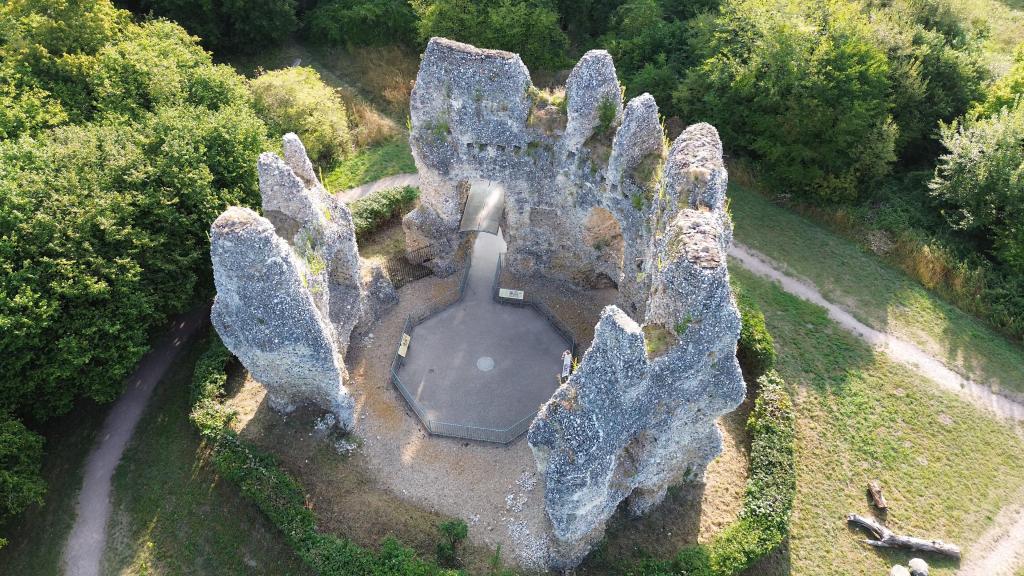
Odiham Castle is a unique “pinned-on” place, offering a quiet, reflective journey into a once-heated past. Walking along the peaceful canal to reach these ruins, you aren’t just visiting a site; you’re stepping into a landscape where the echoes of kings and ancient songs still resonate.
If you liked the blog please hit that like button, watch the full video below and consider subscribing if you haven’t already.
Till Next Time!
 Pinned on Places
Leave a comment