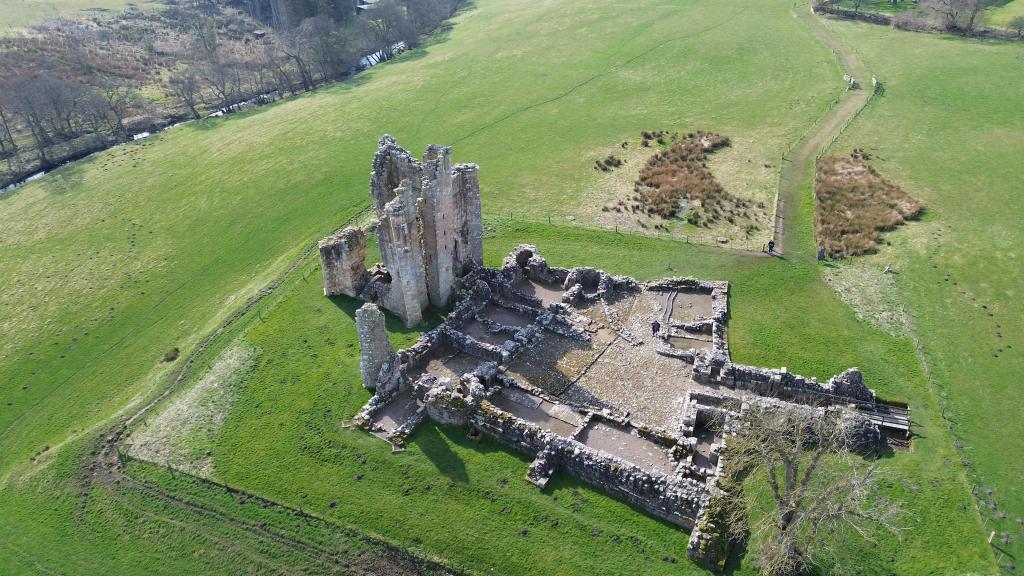
In this week’s post, we’re visiting a hidden gem tucked away in the tranquil Northumberland countryside. Often overlooked in favor of its grander neighbors, Edlingham Castle holds a fascinating story of a domestic dwelling that gradually transformed into a fortified stronghold. Known today as the “leaning tower of Northumberland,” this site reflects centuries of border raids and the changing fortunes of its inhabitants.
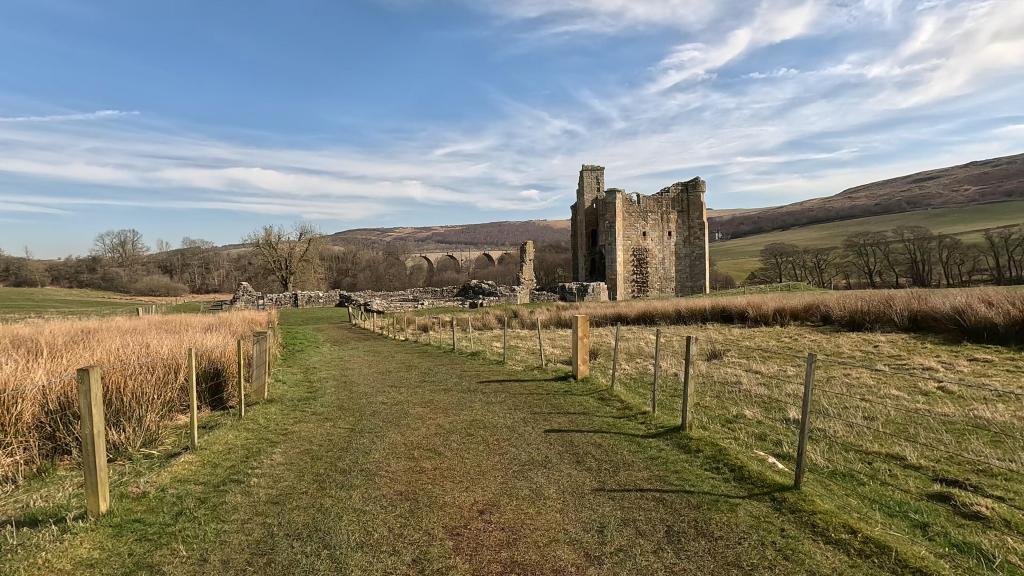
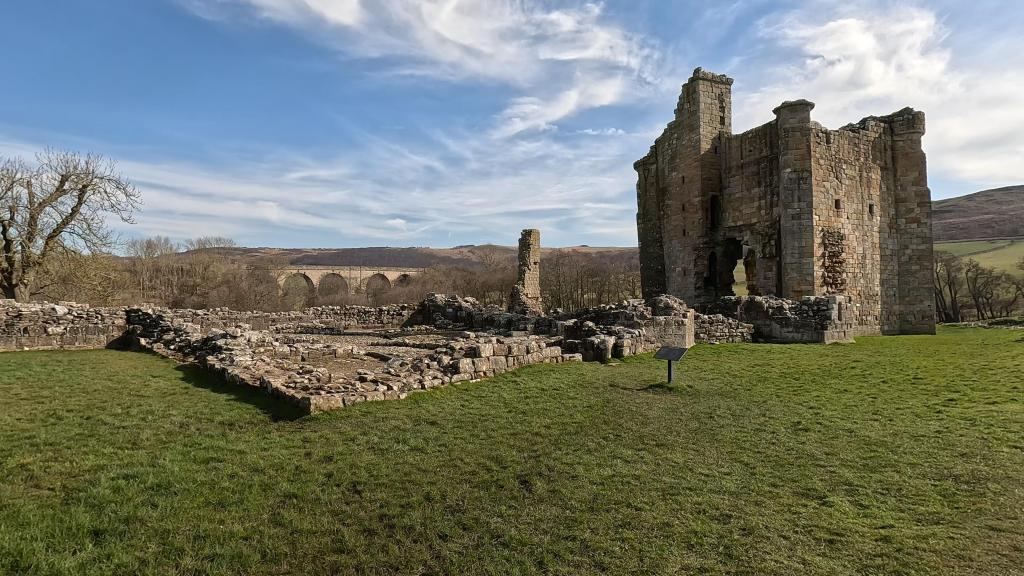
The origins of Edlingham are rooted in the 12th century, but its core is a substantial rectangular tower house dating from the late 13th or early 14th century. This keep was a direct response to the escalating “Wars of Independence” and the brutal era of the Border Reivers. Over the centuries, the castle was progressively expanded; in 1396, Sir William de Felton was granted a license to crenellate, leading to the addition of a gatehouse and curtain wall.
An excellent starting point for any visit is the barbican, which formed the main entrance. As you cross the wooden footbridge, the castle’s structural issues become immediately apparent. The solar tower at the far end has a massive vertical crack, leaving a substantial chunk of the building leaning at an angle that looks totally unsustainable. Remarkably, the tower has remained in this precarious state since the early 1600s, with supporting wires only added in the 1980s to prevent further movement.
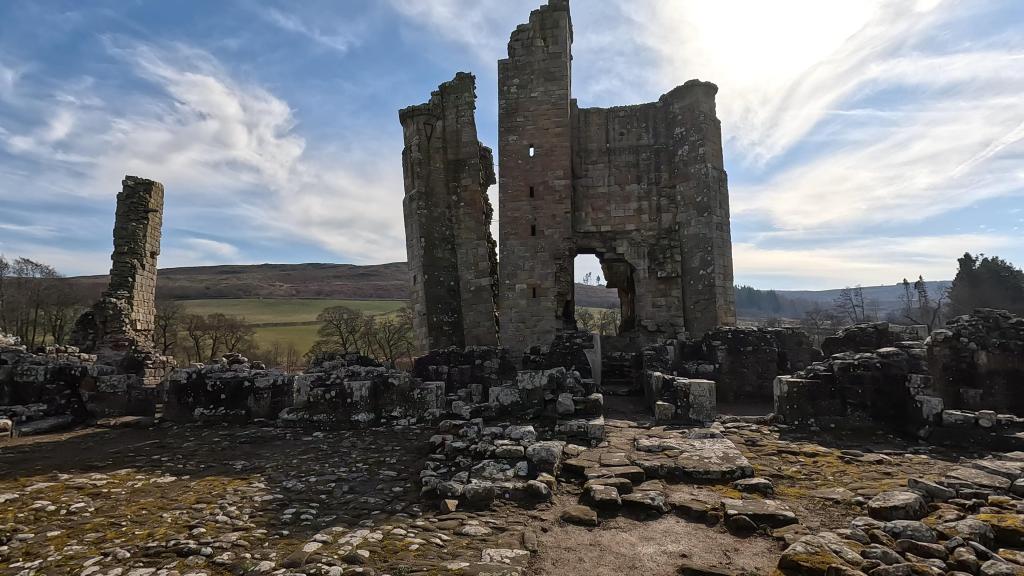
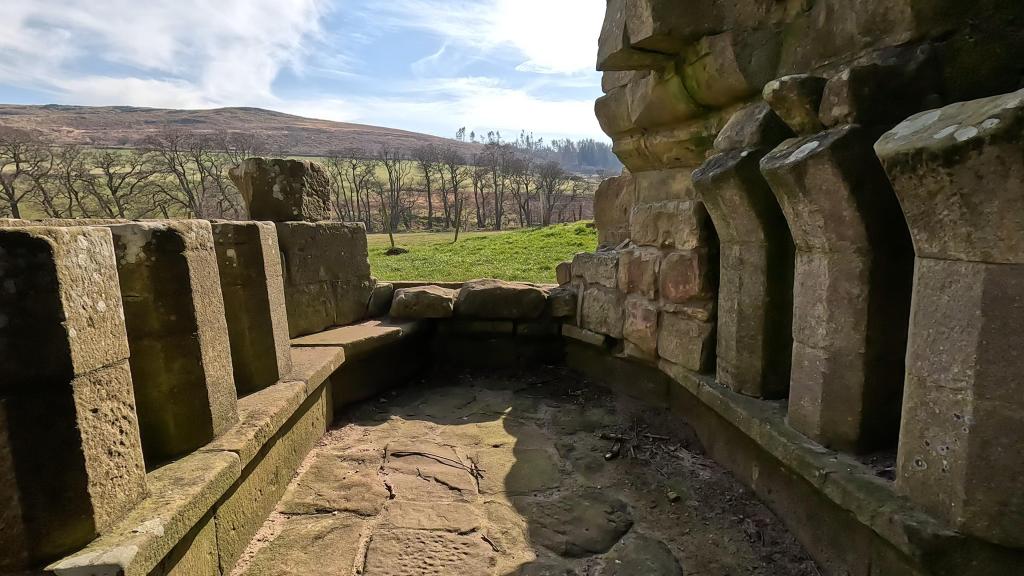
Life within these walls during the Reivers period was a far cry from romantic notions. The primary concern was survival. Livestock would be brought into the secure courtyard at night while inhabitants huddled within the thick walls of the tower, listening for the sounds of approaching raiders. The solar tower itself—once the private living quarters of the lord—still displays high-quality workmanship, including carved heads and decorative masonry that hint at the status of the families who once lived here.
The surrounding landscape also features the Church of St. John the Baptist, a beautiful medieval church that predates the castle. This Saxon-era building, dating to 1050, served as a spiritual sanctuary amidst the insecurity of the border raids. Inside, you can find the tomb of Sir William de Felton and admire the stunning stained glass windows installed during a 1902 restoration.
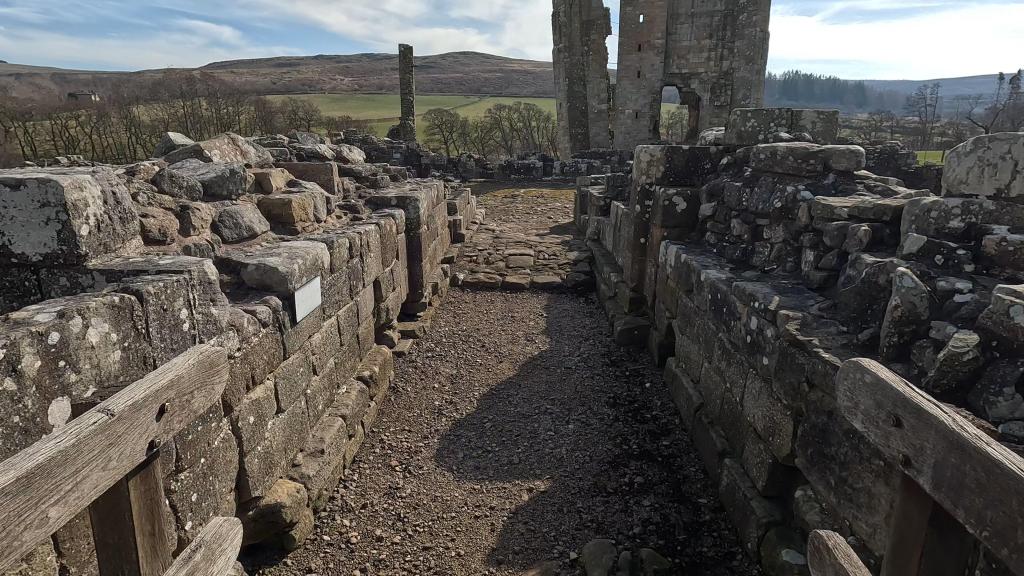

By the 17th century, the Union of the Crowns brought a fragile peace, and the need for such fortifications diminished. Edlingham fell into disrepair, but not before it played a role in the 1683 witch trial of Margaret Stothard. Witnesses at the castle claimed to see unearthly visions of Margaret, with one man testifying that a weight fell upon his heart and gave “a cry like a cat.” While Margaret was eventually released by the judge, local tales suggest the village may have taken matters into their own hands.
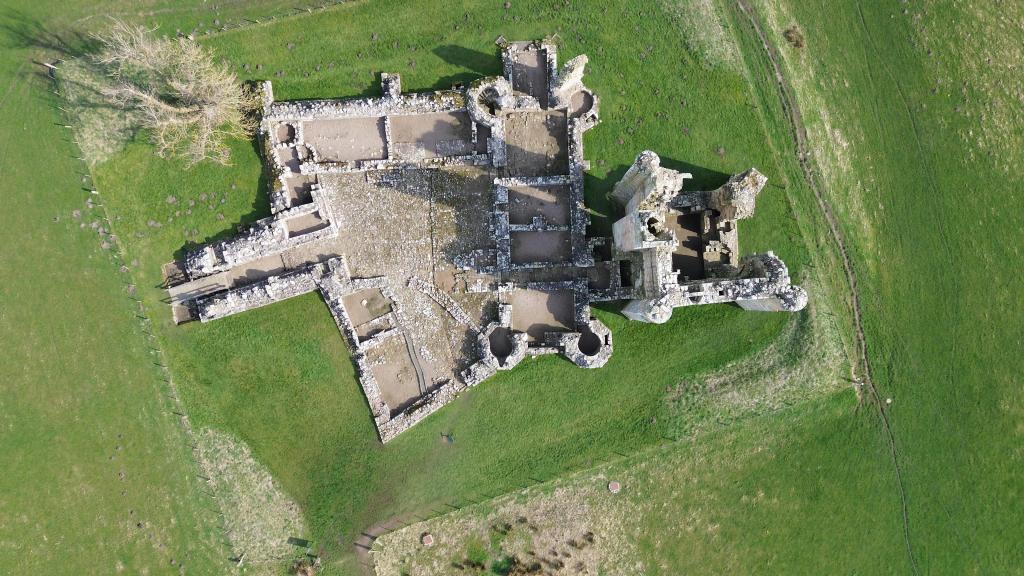
Today, Edlingham Castle is a picturesque and peaceful ruin that rewards careful exploration. Whether you are interested in the evolution of medieval defenses or the ghostly legends of the “Witch of Edlingham,” this site offers a unique window into Northumberland’s turbulent past.
If you liked the blog please hit that like button, watch the full video below and consider subscribing if you haven’t already.
Till Next Time!
 Pinned on Places
Leave a comment