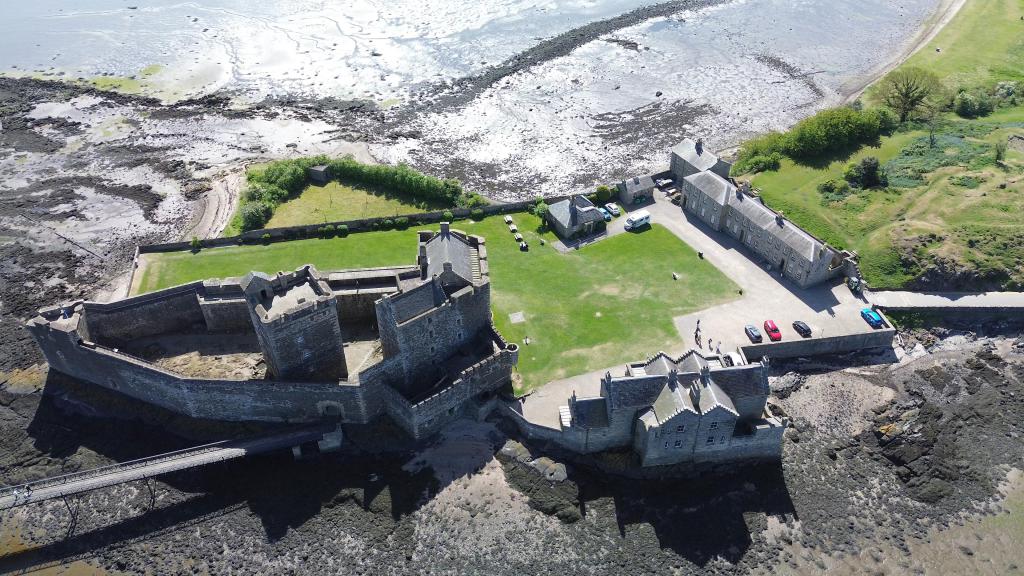
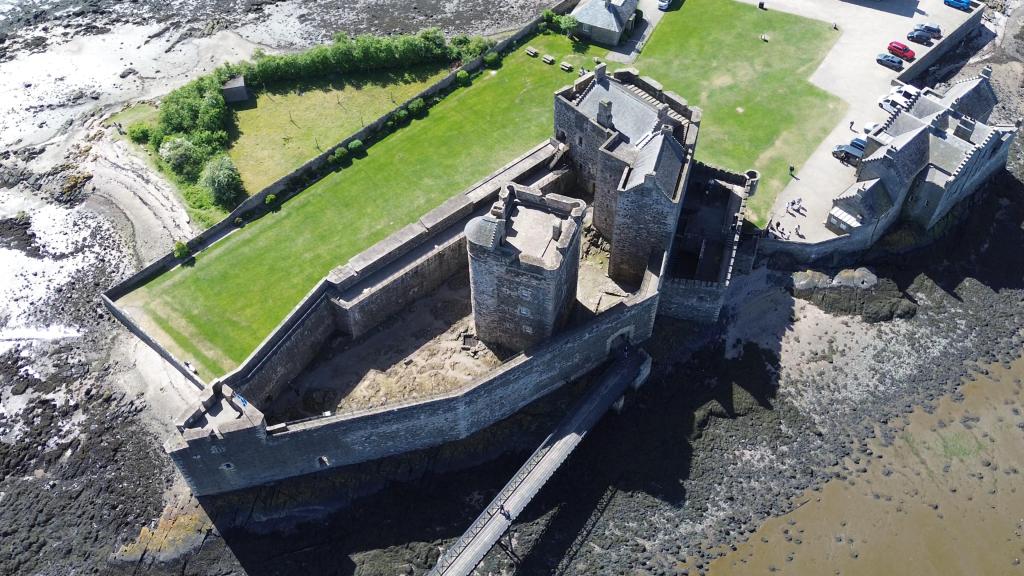
In this week’s post, we’re finishing up our Scotland series with a splash. Blackness Castle emerges from the waters of the Firth of Forth with an almost uncanny resemblance to a mighty stone warship anchored permanently to the shore.
Its unique, elongated shape and three distinct towers give it an unmistakable maritime character, earning it the affectionate nickname “the ship that never sailed.” You can still feel the power of its past occupants, so step aboard and join us for a walk around Blackness Castle.
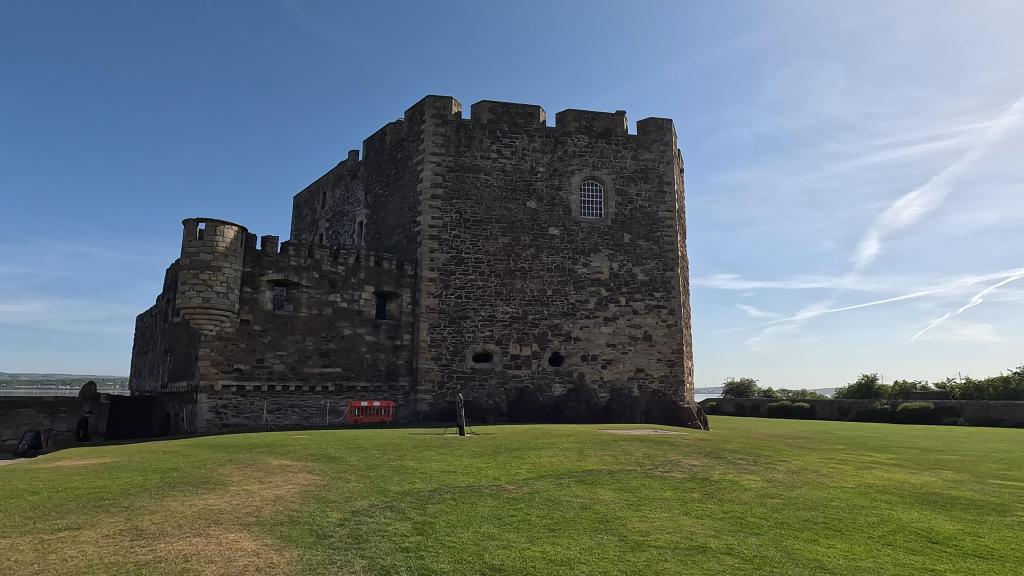
Built in the 15th century by Sir George Crichton, one of Scotland’s most powerful noblemen, Blackness was never intended as a cozy domestic residence. Its primary function was to guard the vital sea lanes of the Firth of Forth and serve as a formidable royal stronghold. Its position meant it could control all maritime traffic to Stirling, Scotland’s ancient capital, and deny access to the wealthy burghs further upriver.
Much of what you see today dates back to a major reconstruction between 1537 and 1543 under King James V, which transformed the castle into one of the strongest artillery fortifications of its age. The courtyard is formed largely of natural rock, still extremely uneven after six centuries of wear. The castle’s shape mimics a ship pointing into the river: the South Tower is known as the Stern, the North Tower as the Stem, and the central residential tower as the Main Mast.
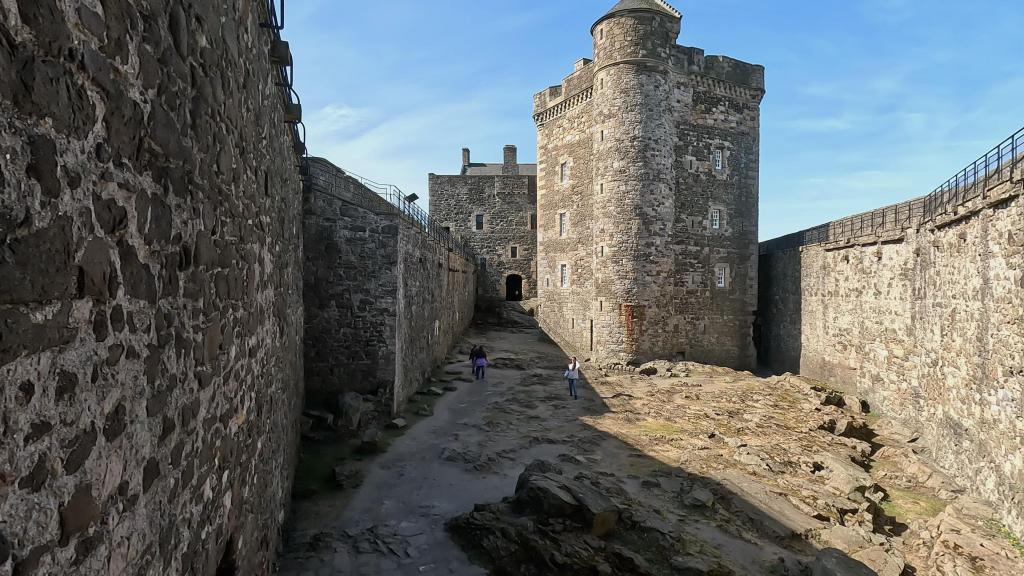
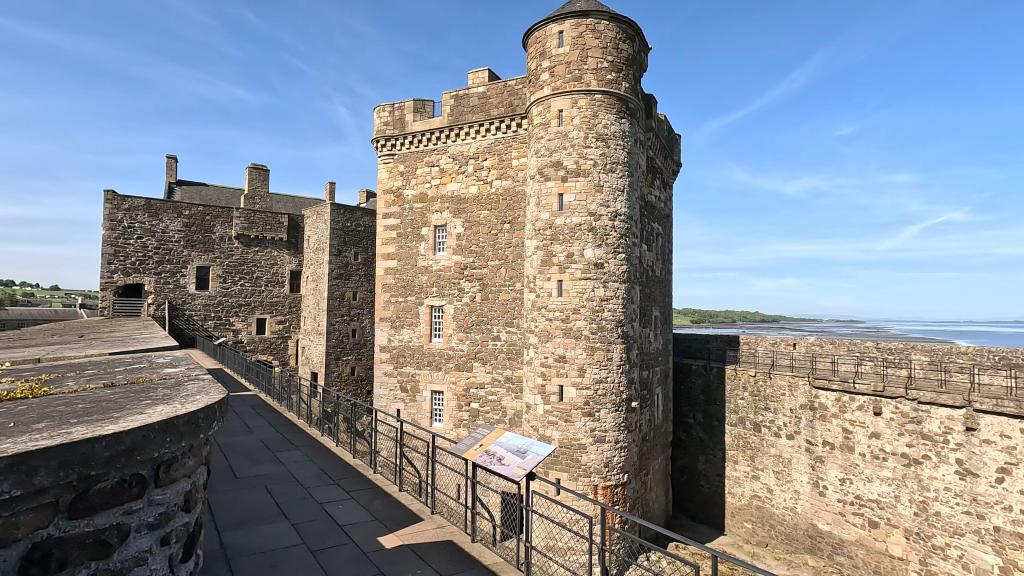
Walking along the wall walk provides an incredible overall impression of the castle and picture-perfect views over the Firth of Forth. However, any lingering homeliness has long been overwritten, for one very good reason: for most of its existence, it has been a prison.
While high-status “celebrity” captives like Cardinal David Beaton enjoyed luxurious accommodations in the Mast Tower—complete with their own servants, silver, and furniture—lower-class prisoners faced grim realities. They were confined to the pit prison in the Stem Tower, a dark, unsanitary space that flooded with seawater at high tide.
As warfare evolved, Blackness transformed into a powerful artillery fort with walls strengthened to withstand cannon fire. It played a critical role during the Wars of the Three Kingdoms, holding out against Oliver Cromwell’s forces, and later served as an armaments depot and a base during World War I. This enduring defensive capability is a testament to its architectural ingenuity, featuring a “key” shape that allowed for effective crossfire against attackers.
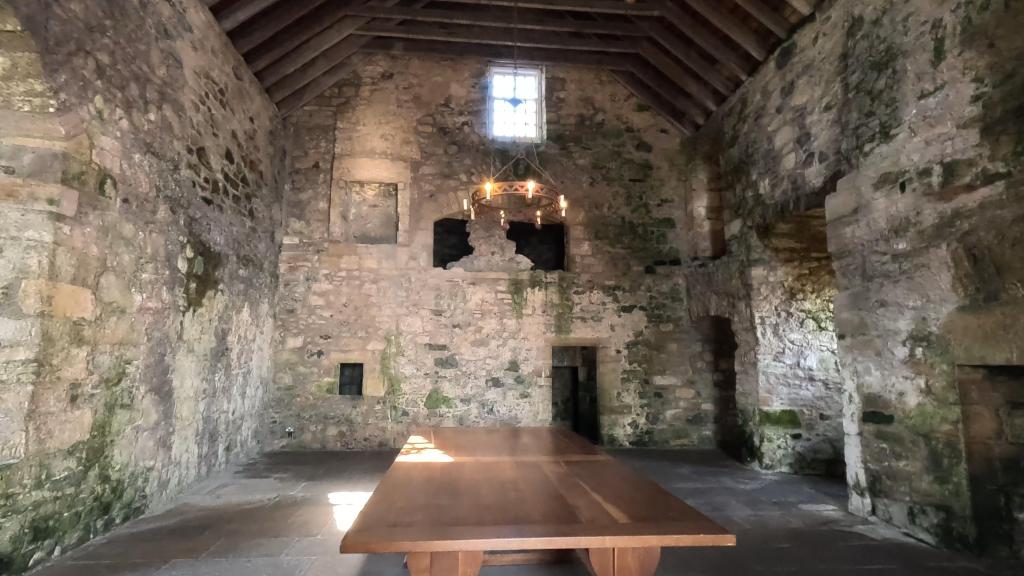
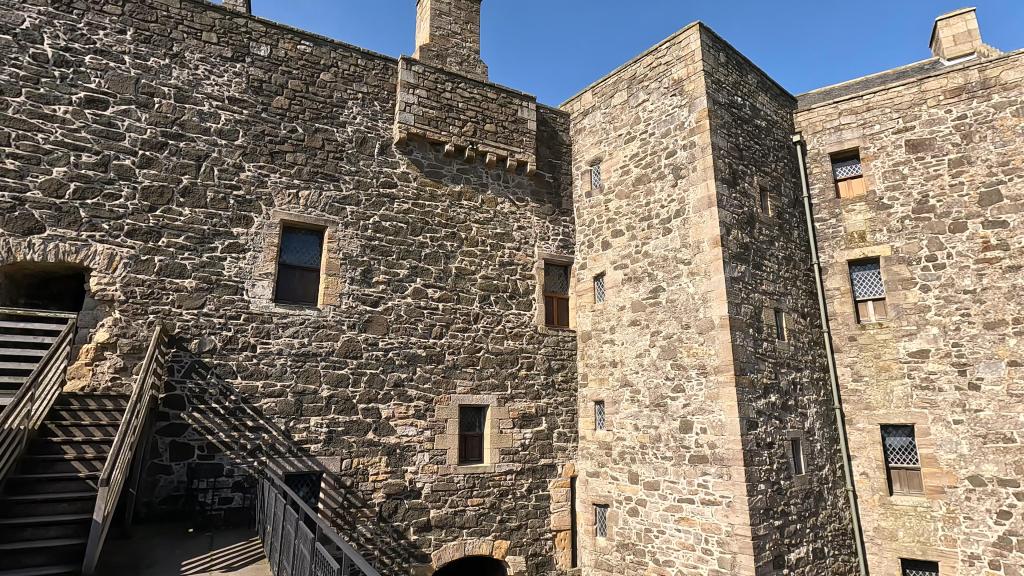
Inside the South Tower, the most impressive room is the Great Hall. Created during the 16th-century alterations, it served as the venue for banquets and social events. You can imagine the colorful wall hangings, tables piled with food, and the music of oboe players who were once paid to entertain James IV during his stay in 1506. Today, massive iron chandeliers give a hint of the room’s former ambience.
Modern audiences may recognize the castle as a popular filming location. It famously stood in for Fort William and Black Jack Randall’s headquarters in the first series of Outlander. The courtyard was the backdrop for the pivotal scene where Jamie Fraser is punished, a brutal reminder of the castle’s dark history.
It is also considered one of Scotland’s most eerie spots, with legends of a phantom armored knight guarding the prison tower and mysterious dragging noises heard within the walls.
If you liked the blog please hit that like button, watch the full video below and consider subscribing if you haven’t already.
Till Next Time!
 Pinned on Places
Leave a comment