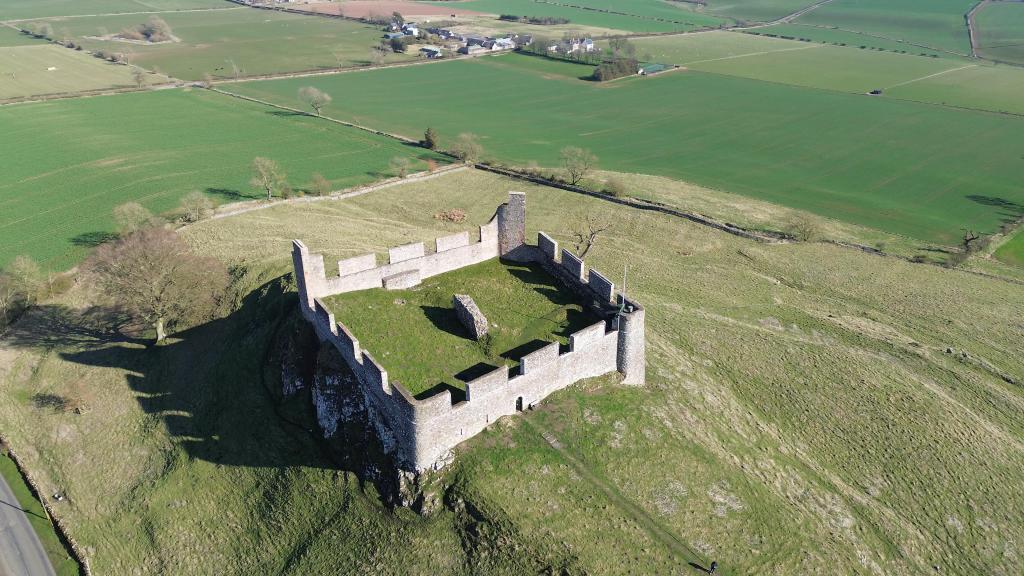
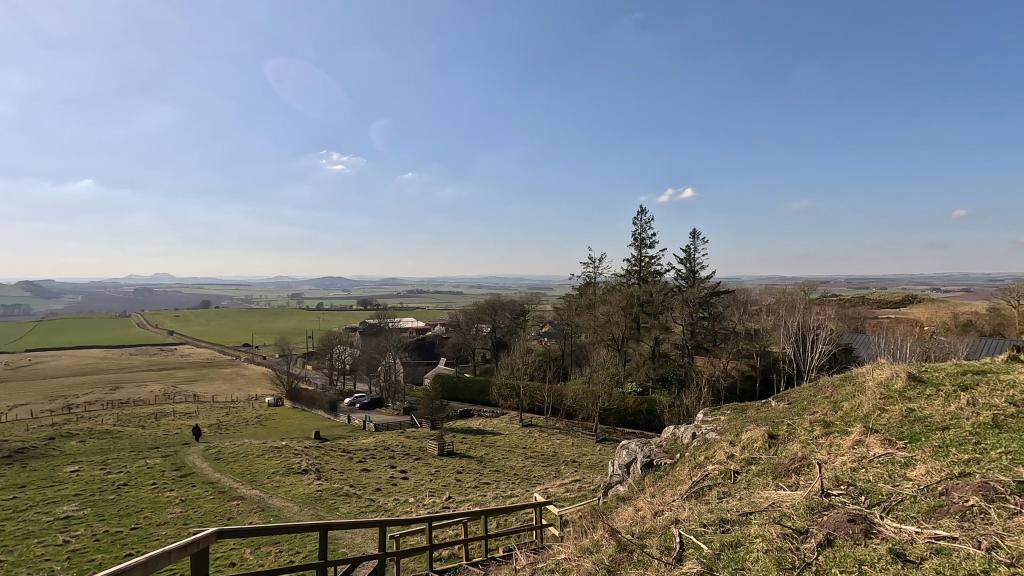
In this week’s post, we visit Hume Castle—an impressive architectural oddity. It stands three miles south of Greenlaw on the top of a rocky outcrop that provides incredible views in all directions. It is difficult to imagine a more dominant position for controlling a broad swathe of the Borders. Yet, even from a distance, it is clear that Hume looks like no other castle in Scotland.
The name Hume originates from the Old English word Hôm, describing a place on a hilly outcrop. While the barony and village retained the “Home” spelling until the late 18th century, many family members eventually switched to “Hume” to ensure the pronunciation remained consistent for those living away from the Borders.
Hume Castle was arguably the major defensive site in the Eastern section of the Borders, often called the Merse. Situated 750 feet above sea level, its strategic value was so high that no victorious army could afford to let it fall back into enemy hands; consequently, it was frequently burned or destroyed throughout the centuries.
The lands were first granted as a dowry to Ada, daughter of the Earl of Dunbar, in 1214. Through her third marriage to William, son of Patrick of Greenlaw, the Home/Hume family line began. The castle itself was constructed in a rectangular courtyard plan—a configuration more common in the Highlands than in southern Scotland. Successive Home Lords served as Wardens of the Eastern Marches, policing the Scottish side of the border less than five miles away.
The castle’s history is filled with dramatic turns. In 1460, King James II used Hume as a base while besieging Roxburgh Castle. During the operation, one of his imported cannons, “the Lion,” exploded and killed him. Later, following the Battle of Flodden in 1513, legend says the 3rd Lord Home hid the body of King James IV in a cave at Hume Castle. Interestingly, a skeleton with a chain around its waist was found in the medieval well during the 19th century, though the bones were tragically lost before they could be identified.
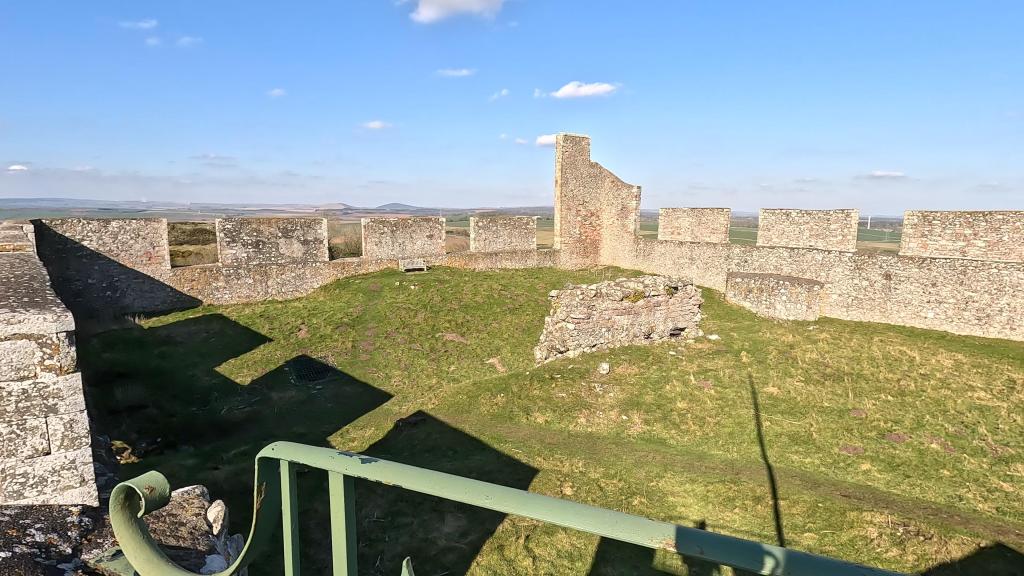
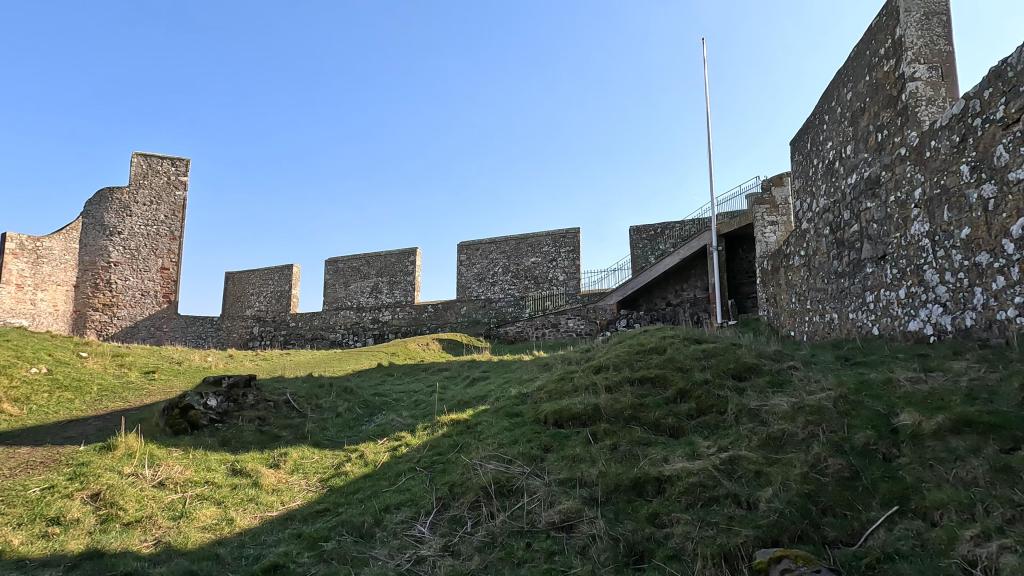
The fortress was a flashpoint during the “Rough Wooing.” In 1547, after the Battle of Pinkie, the English Duke of Somerset captured the castle by threatening to execute the captured heir, Alexander, unless his mother surrendered. The English spent £700 strengthening the defenses, only for the freed Alexander to recapture the castle a year later and slaughter the English garrison in revenge.
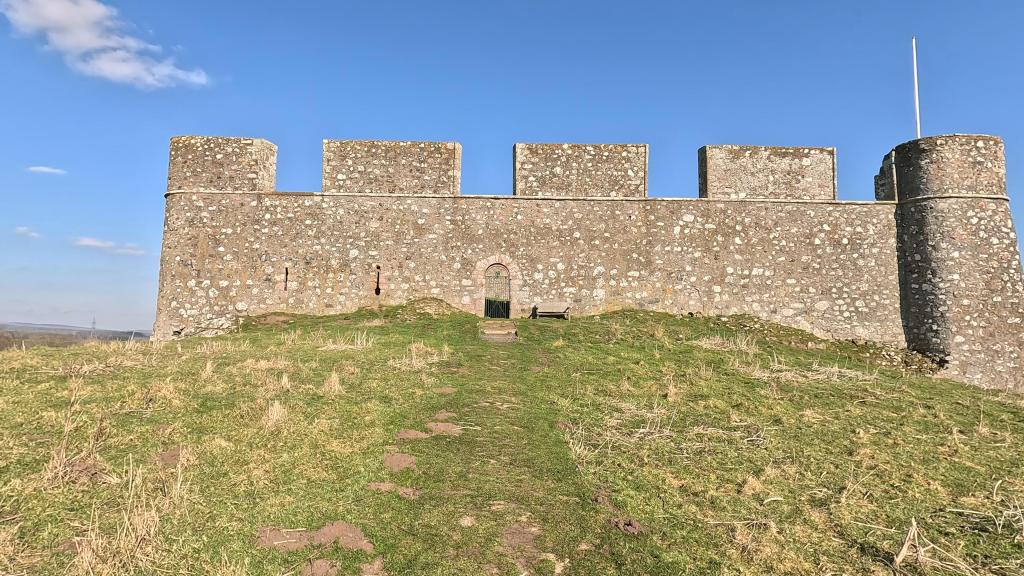
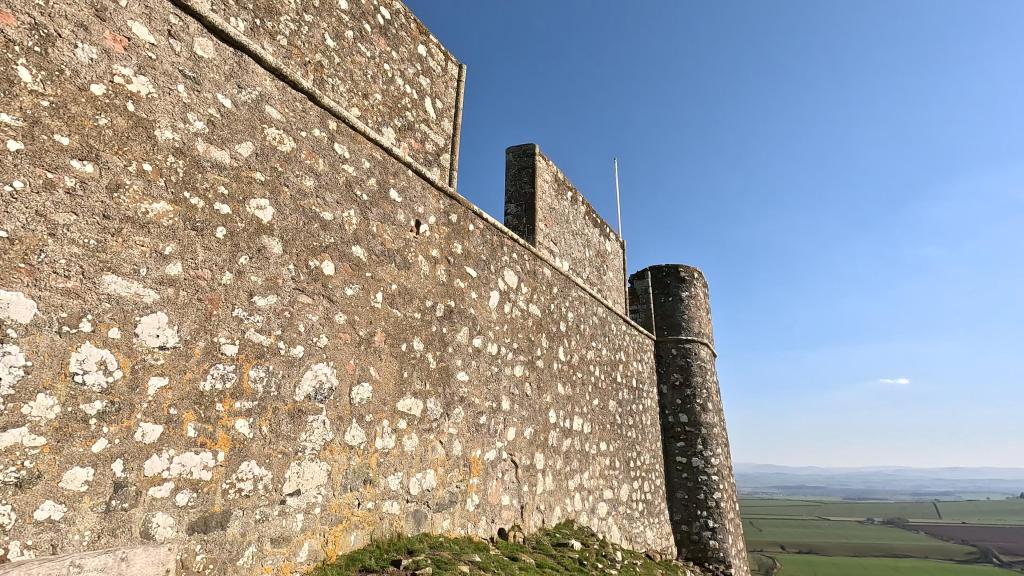
Hume Castle eventually fell to Oliver Cromwell’s forces in the 17th century as part of his campaign to destroy Border fortresses. However, the structure we see today is largely the result of 18th-century romanticism. In 1789, Hugh Hume, the Earl of Marchmont, restored the ruins as a picturesque folly. He built the high curtain wall with exceptionally large crenellations specifically so the castle would be easily visible from his mansion, Marchmont House, eight miles away.
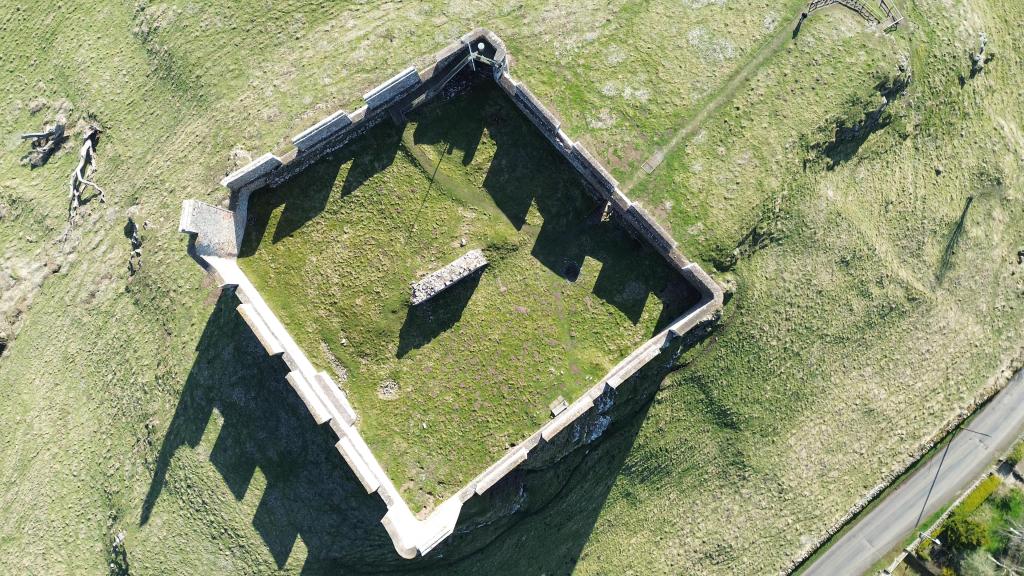
The castle’s final “military” moment came during the Napoleonic Wars in 1804. A charcoal-burner’s fire was mistaken for a beacon signal, leading the Hume garrison to light their own alert. This triggered the “Great Alarm,” causing 3,000 volunteers to assemble across the Borders to fight off a non-existent French invasion. The mistake was later celebrated with a dinner party to toast the speed of the local defense response.
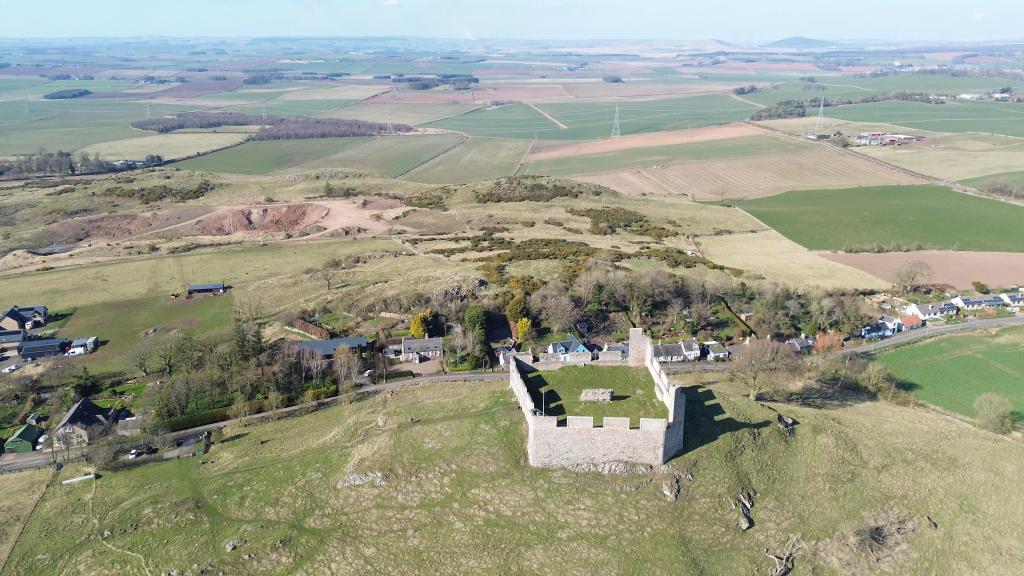
Today, the castle is cared for by the Hume Castle Preservation Trust. It remains a free entry site, offering a fun climb and some of the most spectacular views of the Tweed Valley and the Scottish Lowlands.
If you liked the blog please hit that like button, watch the full video below and consider subscribing if you haven’t already.
Till Next Time!
 Pinned on Places
Leave a comment