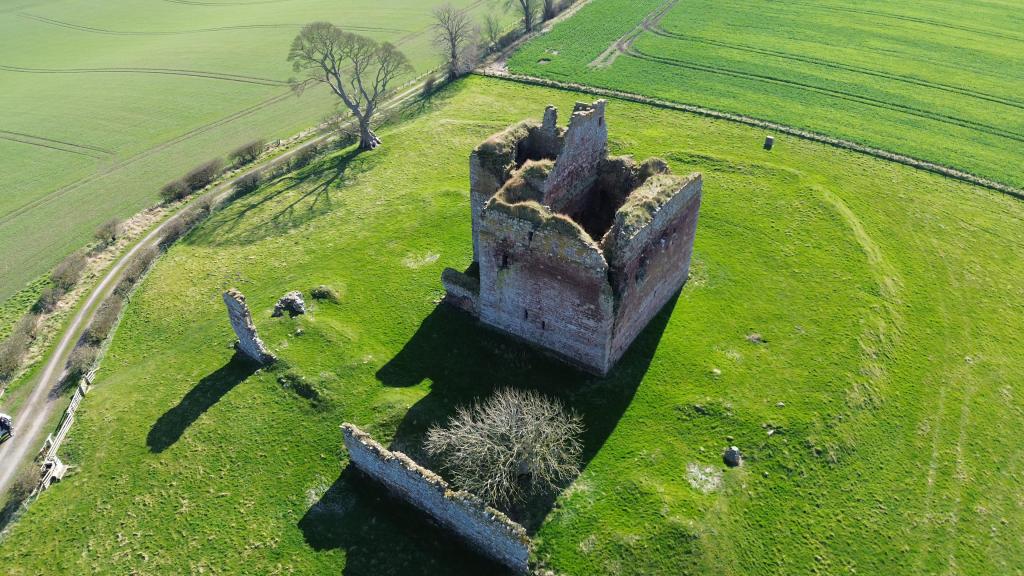
In this week’s post, we’re still in Scotland and loving the chance to visit some of the lesser-known castles dominating the landscape. Back in the 15th and 16th centuries, life along the Anglo-Scottish border was anything but peaceful. Living under the constant threat of invading armies and regular raids from neighbors was a stressful reality. For those with the means, the solution was to build formidable defensive homes—just like the impressive structure of Cessford Castle. Join us as we explore.
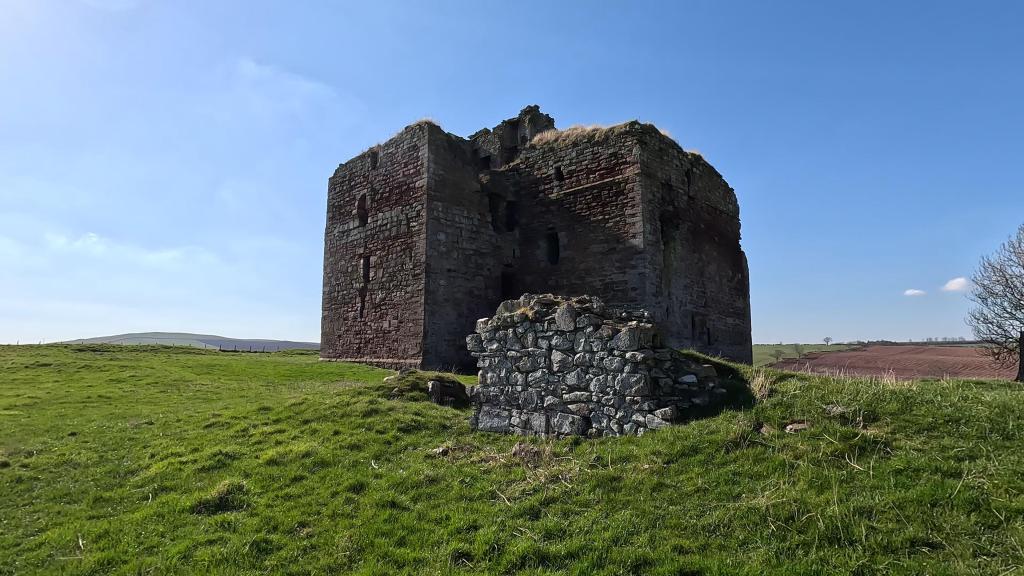
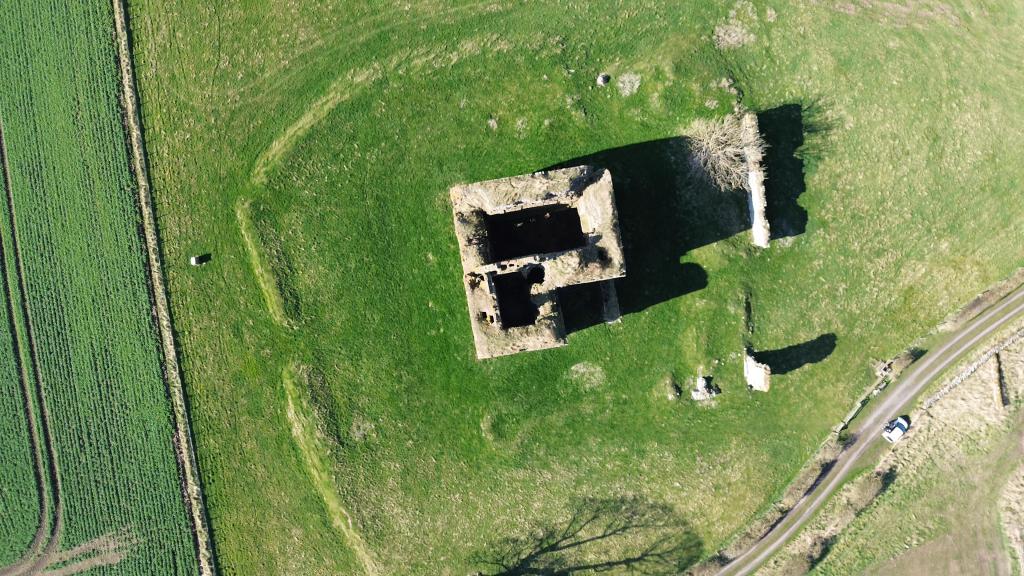
Cessford Castle was built in the 1450s by Andrew Ker. The Kers were a powerful family of notorious Border Reivers, many of whom served as Wardens of the Middle March. In a time when “Reiving”—the stealing of livestock and goods—was a way of life, Cessford was their primary stronghold. Sitting isolated on a hill six miles from Kelso, the castle was once a massive L-plan tower rising three stories in the main block and four in the wing.
The architectural design was focused entirely on survival. The keep featured two vaulted levels that provided storage and a Great Hall, while much of the living accommodation was contained within the wing. This wing comprised six stories, ranging from a grim pit prison at the bottom up through a guardroom, kitchen, and three levels of family chambers. The castle could house a garrison of up to 60 soldiers, most of whom were accommodated in the courtyard surrounded by a protective defensive wall and ditch.
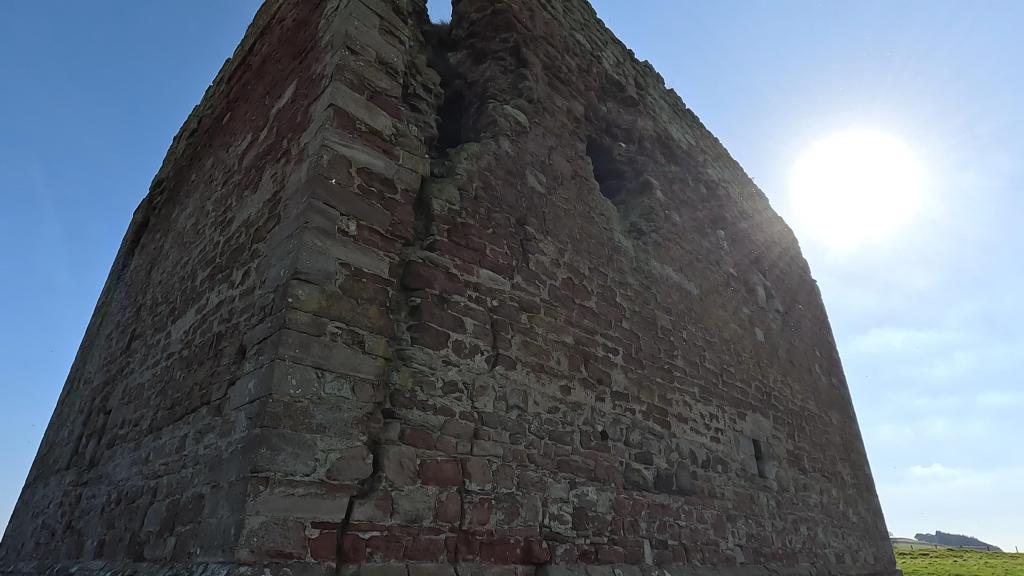
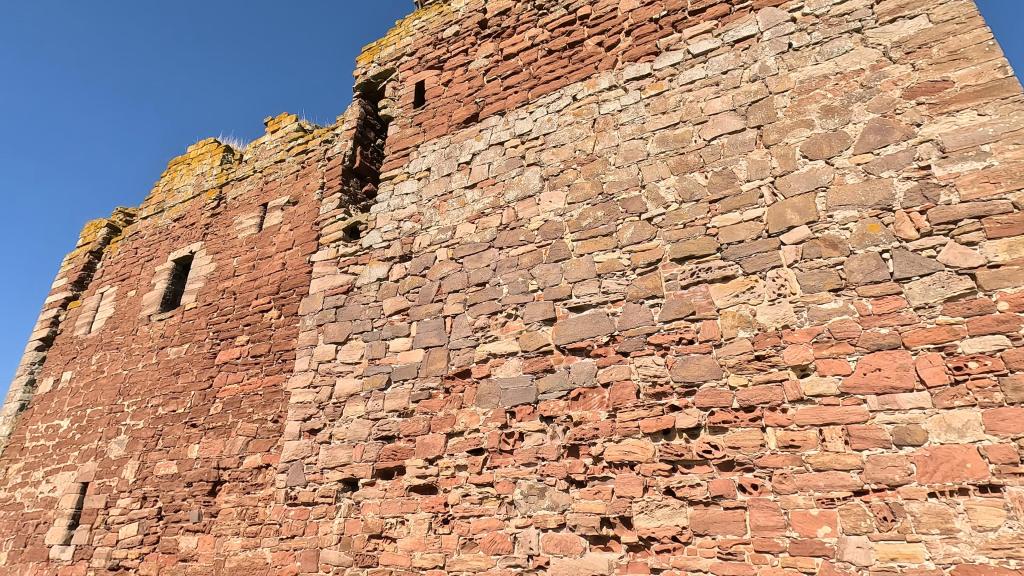
The thickness of the walls is staggering, built specifically to withstand the heavy artillery of the era. This was put to the ultimate test in May 1523. During the absence of its owner, the Earl of Surrey and Lord Dacre besieged the castle with eleven cannons. Surrey himself acknowledged Cessford’s strength, declaring it one of the strongest castles in Scotland, second only to Dunbar and Fast Castle.
The siege was brutal. The English initially struggled as their cannon fire failed to breach the thick masonry. They eventually targeted a blocked-up window, attempting to funnel gunpowder inside for a massive explosion. However, the Scottish defenders thwarted the plan by setting fire to the powder before it could accumulate, burning the attackers in the process. When Sir Andrew Ker eventually returned and saw the superior force arrayed against him, he negotiated a surrender that allowed the defenders to leave with their possessions. To prevent it from being used again, the English commander ordered the castle to be “slighted.”
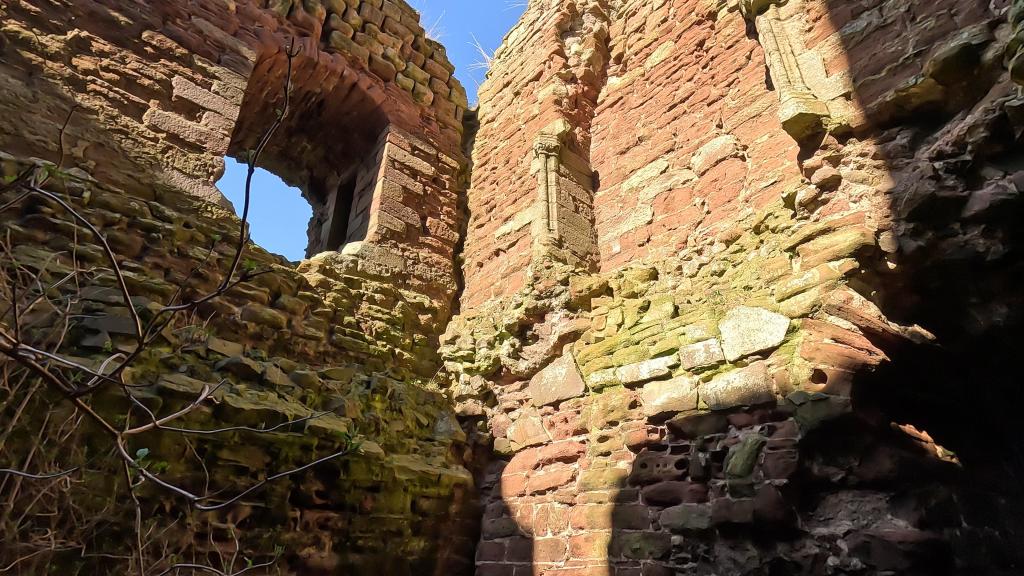
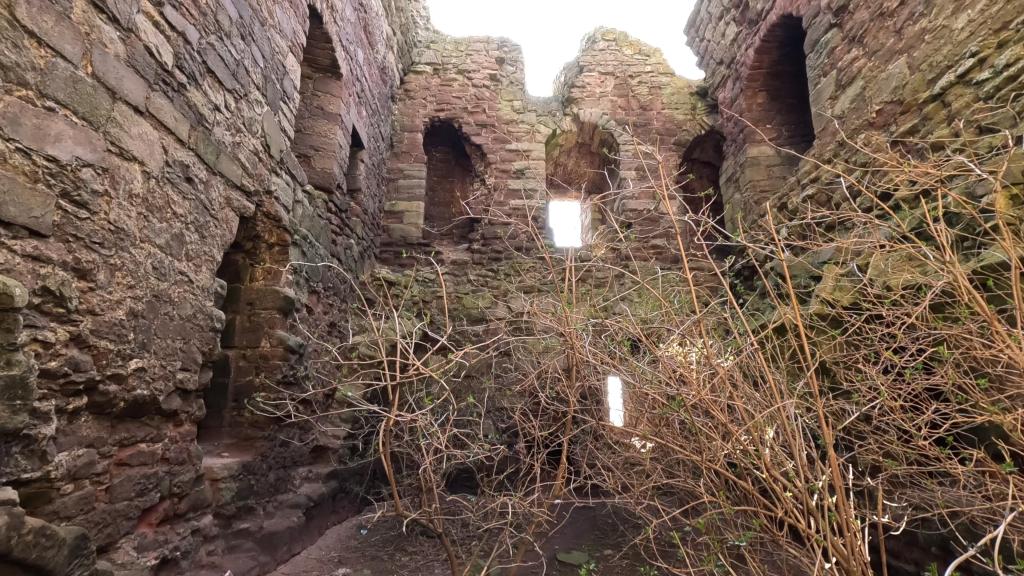
Inside the keep, the atmosphere is heavy with history. While information boards warn against entering due to falling masonry, a careful look from the outset reveals the sheer scale of the ruins. The castle was eventually abandoned around 1650, leaving behind the atmospheric shell we see today.
Today, Cessford Castle is primarily visited by those walking the St Cuthbert’s Way or the Scottish National Trail. It stands as a true remembrance of the Border Reivers—a monument to daring raids and fierce defenses.
If you liked the blog please hit that like button, watch the full video below and consider subscribing if you haven’t already.
Till Next Time!
 Pinned on Places
Leave a comment