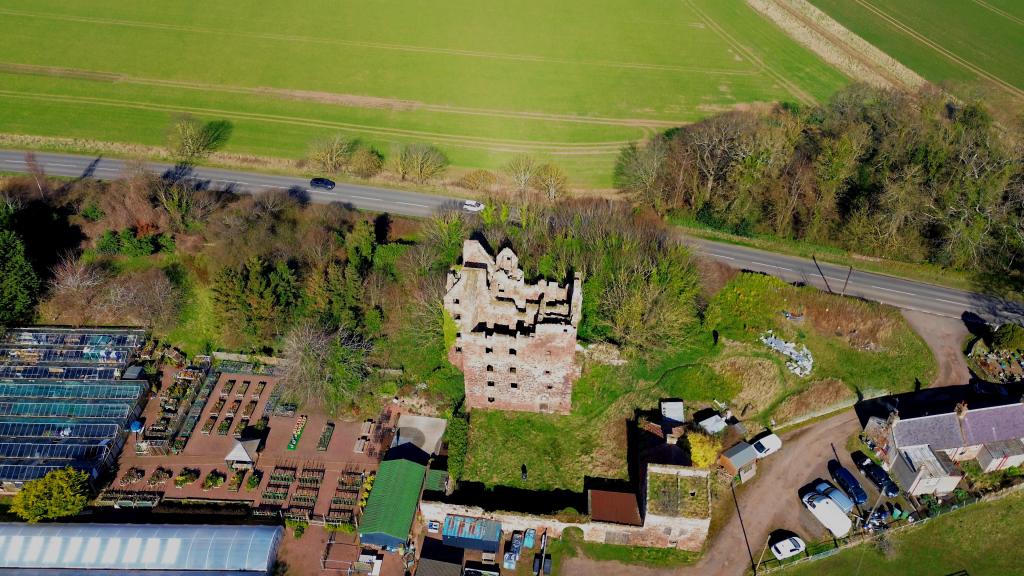
In this week’s post, we’re exploring the heart of East Lothian, not far from the village of Longniddry. Here, an imposing red ruined castle quietly hides behind the tree line like a silent protector, harboring secrets that have echoed through the centuries. Distinguished by its striking red sandstone, Redhouse Castle continues to captivate and intrigue. While its most visible remnants date from the 16th and 17th centuries, its story stretches back much further into the shadows of medieval Scotland.
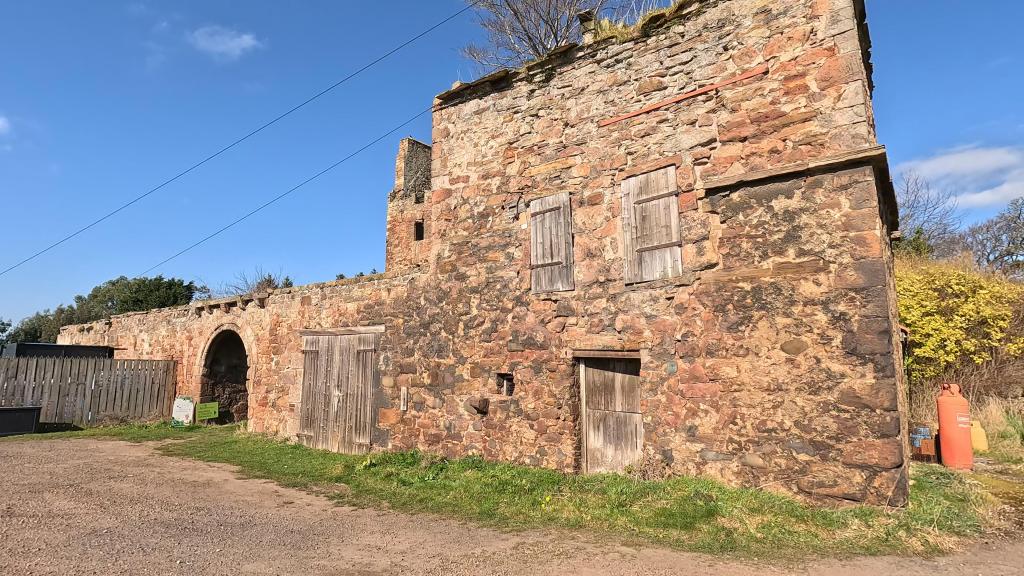
Traces of an earlier structure have been discovered beneath 19th-century cottages nearby, suggesting the site may have originated as a religious establishment or hospice. The first documented mention occurs in 1421, when Archibald Douglas, the Earl of Douglas, granted the lands to his mistress—a transaction that appears to have been a medieval form of child support.
The more substantial ruins we see today likely owe their construction to John Laing, the Keeper of the Signet, in the late 16th century. It is believed that stone was salvaged from nearby Longniddry Castle, which had been slighted by Scottish forces in 1548 after its owner aligned with the English during the “Rough Wooing.” John Laing’s influence remains visible; his heraldic arms still sit above the entrance, and a replica of these arms adorns his tomb in Edinburgh’s Greyfriars Kirkyard.
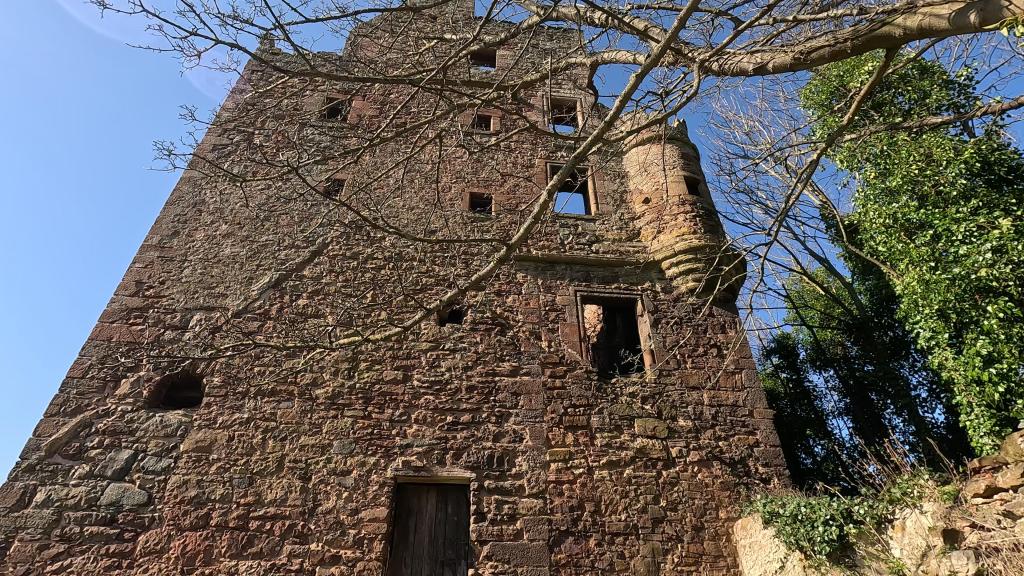
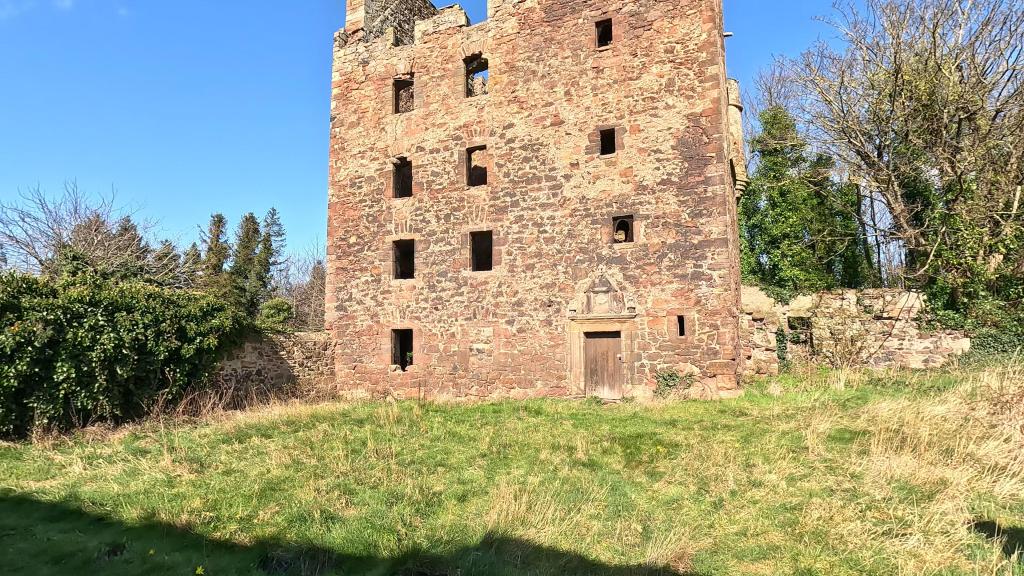
The castle later passed to the Hamilton family through marriage. During the 17th century, the Hamiltons undertook significant expansions, giving the ruins the impressive architectural character they possess today. However, following the Jacobite uprising of 1745–46, the Hamilton estates were forfeited. Abandoned to the elements, the castle began its long decline.
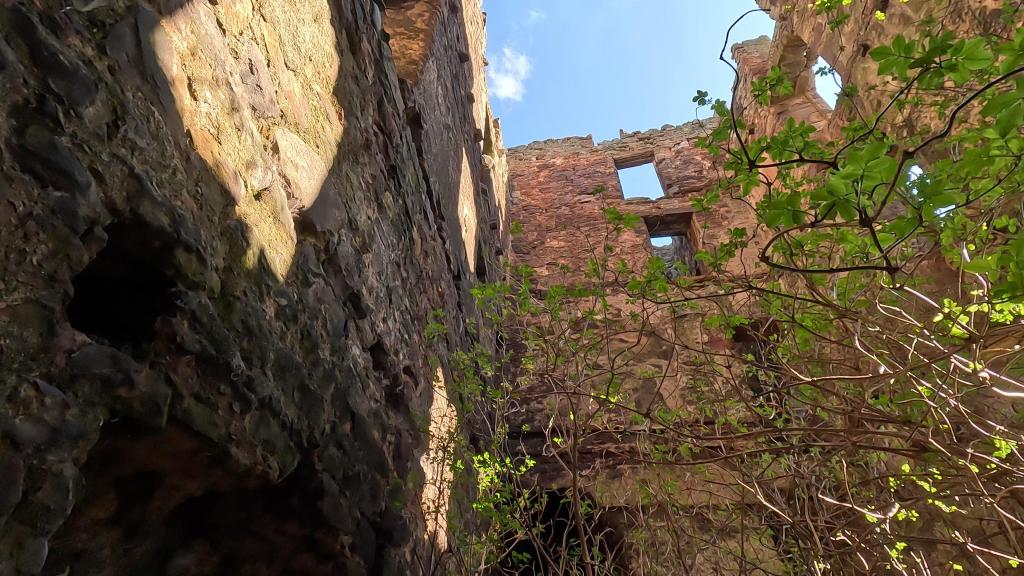
As we explore inside the roofless walls, we find a remarkably intact structure. Unlike many Scottish castles, Redhouse was spared from being used as a quarry for other building projects.
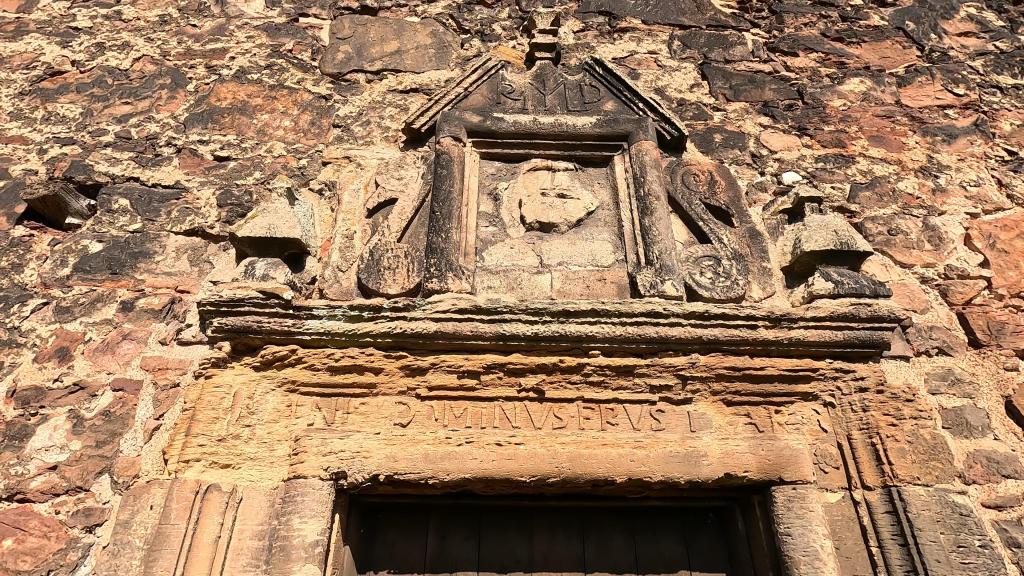
One of the most impressive details is the 17th-century doorway bearing the inscription “NISI DOMINUS FRUSTRA”—the Latin motto of Edinburgh, meaning “Without God [it is] in vain”—alongside the initials of John Laing and his wife. Nearby, a double lectern doocot (pigeon house) adds a unique architectural touch to the grounds.
Inside the main entrance, you’ll find the remains of a turnpike stair. Interestingly, the surviving four steps spiral in an anticlockwise direction. While most medieval spiral stairs were built clockwise to favor right-handed defenders, the later construction of Redhouse likely reflects architectural fashion rather than purely defensive strategy.
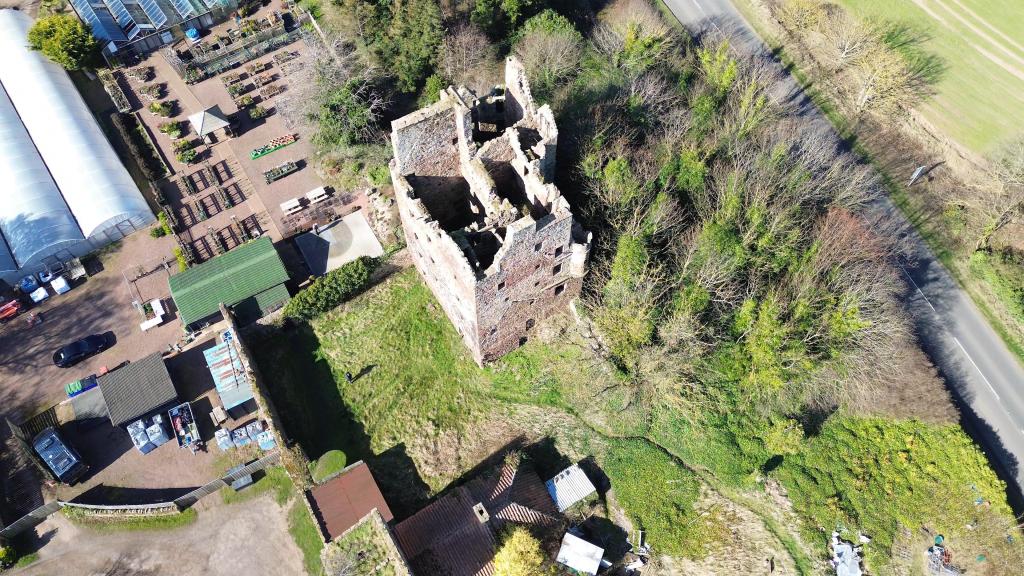
Visiting Redhouse is a fantastic experience. While the mature trees add a sense of seclusion and mystery, the iconic red building looms over you with a touch of eerie atmosphere. For those looking for a more relaxed visit, there is a lovely garden center and cafe right next door where you can enjoy a coffee while admiring the ruins.
If you liked the blog please hit that like button, watch the full video below and consider subscribing if you haven’t already.
Till Next Time!
 Pinned on Places
Leave a comment