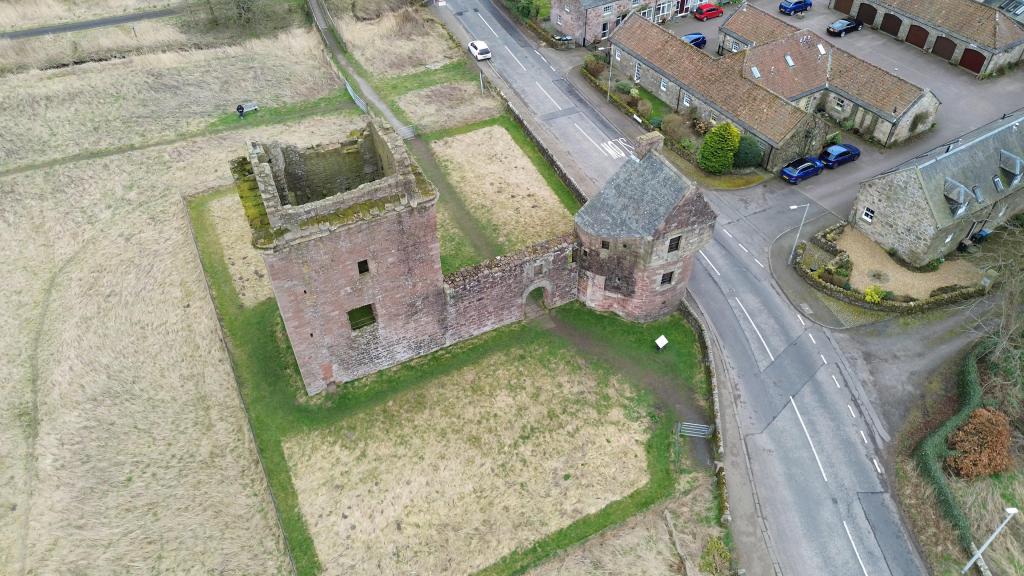
In this week’s post, we venture to the unusual remains of Burleigh Castle, which stands against the Perth and Kinross sky just off the A91. It holds the weight of centuries and a passion-fueled murder within its crumbled and weathered stones. For nearly three hundred years, this was the seat of the powerful Balfour family, whose story takes a dark turn hidden amongst the architectural designs of this fortress. So join us whilst we walk Burleigh Castle.
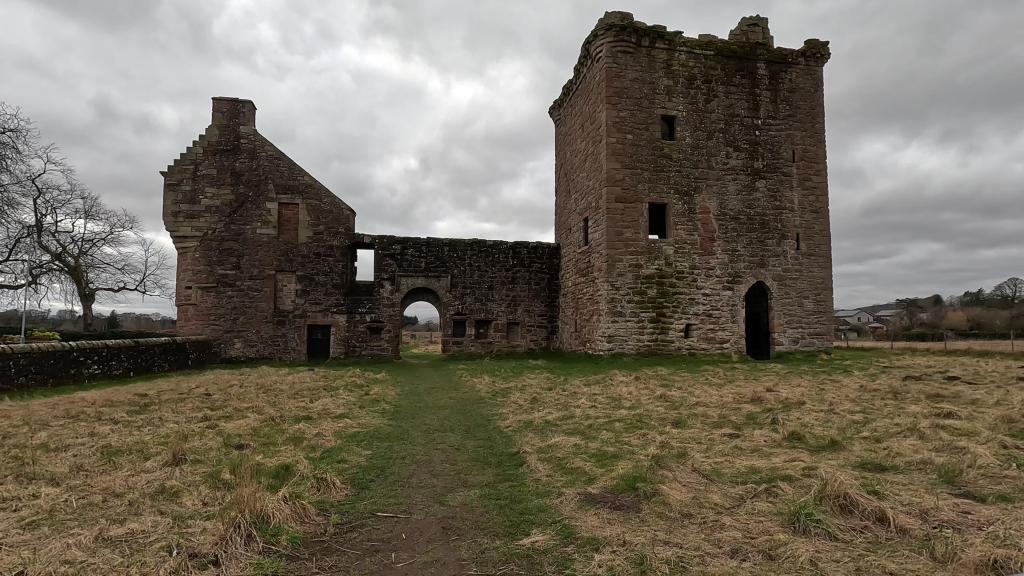
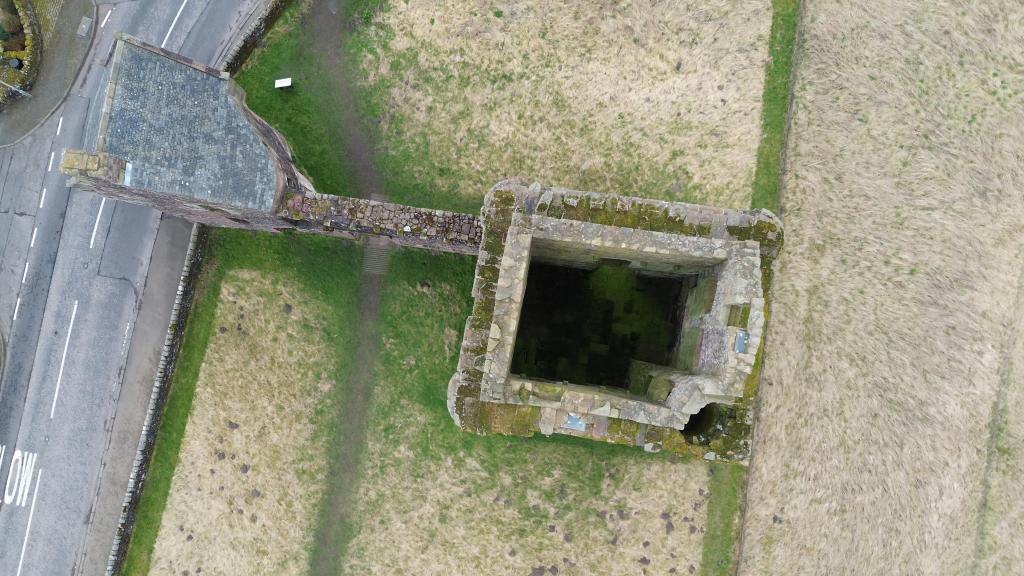
The origins of Burleigh Castle date back to 1446, when the lands were granted to Sir John Balfour. Construction of the initial castle likely commenced in the late 15th or early 16th century under his descendants, starting with a rectangular tower house—a common form of fortified residence for the time. This formed the core of the complex. Immediately to the west, a dip in the land suggests there may have been a defensive ditch or moat.
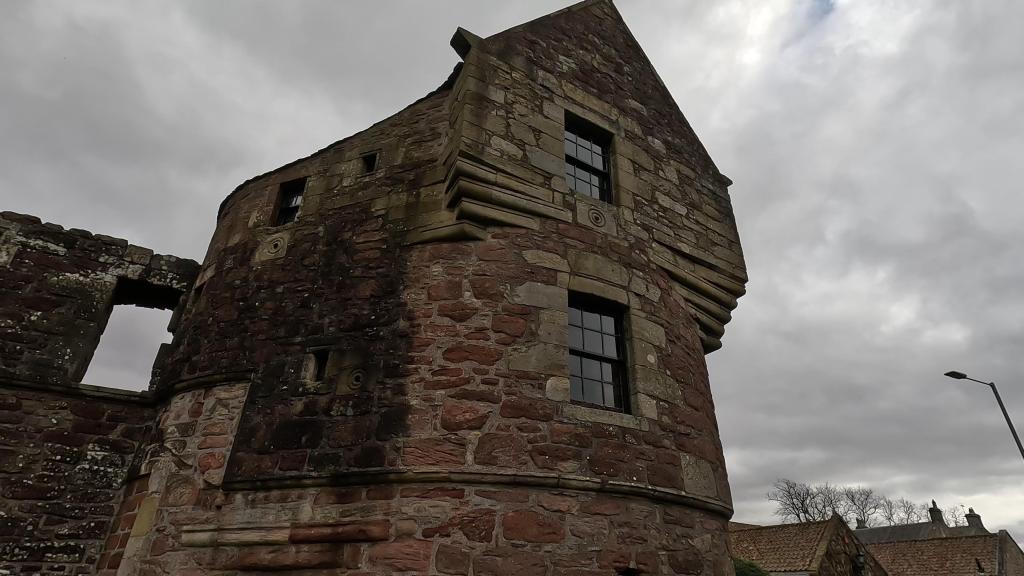
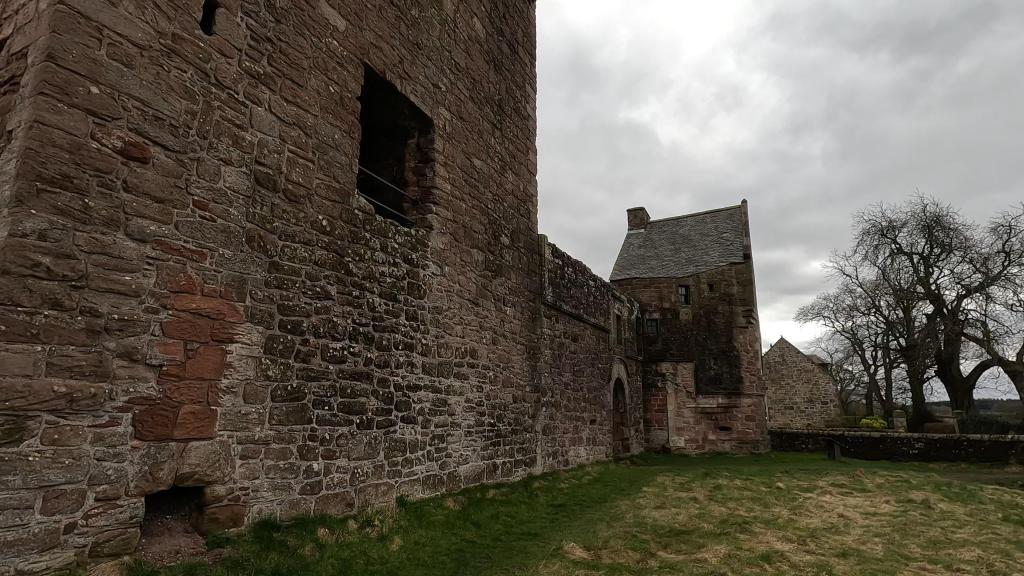
As the Balfour family grew in prominence, the castle expanded. In 1582, a courtyard was added, enclosed by a curtain wall with domestic buildings. A significant architectural development occurred in the later 16th century with the addition of a distinctive gatehouse tower at the southeast corner, known as the “ornamental tower.” Built by Sir James Balfour, a notable legal figure, the tower is remarkable for its sophisticated design, featuring decorative stonework, gun loops, and corbelled-out upper stories. This hybrid style reflects the transition toward more ornamental and domestic features in castle design, influenced by continental European fashions.
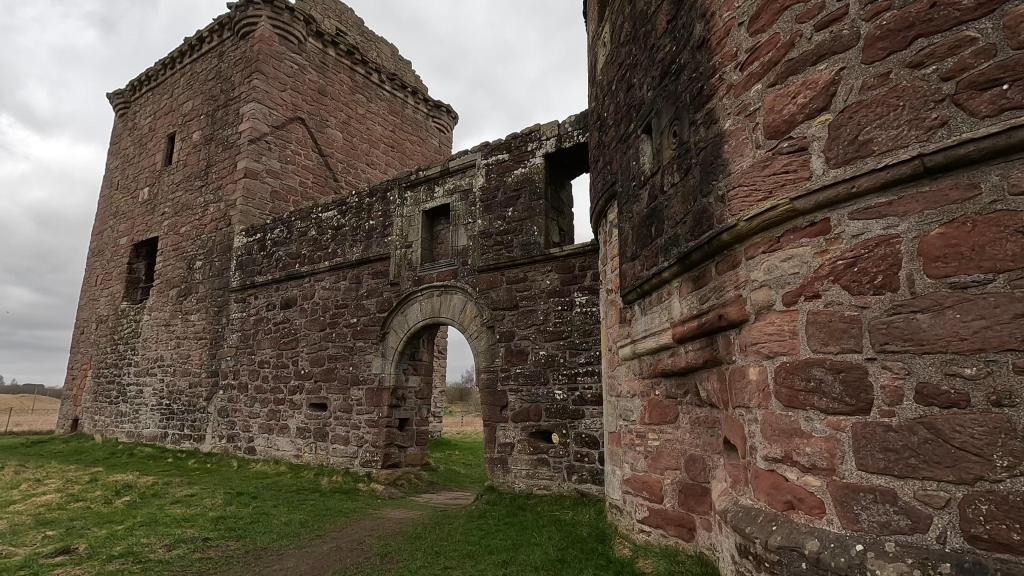
The old northern tower house is entered via an iron grille in its east wall, though it was unfortunately closed on our visit. The ground floor is vaulted and was used as a storage cellar, while a spiral stair within the wall leads up to the first floor, which originally housed the castle’s hall. Today, it is open to the sky, but it once held two stories of apartments and corner turrets. The hall features windows on each wall, a stone cupboard in the southwest corner, and a garderobe in the northwest corner.
In 1607, the family’s status was formally recognized when Sir Michael Balfour was created Lord Balfour of Burleigh. However, the castle’s history took a dramatic turn with Robert Balfour, the 5th Lord, known as the “Master of Burleigh.” Possessing a volatile temperament, Robert became enraged in 1707 when Henry Stenhouse, a schoolmaster, married a woman Robert was besotted with. Filled with jealousy, Robert rode into Inverkeithing with armed followers and murdered Stenhouse in broad daylight.
Balfour was arrested and sentenced to death, but his tale took a legendary twist. Before his execution, he managed a daring escape from the Edinburgh Tolbooth by swapping clothes with his sister. He later joined the Jacobite Rising of 1715, seeking to restore the Stuart monarchy. The failure of the rising brought severe consequences; Robert was tried for treason, and in 1716, his titles and estates—including Burleigh Castle—were forfeited to the Crown.
This event severed the centuries-long link between the Balfour family and their ancestral home. Abandoned and neglected, Burleigh Castle began to slide into ruin. Its stones and timbers were gradually repurposed for local construction, leaving behind the atmospheric shell we see today. Although you may not spend hours here, it is well worth a stop on your way to Balvaird, Lochleven, or Huntingtower Castle.
If you liked the blog please hit that like button, watch the full video below and consider subscribing if you haven’t already.
Till Next Time!
 Pinned on Places
Leave a comment