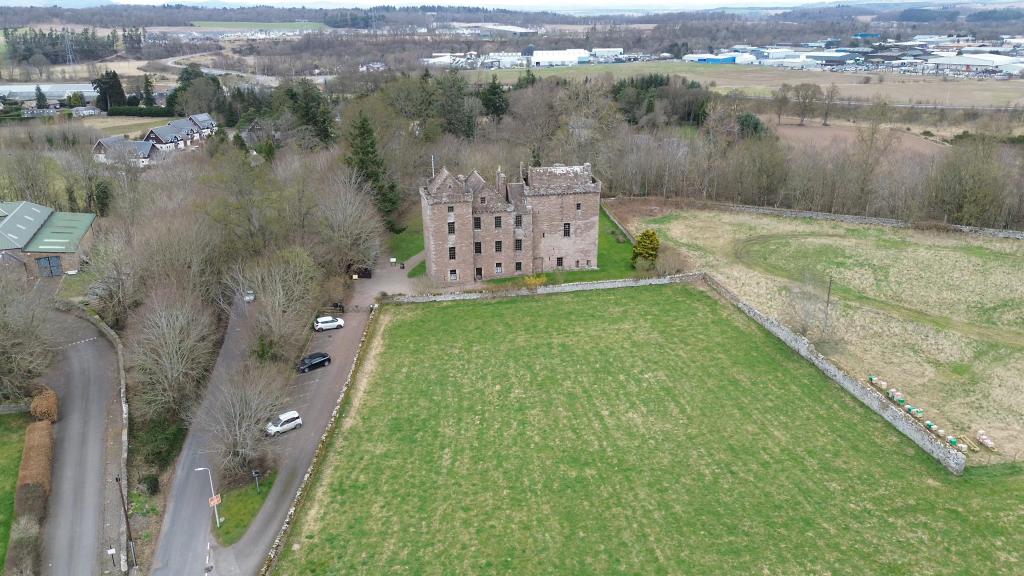
In this week’s post, we explore two towers and one bridge, with a history as dark and vibrant as the paintings on its ceilings. This is Huntingtower—a castle where kings were held captive, legends were born, and art defied time. From the audacious Ruthven Raid to the spectral whispers of “Lady Greensleeves,” and the breathtaking, centuries-old painted ceilings, this manor house holds secrets that still captivate. Join us as we unravel the mysteries and explore the haunting beauty of Huntingtower Castle.
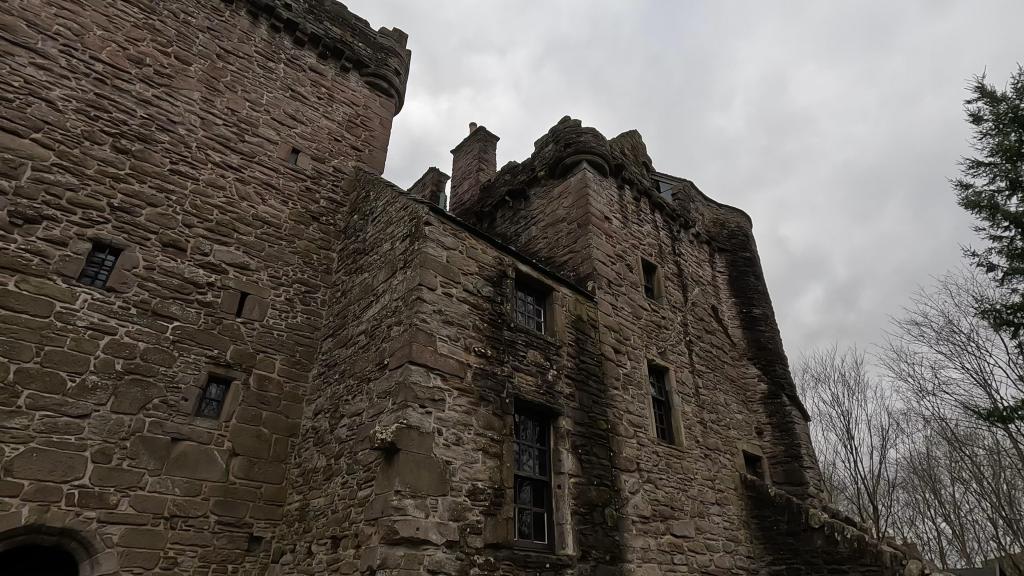
Huntingtower Castle, known as the House of Ruthven or Place of Ruthven until 1600, sits on the outskirts of Perth on land that was once part of the Roman Empire’s northern frontier. Although now under pressure from an ever-expanding modern environment, it was for over three hundred years—between the 15th and the 18th century—the family home of two of Scotland’s noble families: the Ruthvens, later the Earls of Gowrie, and after their fall from grace in 1600, the Murrays, Earls of Tullibardine and later Dukes of Atholl.
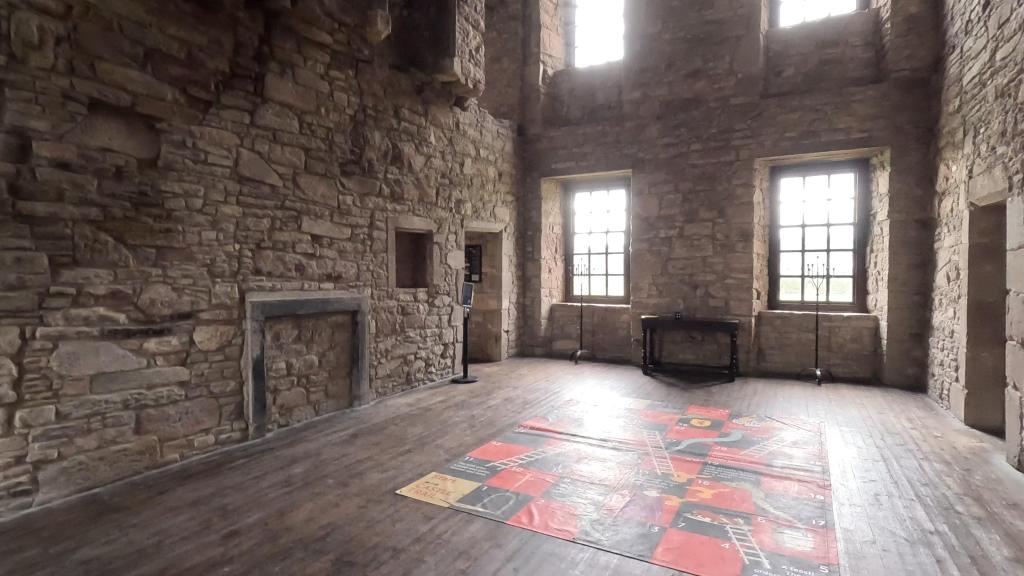
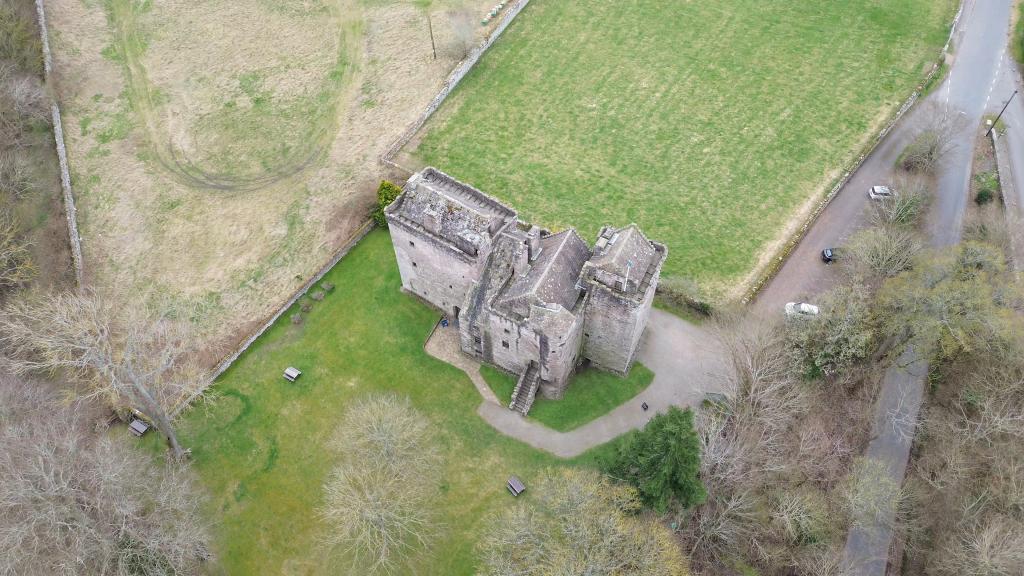
Huntingtower is a peculiar building with an equally peculiar history. It began as a pair of fortified medieval tower houses, built only a few paces apart, and was later combined into one substantial mansion. Although there are other examples in Scotland of similar designs, Huntingtower is unique in that the towers are so close together. The east tower appears to have been built around 1460, with the west added in 1480. The second tower served as the main lodging, larger and more elaborate, built to an L-plan and linked to a great hall where feasting took place.
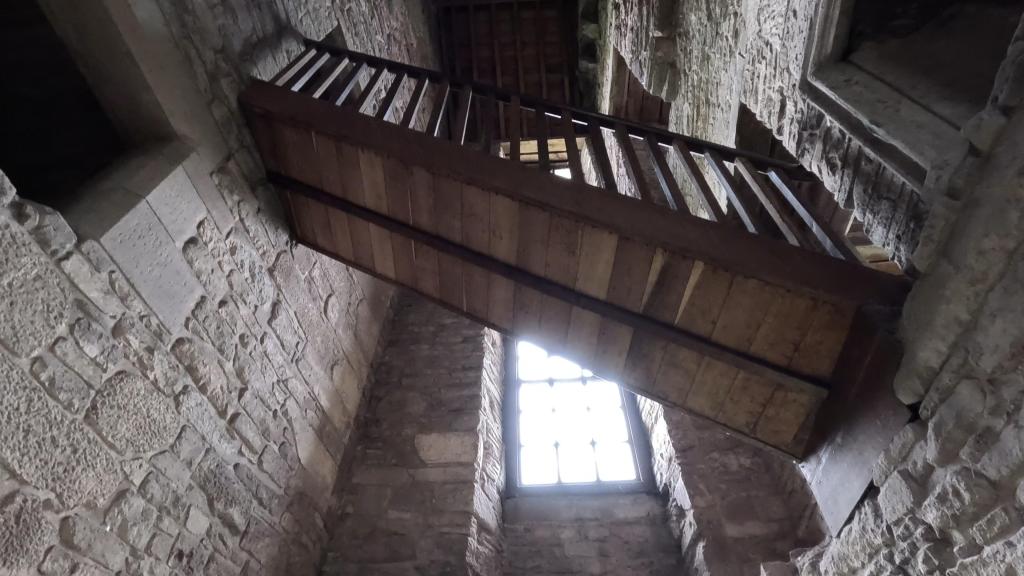
While some castles claim fame through a resident ghost, Huntingtower is known for its resident colony of pipistrelle bats, who live here year-round alongside brown long-eared bats and rarer Natterer’s bats. An information board within the castle notes that bats aren’t house-trained, so evidence of their presence is often obvious. On the other hand, a small pipistrelle can eat up to 3,000 midges each night—and if you see butterfly wings scattered around, they are the leftovers of another favorite meal.
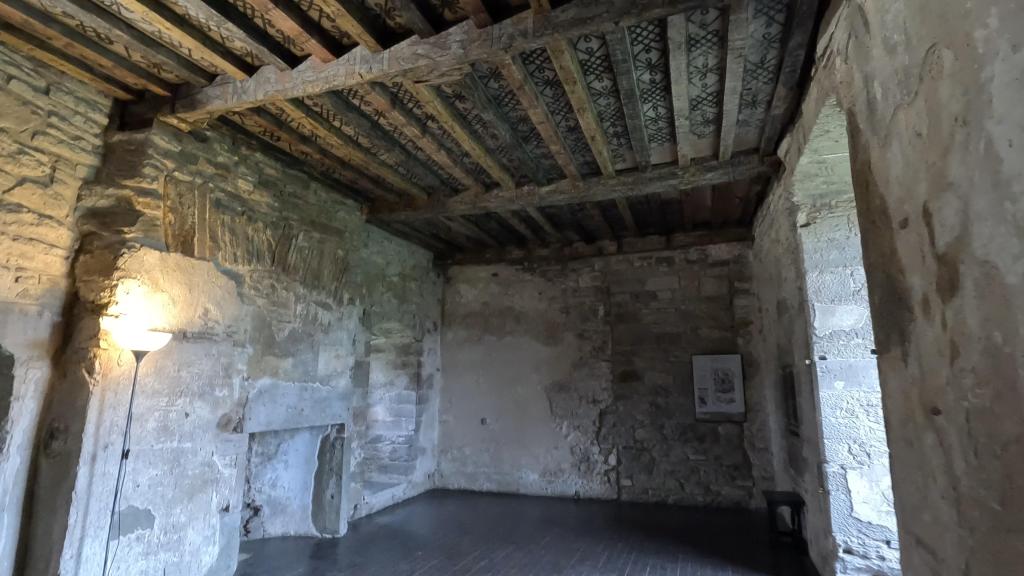
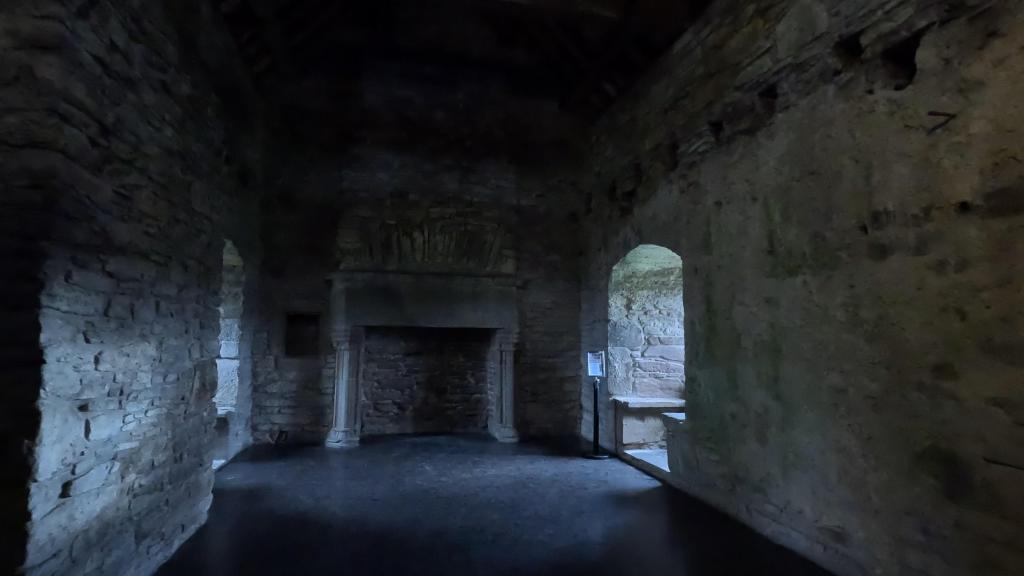
In the east tower, we come across one of the earliest surviving examples of wall plaster paintings, dating back to the 1500s. Remarkably, these were found after the removal of pine paneling in 1913. They are thought to be the oldest Scottish tempera painted ceilings in existence. The panels are ornamented with a knotwork pattern drawn in black on a white background, featuring leaf work, pear-shaped fruit, and animal patterns. Of particular interest are the painted decorations of a hound, a lion with a human head, a hare, and a strange-looking face. This impressive feature highlights just how luxurious and opulent the house must have looked during its heyday.
In the late 16th century, the Ruthven family played a major role in Scottish politics. Mary, Queen of Scots stayed here in 1565 and again in 1582 during her honeymoon with her second husband, Lord Darnley. In 1581, James VI made the 4th Lord Ruthven the Earl of Gowrie. The new Earl had a peculiar way of showing his gratitude; in 1582, he held the king prisoner here—an episode known as the Ruthven Raid. For over ten months, King James was held at the Place of Ruthven while the Earl and his fellow conspirators held the reigns of power.
The king initially forgave the Earl, but Gowrie was later arrested, tried, and executed for treason. The family’s penchant for conspiracy continued, and in 1600, the 3rd Earl took part in the Gowrie Conspiracy to oust the king. This time, James was not so forgiving; the Earl was executed and his estates seized. James gave the property to the Murray family, who renamed it Huntingtower. They joined the two towers to make one large building, remodeling it for comfort and prestige rather than defense.
Huntingtower also has strong links to the Jacobite Rebellions. In 1694, Lord George Murray was born here. He grew up to become a leader of the Jacobite cause and served as Bonnie Prince Charlie’s general at Culloden, where the Jacobite dream finally died.
Not all famous events here involve the kidnap of kings! One famous episode involves Dorothea, daughter of the 1st Earl of Gowrie. She reportedly snuck from her tower bedroom to the bedchamber of her lover, John Wemyss, in the other tower. When a servant alerted the Countess, Dorothea desperately leapt the 10-foot gap between the two towers in the dark to return to her own room before her mother arrived. From that day forward, the gap has been known as “Maiden’s Leap.” The pair eventually married and lived a happy life together.
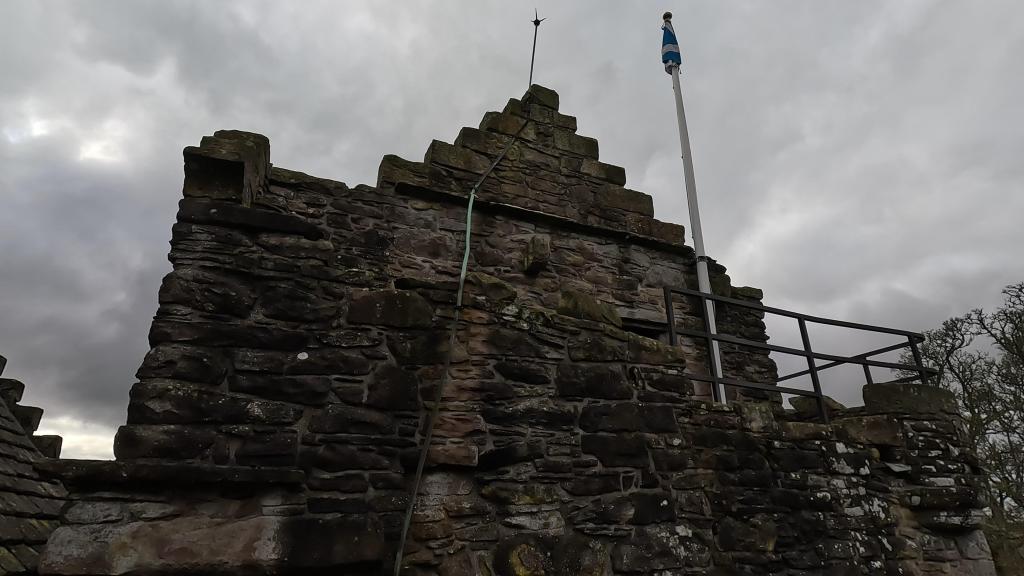
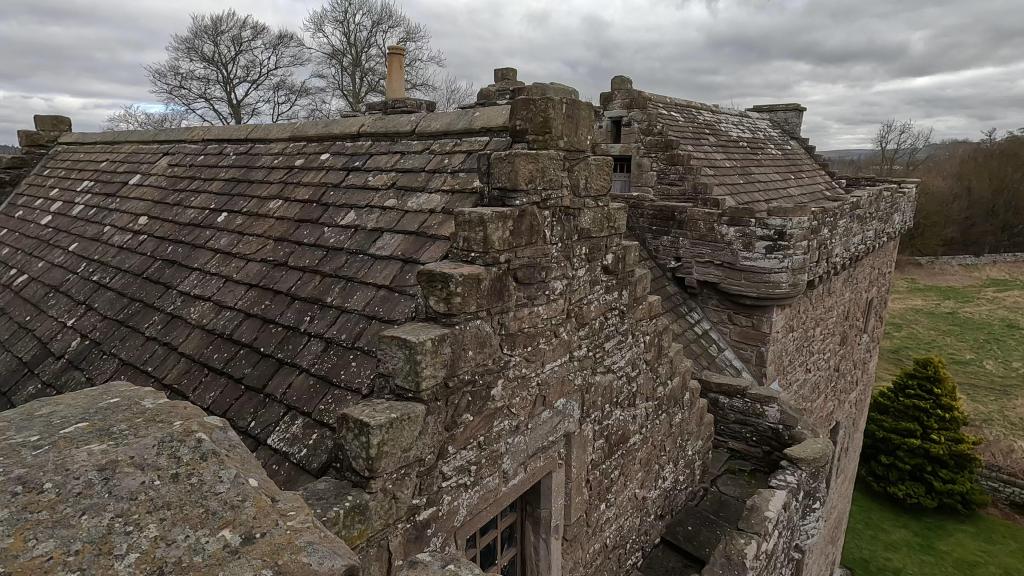
Today, several witnesses claim to have seen the ghost of Dorothea at the castle. Appearing at dusk in a green dress, she is known as “Lady Greensleeves.” Some claim she is an omen of disaster, while others have seen her peacefully guarding the Maiden’s Leap.
If you liked the blog please hit that like button, watch the full video below and consider subscribing if you haven’t already.
Till Next Time!

 Pinned on Places
Leave a comment