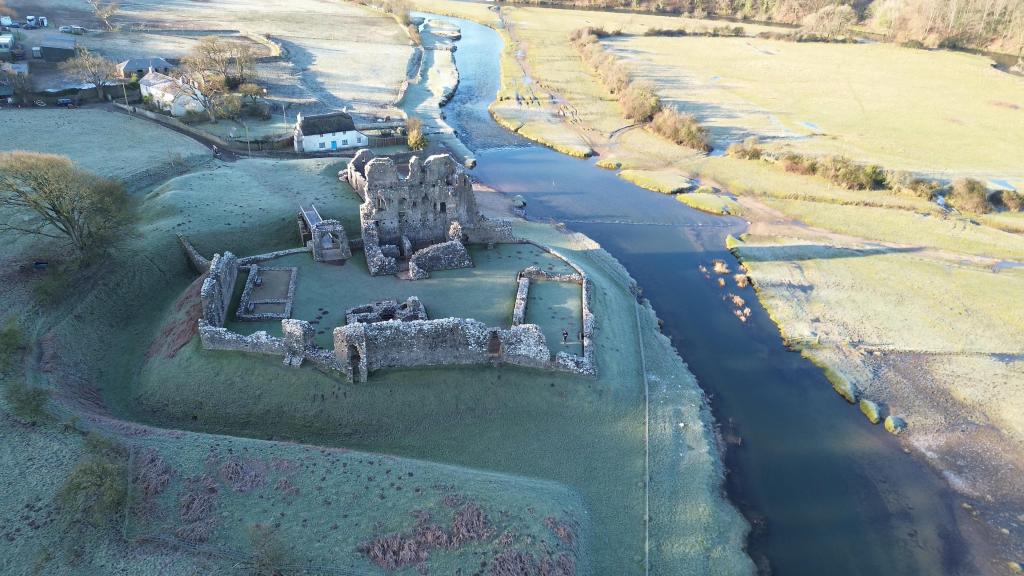
In the region known as Glamorgan in South Wales you can be transported away from the hustle and bustle of now modern living and back to a time in medieval Wales, to a time when the Normans ruled the land and planted castles to ensure their domination. In this video we want to share with you what this 900 year old medieval castle has experienced, from battles, powerful owners and ghostly tales of a White Lady, why not join us at Ogmore Castle
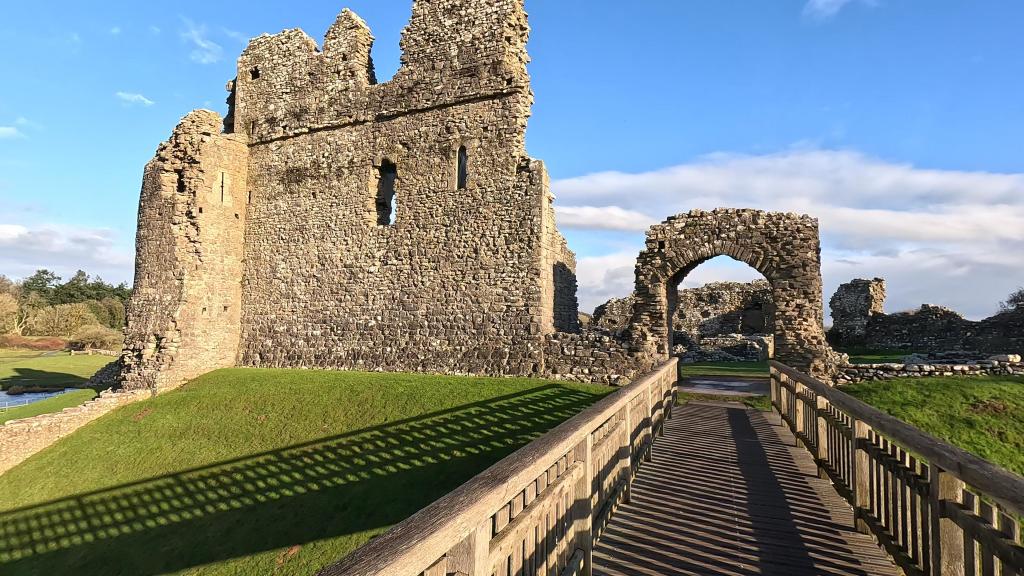
Its thought that construction of the castle might have begun around 1106 by William de Londres, a follower of Robert Fitzhamon. De Londres was one of the ‘Twelve Knights of Glamorgan’, a group of semi-legendary knights who helped Fitzhamon conquer south Wales and were rewarded with extensive lands throughout the region. An earlier fort or fortified manor might have existed before the castle, as the crossing between River Ogmore and River Ewenny was an important strategic point and a trade route for the Welsh tribes since at least the 10th century.
Ogmore Castle played an important part in a defensive line against the Welsh attack on barely established Norman domain in Glamorgan Vale. Along with two other fortresses, Coity and Newcastle in Bridgend, Ogmore served as a fortified border separating the Welsh from Norman invaders. Creation of such barrier was essential – the political situation of the region was complicated after the major Norman victory and successful campaign of Robert Fitzhamon in 1075. As baron, Robert Fitzhamon became the most powerful of the Marcher Lords and continued his conquest of Southern Wales until his death in 1107.
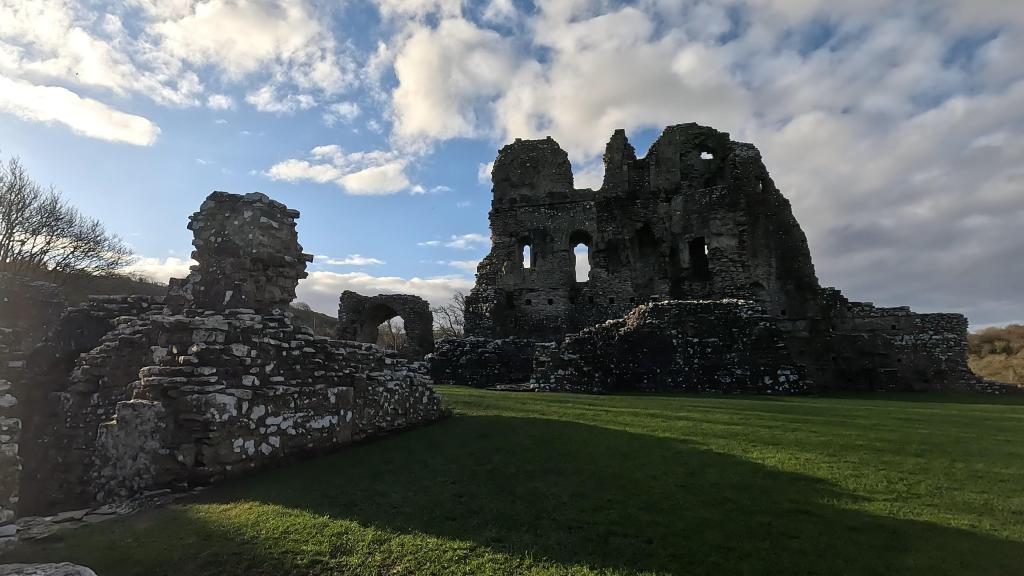
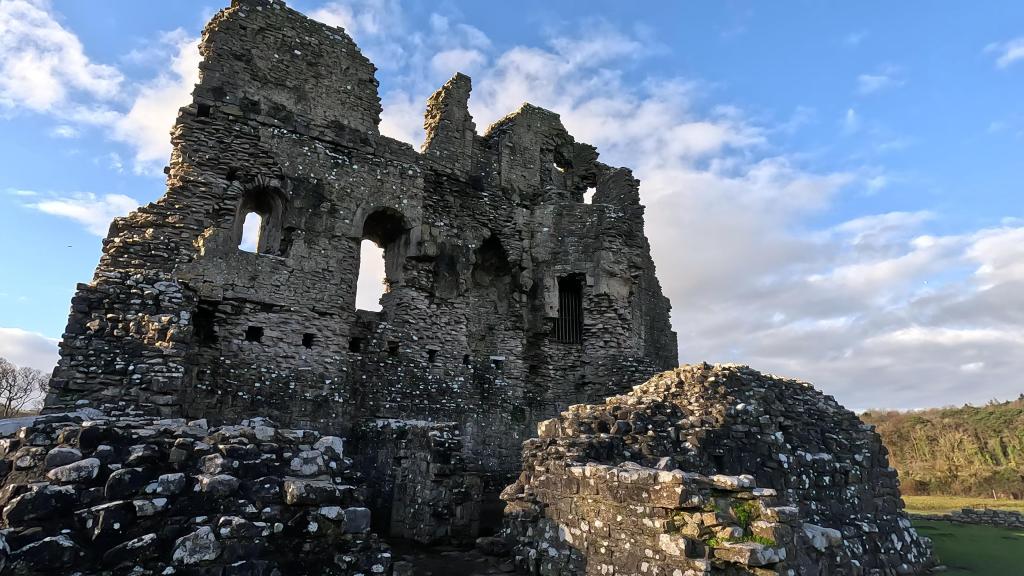
Situated next to the entrance into the inner ward, this rectangular great tower once rising three stories and 40 feet high is now extensively ruined, but still very impressive. It is embellished and has typical Norman architectural features including scalloped capitals on the pillars framing the fireplace, and round-headed windows. The keep originally had two storeys as is shown by the mark of the original roof which was left on the west wall when another storey was added later. The other walls only survive to basement level.
The first story contained the great hall, with the ornate fireplace and elaborate windows. You can still see the remains of a staircase which led from the hall to its floor above, which served as apartments for the lord and his family. Across the inner ward and opposite the keep, stands another 12th century structure. Only the cellar of these building remains, consisting of several small rooms and a vaulted, arched entrance, once overlaid by other, residential room – the cellar would have been used for storage.
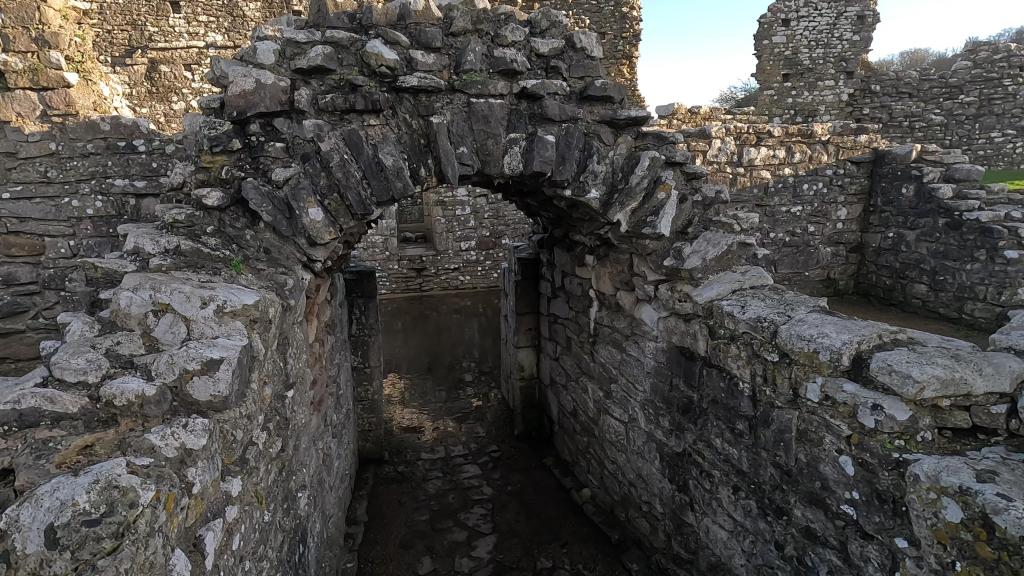
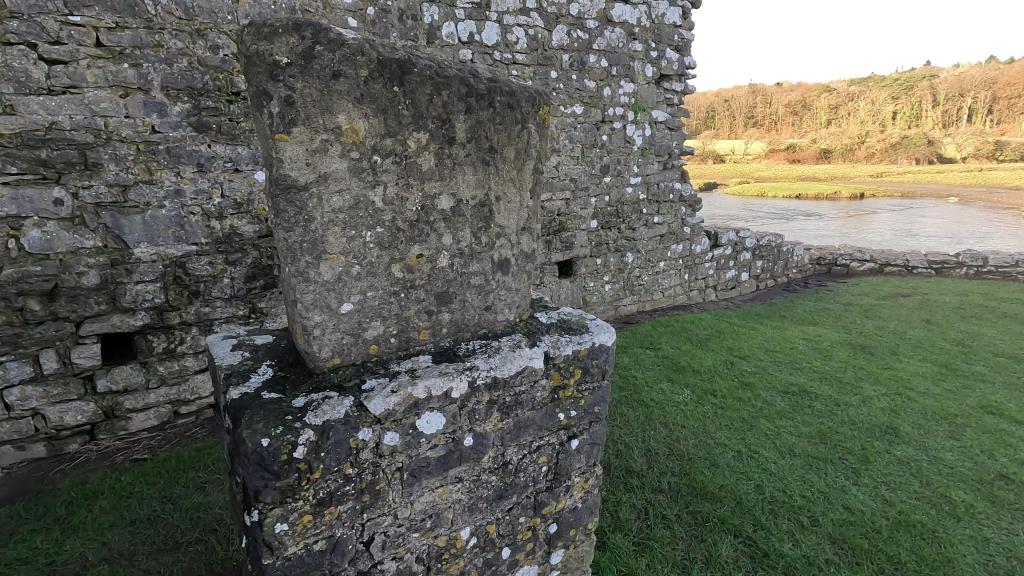
Ogmore Castle has been captured only once during the Welsh attack in 1116. William de Londres had to abandon it for a short period of time, but his butler, Arnold led the defense and managed to get the castle back with minimal loss of life. He was later knighted and received the castle and manor of Dunraven as reward.
Ogmore Castle’s history is fairly uneventful, and by the later Middle Ages, the castle ceased to have any real military worth. Ogmore and its surrounding estates passed in the late 13th century to the lord of Kidwelly. Ogmore became a part of the Duchy of Lancaster, which controlled lands from Monmouth to Kidwelly in Wales, as well as large estates in England.
In addition to that, there were also a number of bad harvests, the black death and of course the Glyndwr uprising which would all collectively destroy castles and properties. From the 14th century the castle became a centre of administrative justice for the Earls of Lancaster, along with the courthouse, a ruined limekiln and some foundations of other structures and manorial buildings constructed in the outer ward are now since decayed and able to visit.
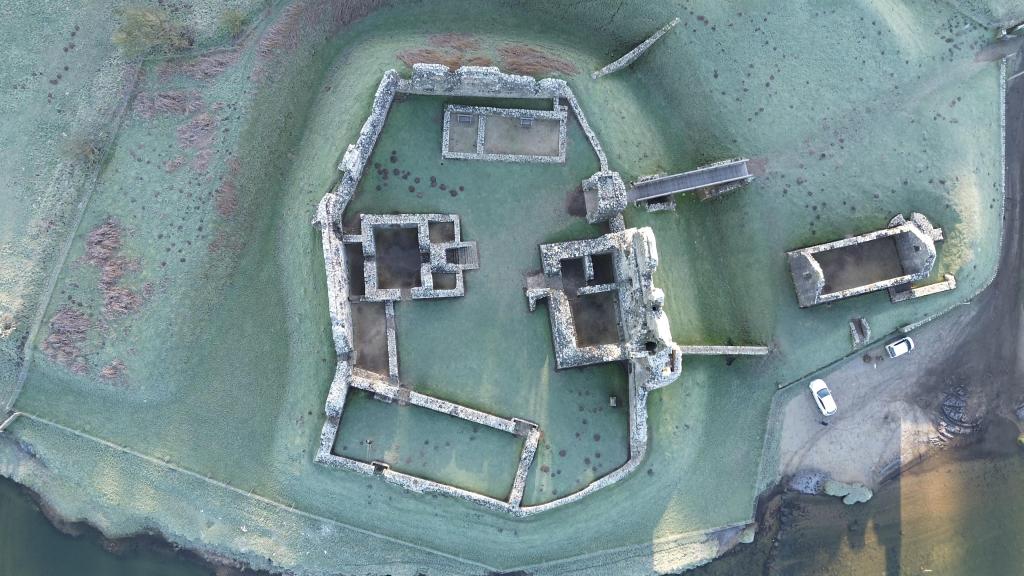
Ogmore is quite a magical place, full with such beautiful scenery, you could visit for hours and not be bored. If you get a chance, visit the castle via the ancient stepping stones that cross the river. Not only does the castle boast such history, it also has fantastic nature and wildlife walk nearby worth looking into.
If you liked the blog please hit that like button, watch the full video below and consider subscribing if you haven’t already.
Till Next Time!
 Pinned on Places
Leave a comment