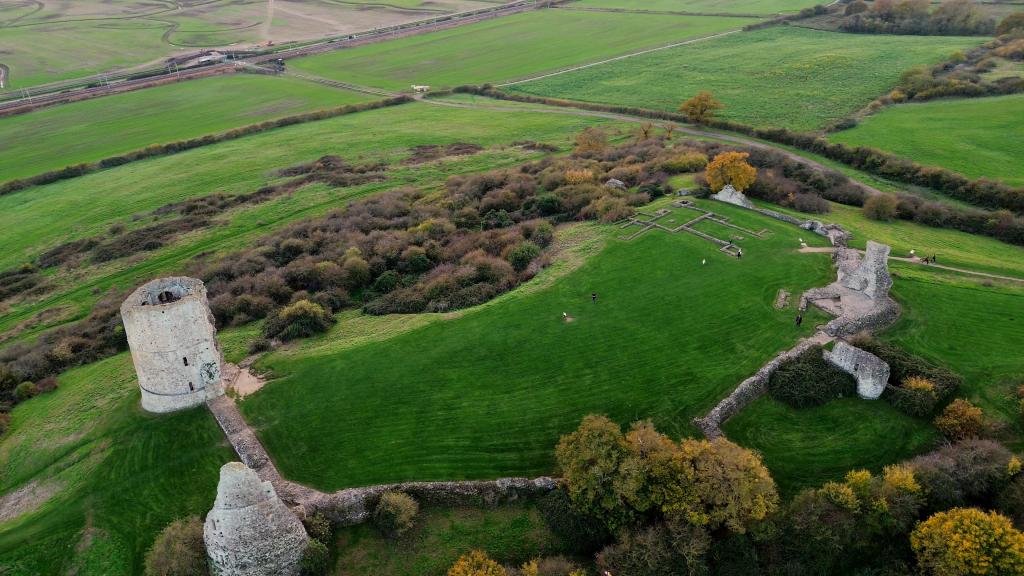
We travelled the remains of an remarkable site that has witnessed centuries of change, from its construction in the 13th century to its eventual decline and transformation into the evocative landmark we explore today.
Standing on high ground over the Essex marshes and overlooking the Thames estuary, the castle has had its fair share of interesting royal owners and visitors, including the notorious highwayman Dick Turpin, who is rumoured to have hidden his stolen goods within the castle secret chambers. This castle must rank as one of the jewels in the historic crown of Essex. Join us for an explore here at Hadleigh Castle.

Taking it back to 1215, King John would give land at Hadleigh to Hubert de Burgh, one of his most trusted advisors and custodian of both Windsor Castle and Dover Castle. During the childhood of John’s successor, Henry III, Hubert was the in effect ruler of England, and he poured money into Hadleigh Castle as a statement of his ever-growing wealth and power. Hubert was a powerful baron at the time and would later fall from royal favour in 1239 where he was imprisoned and forced to surrender all his lands, including Hadleigh castle, to the crown.
The castle remained in royal control and Edward III would recognise the strategic importance of the geographic position Hadleigh Castle held; whether that was specifically in relation to the Hundred Years’ War with the French or otherwise. Some historians are of the opinion that the castle served more as a retreat for the King, and its strong geographical location was purely incidental. Edward III built a twin castle of sorts in Kent called Queenborough Castle, which along with Hadleigh Castle stood proudly on the Thames Estuary. Between both castles they would have communicated a strong sense of power.
Hadleigh castle was built out of Kentish ragstone cemented by mortar containing lots of seashells, mainly cockle shells from neighbouring Canvey Island. It was ideally situated as a base for defending the Thames estuary against French raids during the Hundred Years War; any potential attackers could be spotted for miles and any oncoming attacks would have to traverse the castle’s steep natural hillside to even reach the castle walls.
Geologically it was built in a very precarious position. The castle sits on an unstable spur of London Clay and over the centuries there have been numerous slippages and damage to the castle building, beginning soon after completion of the castle. The last major landslip was during the winter of 1969. Today, about a third of the southern side of the original castle has been lost due to slippage.

Edward’s claim to the French throne had led to war with France. In time, Hadleigh became a favourite retreat for the ageing king. There are excavated foundations of the most important part of the castle – the great hall. It had a serving room at the end and beyond it a private withdrawing room. These indicate the expansion of what was solely a defensive fortification into a more homely abode; with space to dine, entertain guests and retreat to an isolated space at the end of the day.
These additions date between 1360-1370, when the Castle saw a major rebuilding and expansion, which incorporated all of these added features. It is said that he spent a fortune, some £2,200, on repairs and building works. Edward III commissioned new royal lodgings and rebuilt the eastern side of the castle in its entirety. A drawbridge and a chapel were also added by the King as well as the iconic twin drum towers that are still standing today. These towers were forever immortalised in 1814 thanks to the famous artist John Constable in his painting Hadleigh Castle. Later on in Georgian times, tax men would look for smugglers in these very towers. Sadly, these were to be the last glorious years of the castle as a joint royal retreat and defensive position.
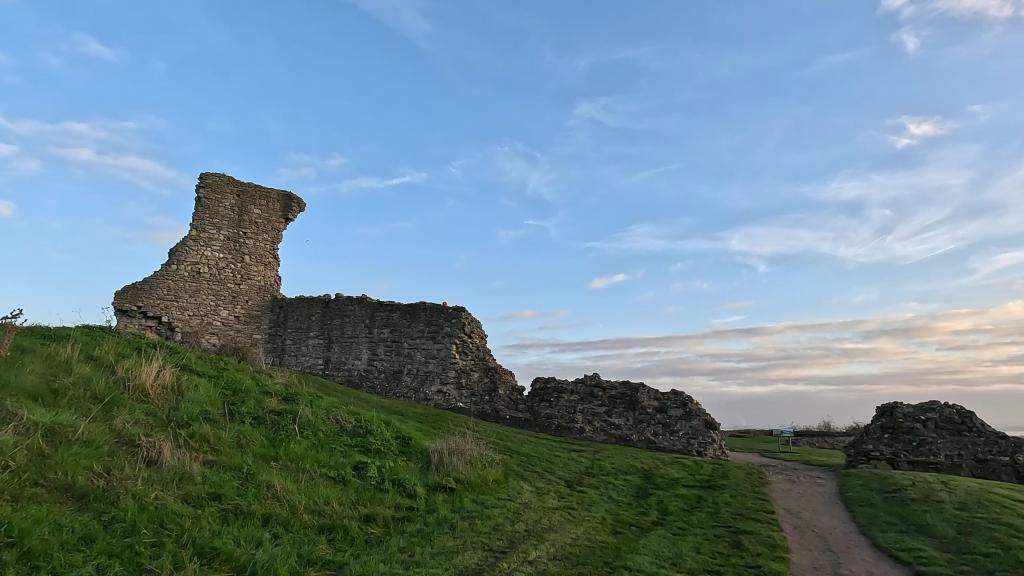
It was later gifted to Queen Eleanor, the wife of Edward I, daughter-in-law of Henry I. Some improvements were made at the castle but it appeared at this stage that only the mill, the lifeblood of the estate, was properly maintained. When Queen Eleanor died, Edward I remarried Queen Margaret, who was also given the castle just like Queen Eleanor before her. Queen Margaret insisted on Hadleigh Castle having considerable repairs lavished on it. It probably needed them; her husband Edward I is said to have only visited Hadleigh Castle twice when he used it as a hunting lodge.
His son, Edward II, took a closer interest in the castle, docking his royal barge at a wharf close by and often travelling to the castle from London up the Thames. He also embarked on some very substantial building works, as well as attempting to address the ongoing subsidence issues. During Edward II’s reign, the armoury room at the castle was often guarded by a garrison of guards and there was even a prison on the premises.


The main tower still looks impressive and is extremely monumental when you peer inside, it gives a good idea of what the whole castle must have looked like in the 14th century, although the tower sits at the edge of the descent down to lower ground towards the river, and cracks are showing inside the tower tell of the possible future for this one substantial remaining part of the castle, it may indeed in time look like the collapsed ruined tower to its left.
Hadleigh became one of Edward’s favourite residences, but his successors did not share his enthusiasm for the castle, Hadleigh was to remain a crown castle for 200 years, but over time it became custom for the king to grant a life tenancy to its current occupant. In later years, it became traditional for the castle to pass to the king’s consort as part of her wedding dowry. In this fashion, the castle passed through the hands of three of Henry VIII’s wives – Catherine of Aragon, Anne of Cleves and Catherine Parr but there is no actual evidence of any of them living or visiting the castle.


By 1551, the castle was more than likely in a complete state of decay. The steep slopes we see around us which had once been a fantastic defensive point to the castle would also become its downfall. The slopes are unstable and the castle like mentioned earlier was damaged and is still damaged by land slipping. As such, the story of Hadleigh Castle ends, like many buildings in our history, being passed through Henry VIII and Lord Richard Riche, in ruins. William Booth eventually bought Hadleigh Castle on the behalf of the Salvation Army in the 20th century and it is now owned and managed by English Heritage and free to visitors to explore.
During the 18th century, Dick Turpin and his highwaymen are rumoured to have used Hadleigh Castle as a hide out after one of their risky robberies. According to local lore, Turpin and his famous Essex gang of highwaymen hid their ill-gotten gains in secret chambers within the castle’s ruins.
They would have accessed the castle by river, and would use lights and strange noises to scare away locals before Turpin made his ill-fated ride to York on Black Bess where he was hanged. Turpin became a legend after his execution in 1739. His story was romanticized in ballads, theatre, film, and television, and he became Britain’s most well-known highwayman.

The Castle is known throughout Essex; it’s an ever-present feature of the coastline, it’s a regular landmark for every commuter travelling towards London from Southend every day, The site is absolutely incredible, we had such an interesting time visiting and know that you will too.
If you liked the blog please hit that like button, watch the full video below and consider subscribing if you haven’t already.
Till Next Time!
 Pinned on Places
Leave a comment