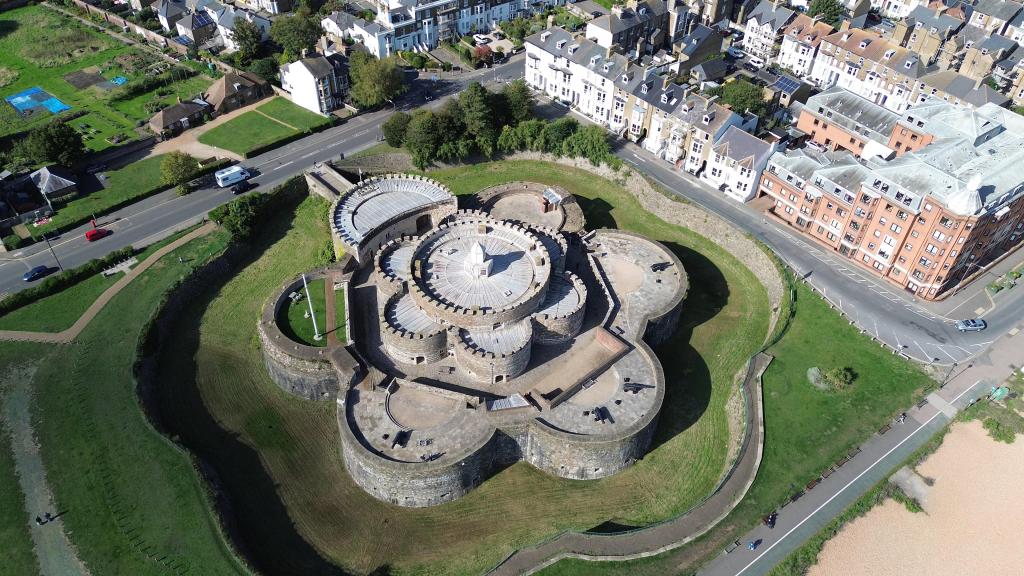
We decided to travel eastwards of our hometown towards Kent and in particular to Deal castle. It was the largest of the three masonry forts that were built to protect the Downs; this was one of the few sheltered anchorages in the eastern sector of the English Channel.
The castle was raised by Henry VIII and remained in use until the very end of the Napoleonic wars and during the second civil war deal was garrisoned by royalists and withstood a three month siege, it was built to protect against invasion from France and the Holy Roman Empire.

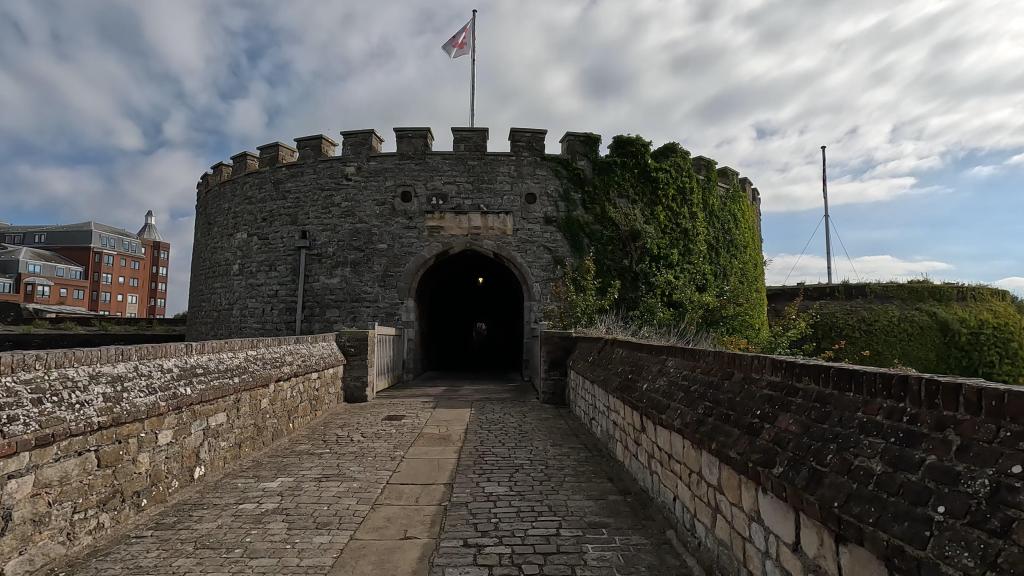
This site may well have been where part of the roman invasion force landed in AD 43 and also in 1495 when Perkin Warbeck had landed in deal trying to seize the throne from Henry VIII. Whilst medieval and earlier defences had been built inshore at particular points,the development of artillery meant that the coastline itself could be effectively fortified.

The construction of deal castle came during the reign of Henry VIII from April 1539 to the following august in 1540. Looking very similar to a rose, the design of the castle was quite elaborate, It was built to a concentric design with a three storey central circular citadel that below was surrounded by six lower semi-circular bastions and a further six bastions projecting out from that, overall this supported 145 gun positions that were spread across five tiers. The structure was built from Kentish ragstone, robbed from recently dissolved monasteries and being used for detailing. It was surrounded by a dry moat which was protected by a gallery along its outer length where 53 gunports for hand held weapons were.
The French Revolutionary and Napoleonic wars of the late eighteenth/early nineteenth century led to enhancements to the Downs fortifications. Sandown Castle was fully re-armed whilst Walmer Castle and Deal, although both serving as high status residences, were re-armed with 36-pounder guns. A dedicated barracks, with sufficient capacity for 1,000 men, and a military hospital were also built in the vicinity. A shutter telegraph system, which provided a communications link between the Downs anchorages with the Admiralty in London, was also constructed. The defences fell into disuse after the end of the Napoleonic Wars and Deal Castle itself was disarmed by 1854. It was released by the military in 1904 and played no part in World War I.
On the seaward facing side of deal, during the 18th century there was a grand manor house built for the castles captain, which was by now an honorary position and in 1904, the war office had decided that the castle no longer had any value either as a defensive site or as barracks and it was then opened to the public when the captain was not in residence.
Early on in the Second World War, what was the captains quarters were destroyed by a Luftwaffe bomber, a consequence of this is that bombers emptied their rounds over deal and it hit the house forcing deal’s then captain at the time, William Bird wood to move to Hampton Court Palace and the castle then became an observation post for an artillery battery along the shore line.
Whilst visiting here we were shown on the inner courtyard by the English Heritage tour guide Jenny where exactly the house would have been and it was really interesting to hear her give us the story to visualise as virtually nothing remains of that house aside from some Tudor bricks in the keep wall – this is something that you need to take the time to discover.
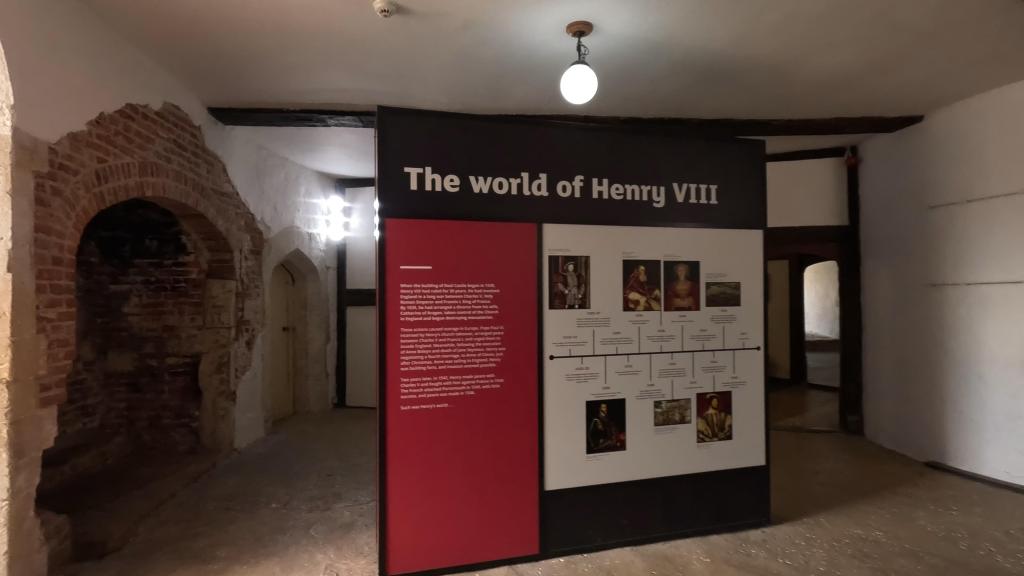


You can learn about how Henry VIII’s fears for the safety of his realm shaped the country’s defenses and his own married life. There is a new table map showing what Europe looked like in the 16th Century along with archaeological finds of Tudor weaponry from Camber Castle. There is also an interactive exhibit to teach you more about the people who lived and worked in Deal Castle.
Deal is an intriguing castle to visit. We had a fun time exploring the castle’s tunnels although I have to admit it was a bit creepy! When you first enter the tunnels or rounds as they are known you may indeed come across a lot of water, but luckily when we visited there were only a few puddles, we used a flashlight on the phone to see where we were going but it was quite dark and disorientating circling around the keep, this was of course the point of the tunnels, to disorientate and confuse enemies.
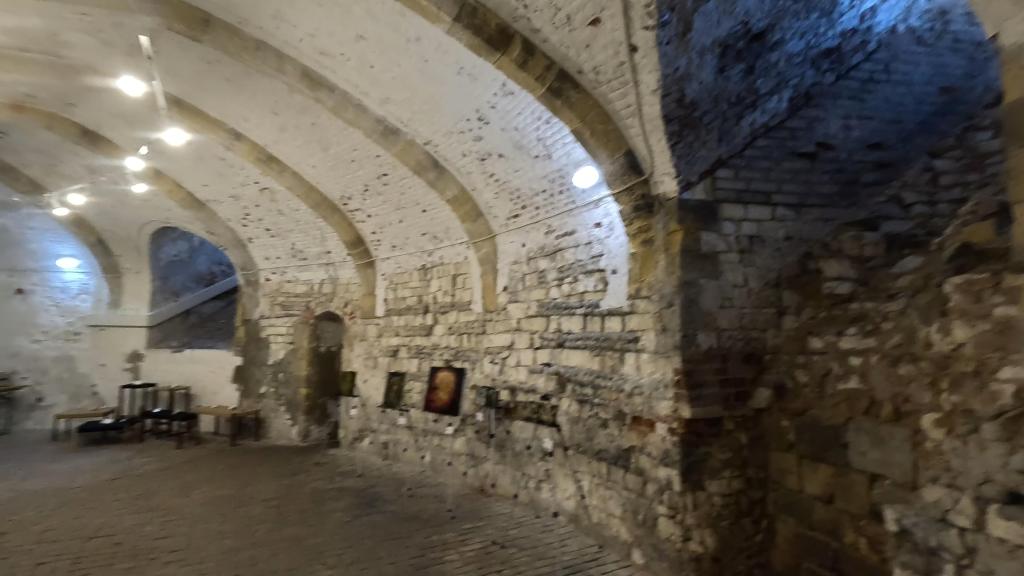

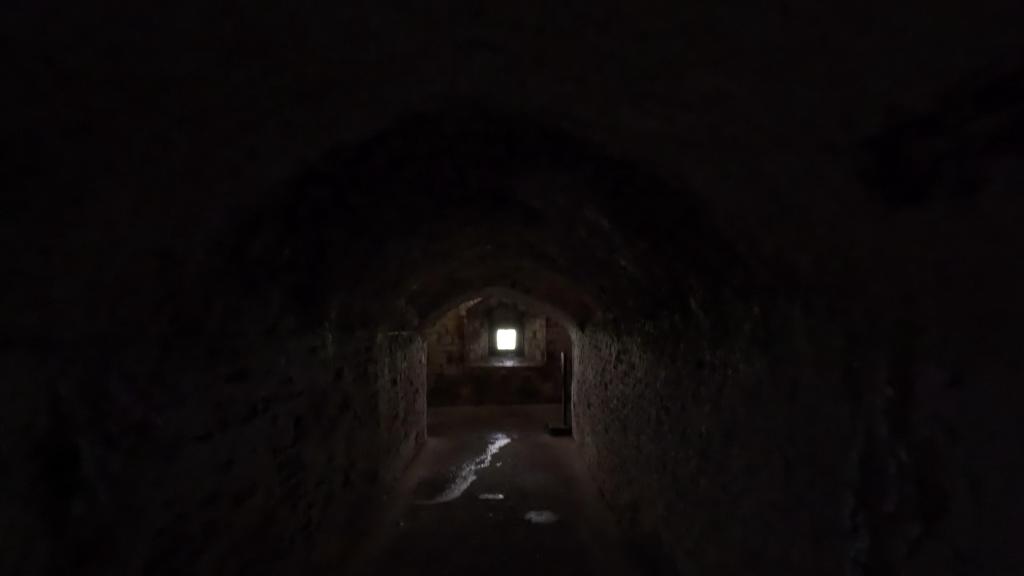
The rounds are a dim narrow passage that was built within the thickness of the outer bastion walls that formed an unbroken circuit around the castle; it was within these walls that the soldiers could stand in with handguns to protect the moat firing from one of the 53 embrasures here.
Following on from the rounds we walked the bottom part of the castle and down into the basement, this was mostly used for storage, mainly ammunition, tools, weapons and food and drink.
Walking up and around the keep there are a lot of interactive exhibits for both children and adults in this part of the castle, you can sit on the thrones and learn about the history of the castle through headphones, or various puzzles and a fantastic colour map which explains how Henry VIII prepared for invasion from the other countries in Europe. There was a part in the first floor of the original Tudor castle; it’s thought that the sunken floor next to the fireplace may have held bellows used to forge weapons and armour.

Your visit to deal castle lets you explore the battlements with its incredible viewpoint of the seaside and discover the passageways that were designed for the defences of the castle. As well as engaging with the incredible knowledgeable staff here that can offer guided tours and tell you such interesting stories and are generally passionate about its history and the building itself.
If you liked the blog please hit that like button, watch the full video below and consider subscribing if you haven’t already.
Till Next Time!
 Pinned on Places
Leave a comment