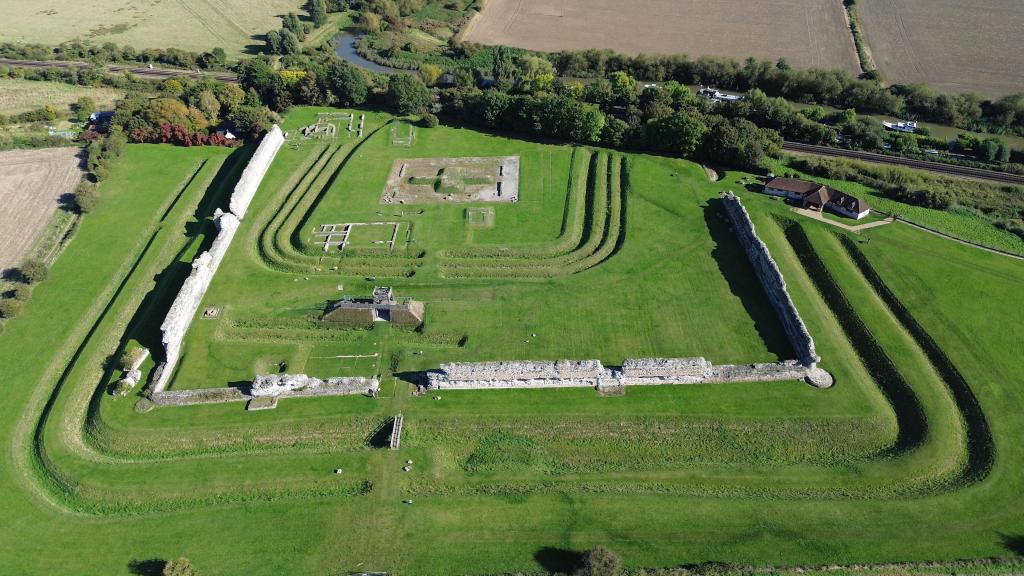
Located on the marshes of East Kent, this historically important site has witnessed both the beginning and almost end of Roman rule, welcoming travellers and trade from across the Roman Empire. Join us whilst we explore the four centuries of life in Roman Britain, here at Richborough Roman Fort.
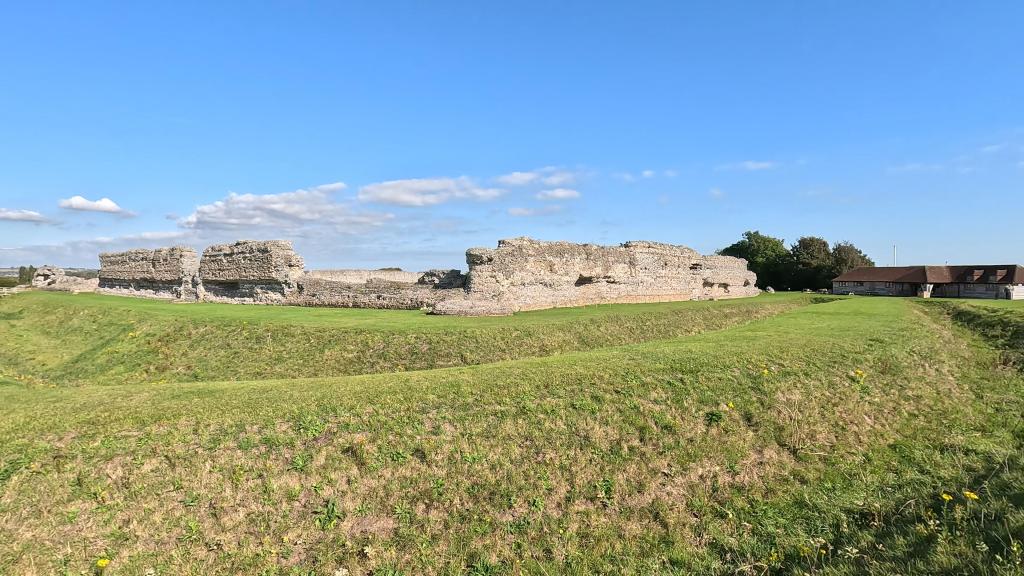
The town of Richborough now rests two miles inland on the marshes, but in roman times it was once a small island at the southern end of the important Wantsum sea channel, which would divide the Isle of Thanet from Kent. Incredibly its thought that the roman emperor Claudius’s invading force of 40,000 men would land here in AD43 which of course would have been a complex and monumental military operation. The army would quickly build a defensive barrier across the island in the form of two deep, parallel V shaped ditches with a rampart on the seaward side that ran for at least 650 metres in line with the coastline. The fortification would have defended the invasion beachhead giving that all important protection to troops, ships and supplies.
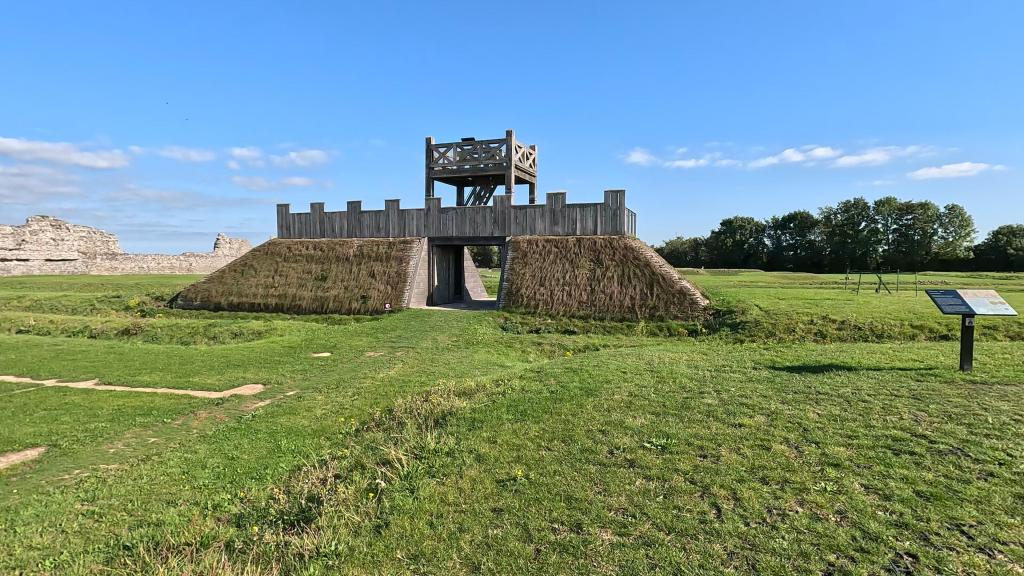
The Roman invasion was a major milestone in in history. It’s known that Richborough witnessed over 360 years of Roman rule-from the very beginning to the bitter end-but being able to step inside, around and atop this eight-metre-high gateway reconstruction, you can look out and just imagine what the first Romans might have seen, its quite the experience. This gateway reconstruction has been built on the found foundations of the original timber gate and tower first built on the site. The newly built gatehouse is eight metres tall, built in oak using roman woodworking techniques and handmade nails, its thought to be based on a column in Rome.
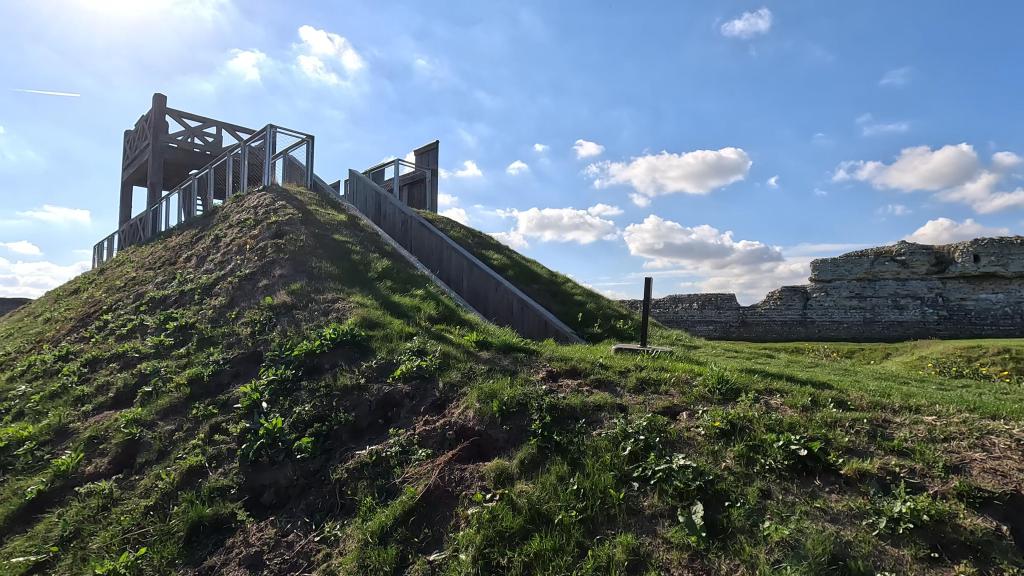
In the area of what is now East Kent, the roman troops encountered little to no resistance and the army could advance to campaign further inland, Richborough became its supply base, there is evidence of this through the large storehouses and granaries that were found during excavation. The stores would have done well to provide the troops with their provisions and all they could need as they make their way inland. The base would later develop into a thriving port town, known all throughout the roman world as Rutupiae.
At the end point of the best sea crossing from France, with its ideal sheltered harbour, Richborough was perfectly situated to develop into a major port. The boom of the town was in the 2nd century. In the far corner of the site is the remains of an earlier timber mansio – a mansion was similar to a modern day hotel, it was an inn for messengers and officials on government business and was rebuilt in stone. Aswell as the mansion and the chapel, other buildings including shops would line the streets. These are now partly visible within the area of the later 3rd-century stone-walled fort. Geophysical and aerial surveys, however, have shown that the town extended far beyond the confines of this later fort, covering an area of at least 21 hectares.
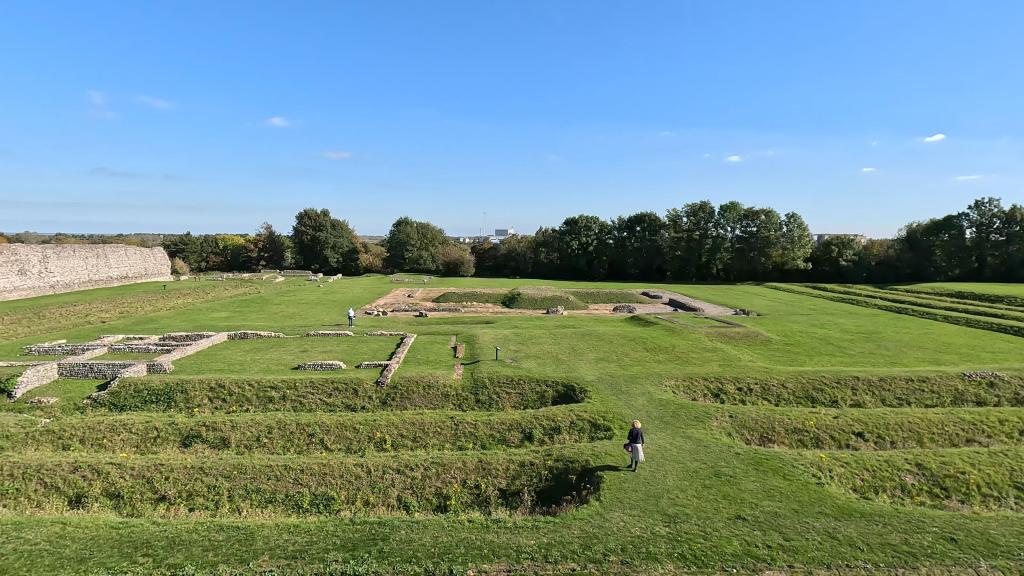
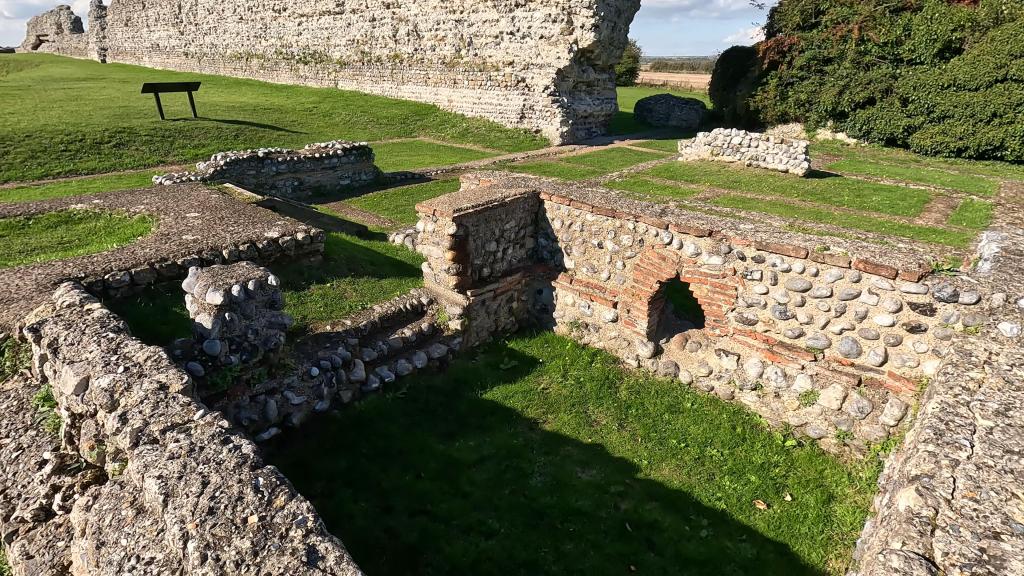
The town thrived for nearly 200 years, until AD 250, when a radical change occurred in response to conflicts within the empire and attacks by Saxon and Frankish raiders in the English Channel. Buildings in the centre of the town were demolished and replaced by a small fort. Shortly afterwards this fort was replaced by another, when the monumental arch was dismantled and its materials reused.
Here at Richborough an excavation was carried out in 2021 with a number of incredible finds as well as revealing details on its construction and design. The exterior of the amphitheatre arena wall was up to 6m wide and made carefully of stacked turf. It’s interior wall, which would define the arena was made of mortared chalk blocks with a plastered outer, there were traces of paint in which would have once had the colours of vivid blues and reds, this type of discovery has never been found before in Britain.
Many other small finds have been found during excavation including coins, personal grooming items, pottery fragments and possibly the more unusual discovery of a complete Roman cat, nicknamed Maxipus by the team who had discovered the skeleton. Today, a broad oval mound represents the remains of the amphitheatre’s outer wall, around a large hollow that marks the arena. The first excavation of the site, which took place in 1849, revealed an arena 62 metres long by 50 metres wide, around which up to 5,000 people might have been accommodated.
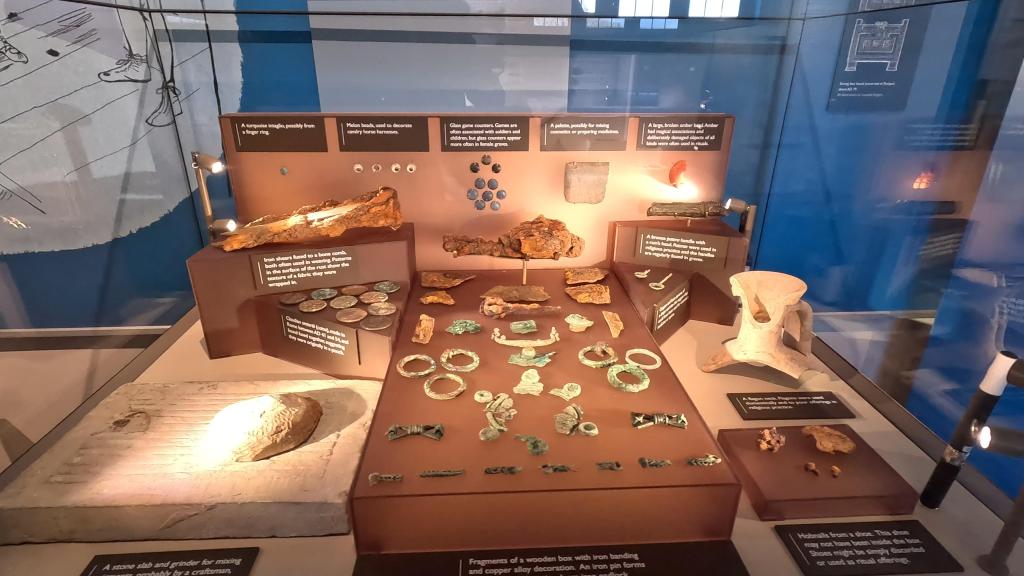
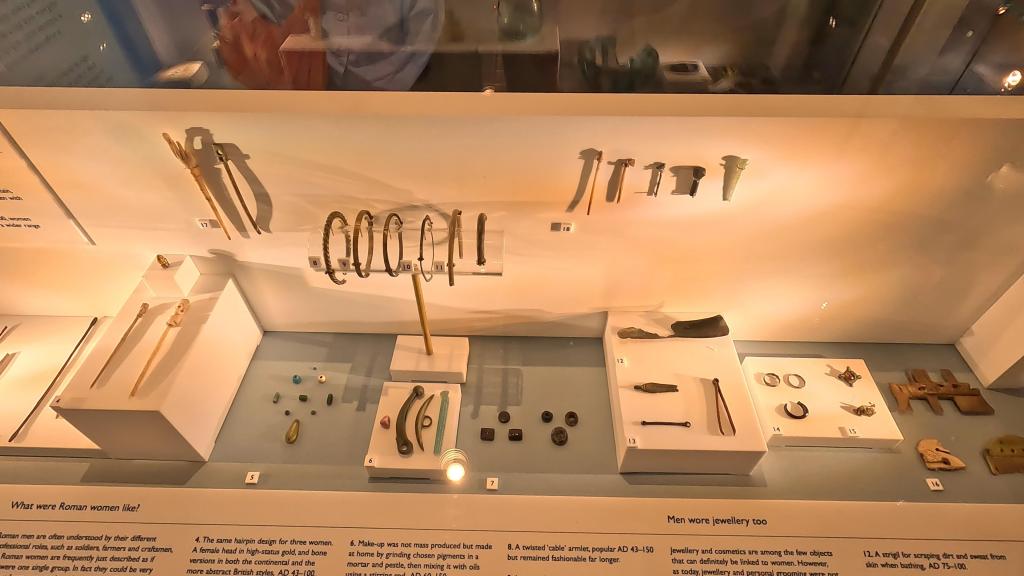
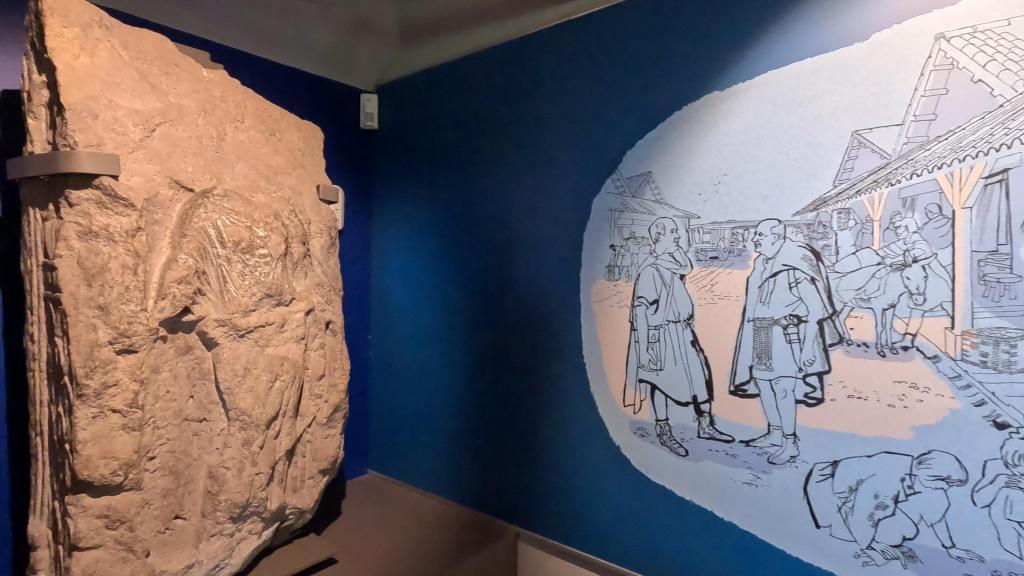
Inside the museum, you’ll find a number of interesting and fascinating items on display, be sure not to skip this part, it gives a great first glance why and what Richborough Roman Fort is all about. Since it was first excavated in the 1920s, the site has yielded some of the richest finds from any Roman site in Britain, including 56,000 coins, 460 brooches and more than 1,000 hairpins. The site museum will also display recent finds for the first time, including a glass cup made in the Middle East testifying to luxury imports through the town and hairpins including one in gold.
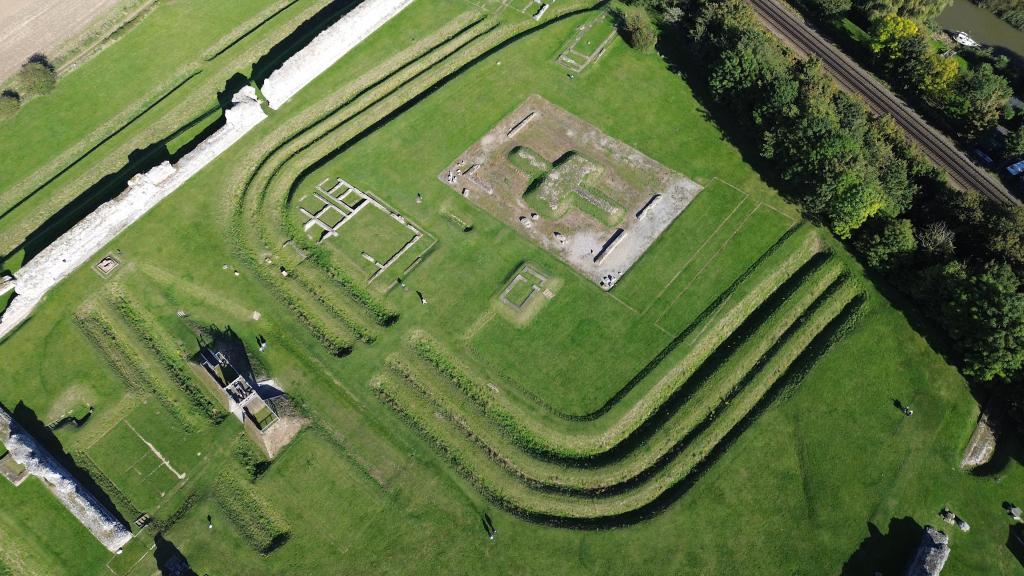
Of course, we did not show everything, because we want you to experience first hand, what Richborough Roman Fort has to offer. The site is run and maintained by English Heritage, with a large car park, toilet facilities and a shop located in the museum. Be sure to check the English Heritage website for further details on the opening times!
If you liked the blog please hit that like button, watch the full video below and consider subscribing if you haven’t already.
Till Next Time!
 Pinned on Places
Leave a comment