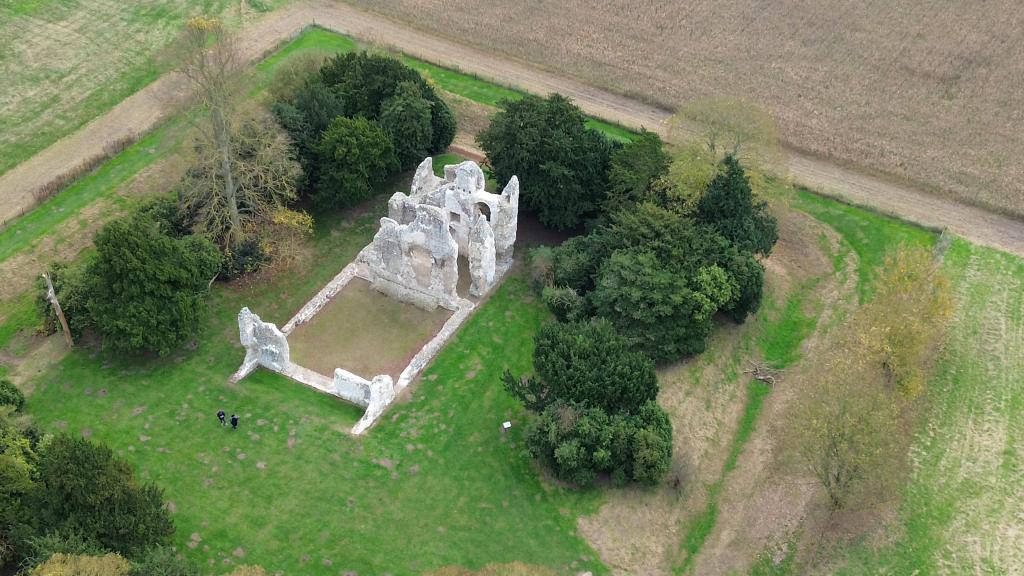
We are visiting the area of Norfolk and in particular we wanted to explore the remains of a late twelfth century manor in England which in itself is quite a rare thing, obviously in the area Of Norfolk, you’ll be blown away by the variety of castles, manor homes, stately buildings that are scattered around, but we think that it’s worth to make the time to find this isolated gem shrouded in mystery.
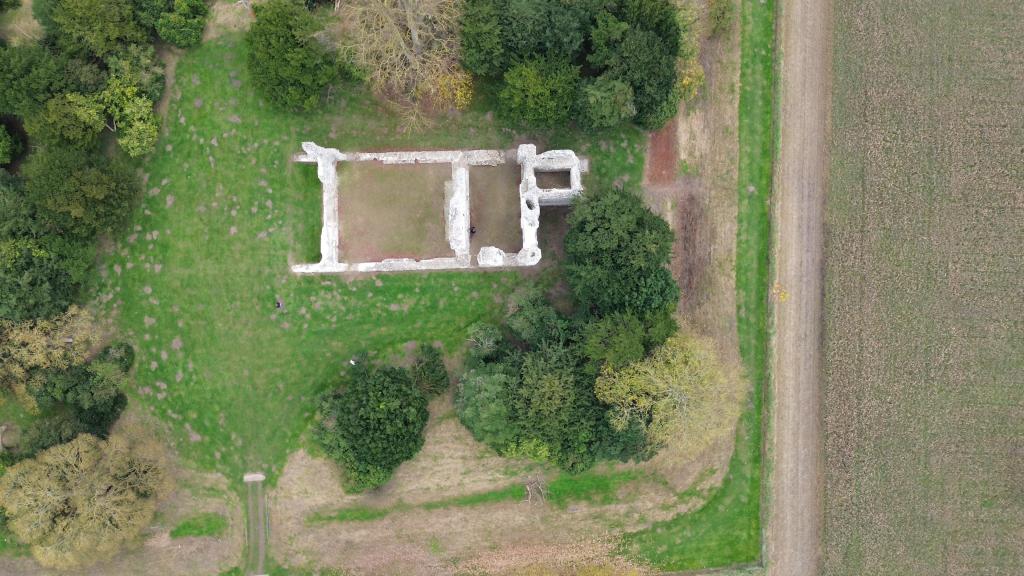
The Castle here at Weeting is not actually a castle in the traditional sense, but more a 12th-century moated manor house built by the de Plais family. The site was first occupied by a Saxon settlement in the late 10th or early 11th century, but around 1180 the de Plais family constructed a fortified manor house, and about 70 years later they added a rectangular moat to enclose the site, which is also the first thing we see after entering through the gates.

In the 14th century, the castle passed by marriage to the famous Howards, the Earls of Norfolk. The Howards had other great houses, and sadly let Weeting Castle decay and crumble. It was finally left abandoned around 1390.
Walking around the outside of the building it’s amazing to be able to see the height of the tower block and private apartments and amazingly still standing well considering how out in the elements it is. We make our way to a small room which was at the back of the private apartments. This room would be part of the latrine block, where three cubicles could drain into a ground floor chamber. In the outer wall of this chamber was a small door, allowing the contents to be cleaned out periodically. The door stands just above the moat, which makes you wonder if the latrine contents were just simply emptied into the moat.

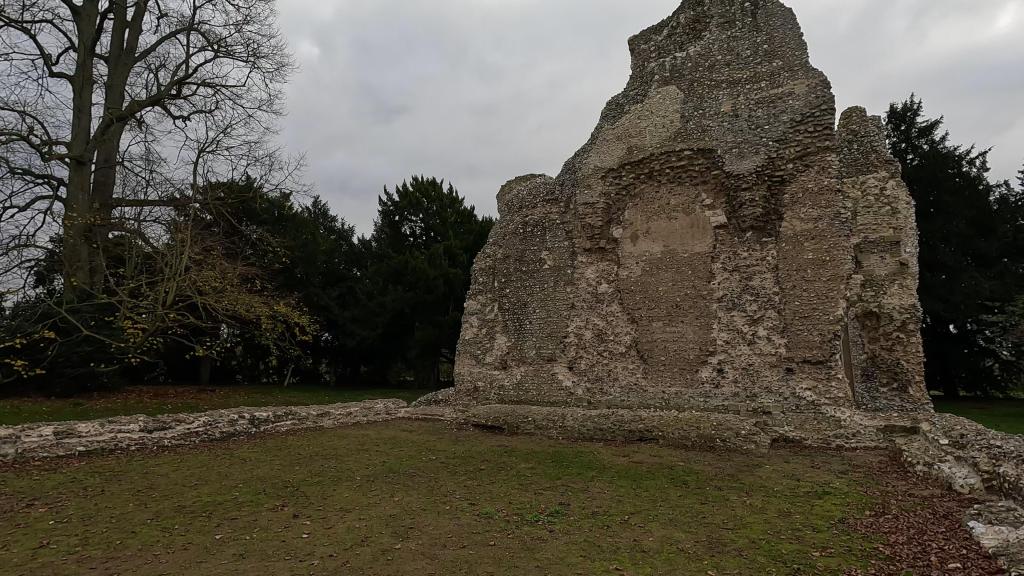
After the hall went out of use, it was incorporated as an ornamental feature within the grounds of the now demolished Weeting Hall. The site has a long history of use, from the 10th century until the late 18th century. Archaeological excavations at the southern end of the hall have discovered ditches, post-holes and pottery dating to the Saxon period, suggesting that a Saxon settlement existed here before the stone hall was built.
Imagine if the castle had been totally demolished and rebuilt on, we might know it was there, but now with these ruins we still have something to visualise, even just a few flint stones, it still fires the imagination so much more and is a fantastic place to visit and worth a trip when visiting Thetford and Norfolk. Weeting castle’s claim to fame is that the type of building here is a typical example of an East Anglian ‘great house’, in fact rarer than a castle.

Nearby, the church of St. Mary the Virgin is one of around 130 round-towered churches in the area of Norfolk. Its earliest elements date from the 11th/12th centuries, though there’s no evidence the church and castle were actually connected. When the church is open, it’s a great place to visit at the same time of the castle and experience how impressive and atmospheric the church is, sadly it was closed whilst we were there.
If you liked the blog please hit that like button, watch the full video below and consider subscribing if you haven’t already.
Till Next Time!
 Pinned on Places
Leave a comment