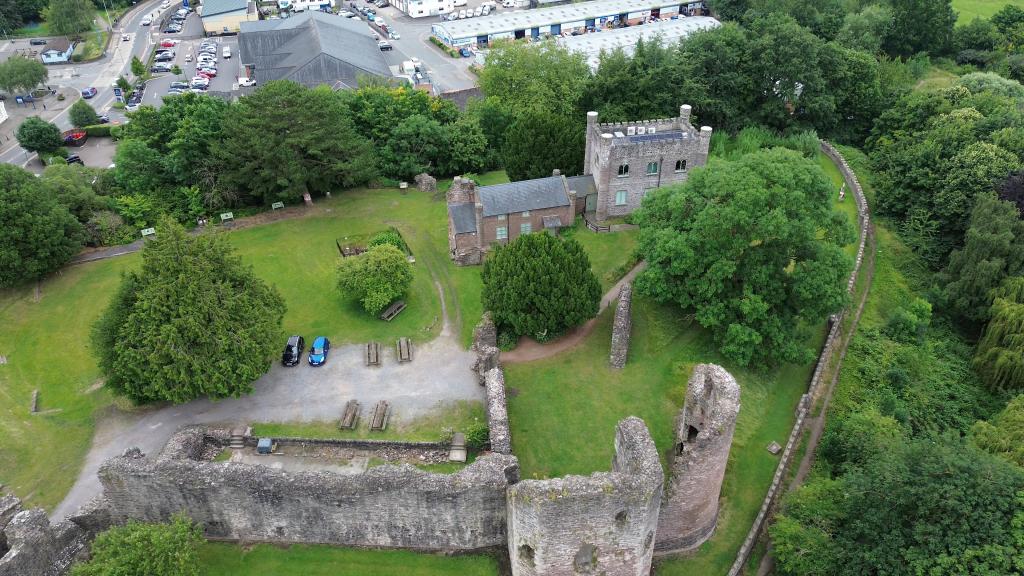
We travelled back to the beautiful county of Monmouthshire in Wales to visit a now ruined castle is set against the beautiful lush hills which form a backdrop to Abergavenny town. Your visit offers you a castle and a museum in just one visit, not to mention it being a free attraction, famed for its disturbing Christmas day massacre. So why not join us, here at Abergavenny castle and museum.
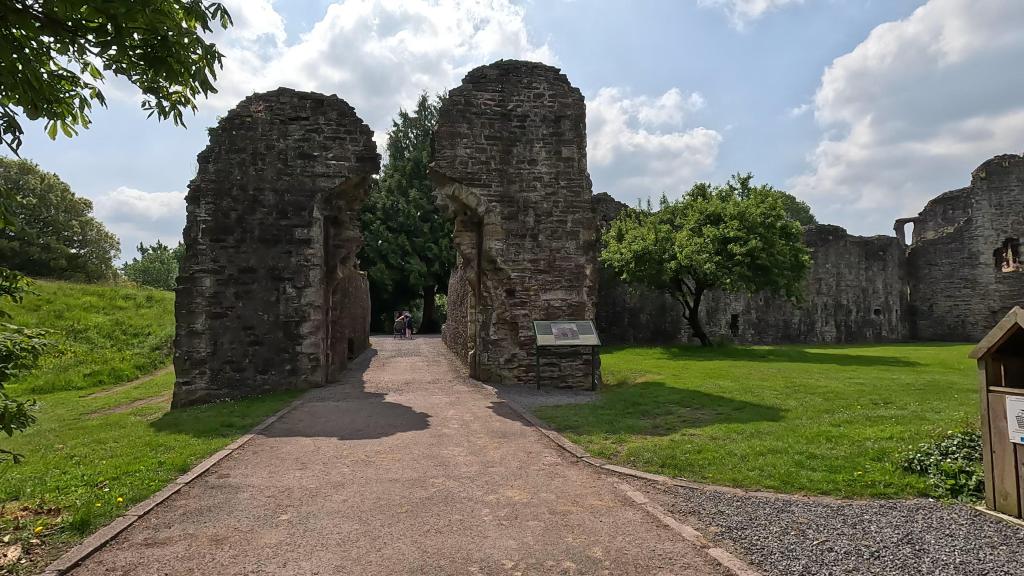
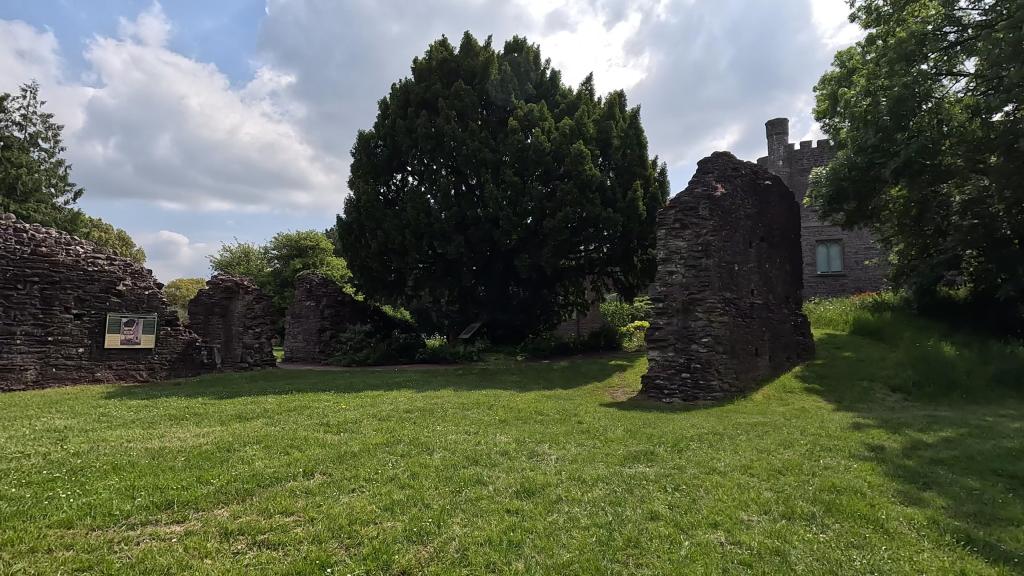
The original castle was a typical Norman motte and bailey style castle built by the Norman lord Hamelin de Ballon around 1087 to guard the River Usk and the lowland areas, complete with a surrounding ditch and wooden palisade walls. Soon after the 1100s, a stone keep was built to replace the wooden keep.
In 1175, the Castle was the scene of an infamous massacre. Like the town itself, the castle seems gentle, calm, possibly a place of rest and refuge, there is nothing left to suggest the horrifying scenes that took place on that very soil late in the twelfth century. Despite Henry’s death working in his favour, William de Braose, the successor to the castle, sought to end, once and for all, the ceaseless conflict with his men and the warring local factions.
To that end, and to avenge Henry’s death, he rather foolishly took it upon himself to orchestrate one of the most underhand and bloody events in Welsh history. I’ll set the scene as we walk in the remains; a royal feast was arranged for Christmas in 1175. Goodwill to all was promised, Reconciliation and a chance to air grievances and to begin the New Year with a clean slate. Unarmed, with their weapons left outside as a show of trust and honour, Seisyll and other leading Welsh noblemen, along with their sons and other high ranking men, made their way into the castle in pursuit of Christmas joy and merriment.
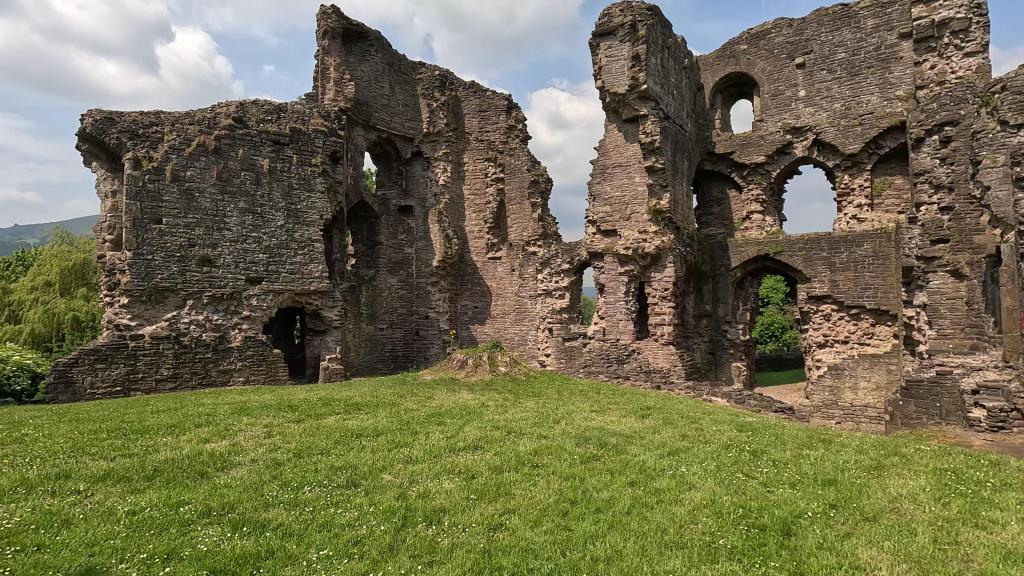
Once inside the great hall, pleasantries were made and festive drinks shared and the sounds of laughter and music played throughout the hall, however, a signal was passed, the doors were bolted and de Braose’s cruel intentions were laid bare. William watched from afar as his enemies enjoyed their hospitality and delighted in the thoughts of them being unable to know what’s coming next. In an act of merciless and unthinkable cruelty, William signalled again to his men to enact his bloody plan and within moments, the hall was in complete chaos. Every guest was brutally murdered and they attacked adults and children alike.
Not yet satisfied with the bloodshed and the harm he had reacted, de Braose left on horseback alongside his men to finish off this most monstrous Christmas killing spree, eventually murdering Seisyll’s wife and only surviving son and heir. The night had been brutal and it earned William a nickname of The Ogre of Abergavenny. Weirdly enough his actions were forgiven as he was a firm favourite of King John of England and later would take up the post of Sheriff of Herefordshire.
But as the old saying goes, karma will come back to bite you, It took until 1182 for there to be any significant act of retribution for this unhallowed of nights, when the castle was stormed and set alight by the Lord of Caerleon. William was set to have fled to Ireland and was later seen in France where he lived out the remainder of his life, Williams’s wife and son were taken to corfe castle and are said to have been starved to death in the dungeons. The massacre has even said to to inspire the infamous Red Wedding scene in Game of Thrones, one of the much-loved series’ most memorable and shocking moments.
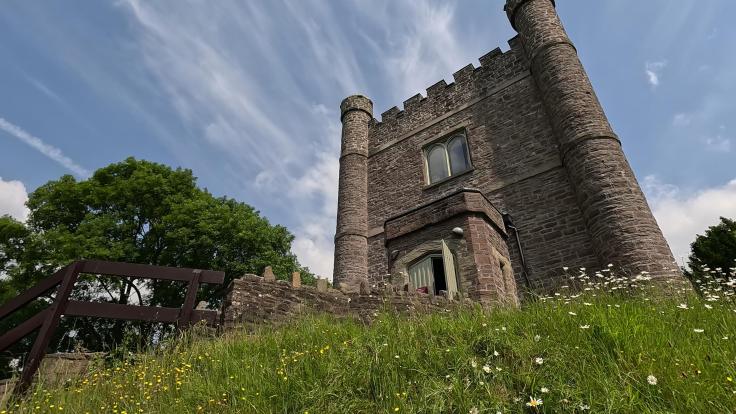
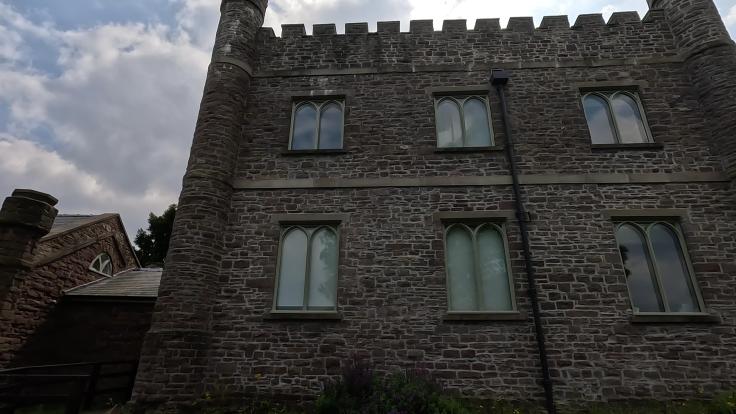
The building on top of the motte now houses Abergavenny Museum. It was constructed in 1818-19 by the Marquis of Abergavenny as a hunting lodge. Its construction would have drastically altered the medieval remains of the castle and much was destroyed, most significantly the keep on top of the motte.
In 1881 the grounds at Abergavenny Castle were opened to the public. Walkways were put in place around the ruined walls and towers and were used up until the 1930s. Dances were also held in the ruined Great Hall up until the second World War. The demolition of historic buildings in Abergavenny during the 1950s made people aware of the need for a museum in Abergavenny. In 1957 a Committee was formed and by 1959 the museum opened at the castle.
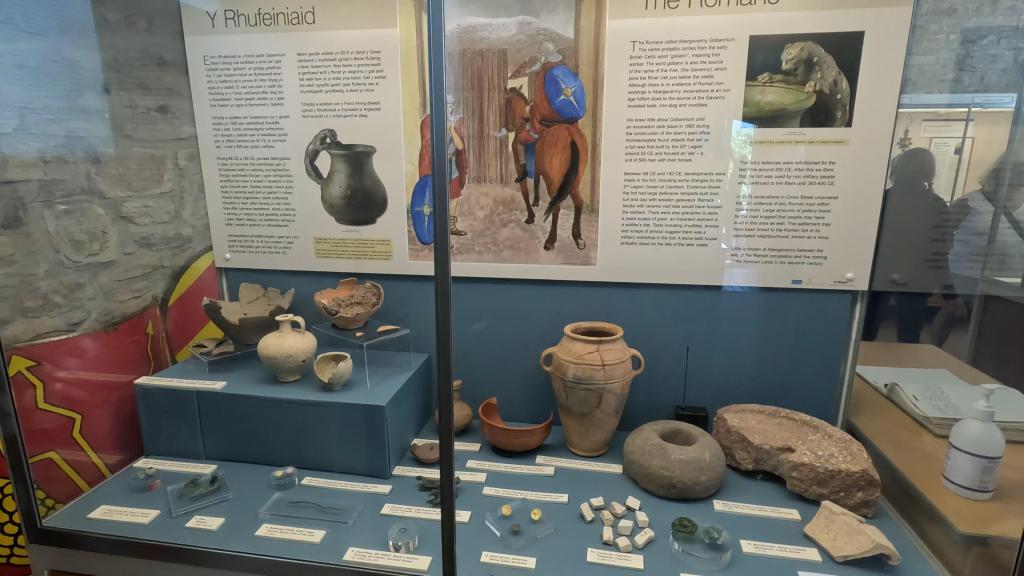
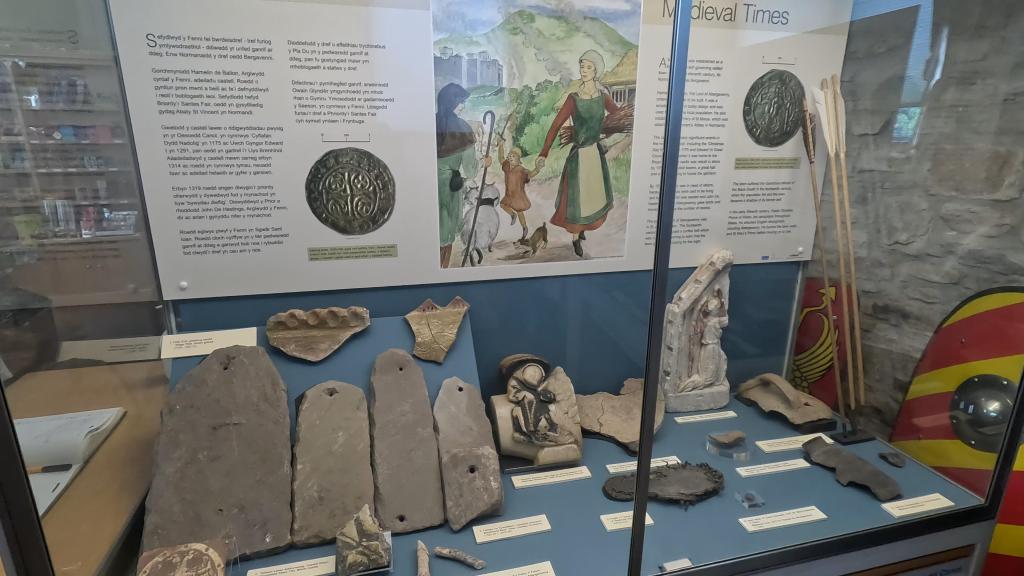
The museum houses a collection of objects of local significance with old photographs of the landscape and town and displays relating to the history of the area. You’ll notice glass cabinets full of prehistoric tools and finds, dating from the Mesolithic, Bronze and Iron Age, with axe heads and arrow heads. Other items include roman armour, Pieces from the medieval and Tudor period, and Victorian artefacts. They also have a display on the infamous Whisky the turnspit dog which is really interesting.
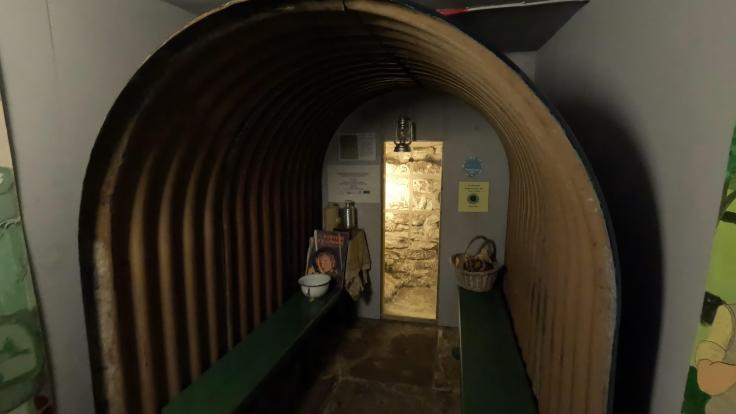
Perhaps the more unexpected moments you’ll find when visiting the museum, are the five permanent exhibitions they have here, including that of a reconstruction of a World War II air raid shelter. It’s quite eerie to be able to sit inside and listen to the sounds of sirens going off, but also very thought-provoking too. Up until 2008, the shelter itself served as a tool shed in the back garden of an Abergavenny resident.

The next part of the museum shows of a mid-19th century saddler shop, in Abergavenny town, there was over 8 saddler’s shops and in the display they show off how a shop would have looked aswell as next door a typical Welsh kitchen dating from the 1960s, It is in the style of a Victorian farmhouse kitchen and incorporates a fireplace, which was rescued from the Tudor Street demolitions.
It’s a fantastic example of the beauty of simplicity back in the 60s, the plates on the backwall remind me of how my grandparents used to display their finest china and silverware as does the big grandfather clock, a staple piece in those times. The display was updated in 2014 by pupils from a local primary school who helped to redesign the space and it’s now a forgotten but interesting style of how the kitchen would have looked over 50 years ago.
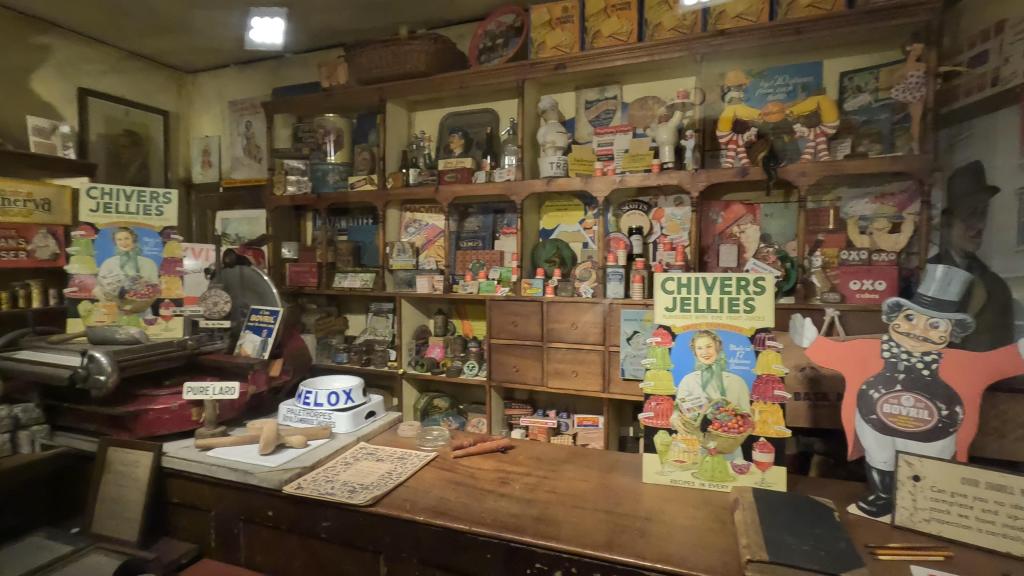
Possibly the most fun and interesting display for us to see is the Basil Jones grocers shop. Interestingly in 1994 the museum acquired a large amount of stock from a local well known grocer – named Basil Jones, inside the display you’ll notice some household favourites and see packaging from as early as the 1930s, it’s pretty incredible to see the difference between then and now and how everything has changed, gotten smaller yet way more pricier. I love looking at the advertising on some of the products and how impactful and colourful they were. You’ll also spot Basil Jones’s bike which just adds more to the authenticity.
So although the castle has witnessed much violence and destruction over the years, its ruins still stand watch over this beautiful valley – as it has done for a thousand years. Its centuries-long history of re-use, remodelling, and repurposing continues to this day, and will likely remain to do so for years to come.
The museum is also a fantastic reminder to what’s being slowly forgotten, it’s a great visit if you have kids too as there is plenty of hand on exhibits, but there is also a great deal to enjoy as adults. As I mentioned earlier, your visit to the castle and museum is completely free, although they do rely on donations and have the friendliest of volunteers ready to help and tell you more about the town.
If you liked the blog please hit that like button, watch the full video below and consider subscribing if you haven’t already.
Till Next Time!
 Pinned on Places
Leave a comment