
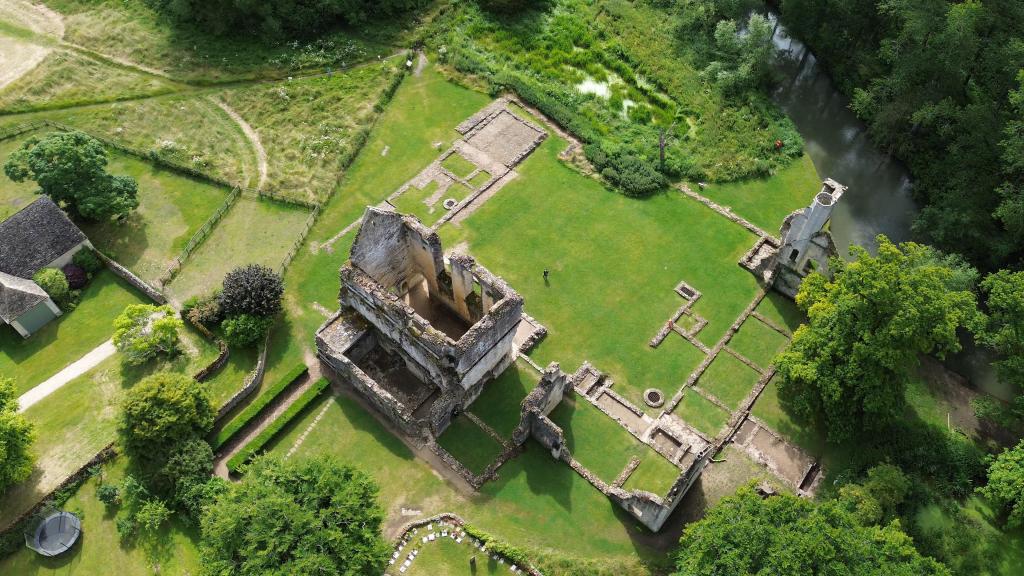
We wander the church of St. Kenelm and Minster Lovell Hall in Witney, West Oxfordshire. Most medieval ruins in the UK are either castles or monasteries, halls are much less common, but Minster Lovell Hall is a fine example, a grand manor house constructed around 1440 and occupied for nearly 300 years before being abandoned and partially dismantled.
There has been a manor house here at Minster Lovell since at least the 12th century, but the major part of the ruins that we see today are those of a large new house built by William, the 7th Baron Lovell in the 1430s after his return from the French wars. The manor of Lovell was granted to the Lovell family by Henry I sometime before 1124. William Lovell, was one of the richest men in England who built his house as a demonstration of his wealth.
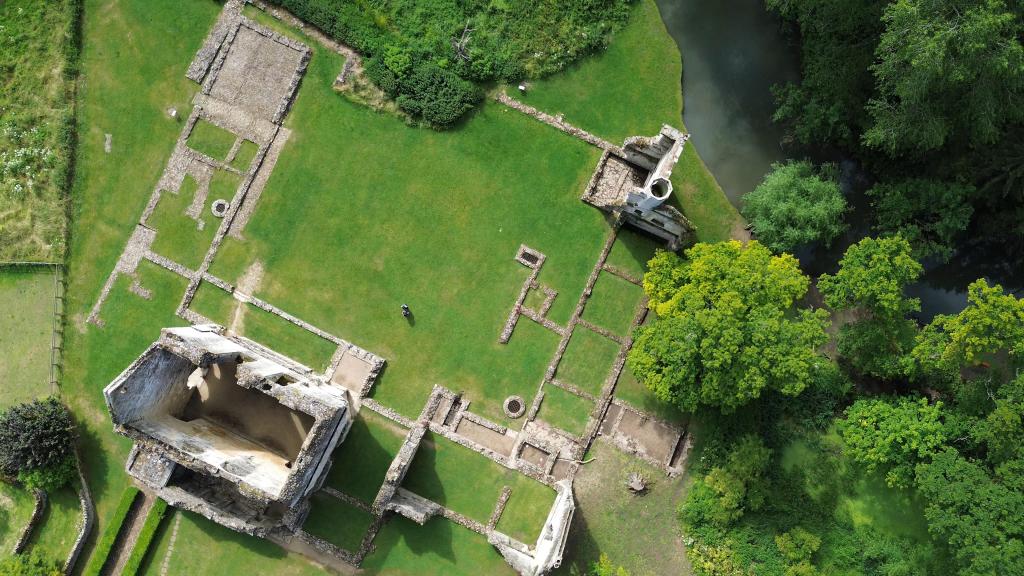
The buildings are grouped around a central courtyard in a form characteristic of a late medieval manor house – hospitality and control was fundamental to the maintenance of the loyalties on which late medieval English society relied.
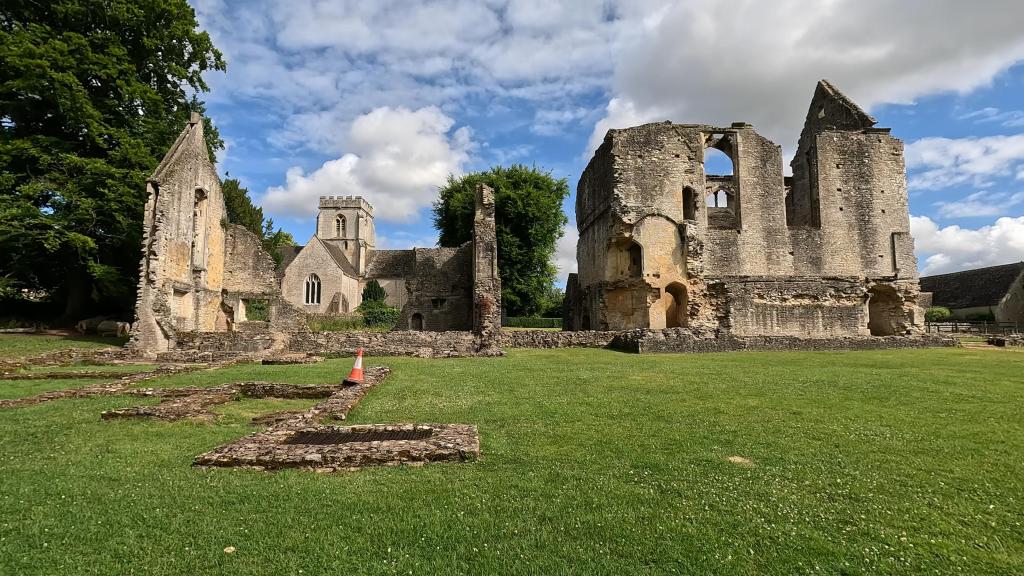
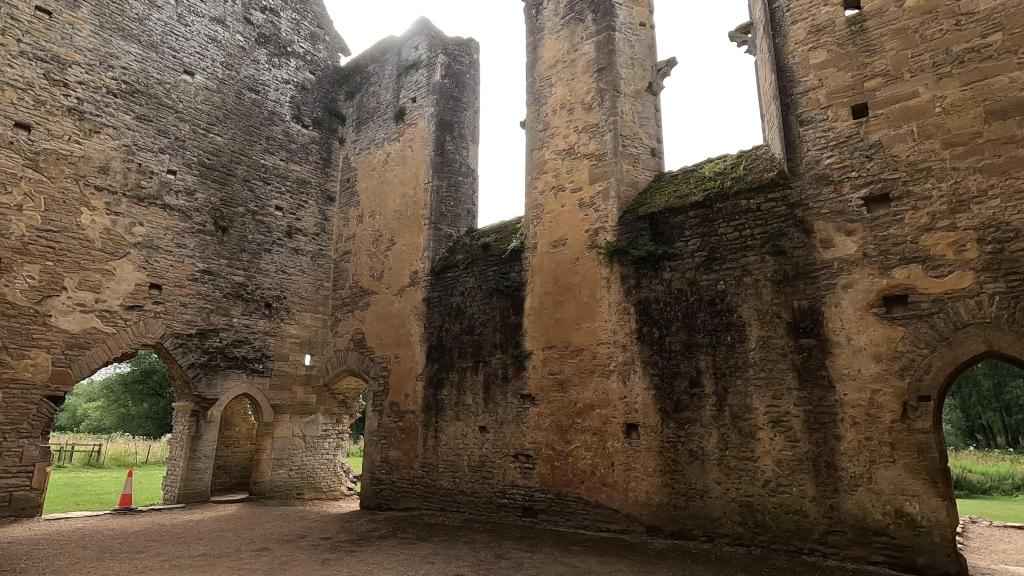
The most impressive room in our opinion is the large great hall, the walls of which rise up to twelve meters high and have stunning traceried windows from which the Lovells would have once gazed out from. West of the hall, and separated from it by the width of the room that would formerly have been used as a parlour with a chamber above, lies the northwest building. The east and west walls of this structure still stand.
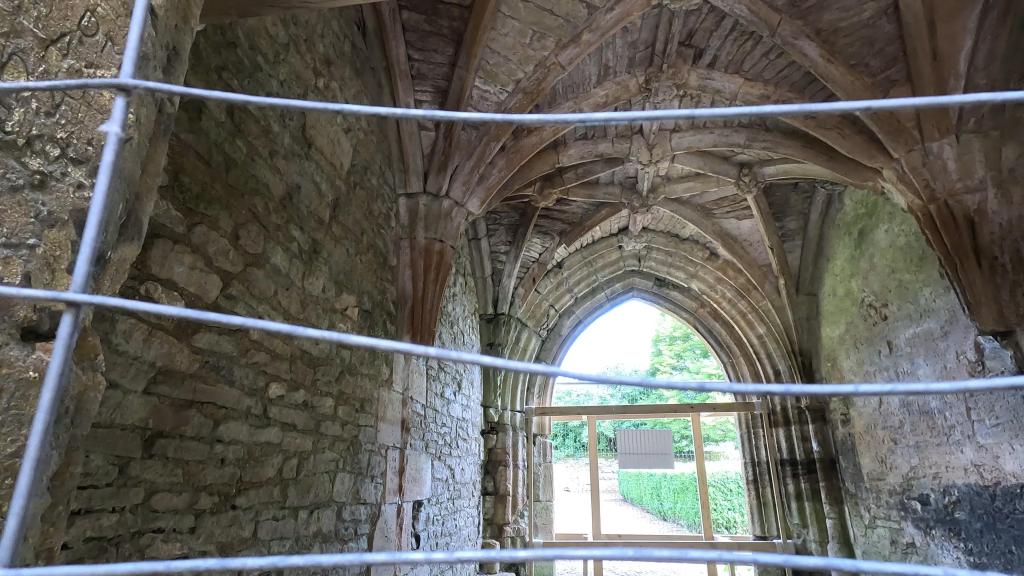
Behind the gates is the great hall porch. The porch which is approached from the north by a patterned cobbled pathway, has suffered the effects of being exposed to the elements but internal plaster survives within the vaulted roof. Decorative details can also still be seen, giving an impression of the splendour of the building when it was newly constructed.
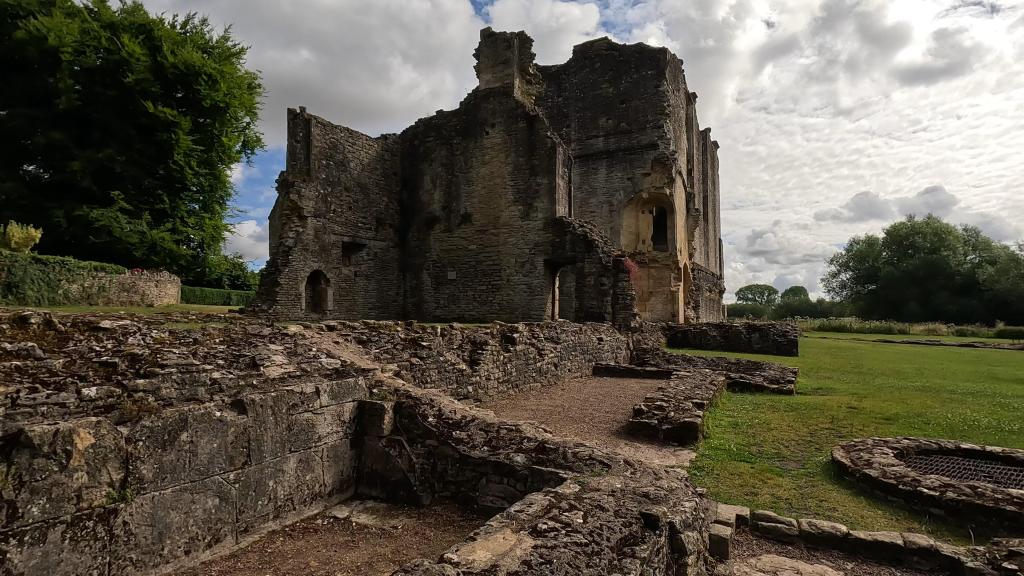
The manor was briefly held by Hugh le Despenser, favourite of King Edward II, during the infancy of the third Lord Lovell. Sometime around 1431 William, the seventh baron, began building a new house by the river to replace the 12th-century Hall. It would be an early example of a new style of architecture based less on defence and more on comfort, with ranges of richly furnished buildings centred on a courtyard. For a time the Minster Lovell estate was held by Jasper Tudor, uncle of Henry VII, and then by a succession of tenants.
The high walls on the west and south remain, though access to upper floors is not possible. Nothing beyond foundations remain to the east, where accommodation chambers may have been sited. At least one king, Henry VII is known to have stayed at Minster Lovell Hall and it is possible that Richard III did so also, as a guest of the ill-fated Francis Lovell.
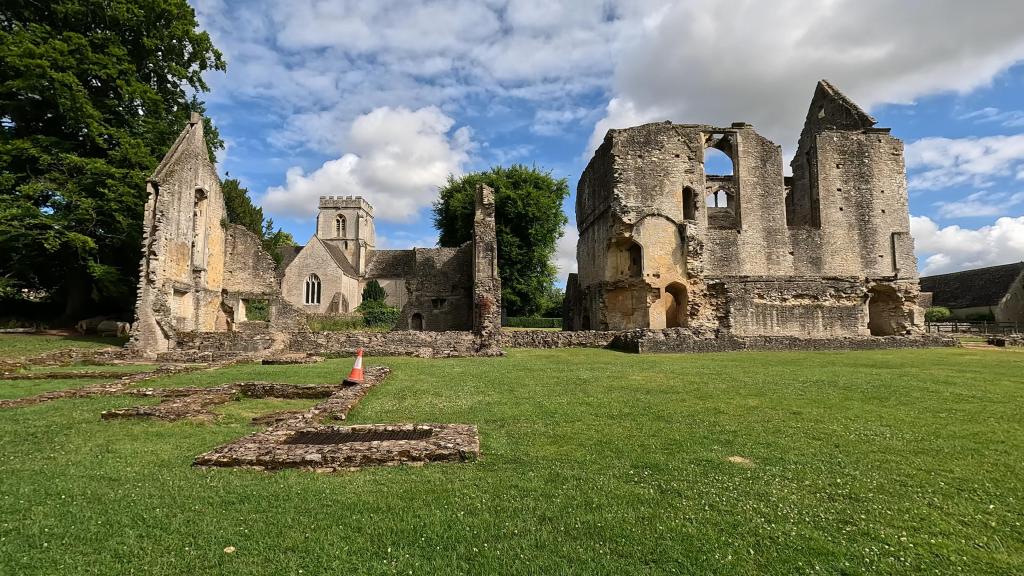
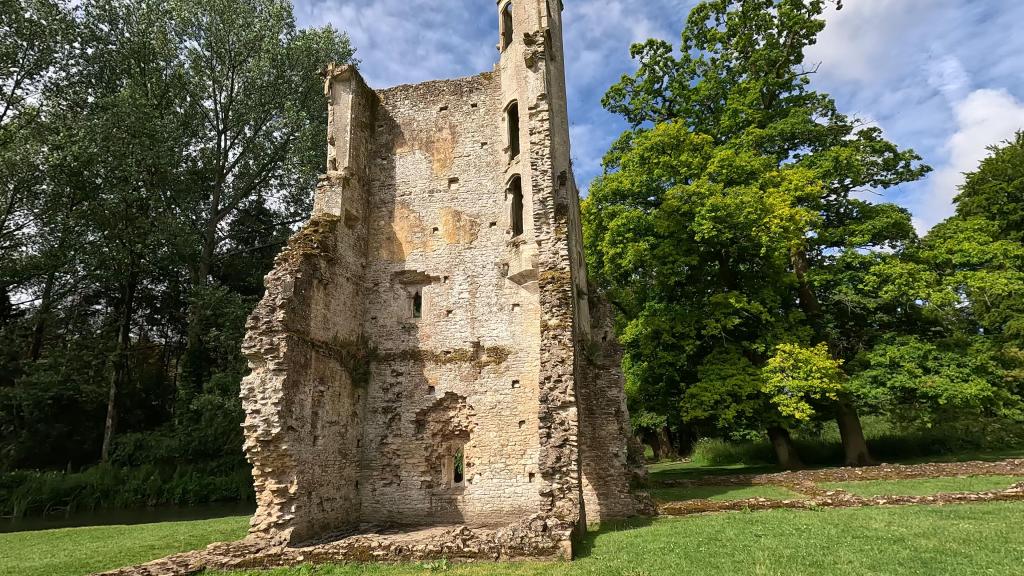
The four-story tower at the southwest corner probably dates to the period of Francis Lovell’s ownership in the late 15th century. Francis was the last Lovell to reside at Minster Lovell Hall. He was a firm favourite of King Richard III, who made him a Viscount. Other courtiers resented Lovell’s influence over the king. In 1485 Lovell supported Richard III against the rebellious Henry Tudor. The story goes that when Richard was killed at the Battle of Bosworth Field, Lovell fled to his manor of Minster Lovell, where he hid rumoured to be in a secret chamber in the southwest tower.
The chamber’s existence was known only to an old and trusted servant, who brought his lord food and drink. When the servant died suddenly, Lord Lovell’s hiding place became a tomb, as the rebellious lord was left to slowly starve to death, unable to get out of his sanctuary. It is said that the piteous moans of Lord Lovell can be heard amidst the ruins of his family home to this day.
Could it be true? Probably not, for the story did not emerge until early in the 18th century, when a new staircase was being constructed, a skeleton was found, sat at a table, with a dog at his feet, within a previously hidden room. There was a book, papers, on which a hand rested, and a pen, which all turned to dust when air was admitted. Perhaps he intended to write his story but if so, it was never read.
As Romanticism influenced culture at the beginning of the 19th Century, the hall became a place of pilgrimage for the new ‘culture tourists’ of modern England – and, as was common in these times, they would scratch their names into the walls to mark their presence. In fact, it’s only relatively recently that doing that has been frowned upon. It’s worth taking some time to really look around for the graffiti etched into the walls, some dates back to the 18th century, it’s just very interesting to be able to see.
The hall is a wonderful example of what wealth would have looked like back in the day, but the atmosphere there is something else. I can see why this hall is reputed to be haunted and that it’s a popular site for paranormal investigators wanting to experience the otherworldly. But if you’re visiting like we were during the day, the site is a calm and beautiful place to explore, you can even do a spot of wild swimming in the river just beside the hall. Of course a trip to the hall is not complete without venturing next door to St Kenelm’s church.
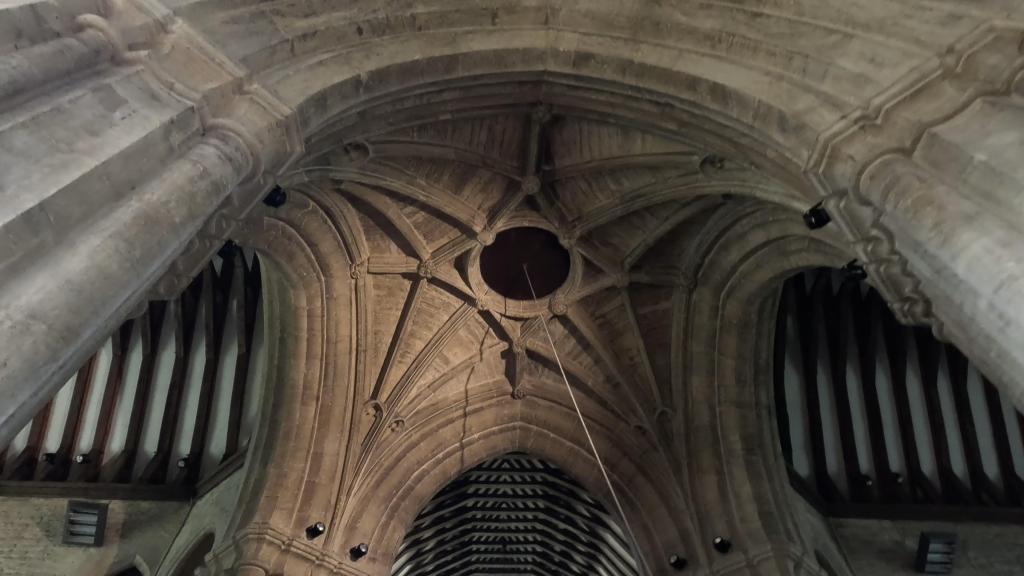
The church’s dedication to Saint Kenelm suggests Saxon origins. The earliest known record of the church, however, is from 1183 and the present St Kenelm’s is a rebuild of the 15th century. St. Kenelm was a Saxon prince, and the name “Minster” in the name of the village suggests that the village may have had a Saxon minster. The suffix “Lovell” was added to the name from the 13th century when a William Lovel held land here.
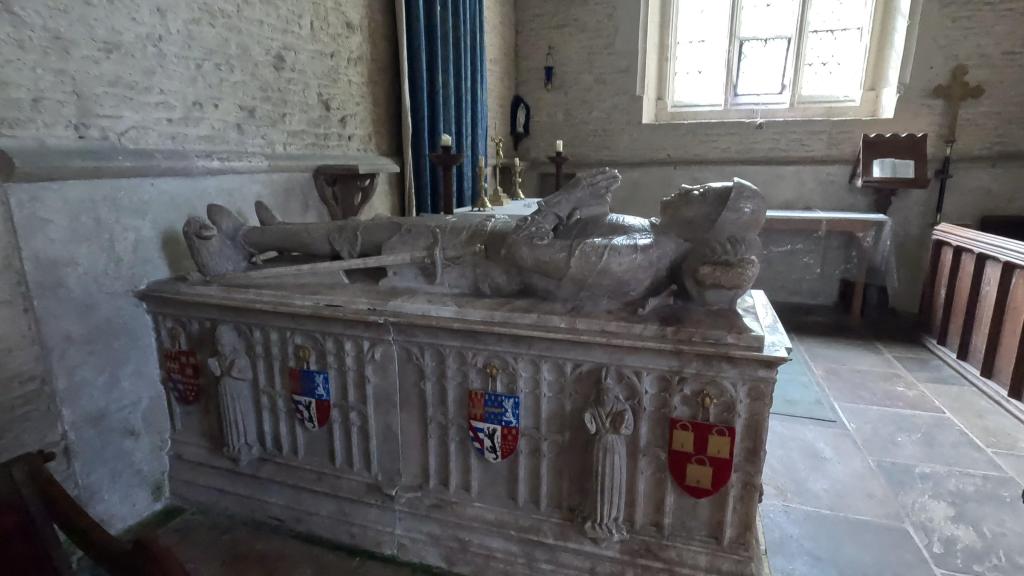
The church is quiet, beautiful and peaceful and not to mention large. A tomb effigy of Lord Lovell lies here peacefully and is the main focus as you walk through. The highlight is the alabaster tomb to William the 7th Baron, it’s quite beautiful to look at with the tomb laying on a chest decorated with heraldic symbols that relate to his family connections. There are also carved figures of St Christopher and St Margaret on the base. The high wooden ceilings are very impressive to see too as is most of the decoration here, including the original 15th century seating in the nave.
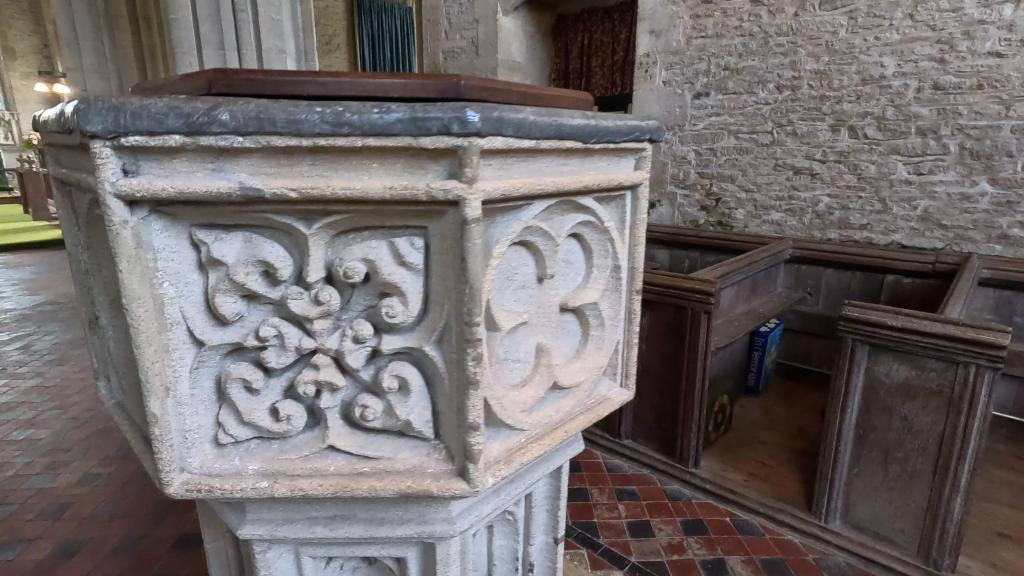
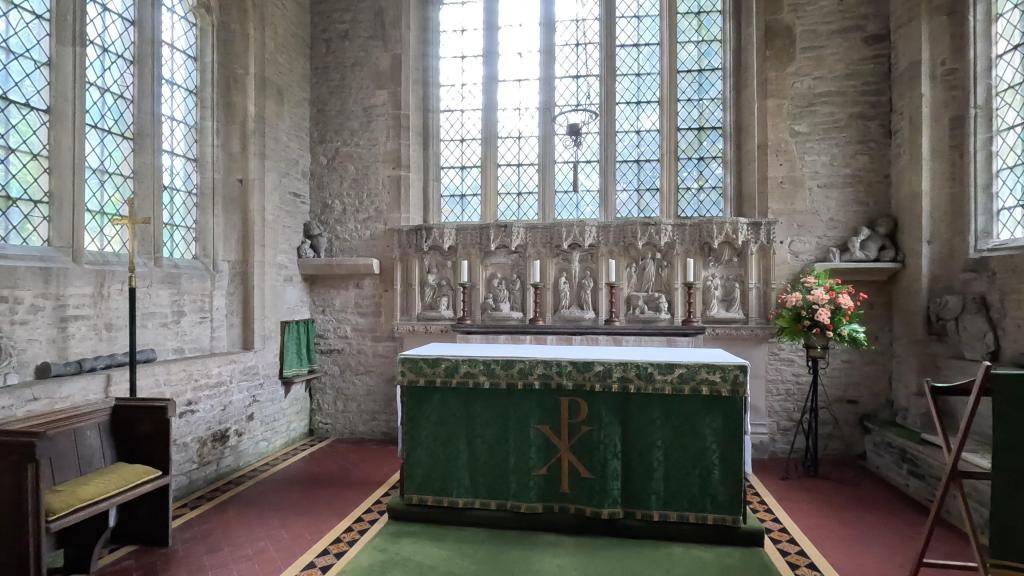
The base of the walls beside the chancel arch probably dates back to the original 12th-century church and is the oldest part of the building. The striking reredos behind the altar, were installed in 1876 in memory of Lady Taunton, the wife of Sir William Taunton of Freeland, who owned Minster Lovell Hall at the time. This is a lovely piece of High Victorian art, with five panels of finely carved sections of Biblical scenes.
The church just concretes the sense of simplicity and peacefulness, which can be said for the hall next door and for the small village too. Minster Lovell is a pretty special place worth visiting if ever near the Cotswolds.
If you liked the blog please hit that like button, watch the full video below and consider subscribing if you haven’t already.
Till Next Time!
 Pinned on Places
Leave a comment