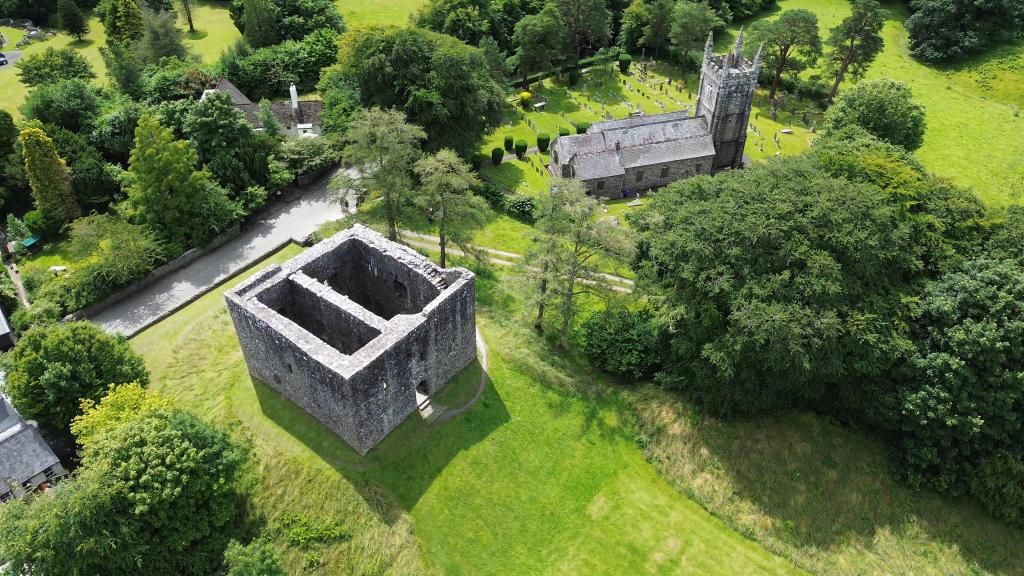
Lydford, a quintessentially English village, hidden away on the edge of Dartmoor in Devon is where we will explore both the Norman village church of St. Petrock and the nearly 800 year old ruins of Lydford castle that served primarily as a harsh and unforgiving prison and courthouse.
The history of the village begins in the Dark Ages. By the 9th century the Saxon kings of Wessex had established a burh here to protect the area both from Viking raids and also from the Cornish. Fortified during the reign of King Alfred, in Saxon times, Lydford was considered equal in importance to Exeter. As well as a stronghold, a mint was established at Lydford in the late 10th century. Some of those coins that were minted here have been found in Scandinavia, possibly having formed part of protection money made to the Vikings by the Saxons.
The Middle Ages saw Lydford become the administrative centre of the Forest of Dartmoor and continued to govern the tin industry within Devon and Cornwall. To understand how important the village had become, it’s worth knowing that at the time the Domesday Book was compiled in 1086, Lydford gathered more tax than London.


Our first location to visit is Lydford’s very fine stone church, named St. Petrock. The church is dedicated to St Petrock who was a Welsh monk who travelled extensively through the West Country in the 6th Century and died in 564AD. There are at least twenty-seven churches in Devon and Cornwall which bear his name.
The original Saxon wooden church in Lydford may have been burnt down by the Vikings when they attacked Tavistock and Lydford in 997AD, but it is possible that it lasted until well after the Norman Conquest of 1066. But nothing now remains of it. The first mention of a stone church in the village is in 1237. After that, there are references to building work on the church in 1261 and in the middle of the fifteenth century. At one time a considerable quantity of lead was taken from the roof of the church to repair castles in Cornwall.


Inside it is an enchantingly compact granite space full of golden-brown woodwork and giving off a true grotto vibe with its bare walls and pillar. The woodwork inside though is what brings this church its character and brings it to life.
There is so much to be looking out for when visiting St Petrock, The intricate wood carvings on the ends of the pews are really interesting, each one being different, they show a saint or holy man surrounded by a border of animals, plants or words. There are creatures from the sea and land, birds, insects, frogs and animals ranging in size from rabbits to goats; there are also many exquisite flowers, amongst them the primrose that has been carved.
On your way out of the church, you might notice that there is a very interesting display of models of the village throughout its long life, as well as the a late Saxon or early Norman tub font. Who would have thought that a small village church could have made such a mark on English history. This church from the outset might not seem much, but inside it really is quite remarkable. As are the gravestones surrounding the site.


As well as the charming church, there are the remains of medieval Lydford Castle to explore. It wasn’t actually a castle as such, it was actually a courtroom and prison for both of these functions, and was originally built about 1195 and took the form of a freestanding tower at least two storeys high.
Lydford Castle does not seem to be primarily designed to have a military function, although in 1199 when King John succeeded to the throne he had the castle garrisoned and expensively equipped to prevent any potential unrest breaking out in the region. The castle lacked the usual military features of the time, such as external gatehouses, and its design seems to have been intended to evoke the authority of a traditional defensive fortification rather than to resist an actual attack.
During the 13th century, the stone tower was rebuilt, and a mound piled up around its base, making it look much like the older Norman motte and bailey castles. The reason for the mound is not known, but maybe it made the lower-floor cells even more damp and uncomfortable for the prisoners held there.
An earthwork bailey to the North West was also constructed at this time. During the Civil War the tower was used as a military prison by the Royalists but it had fallen into disrepair by the mid 1600s and although later partially restored, by the early 19th century it had been abandoned.
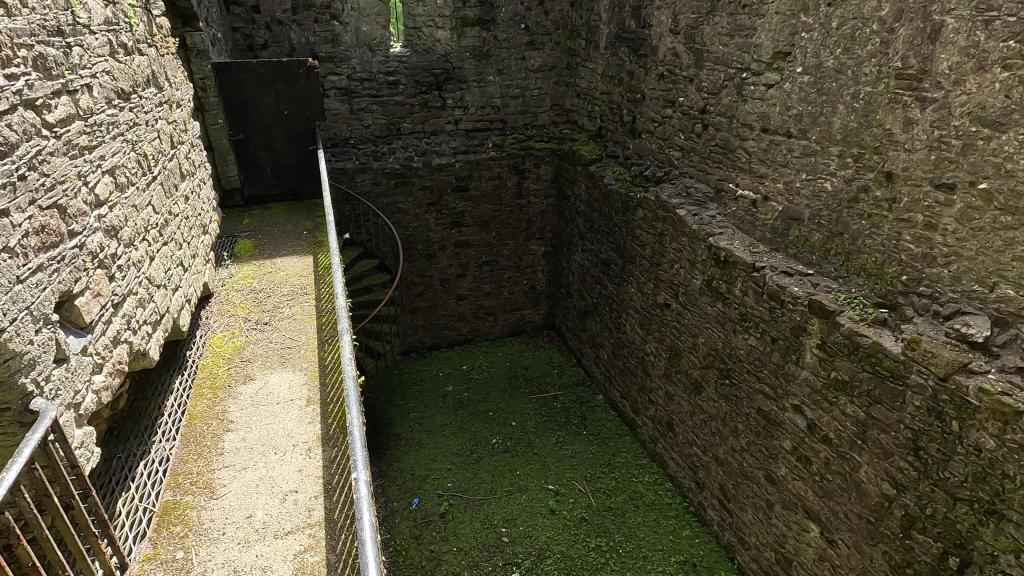
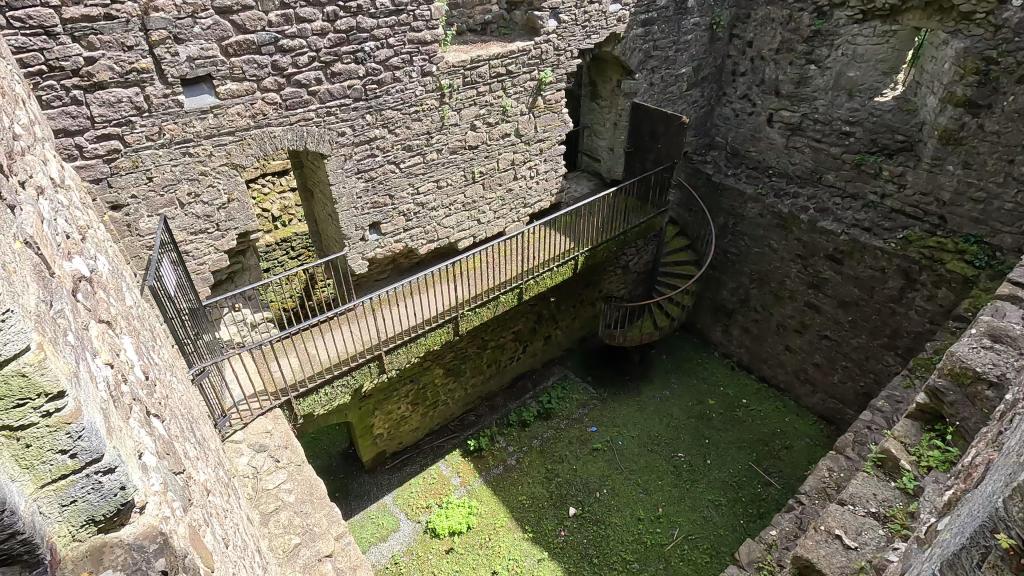
Throughout the centuries the castle was notoriously known as ‘a strong house for keeping prisoners’, and by the 18th century, it was used purely as a court of law and jail being described as ‘being a place most horrible, filthy and vile…’. The court and prison earned a grim reputation for hanging defendants in the morning and passing judgement in the afternoon. Conditions in the lower levels were pretty grim and not many survived what became known as ‘Lydford Law’, for once imprisoned you were literally forgotten about as your chances of making an actual court appearance were pretty slim as the judges sat in judgement seldom, so as the sentence was usually execution this was often carried out before you were actually found guilty!
During archaeological excavations possible proof was found for the story that the prisoners had to drink water collected from the roof. A well was located in the western corner and excavations further revealed it as a waterspout, which was carved from local stone. This was located 5ft above floor level in the south-western wall. The head contains a circular hole leading into a half round channel, which was built within the thickness of the wall. It suggests that it could have connected a supply of water, possibly from the roof with the spout being easily turned off and stopped meaning they could control the regulated water supply down to the prisoners.
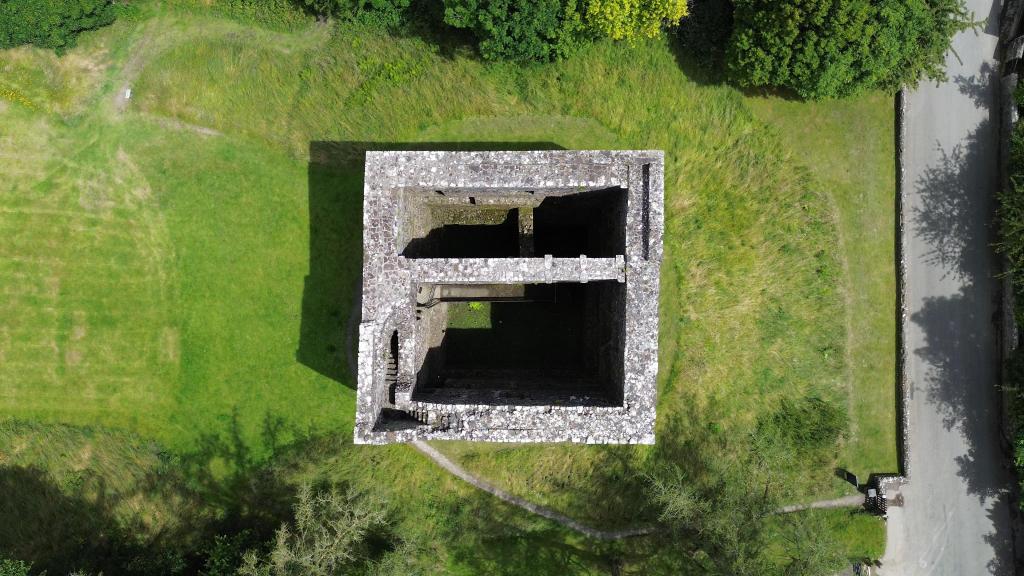

The castle continued to be used as a prison until the 18th century while going through stages of falling into decay and being refurbished. Prisoners were held there no matter what state the castle was in. During periods of decay, the prisoner’s sentences just became even more uncomfortable.
As Lydford is situated on the fringes of Dartmoor, it makes a perfect base from which to explore the historic market towns and the pretty villages and countryside of Dartmoor. Lydford is a settlement which has risen to great importance and then transitioned gracefully to become a village of charm and character.
If you liked the blog please hit that like button, watch the full video below and consider subscribing if you haven’t already.
Till Next Time!
 Pinned on Places
Leave a comment