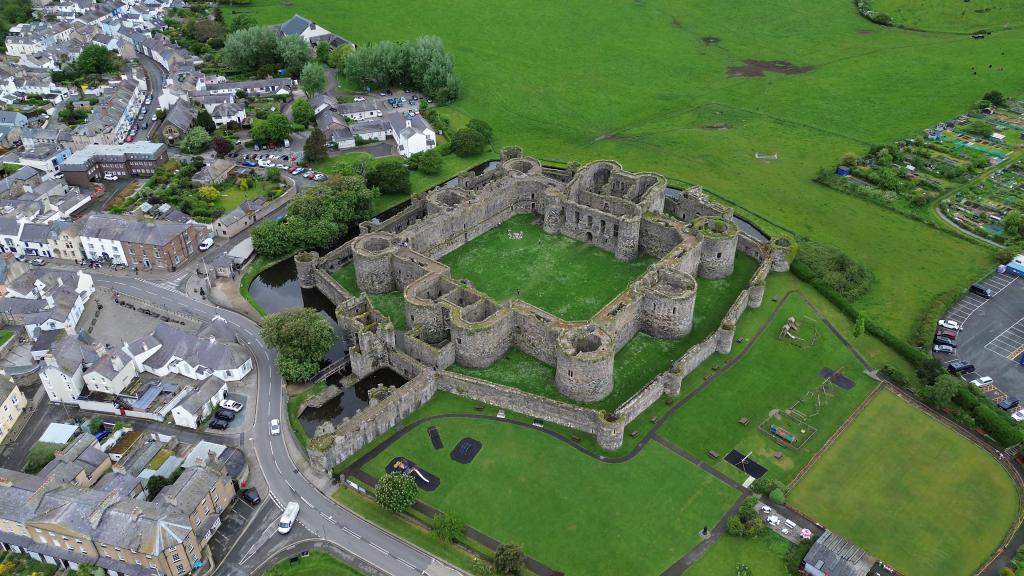
The Stronghold of Beaumaris sits on the island of Anglesey and is famous as the greatest castle never built. It was the last of the royal castles that were created by Edward – and perhaps his final masterpiece. It’s nothing more than a breath-taking example of medieval ingenuity. From the moment you step through the gatehouse, you’re transported back in time. The perfectly symmetrical design, the towering walls, and the still-water moat create an air of awe-inspiring power.
From 1285, Edward I poured huge amounts of money into building an ‘iron ring’ of castles across the coast of North Wales. Beaumaris, then, was a sister to Edward I’s other Welsh fortresses – which include Caernarfon, Conwy, and Harlech. It was the last to be built, and, in some ways, is the pièce de résistance of Edward’s hectic work.
The genius behind Beaumaris Castle – and the majority of Edward I’s Welsh castles – was the architect Master James of St George. Master James had masterminded the mighty towers of Harlech Castle, and the walls of Caernarfon which wrap around the town and the castle, too. Edward I almost certainly chose the site for Beaumaris Castle in about 1285 – at the same time that he selected the locations Harlech and Conway castles. However, for strategic decisions – and sheer financial pressures – he started building those first. As a result, when it came to building Beaumaris in about 1295, Master James had learned a great deal from those neighbouring castles.
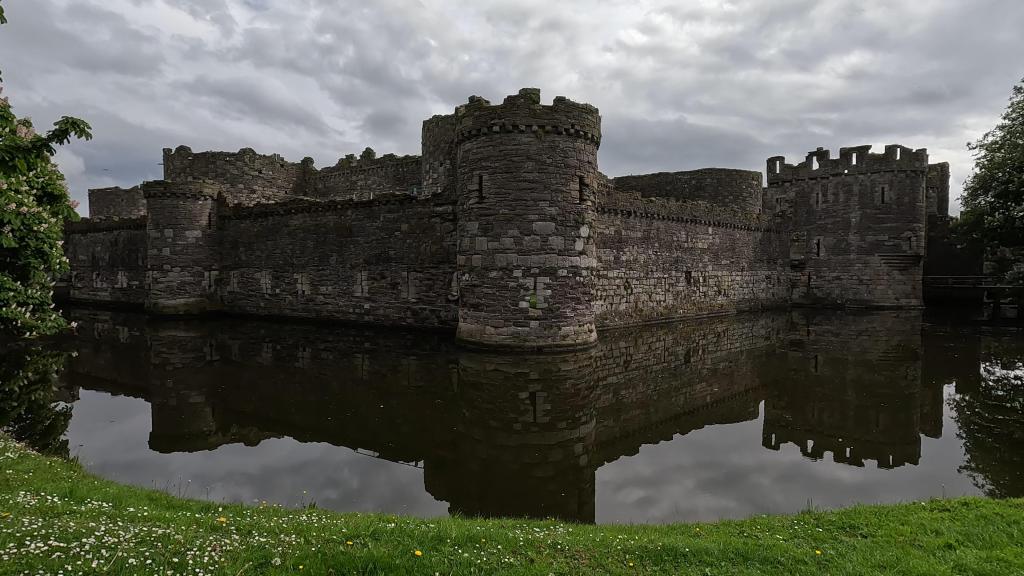
The style of Beaumaris is best described as a concentric design, or “a castle within a castle”. It’s made up of a phenomenally strong, 4.7m thick outer curtain wall which encircles the equally well-defended inner castle. In actual fact, Beaumaris is undoubtedly the world’s best example of concentric castle design. It was a method of building which maximised the castle defences. First of all, the outer concentric wall was shorter than the inner to give archers a vantage point against oncoming enemies.
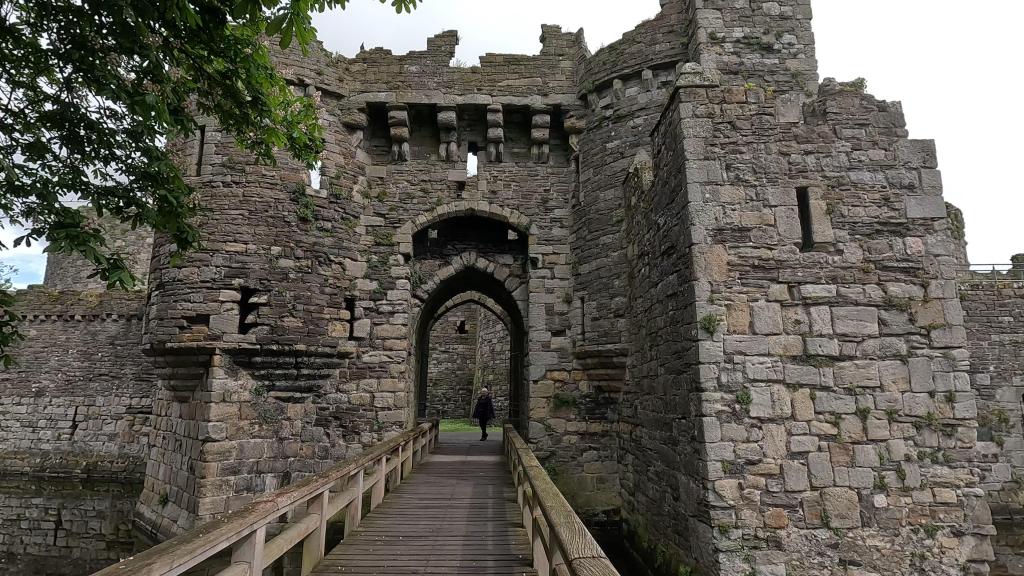
The only route of access into the castle would have been through the drawbridge we first entered to then directly turn right into the barbican and onto the South gatehouse which we are walking through now. This design was meant to make the castle almost impregnable. Once through the gates, an attacker would still have to face 11 further obstacles before entering the heart of the castle. This included the barbican, further “murder holes,” three portcullises and several sets of doors. If the daunting prospect of the gate-passage proved too much, the would-be attacker caught hesitating between the inner and outer walls could not have survived for long. There were 164 arrow-slits in the inner wall, designed so that arrows could rain heavy crossfire which would have poured down from all directions.

Beaumaris was to be built on flat, marshy land (beau-maris literally means ‘fair marsh’) adjacent to the Irish sea. In Harlech castle, Master James’ design had been restricted by the need to build the castle on an uneven, rocky outcrop.
The outer curtain wall contains an almost-symmetrical ten towers; and the inner wall wraps around six formidable stone towers and also the North and South gatehouses. The moat would have circled round the entire fortress, although it’s been partially filled-in today.
Although the main parts of the castle were built extremely quickly (works began in 1295 and ended in 1330), the towers, gatehouses and defences were never finished. That’s quite apparent when you visit the the castle today.
If the castle had been fully finished, its modern appearance might have been much grander. The two round towers which flank the Northern gatehouse are the tallest in the entire castle, but even these are about 10m shorter than they were meant to be – they lack battlements and the intended roofing.

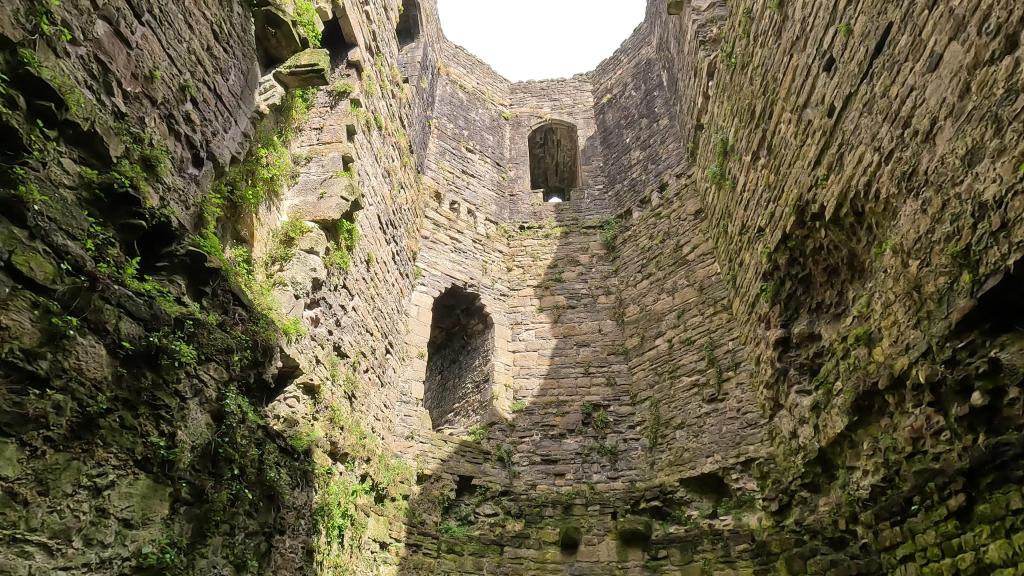
All the other towers in the internal ring of the castle are about half the height planned. The original designs crowned them with grand turrets which would have given the castle a very distinctive skyline. To top it off, the gatehouse, at the front of the castle, looks formidable; but the original plans would have given it a second storey of rooms and fortifications, effectively doubling its height.
The castle suffered no significant siege until 1403, where the Welsh besieged the castle during a revolt led by Owain Glyndwr against English rule. However, it was retaken by the English only a couple of years later, in 1405.
Beaumaris Castle was a strategic location during the English Civil War since it controlled part of the route between Ireland and the king’s headquarters in England. The castle was managed on behalf of the king by the Bulkeley family. In 1646, Parliamentarians defeated royalist armies, and Colonel Richard Bulkeley surrendered the castle. Royalists revolted against Parliamentarians once again in 1648 but eventually surrendered a second time in October of that year. Beaumaris Castle was not slighted or damaged, as was the fate of many castles captured by Parliamentarians under Oliver Cromwell. Architectural defenses were crucial for survival due to the need for protection against potential royalist invasions from Scotland.

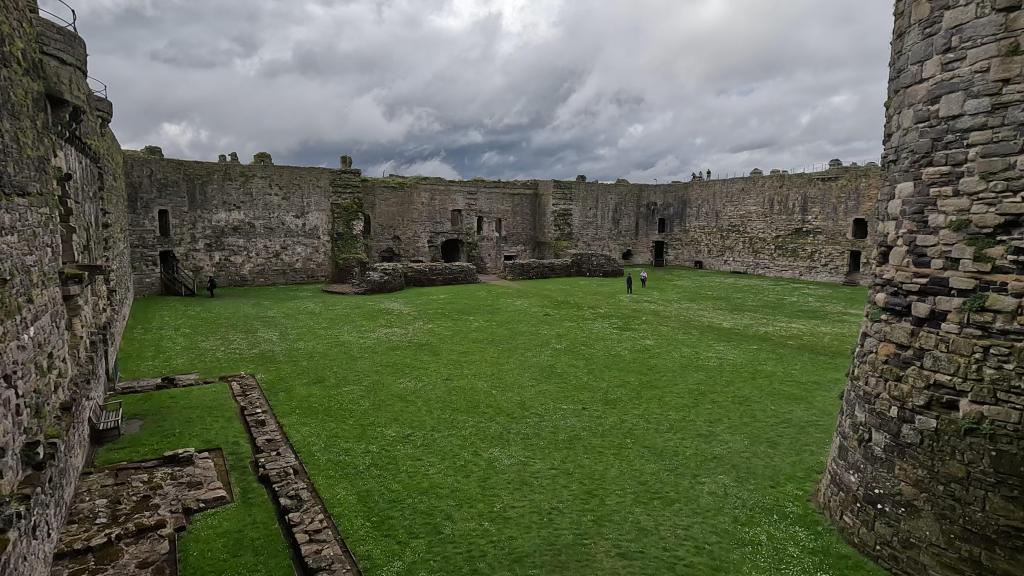
In the middle of the castle you will see a large lawn inside the inner castle walls, this is the inner bailey or ward. Today there are no wooden buildings but back in the 13th and 14th centuries this would not have been an empty space. It would have some now demolished stone buildings and several wooden buildings. During its time in use, there would have been stables as well as the hall and chambers outside you would find a mix of small industrial buildings used to support the garrison. The space is very open inside. Much of the living quarters, prison, chapel, etc. are built into the walls themselves.

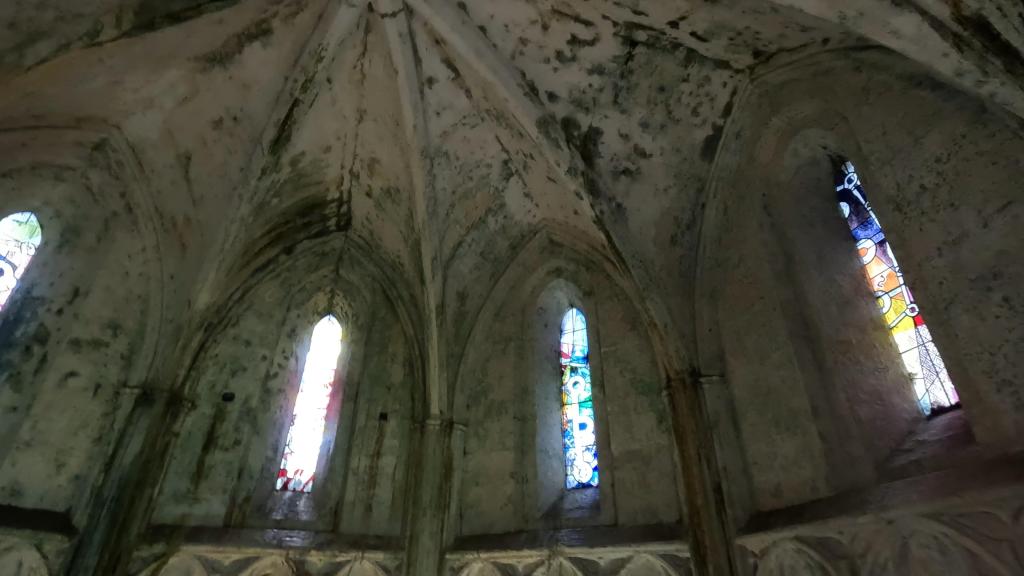
You can investigate the extensive internal passageways and countless nooks and crannies without realising the place was never finished, the beautiful chapel we make our way to, within the eastern curtain wall is worth a visit alone. A moment experiencing the beauty inside this room mixed with so much peace is quite unexpected within the walls. There are five lancet windows, some incredible and exquisite carvings and a vaulted ceiling, it remembers all the feel of the medieval mass that would have taken place inside, and this place really takes you back in time.

Beaumaris Castle, with its rich tapestry of history and hauntings, offers a unique blend of education and exhilaration. Whether you’re a history buff keen to explore its architectural wonders or a paranormal enthusiast eager to uncover its ghostly tales, Beaumaris promises an experience that will both enlighten and enthral.
A visit to the castle is a must when visiting Anglesey, the town of Beaumaris has its own Goal, some lovely ice cream spots, restaurants, a boat tour to see the puffins and of course make sure you do a walk along the pier and have a look at the Menai straight with Snowdonia’s great mountains in the backdrop.
If you liked the blog please hit that like button, watch the full video below and consider subscribing if you haven’t already.
Till Next Time!
 Pinned on Places
Leave a comment