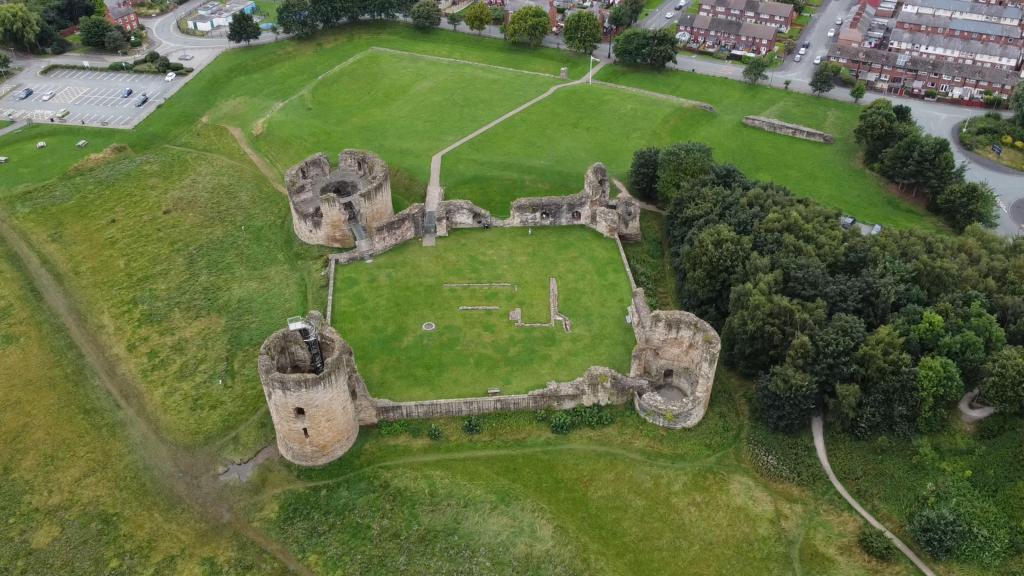
Exploring some of the remarkable fortresses across North Wales, our journey takes us to one of the first castles built in Wales by King Edward I ‘Longshanks’, which formed part of his chain of great fortresses across the north to subdue the welsh people. Built between 1277 and 1284 and protected by a moat and the River Dee from which it could be supplied under siege. Edward I chose the site with great care, ensuring access by sea – for reinforcements and supplies – as well as by land. So Join us whilst we explore the remains of this incredible and unusual fortress here at Flint Castle.
The fortress has the distinction of being the first of King Edward I’s ring of castles in North Wales. Although it is often overlooked in favour of its big sisters at Beaumaris, Caernarfon and Conway, Flint is still an impressive structure with a layout that is unique in the British Isles.

The site of Flint Castle was carefully chosen for its strategic location. Only a few mere miles of Chester, the castle sits on a low peninsula that used to reach right into the estuary. It could be easily supplied by river or sea, its harbour was protected by a defensive wall. The castle sits opposite to the English shore and from Shotwick Castle, a Norman medieval fortification near Cheshire.
Before the course was changed in the 18th century, passage across the estuary at this point could be made directly by boat at high tide and There is still evidence of a dock that would have been used to resupply the castle during a siege.


As we start our journey, we are met with ruinous stonework and what was once the outer gatehouse. Although there is very little remaining, look into the distance and you’ll see just how cool and impressive Flint castle is. The outer gatehouse gives some indication just to how big this castle was too, it was essentially a castle within a castle.
Walking up the modern path, you’ll approach the castle with the South West Tower on the left and the Great Tower and keep on the right. There is a modern bridge leading over the inner ditch and into the castle grounds. Flint was built in the medieval French style. Castle was constructed using the most sophisticated medieval military architecture of 13th century Plantagenet England. It incorporated formidable defensive design features and luxurious accommodations befitting a royal Welsh stronghold of King Edward I.
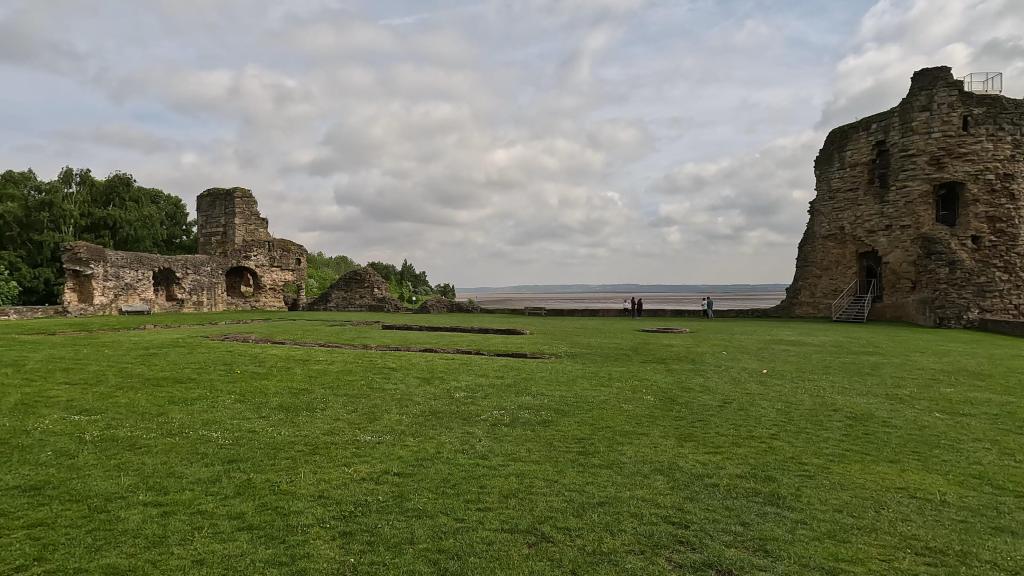

The castle consists of a curtain wall enclosing an outer bailey with a second stronger wall surrounding the square inner bailey, It would have had buildings to house and feed troops stationed there, together with stables for horses and a gaol for holding prisoners. The inner curtain wall neatly skips around the keep and has three smaller mural towers at three of its corners.
The inner wall is mostly gone now and has been replaced by retaining walls. The best preserved of the three smaller towers is the North-East tower, which we make our way to now. It would originally have been four stories high. The rooms inside were polygonal and it was designed to provide accommodation. Guests and servants were housed here and this was indicate by the fireplaces on the second floor, with a chimney that leads right upto the battlements. What is fantastic, is being able to climb the modern spiral staircase for views out over the battlements and across the estuary, on a beautiful day it’s a wonderful view.


Flint was a target right from the outset. Before it was even fully constructed, it was under attack. the Welsh forces besieged Flint Castle but they were rebuffed. In 1294 they returned under the command of Madog ap Llywelyn; Battle was fierce and bloody and the constable of the castle was forced to set fire to Flint Castle to prevent its capture by the Welsh.
Flint was the centre of English attention again in 1399. King Richard II of England had landed in Wales on July 24th after a military campaign in Ireland. He made his way across Wales to Flint where he was met by Henry of Bolingbroke’s forces. Henry’s was prepared to lay siege to the castle, but on August 19th Richard surrendered and was sent to the Tower of London. Henry seized the crown and became King Henry IV of England.
After repairs and partial rebuilding, Flint Castle was again used as a defensive fortress. During the English Civil War, Flint Castle was held by the Royalists, but they lost it to the Parliamentarians in 1647, after a three-month siege. Much of the stonework was then demolished to prevent it being re-fortified and a prison was built in the outer bailey in 1784 and was used until the early 20th century.
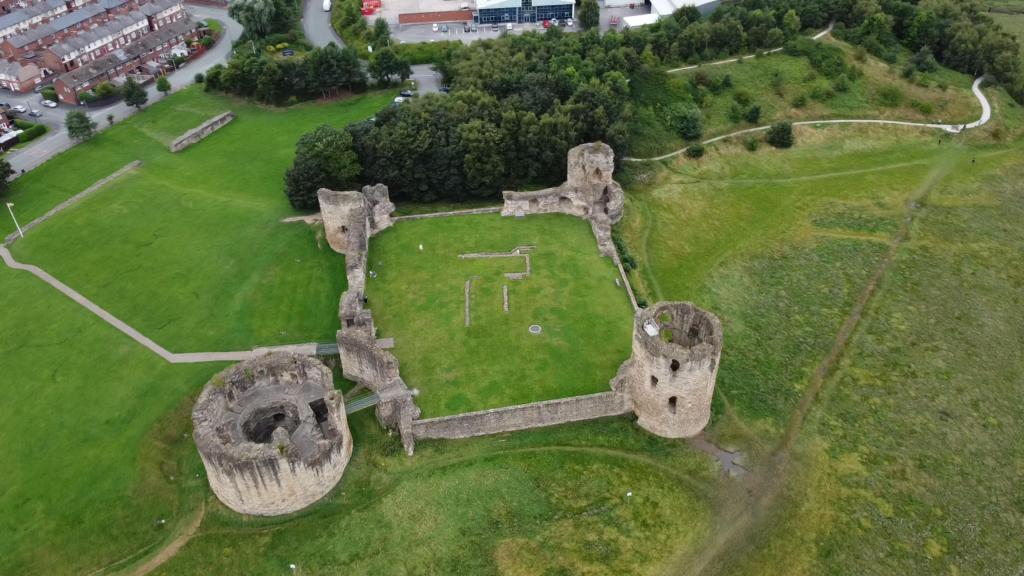
You wouldn’t think it, being hidden away on the coastline and the mud flats of Flintshire, but Flint castle is quite extraordinary and if you’re into your castles or architecture, It truly is the perfect starting point for a north wales castle crusade of your own.
The area is brimming with natural beauty, if you’re thinking of visiting, bring some waterproof boots or wellies and enjoy the muddy marshes and circle the entire castle to get up and close around the foundations or take a walk and search the waters and marshes for the many seals and birdlife soaking up the area.
If you liked the blog please hit that like button, watch the full video below and consider subscribing if you haven’t already.
Till Next Time!
 Pinned on Places
Leave a comment