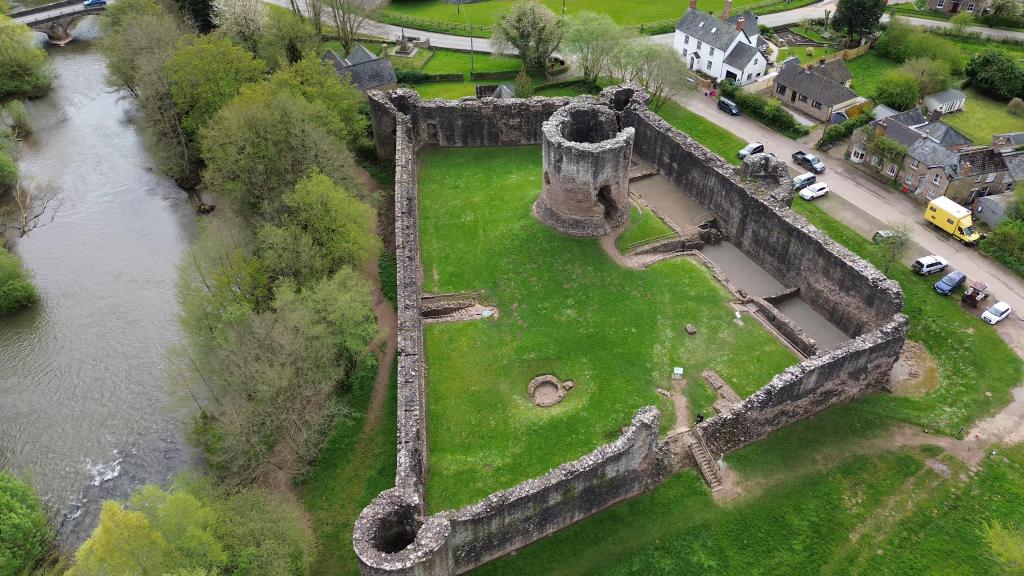
Today, we visit our last Castle of Gwent; Skenfrith Castle in Monmouthshire, one of the three with the last two visited previously, Grosmont and White Castle. Between them, the Three Castles controlled a large area of border country between the River Wye and the Black Mountains, with Skenfrith occupying a tactical spot on the banks of the River Monnow overlooking one of the main routes between Wales and England.
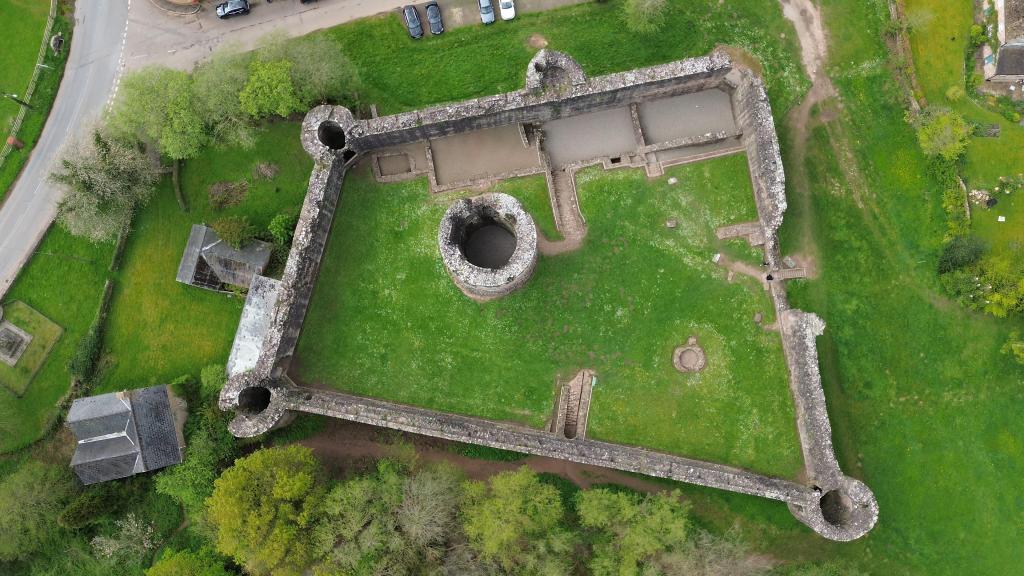
Skenfrith was founded by Norman lord William Fitz-Osbern in the early 12th century, The castle’s well-preserved walls surround a circular keep and Skenfrith is built on an earthen mound. This sturdy structure was a last line of defence should the castle fall under attack. It was built of timber, and stood atop a man-made mound, made necessary because the castle site lies on level ground beside the River.

The site was sub-rectangular, with a round tower at each corner and a circular stone keep in the centre. The keep was accessed via a timber stair to the first floor, which has a spiral stair to the upper floors. The corner towers had no toilets or fireplaces, so we can assume that they were intended solely for defence.

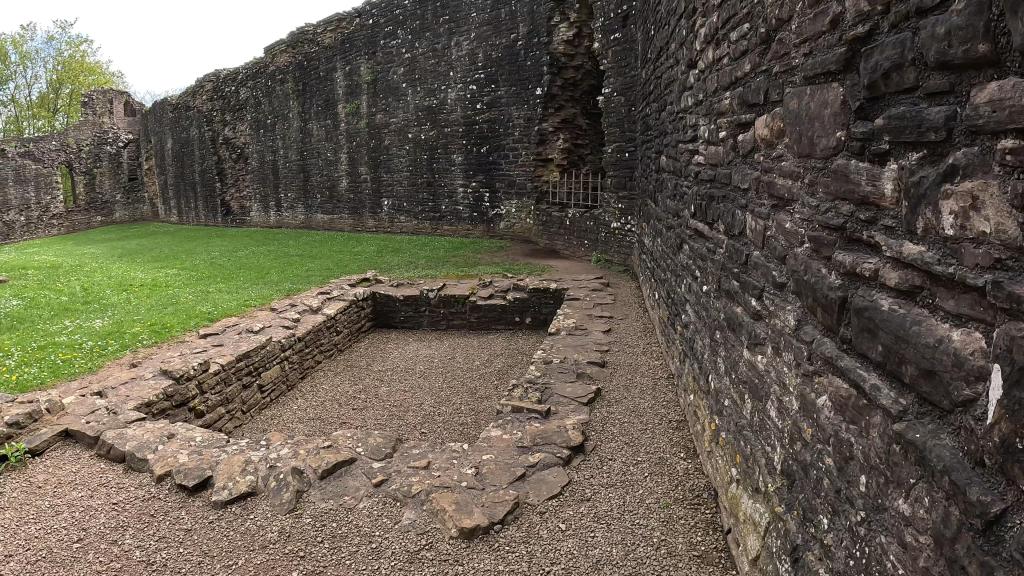

The remains of the original castle were discovered during excavations. As we wander through the hall range which is stretched across the south-western inside of the site, it contained a two story long room on the northern end, and a smaller chamber to the south, although the northern section was then segmented. The floor level of the hall range was later raised due to flooding, with the ground floors being filled in with gravel, the hall and domestic apartments provided accommodation. The south end of the range held a water reservoir for the castle and On the opposite side of the hall range was a kitchen block, of which nothing now survives above ground.
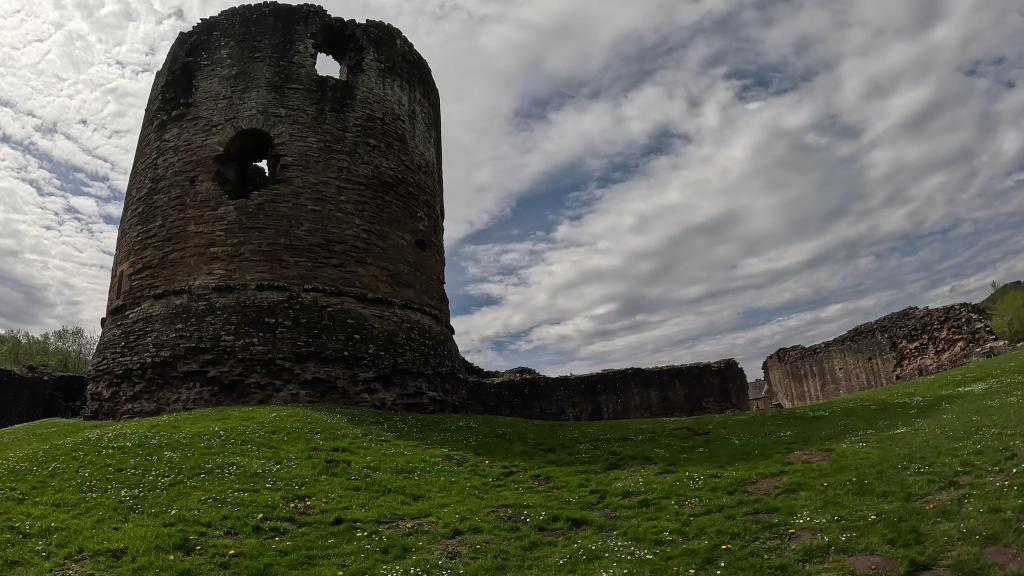
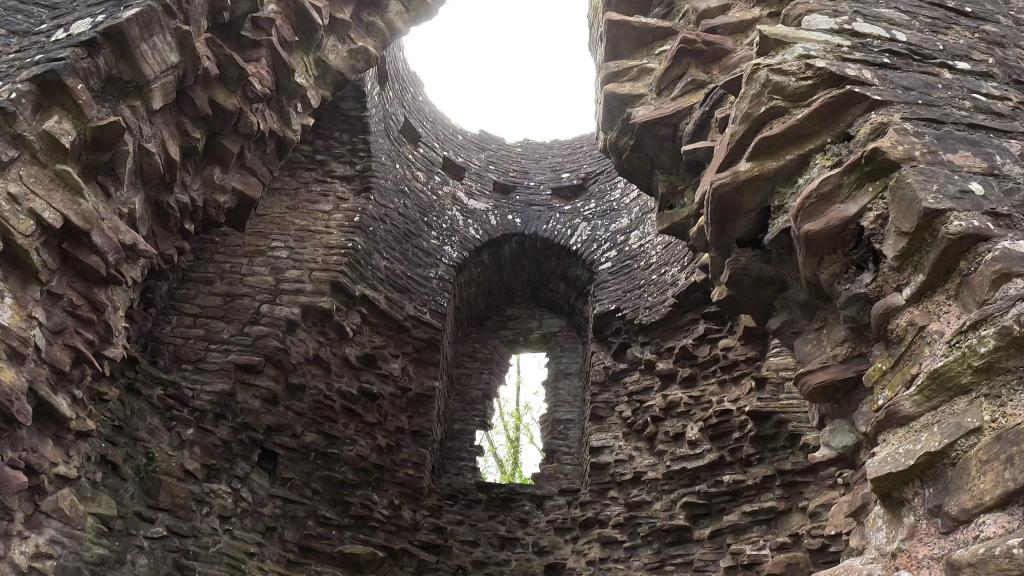

The most noticeable feature of the castle is the three story circular keep, where it was the living accommodation for the lord. In the middle of the grounds it stands tall at 39ft high with walls that are 2.2 meters thick. I read that the basement was accessed by a trapdoor and used as a storeroom. Its wonderful to look inside and picture how grand this building once was. Today it remains a picturesque ruin that overshadows the rest of the grounds of the castle.

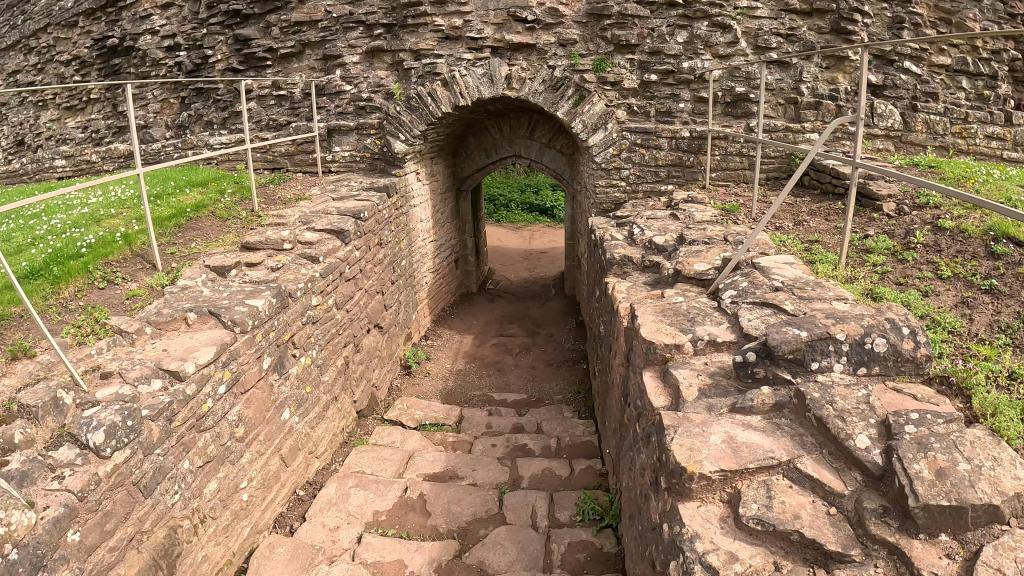
The castle is well signposted, and is set in an idyllic location, with the River Monnow on one side and a row of stone cottages on the other, and a ring of green hills rising up from the flat land near the river. The site is open at any time to visitors and there is free parking just outside the castle.
It won’t take long to explore the castle; you cannot climb the walls or the keep, and the remains inside the castle walls are not extensive. Yet Skenfrith is one of the most relaxing spots in the south of Wales. While the exterior of Skenfrith Castle seems fairly plain, the interior is an unexpected visual treat. Its charm is its round keep, which immediately grasps your attention as you cross the footbridge and through the main gateway.
Despite the castles simplicity and Thanks to CADW, it remains in outstanding condition. Skenfrith Castle should be on every traveller’s itinerary when exploring Wales as well as doing The Three Castles Walk in Monmouthshire, which is a 19 mile circular route that links 3 of the medieval castles together.
If you liked the blog please hit that like button, watch the full video below and consider subscribing if you haven’t already.
Till Next Time!
 Pinned on Places
Leave a comment