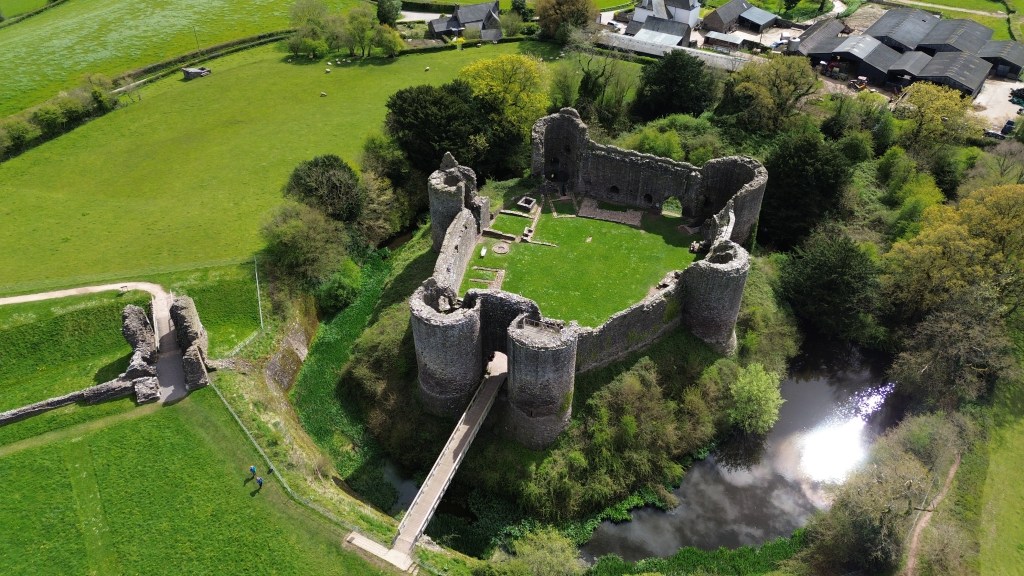
Today we visit one of the three castles of Gwent here at White Castle, whilst some castles and ruins are more mysterious than others, they all possess a rich history that went into the making of Wales as it is today: a land of natural beauty, with strong history, and the resilience to overcome the hardships it once knew.
The Three Castles, all in Monmouthshire, share a great deal of history together dating back to the 11th century. With various owners throughout their time as well as a highly active military presence, their battles and uprisings during their glory days were the ones that made the history books. White Castle is one of these castles, possibly the most well-preserved ruin of the three. So join us whilst we explore White Castle.
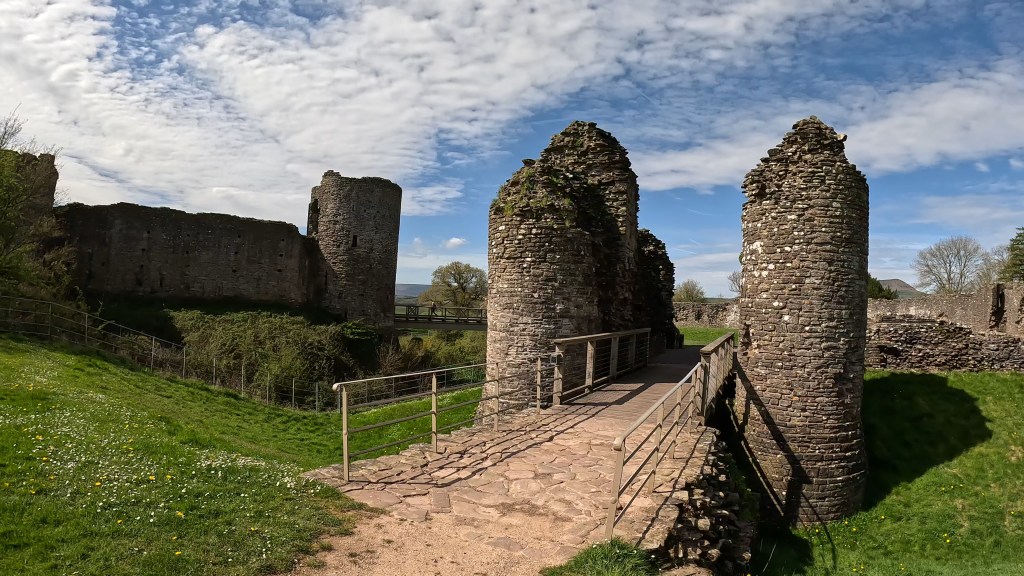
The stronghold is in Monmouthshire, Wales, near the village of Llantilio Crossenny. Its location is a strategic one; protected by the hills of the Monnow Valley and overlooking the Monnow River. White Castle had great advantages to its placement. This ruin was formerly named Llantilio Castle and known in Welsh as Castell Gwyn, its ruins are a sight to behold, and a rich history is contained within its walls.
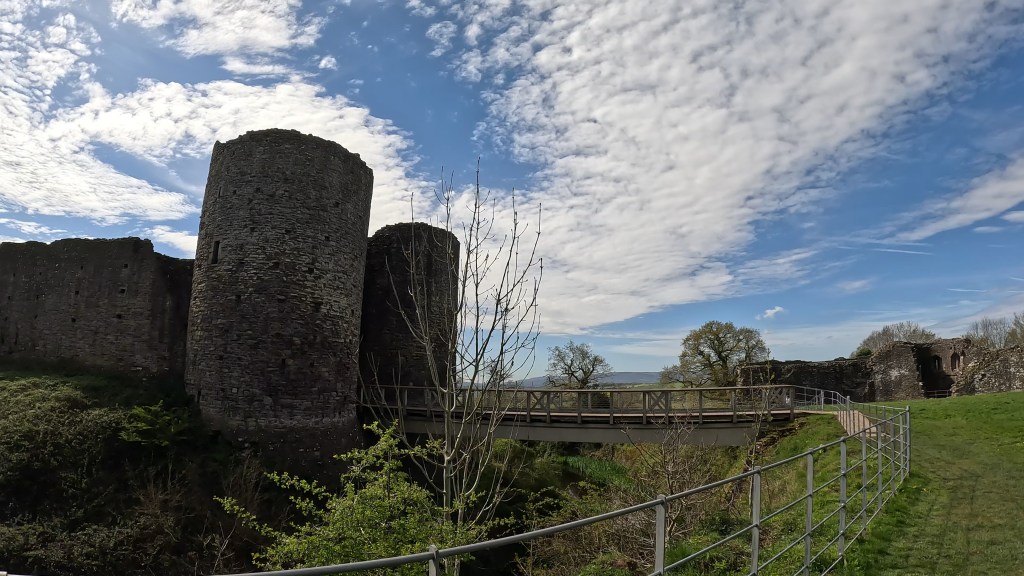
During our visit you pass through the now crumbled outer gatehouse and into the outer ward before making our way inside to the castle. The outer ward was where the real life of a working castle could be produced, manufactured and made, its thanks to the buildings in the outer ward that would enable the smooth running and making sure the castle was always well equipped and well supplied. T
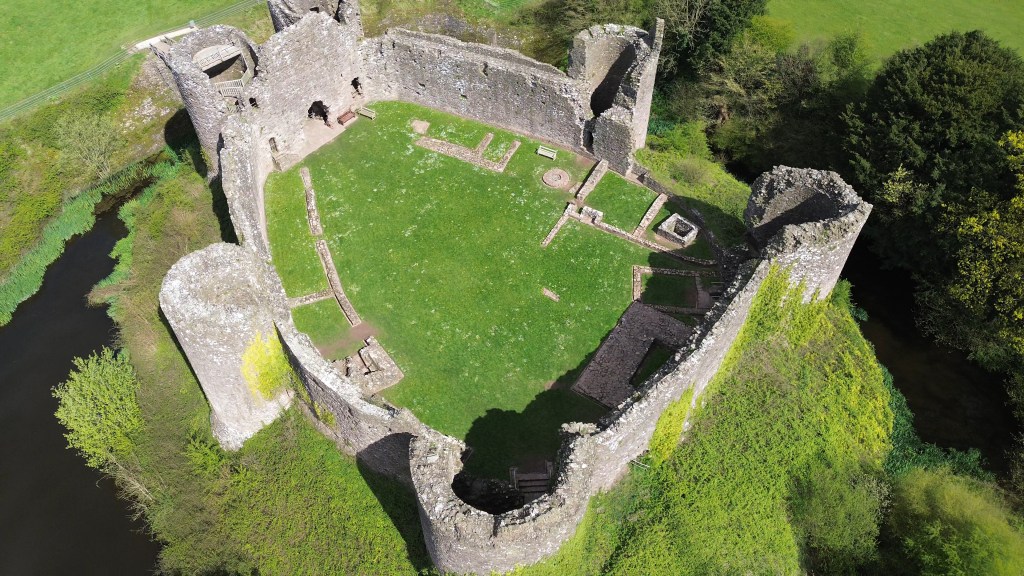
he surrounding curtain wall boasts four projecting towers, all two storeys high with a battlemented wall walk. One of the towers was designed for a more individual basis, it had an upper room that was formed into small lodgings equipped with a fireplace and latrine, more than likely for a household official or quartermaster that would have been responsible for the troops and the supplies that were housed in the outer ward.
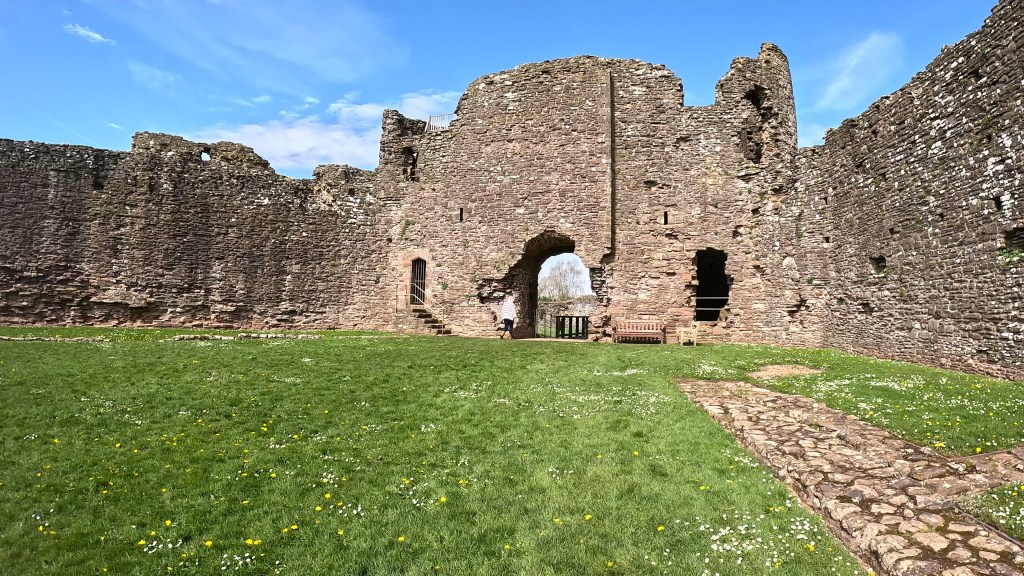
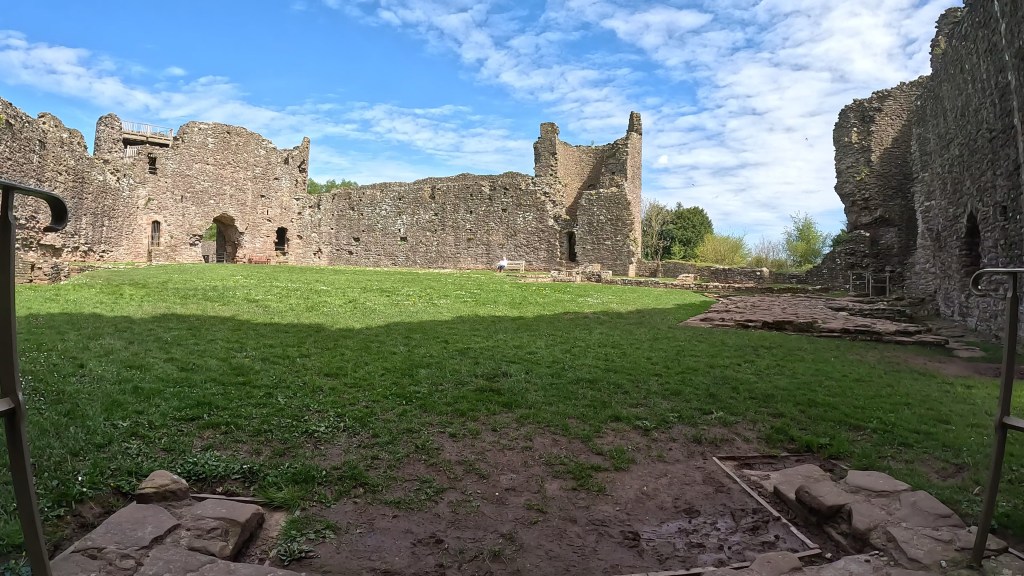
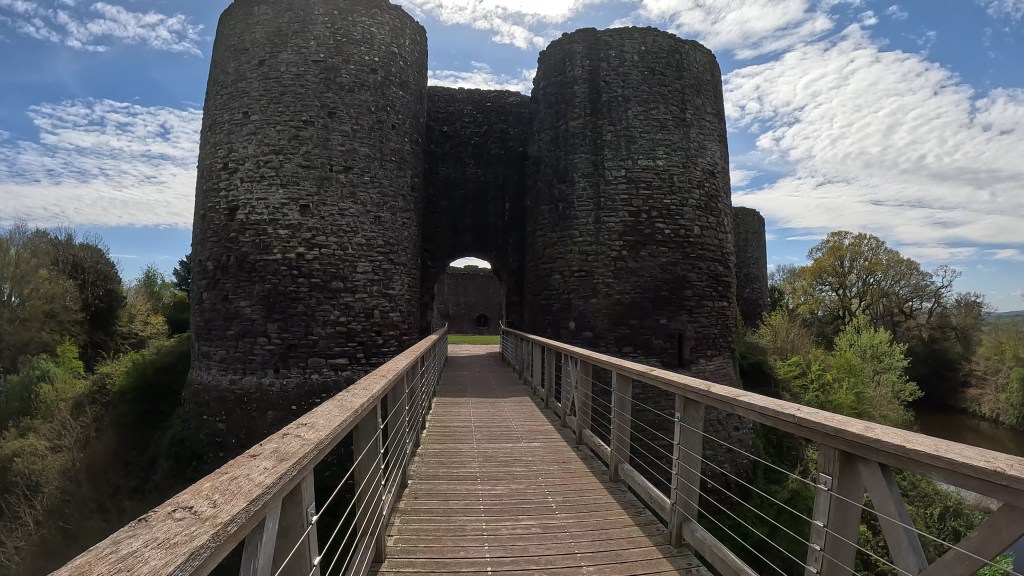
The inner ward is surrounded by an impressive and quite beautiful water filled moat, cut deep into the red sandstone and marl. The huge two circular towers flank and impose mightily on the front of the entrance inside which is quite impressive. You are able to see and explore the remains of the domestic buildings to keep the castle self-sufficient in times of trouble. Near the fourth tower you can see the remnants of the combined malthouse and bakehouse, with its rectangular malting kiln and a circular bread oven side by side. Malt would be made by roasting barley, boiled off to make beer for the castle and its inhabitants. The long and narrow building beyond was probably the kitchen for the food and drink to be made simply for the lord and his guests.
Amazingly, Wales is home to some 600 estimated castles, 16 of them residing in Monmouthshire. The naturally strategic landscape of the countryside and its access to water are part of the reason; Normans and earlier Romans saw great potential in this and wanted to benefit from the natural advantages that it could bring them in battle. The ongoing battles, revolts, and uprisings of Wales over the centuries are another reason for the many castles across the country; they served as fortresses and a means to control movement across the land from the south.

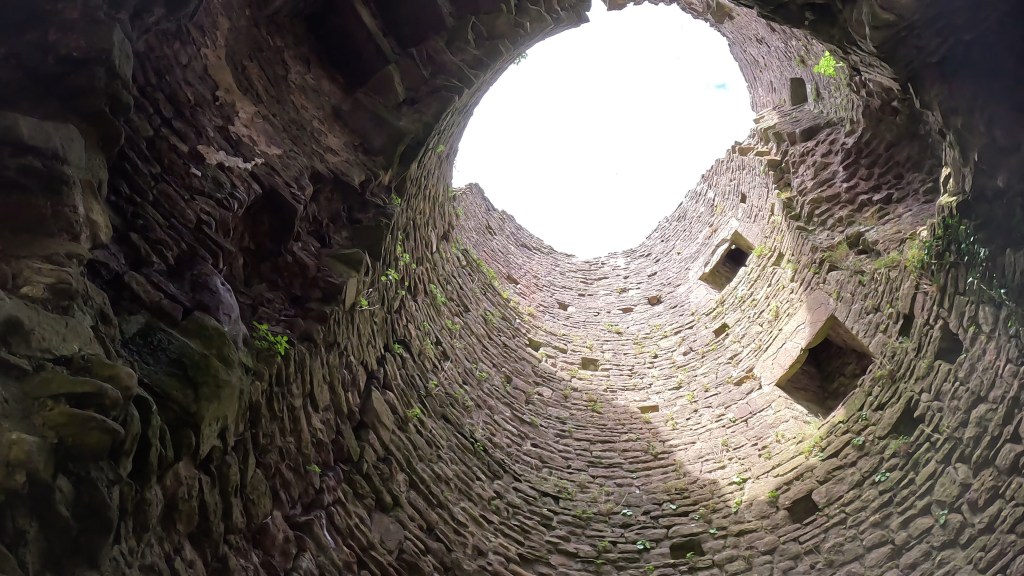
White Castle’s purpose was first to be a stronghold, protecting against invaders and providing an advantage through its location and architecture. It has since been the grounds of many battles, and the residence of many owners including royalty. The unique circular architecture was the example used by King Edward I when he went on to build more fortresses in Northern Wales.
The stone construction that came later, in the 13th century, comprised of a very particular architecture that was created to make the inner castle impenetrable. The inner wall was surrounded by a deep, steep-walled moat, the outer wall, and four towers that easily viewed the entire surrounding landscape for miles.
Much later, in the 19th century, White Castle was sold to Henry Somerset, the Duke of Beaufort. White Castle passed throughout the Somerset family over the next century, eventually becoming an informal tourist attraction in 1909. In 1922, White Castle was given to the state to care for and is now managed by CADW. It remains a free tourist attraction for visitors to enjoy to this day.
At over a thousand years old, it has seen countless encounters that made history, in Wales and beyond. Once made of wood and earth, the stone walled structure that people know of today is what made White Castle famous. Along with its two sister castles, together The Three Castles were an important element of Welsh history, eventually becoming part of an independent country that was once plagued by invaders of all kinds.
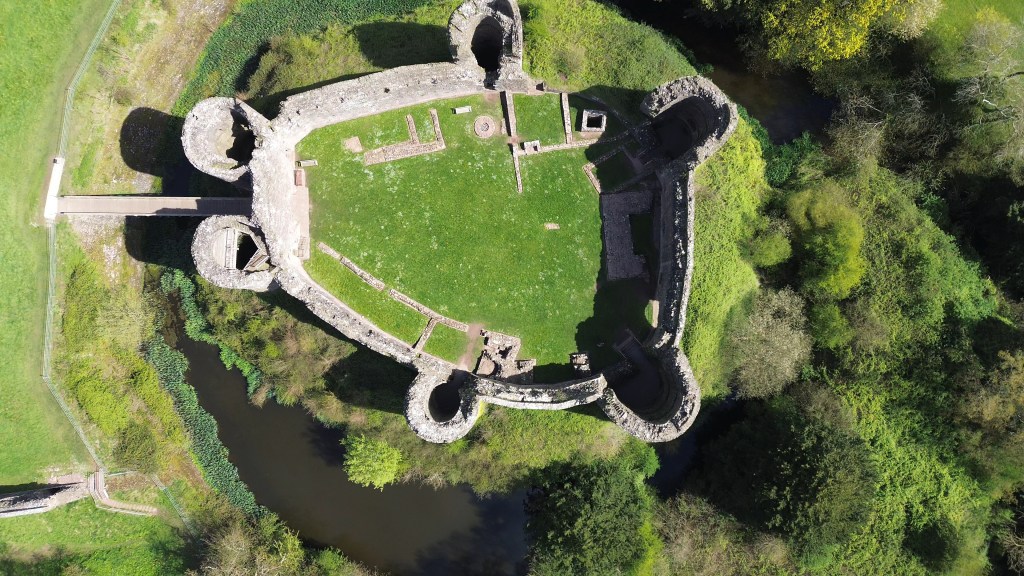
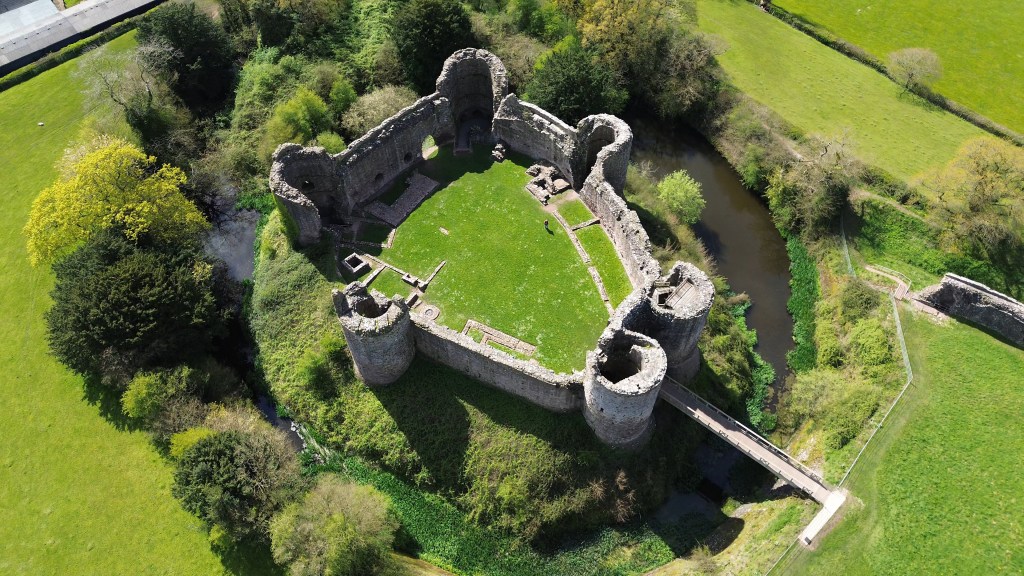
Thanks to the accommodating lands of Wales, many a castle has been built within its borders. The ongoing battles and uprisings of the medieval age caused need for protection, and the castles provided just that. With the advantageous terrain of mountains and valleys along with the plentiful water supply, castles built in Wales served great purpose and effectively protected their residents from attackers. While it’s hard to see now how gloriously it once stood, a simple gaze at White Castle’s ruins gives off the feeling of great power.
It mystifies me that White Castle is not better known; it seems an almost idyllic representation of a moated medieval castle. True, the interior remains are scanty, but the moated site, with its largely intact curtain walls and corner towers, is a wonderful example of a 12th and 13th century castle, set in lovely countryside.
If you liked the blog please hit that like button, watch the full video below and consider subscribing if you haven’t already.
Till Next Time!

 Pinned on Places
Leave a comment