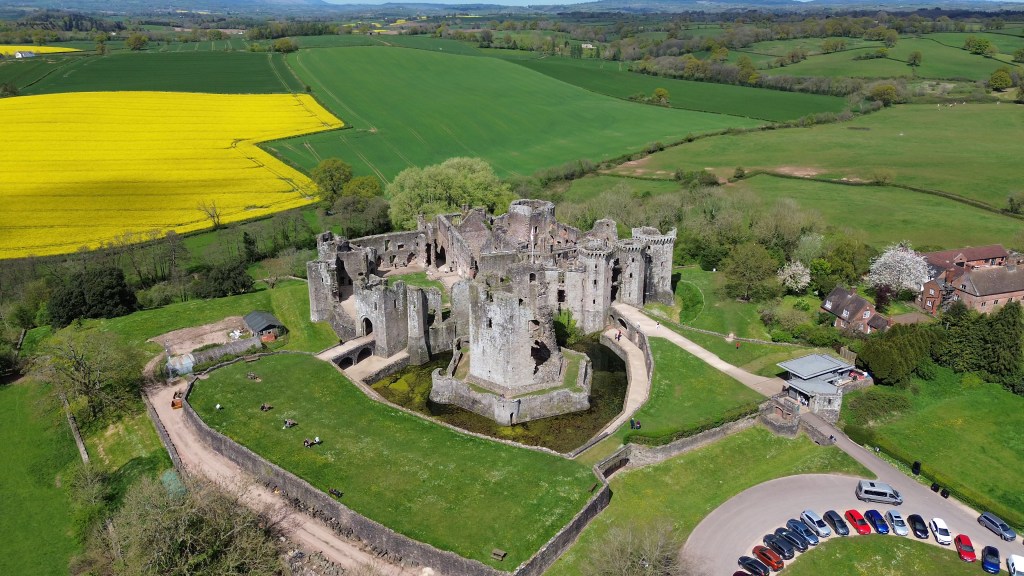
With its great multi-angular towers and Tudor-styling, it is unlike any other stronghold in Wales; it soaks up the atmosphere with its grandeur and is extremely unique yet picturesque and mighty. As a tourist visiting here it’s exactly what you vision when you think of an extravagant and wealthy castle but as an enemy, an attacker from the 1500’s, you would have to be pretty overconfident to even attempt to storm this intimidating fortress. So why not join us as we walk the remains of Raglan Castle and we’ll tell you abit more about how this once mighty castle turned to enchanting ruins that you see today.
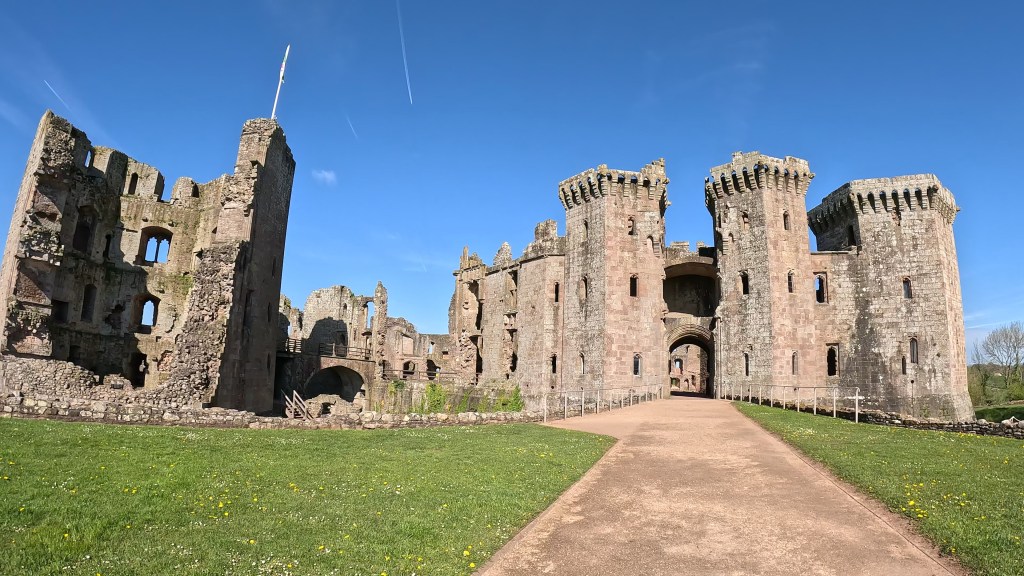
Stepping inside and underneath the huge gatehouse range you can see the impressive entrance and it dawns of you why this area is the most photographed here at Raglan and that’s certainly because those hexagonal towers and pointy (battlements) that have a story-book quality look about them. But aside from the finish and look of the gatehouse, the defences are very impenetrable. To try and even attempt getting inside, you would have to pass through a portcullis then a two leaved timber door, a second portcullis and then finally two more double doors. These features were more likely to demonstrate strength than to be used in battle. The gatehouse was also defended by machicolations on the battlements where suitable objects could be dropped onto besieging enemies, or for water to be poured down on any fires that could have been lit against the gates. But on the other hand, they add a sense of grandeur to the whole castle, and it could have been their main purpose.
Raglan Castle is one of the last true castles to be built in Wales. Its construction began in the 1430s by Sir William ap Thomas, the Blue Knight of Gwent, who fought at the Battle of Agincourt with King Henry V in 1415. He was responsible for building the Great Tower at Raglan, known as the Yellow Tower of Gwent. After William ap Thomas died in 1445, the castle passed to his son William who took the surname, Herbert.
The main stone used in construction of the castle is sandstone, but of two different types. The 15th century castle is characterized by pale, almost yellowish sandstone from Redbrook on the Wye River, three miles away. The other sandstone is local Old Red Sandstone, red, brown or purplish in colour, used in the Tudor work. Despite Tudor and Jacobean rebuilding the Raglan Castle we see today is largely the work of one hugely ambitious man – Sir William Herbert.

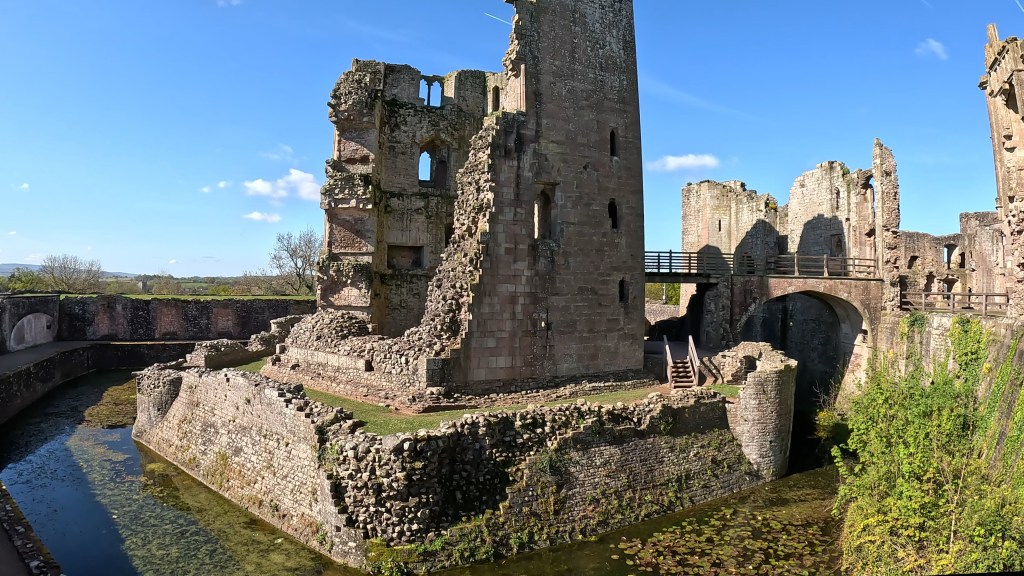
Looking at the Great Tower today, what you’ll see is a more-or-less four storey, grand circular tower; which is surrounded by a murky-green, shield-shaped moat. Today, one entire side of the tower is destroyed; giving you a indication of the layers of rooms and chambers once held inside.
Either way, the Tower demonstrates everything that was needed in a medieval fortification: a self-contained assembly of living rooms; kitchen and hospitality quarters; wrapped up in a protective apron wall and moat, and studded with arrow-loops for defence. Evidently, the more modern segments of Raglan Castle mushroomed around the Great Tower, but the Tower’s strength and purpose remained intact throughout its existence. Successive owners – such as Sir William Herbert – could effectively move into the castle and ‘pull up the drawbridge’ if they wanted peace and quiet.
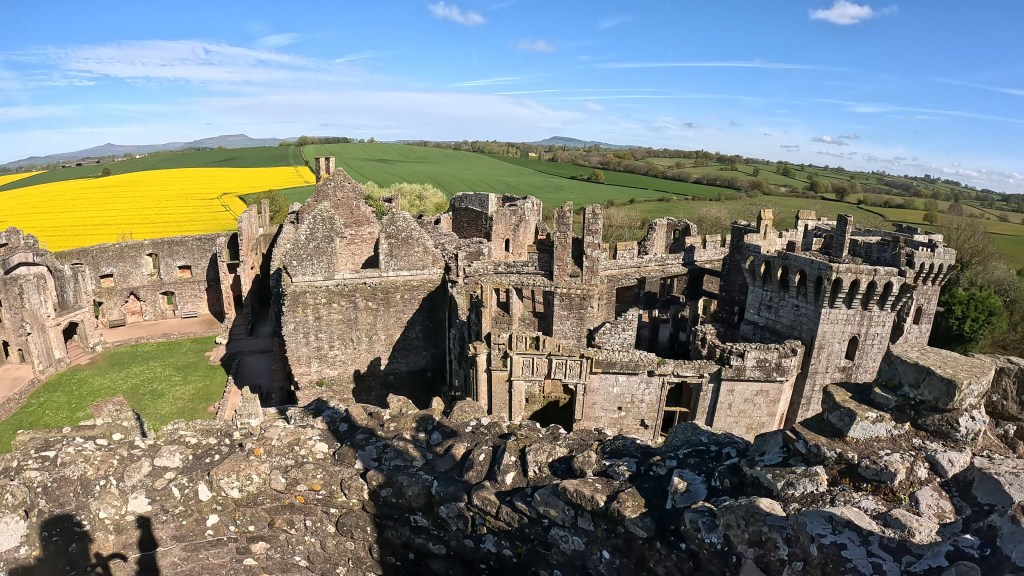
The sheer height of the tower – in its heyday, measured five stories high which granted Raglan a touch of prestige and a defensive advantage. The tower could be seen (and was a vantage point) across vast swathes of the Welsh countryside – and, today, the views are still just as jaw-dropping especially on a day like we visited.
The downfall of the Great Tower came during the English Civil War. The Tower was bombarded extensively from one side; and then, when Raglan fell to the Parliamentarians, the forces attempted to destroy it to prevent future Royalist use. Workers managed to hack off the upper layers with pickaxes; but the tower was stronger than that, and so ended up entirely undermining the foundations – leading the collapse you see today.
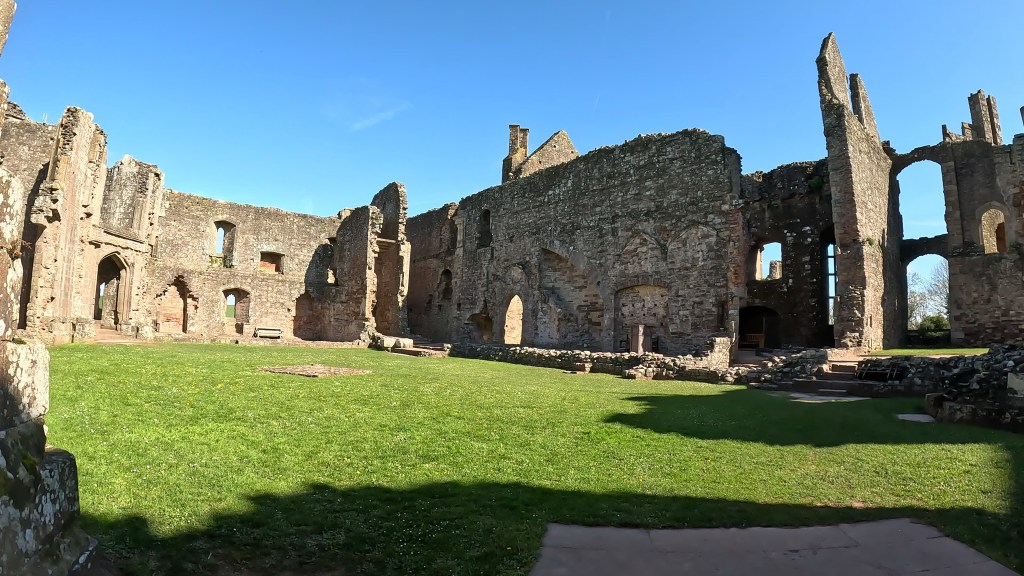
During 1460 to 1470, Raglan castle became reborn as a noble castle-mansion. As well as the Gatehouse, Sir William Herbert added the main features of the castle – including elements of the large Cobbled Court behind the main Gatehouse and the incredible Fountain court to its left which we are in now. Whereas the Cobbled Court was a focus for everyday domestic life being home to the kitchen and buttery. The Fountain Court here acted as the centre for prestige and entertainment – home to the state apartments, chapel and later library were built around this focus of privileged life.
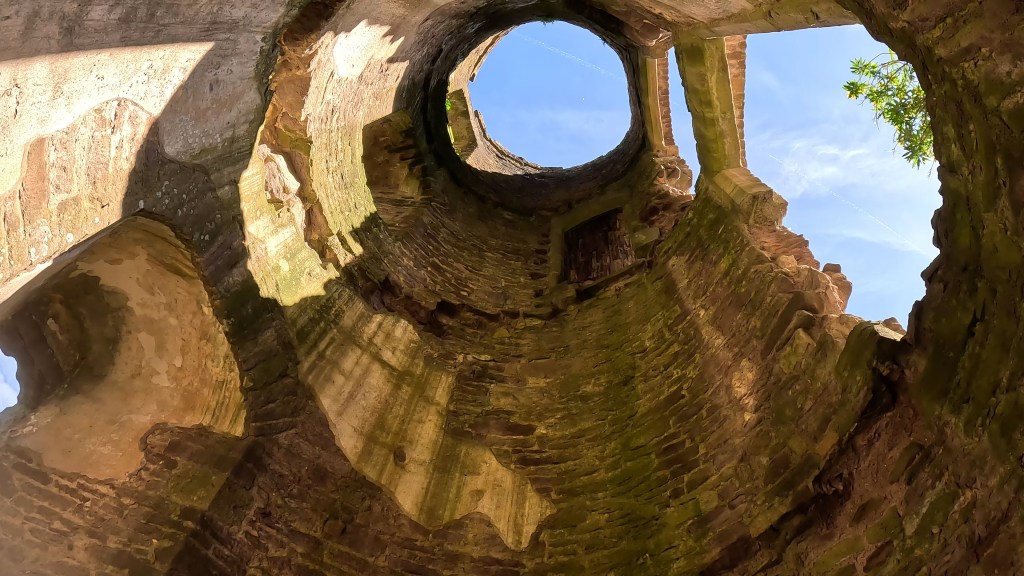

Built in the second half of the 15th century, was the Kitchen Tower, apart from its defensive function, it contained rooms for more servants on the first floor, a huge kitchen and a room for preparing meals on the ground floor with access to a cool pantry in the basement for storing meats and cheeses. The entrance to the kitchen itself is on the ground floor and access is by way of a wide arch and a triangular vestibule, originally lit by two narrow windows. The kitchen is dominated by two large fireplaces, each with an oven. On the first floor above, the outer room has an ornate fireplace set between a pair of windows with seats in the embrasures, clearly a chamber for a person of value in the household.

What I love about visiting here is how lost in the moment you can get, it’s so fun walking these cobbled parts, wondering what it would have once been like or just admire the beauty of the construction of these impressive buildings. If you’re venturing into South Wales, this should be on your list to stop off at, even for a flying visit. Entrance fees into the site are extremely reasonable at £9.50 for an adult at the time of filming, but if you are a CADW member or English Heritage your visit here will be completely free. There is so much to see and do and most importantly enjoy, if you’re on a castle crusade then team it up with the other many castles in the area, such as Cardiff, Caldicot, White Castle, Skenfrith or Grosmont.
If you liked the blog please hit that like button, watch the full video below and consider subscribing if you haven’t already.
Till Next Time!
 Pinned on Places
Leave a comment