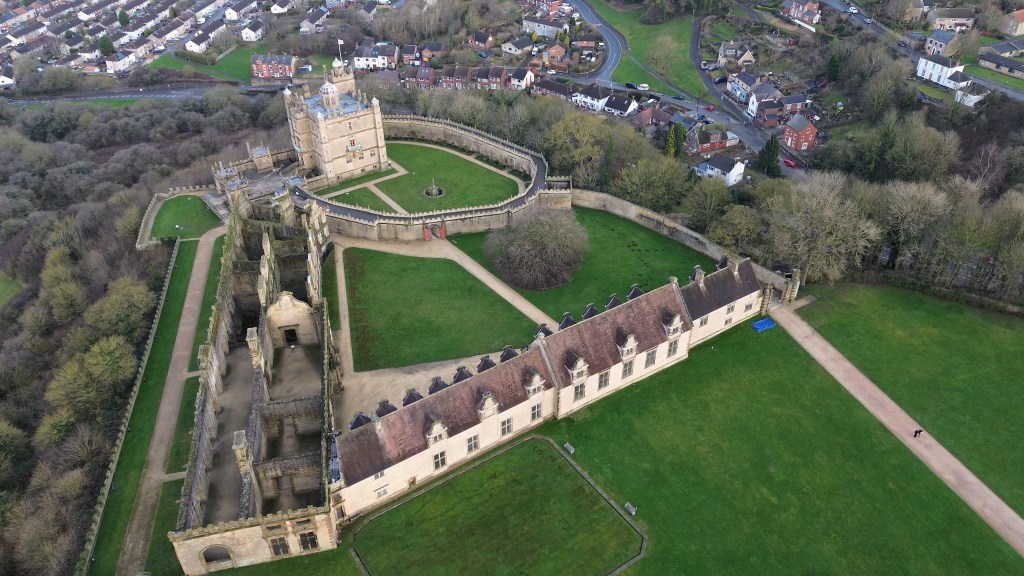
The castle is known as the fantasy hilltop pleasure palace of a horse-mad Cavalier, poet and playboy, named William Cavendish, it’s here inside these walls that you will be transported to a lost age of aristocratic extravagance as you discover lavishly decorated rooms, the astonishing riding school and the richly coloured wall paintings that makes this building one of England’s most unfound treasures, so join us as we explore Bolsover Castle.

This is no ordinary castle; here, you can see the riding stables where King Charles’s riding master – William Cavendish, first commissioned his 17th-century Riding House. William would bring in horses from all over the world to train them in his passion for dressage, making the castle a landmark in British equestrianism. Yet outside of his love for horses, William liked the finer things in life and loved art décor and this is reflected in the so called, Little Castle’s remarkable wall paintings and interiors, which can still be seen today. As a renowned playboy, William loved nothing more than a good party and Bolsover Castle certainly hosted many, many that I would have loved to have seen.
In the 12th century, a defensive castle was built on the site for William Peverel with a stone keep added by Henry II around 1173. It remained in royal ownership until 1553 when it was granted to the 6th Earl of Shrewsbury, the fourth husband of Bess of Hardwick. Through that marriage, the property passed to Sir Charles Cavendish (1553-1617) and his son William (1592-1676) who employed Robert Smythson (d. 1614), his son John (d. 1634) and his grandson Huntingdon to demolish almost all the medieval buildings and replace them with grander new buildings at Bolsover. Work began c. 1612 on two significant new structures, the Little Castle and the Terrace Range.

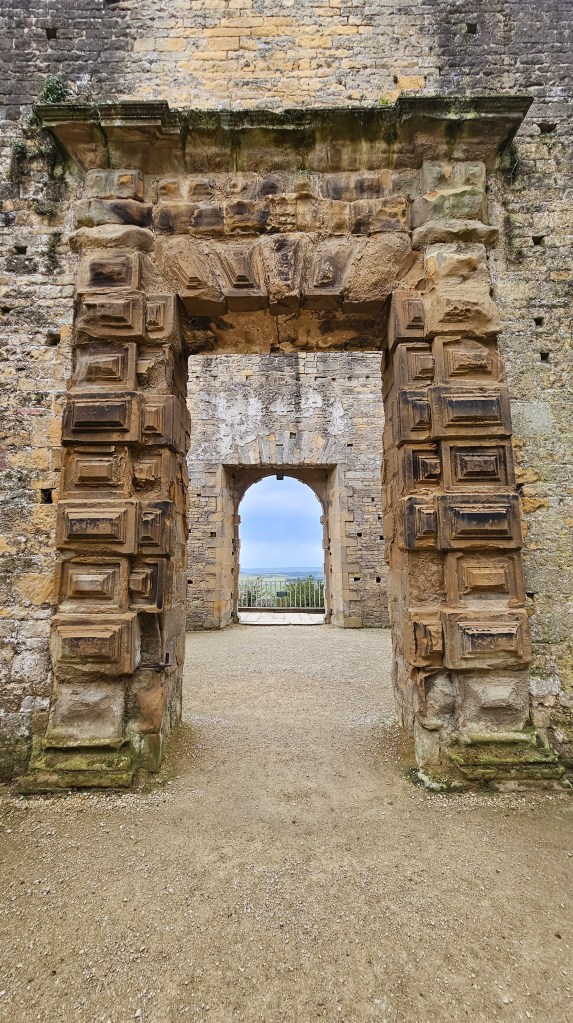

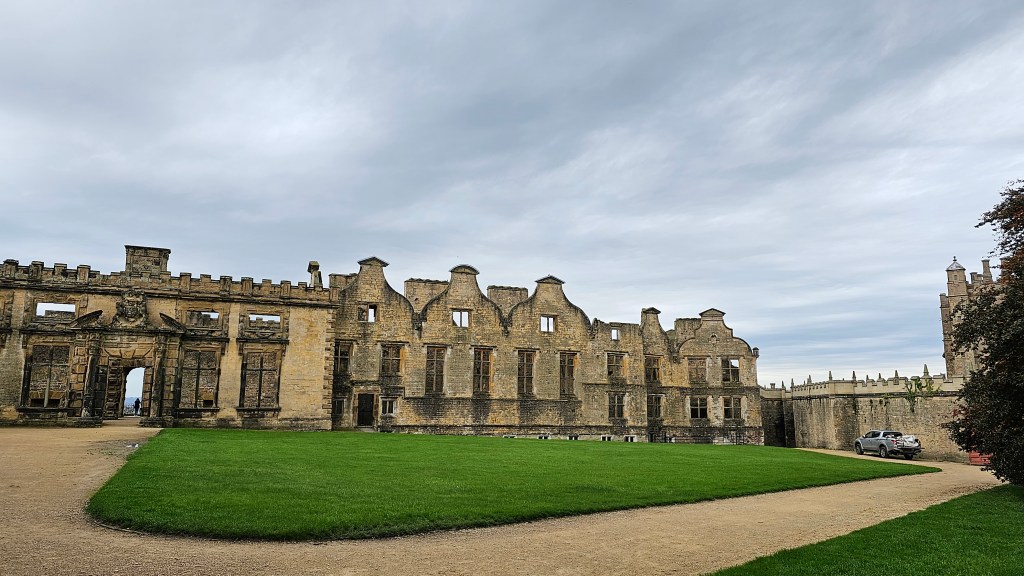
The next building or range we walk is the terrace range. The range was developed by William in separate stages between the late 1620s and the 1660’s. Walking under the elaborate family crest of the Cavendish’s you enter inside the large and impressive dining room, can you imagine being invited to dine in such a grand and lavish room? Although now ruinous with only skeleton remains and sandstone walls this would have been the place to wine and dine and show to his affluent pals. Through the door behind us there would have been an enormous withdrawing chamber and its lodging chamber with a great grand bed. This dining room, along with the other splendid rooms would boast expensive tapestries, court furniture and ruling paintings as well as a massive painting of William, full head to toe armour hung amongst the wall behind us reminding people whose palace this was.
Both the ground floor and first floor rooms of the northern end of the terrace range are best seen from the basement, but using this platform to overlook the entire area you are able to make out the various rooms and uses from above. The kitchens were in the basement, beneath the hall that were standing on and of course were designed for maximum productivity. Every room had a purpose, a purpose to make life easy and efficient for the staff to be able to fulfil their roles in the castle.
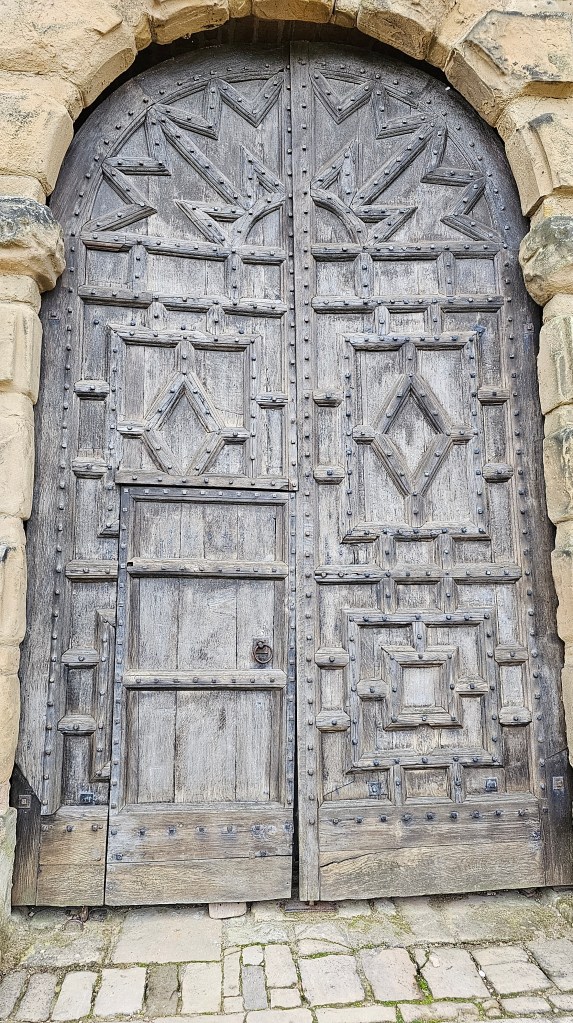


We took a different route into the little castle, we started from the bottom to the top, making our way around the basement and exploring those rooms before climbing the staircase to see the rooms on the second floor of the castle. Inside this floor, you’ll notice the rooms section off into various bed chambers and have rooms that were large wardrobes. The most notable feature of the second floor is the central lantern. It was a place to be able to sit and possibly enjoy some dessert and relax, it enabled free access and flow throughout the second floor. In these rooms you’ll notice the extravagant fireplaces and panelling that would indicate the richness and high status of these rooms. One in particular we enter, with the black and cream fireplace is thought to be where William’s mother would sleep.


I think for me, the star of the show and this building has to be the Star Chamber, one of the most popular rooms of the house for obvious reasons. Upon entering inside here you are blown away with the beautiful woven tapestries, the elaborately decorated star ceiling and the royalty that this room oozes in atmosphere. It was refurnished in 2014 to replicate what it may have once looked like in the Stuart era but I think we can all agree how homely and extravagant this room is. The tapestries are not original to the house, they are actually reproduced versions of original 17th century tapestries found at Blickling House in Norfolk.

Bolsover Castle in a nutshell is just spectacular, you could spend hours exploring, and delve into the pleasures of one man’s life, and a day spent within its walls offers not only the enjoyment of a lovely building, but also an insight into a fascinating man. The amount you get to see and enjoy and experience here makes for the perfect day out for anybody. Just being able to understand and walk the rooms of those more fortunate than ourselves, letting us get a glimpse into their lives is one I will remember for a long time.
If you liked the blog please hit that like button, watch the full video below and consider subscribing if you haven’t already.
Till Next Time!
 Pinned on Places
Leave a comment