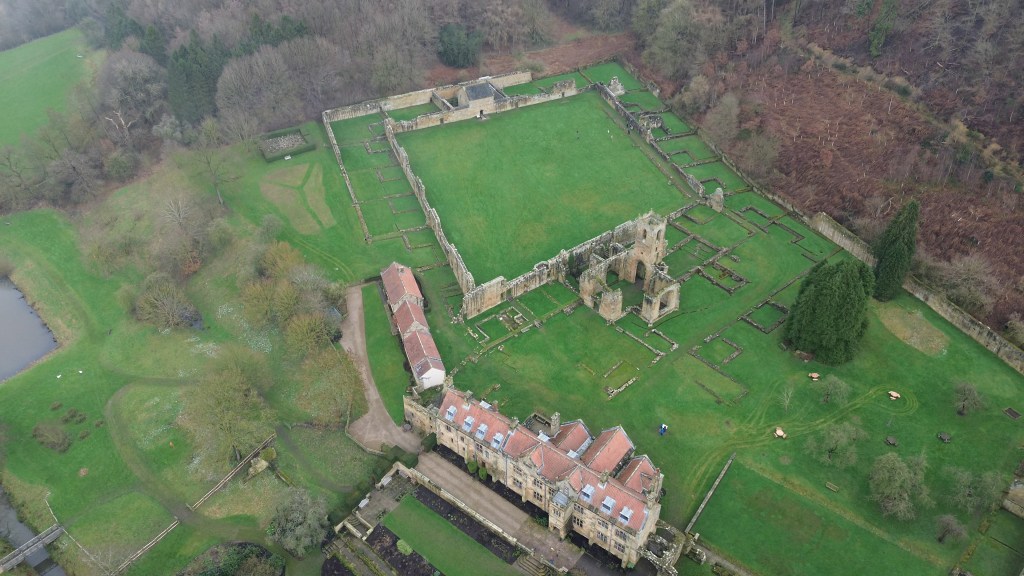
In this explore, were taking you on a trip to Mount Grace Priory, a late 14th-century Carthusian monastery on the western borders of the North Yorkshire Moors. The priory was the last monastery to be founded and one of the few that was founded in Britain during the period of the Black Death. It not only has evocative ruins but also boasts a large manor house and one of the best preserved examples of monastic horticulture, so join us whilst we wander here at Mount Grace Priory.
You may ask what a Carthusian is. It is a monastic order, which was founded in 1084 by a group of monks who wanted to emulate the harsh, contemplative lives of the early Christian hermits who then formed a small community in the chartreuse mountains near Grenoble in France. From that point on, the new monastic order spread across Europe and the monks soon became known as Carthusian and their priories as charterhouses.


The priory itself is unusual in several respects. First, not many Carthusian monasteries were founded in England and the order never gained the popularity of orders such as the more well-known orders like Augustinians, Benedictines, or Cistercians. One of the reasons for that lack of popularity is that the Carthusians were a very strict order; the monks would wear hair shirts and lived their lives in isolation, echoing the lifestyle of early Christian hermits.
Unlike other orders which ate, drank, slept, and worked together, the Carthusians had private cells and lived in silence, devoting their whole existence to solitary contemplation and working in their garden plots. They did gather together for worship in the priory church three times a day, and ate silent meals as a group on Sundays and holy days, but much of their existence was solitary and silent, living their lives as hermits.
The Carthusians played an important part in the events that led up to Henry VIII’s dissolution of the monasteries in the 1530’s. The order led opposition to the act of succession of 1534 which legitimised henry’s marriage to Anne Boleyn, even despite the pope’s refusal to annul his marriage to Katherine of Aragon. The prior of the London charterhouse, John Houghton and two other priors refused to swear to the act of supremacy that passed later that year, acknowledging henry as supreme head of the church in England.


The King had ultimately hoped for the support of the Carthusians, whose opinions carried great importance, their popularity and their refusal to deny the authority of the pope were seen as a series threat to the government. Henry then ordered his general, Thomas Cromwell, to break their resistance. So in May 1535, Houghton, Robert Lawrence and Augustine Webster were tried for treason and executed at Tyburn in London. By the 1540’s all of the charterhouses in England has been suppressed and Carthusian resistance to the reformation was well and truly crushed.
Apart from the church the most fascinating feature at Mount Grace is the Great Cloister, arranged to provide living quarters for up to 15 monks. As its name implies, the Great Cloister is much larger than most monastic cloisters, simply due to the space required for so many individual cells. One of the cells has been furnished so that it can give visitors a good idea of how a Carthusian monk would have lived.


The word “cell” conjures up an image of a dingy space with bars on the windows, but this was far from the case at the Priory. The cell was a reasonably large house with a kitchen and living room, space for prayer and studies, a sizeable bedroom on the ground floor and just above, visited by a steep staircase there would be a workshop just above, where things like Weaving and clothing would be masterfully created. Not only did the monks have their own home, they would also enjoy their own private kitchen garden aswell as toilets at the end of the garden with running water.
Each cell had its own water supply, fed by a spring on the nearby hillside, channelled to a now-vanished water tower, then through a system of lead pipes to each cell. These cells were originally built of timber but were rebuilt in stone around 1420. You can easily trace the system of stone-lined drain channels which link the individual cells to the main drain system. The water supply and drainage system is remarkable, for it was built at a time when even the largest and most expensive homes of the nobility had undeveloped water supplies, and long before most large cities had adequate water and sewage systems.
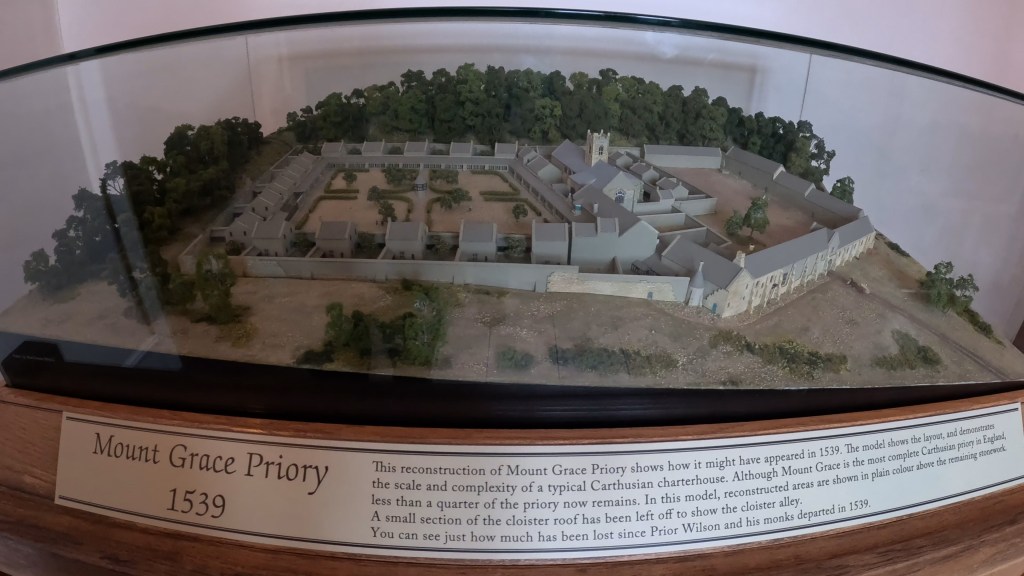

After Mount Grace was closed by Henry VIII in 1539, its monks were pensioned off and the manor became a gentleman’s residence. It was extended in the 17th century by Thomas Lascelles. He added two new wings to the house during the Commonwealth period when England was ruled by Oliver Cromwell. By the 1800s, though, the property had fallen into disrepair and faced a bleak future.
It was then bought by Sir Isaac Lowthian Bell who had made his fortune in the steel industry. There are beautiful graduated gardens to the front of the house with stunning floral borders and water features to enjoy. His purchase proved to be a turning point for the Manor House. Not only was he an advocate of the Arts and Crafts movement, he was also a leading light in the Society for the Protection of Ancient Buildings.
He preserved both monastic and Commonwealth features whilst adding his own Arts and Crafts twist, including square black leaded windows which are still visible today. Sir Lowthian Bell employed leading designers and spent three years on the makeover and restoration.
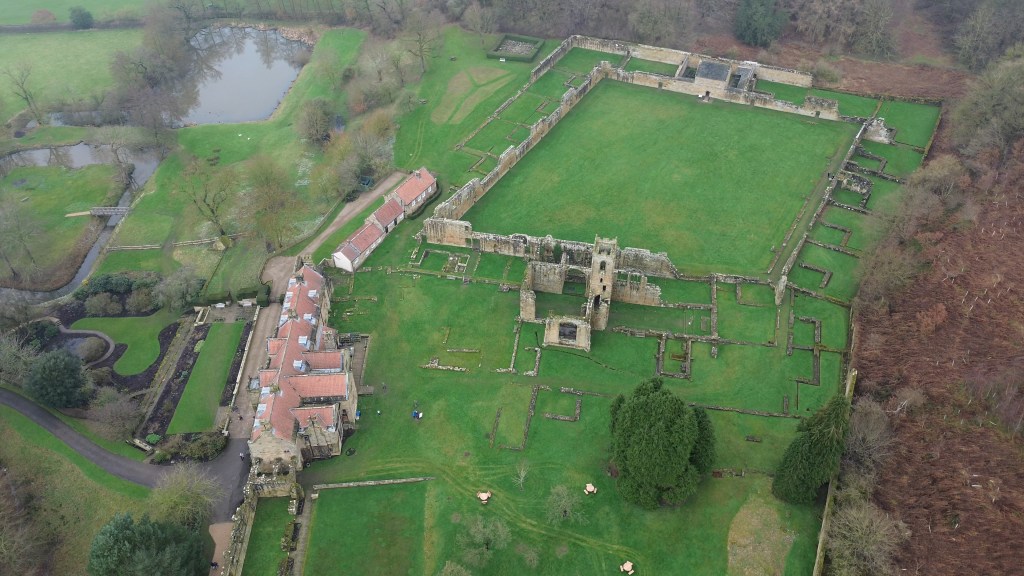
Even today, the site is very secluded. It’s miles from anywhere and surrounded by woodland. The traffic on the A19 rushes past, mainly oblivious to the fact that the Priory is there but what a hidden gem this priory really is. The site is accessed off the A19 were you can explore the thirteen acres of gardens, relax at the orchard cafe, walk through the 13th century manor house with exhibits, and understand more about this less known religious order.
Mount Grace Priory is maintained by the English Heritage, but National trust and English Heritage members can both access the site for free with their memberships. The site is partly accessible for wheelchair users, and all facilities are kept and maintained in great condition for your visit.
If you liked the blog please hit that like button, watch the full video below and consider subscribing if you haven’t already.
Till Next Time!
 Pinned on Places
Leave a comment