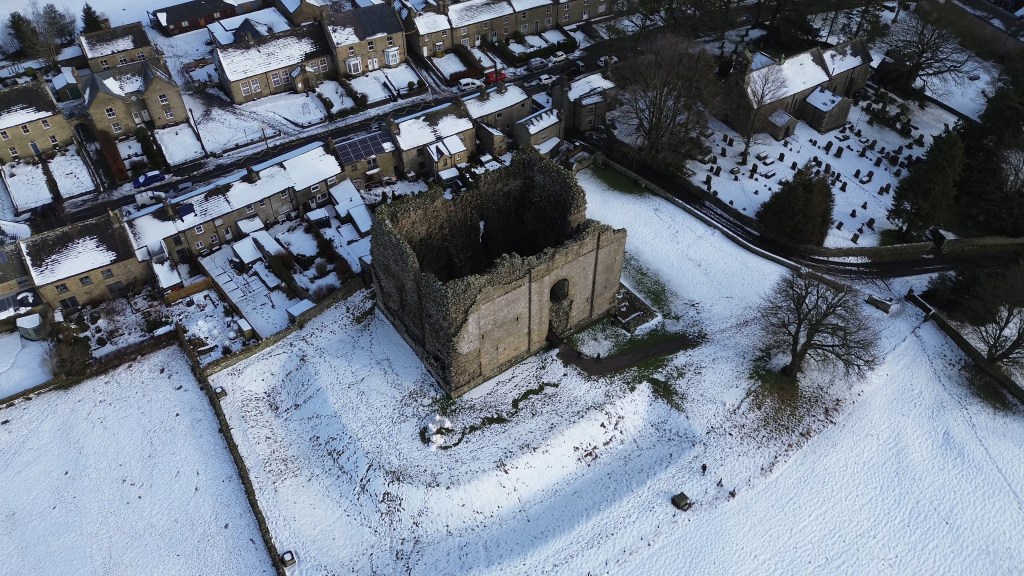
Located in County Durham in England, this castle has quite a rich history dating back to the 12th century, it originally was built as a defensive structure by King Henry II around 1170 and the castle had strategic importance, because of guarding the important Stainmore pass route through the Pennine Mountains, so it came to no surprise that Bowes was at the forefront of plenty of conflict and invasions. So Join us as we take a walk around the castle remains.

Bowes castle was built within the ruins of the old Roman Fort of Lavatrae. It was here that the Romans controlled the pass that linked Carlisle with York where they established a fort at each end. At Bowes a branch road turned north east to cross the river tees at what is now Barnard Castle, and if you are interested in this Castle, click here to discover this castle also.
The Roman fort and medieval castle lie to the south of the main road through the village of Bowes and is approached to the west of the church of St. Giles. The fort occupied roughly around five acres and in the 1130’s the castle would have likely been established in the north west corner of the fort and a little later the church raised in the north east corner.
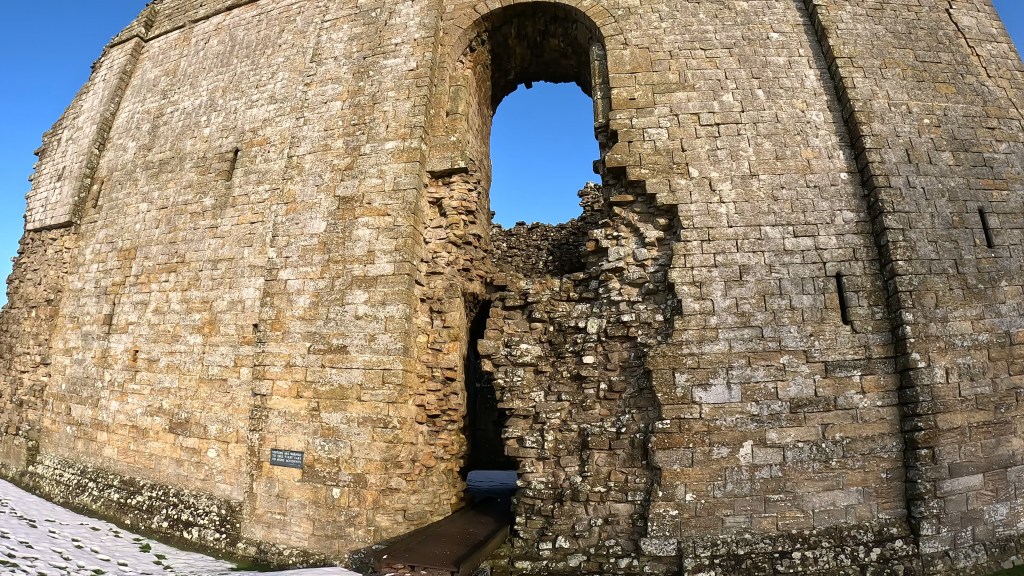
The inner ward occupies a small enclosure that is defined by a moat that can still be seen to the south and west of the later keep. The keep, which is rectangular in plan was built in the late 12th century of high quality ashlar masonry, there might have also been an outer bailey but nothing remains today. It’s hard to imagine, whilst we enter inside the castle on the modern built timber bridge how this castle would have been accessed, well the original and only entrance to the keep was on the first floor, via a long staircase in the keep which also led to an upper storey or gallery and on to the roof at parapet level. Today, we enter inside the basement through a broken opening on the south wall.
A north and south wall divided up the basement into three unequal spaces, the eastern and larger area was where the munitions, food and valuables would have been kept. The strong, thick walls and access was only from the first floor which provided that extra bit of security.
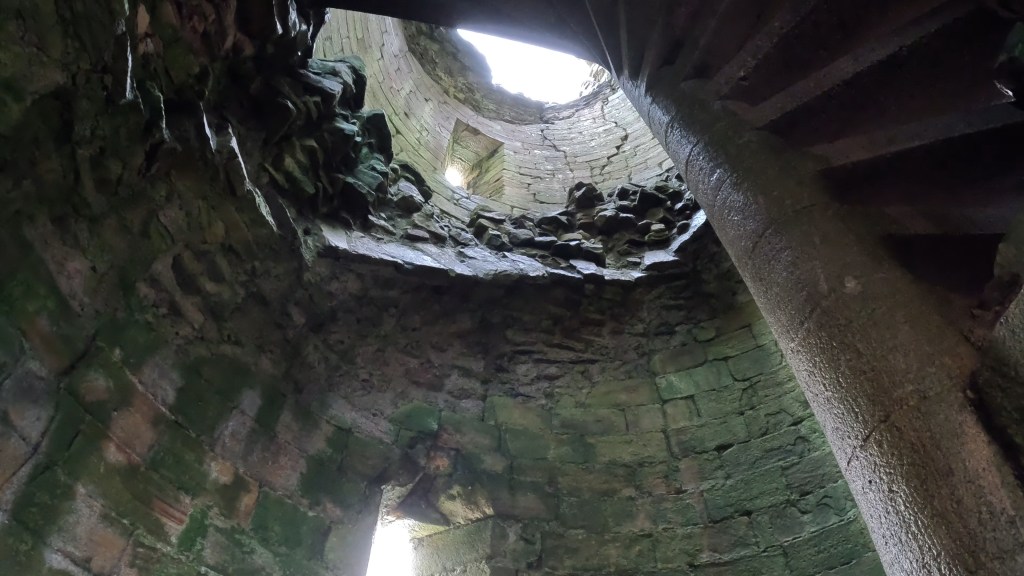

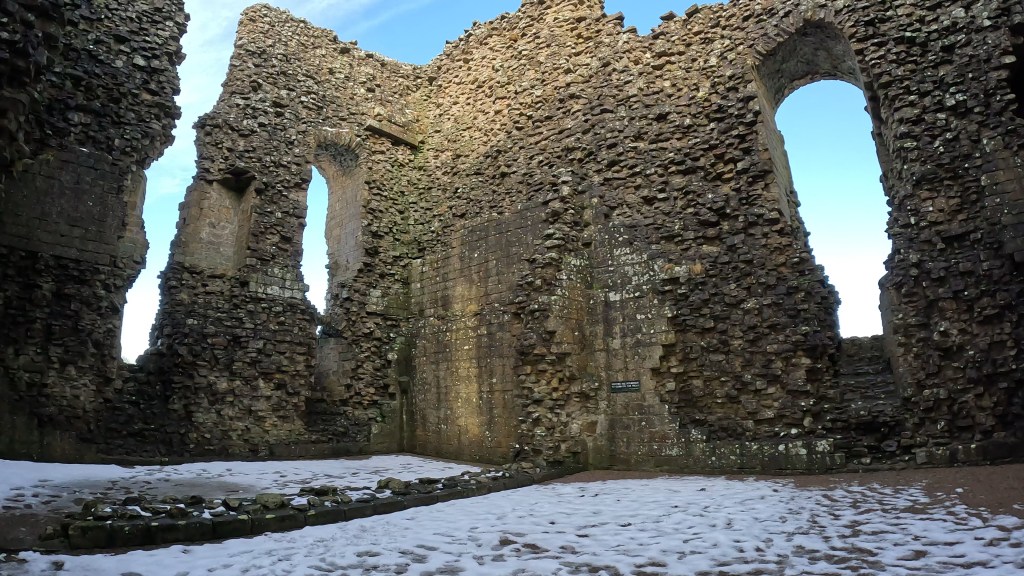
The first floor plan probably mimicked that of the basement in having three main rooms, the eastern entrance opened into a passage that lead to the north room. In the north there are speculations that this might have been a kitchenette, it was lit by a loop and contained a sizeable fireplace. We can only really speculate on it’s details considering it’s now an empty shell. A pair of latrines at the south end of the west wall served both the southern and west rooms. On this floor there is also remnants of a higher level doorway opening from the staircase, which can suggest an upper storey or gallery.
Royal concerns over security led to Henry II investing heavily in a new castle structure on the site between 1171 and 1174. It was unusual for a new royal castle to be built in this part of England during the 12th century, and Henry appears to have been driven by the military threat from Scotland before and during the great revolt of 1173-1174. Henry had spent almost 600 pounds on the castle between 1170 and 1187, most of it in the first few years, rebuilding the older structure under the supervision of the count of Brittany’s local tenants.


The rebuilt castle design featured a hall keep, an uncommon and unusual design in English castles, but this was built of stone and as a three story structure up to 50 feet high. The keep had architectural similarities to nearby castles in the region. A mill was constructed inside the bailey and built over the river Greta which was an essential part of life in the castle as it was able to supply flour for the garrison.
In England, the Great Revolt against Henry’s rule involved a coalition of rebel barons, boosted by support from the King of Scots and European allies. King William the lion pushed south from Scotland in 1173 and the castle was damaged in the raids. Henry II was successful in suppressing the Great Revolt, capturing William the Lion at the Second Battle of Alnwick and imprisoning him until a peace treaty was agreed, extending Henry’s authority north into Scotland. In the subsequent years the security situation in the north of England improved significantly.
Following the devastating defeat of the English army at Bannockburn in 1314, the Scots invaded the northern countries and dipped into north riding of Yorkshire as far as Richmond and beyond, which meant that Bowes castle was indeed on the front line again. In the summer of 1321, whilst the earl of Richmond was attending parliament at Westminster, Bowes was captured and besieged by a party of local tenants who rebelled and attacked the castle.

Still ruined, the castle was reclaimed by the crown in 1361 and then controlled by the Neville family who were powerful regional landowners before reverting to the crown once again. In the 21st century the castle is now in the hands of the English heritage who keep this free to visit site open for people to enjoy and wander. Although just a shell, it is still an inspiring building. You get a real feel for the strength of the Keep walls and can imagine the many knights and royals that would have stayed here before battle. Like many castles, it was unloved by previous owners, before handing over to government property.
Not only is Bowes Castle worth a visit but in this area you are surrounded by charming villages, historic houses and castles just a car drive away and also near is the North Pennines area of outstanding natural beauty where you can enjoy a walk to see one of England’s most spectacular falls at High Force Waterfall.
If you liked the blog please hit that like button, watch the full video below and consider subscribing if you haven’t already.
Till Next Time!
 Pinned on Places
Leave a comment