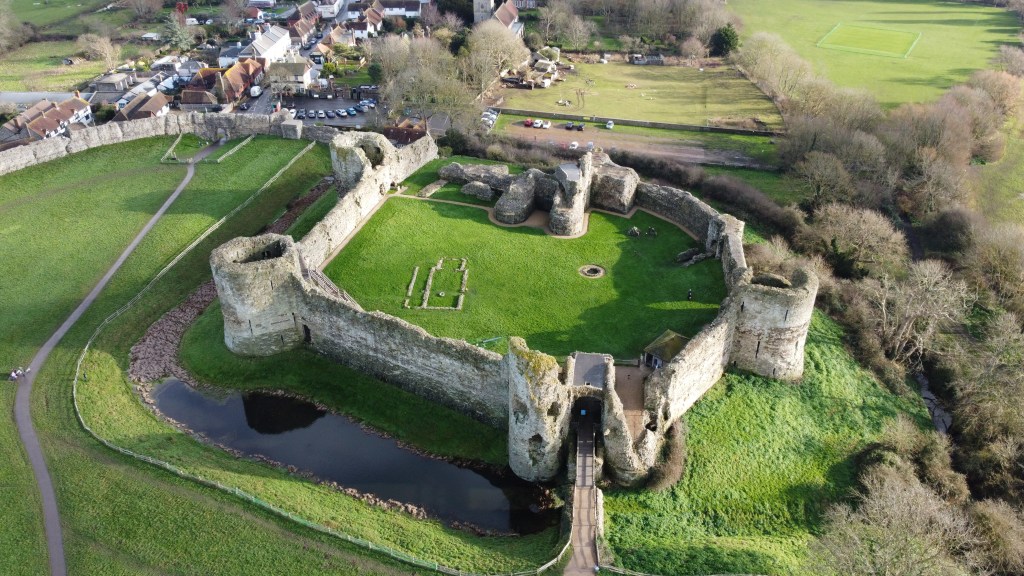
Built within the walls of a former roman Saxon shore fort. It was initially a series of earthworks that supplement the existing roman walls but it was later on rebuilt as a substantial medieval fortress. It endured many sieges through its long history and was also used to imprison King James I of Scotland, the site was also refortified during WW2.

From the outside the castle curtain walls are very dramatic and make for some amazing photo opportunities, but the real story doesn’t really unfold until you cross into the main entrance and enter the castle. The moment you walk inside the entrance and through the outer bailey, you can see above you that the portcullis would hang above your head and be ready to strike especially if you were an unwanted visitor back in the day, that’s where the castle ground really reveals itself to you and you realise the site is much larger than the exterior lets on.
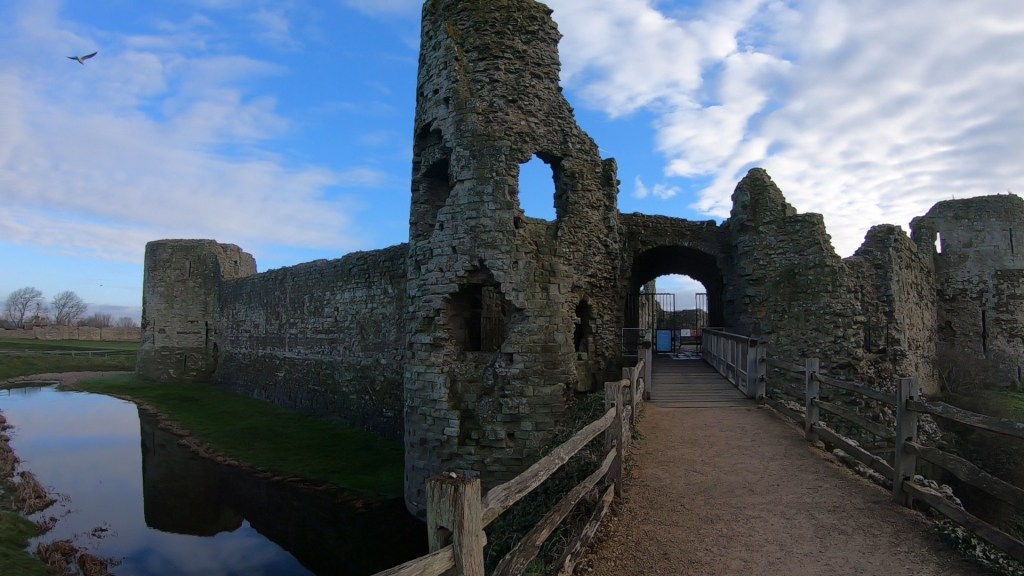
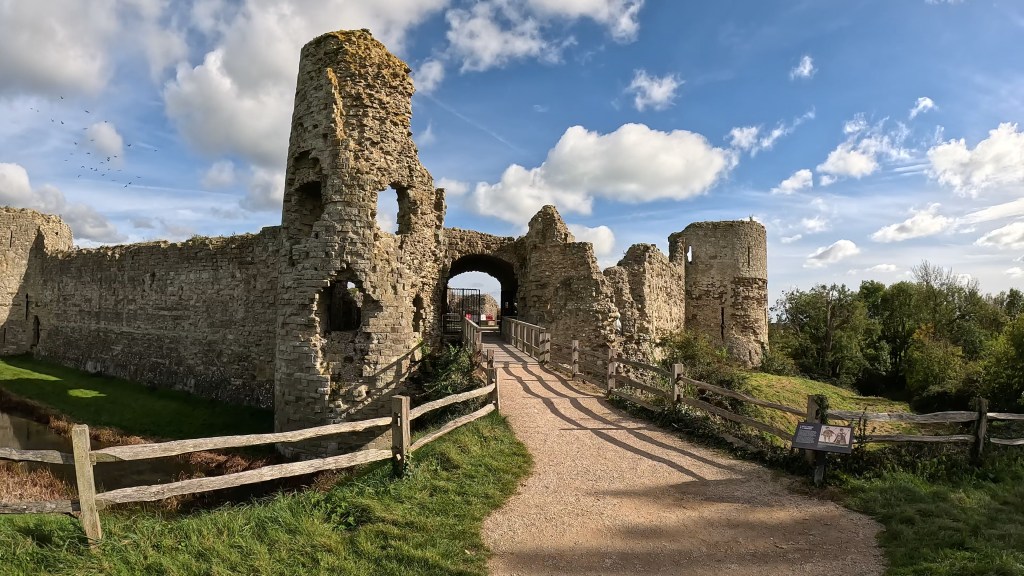
The gatehouse is one of the predominant features of Pevensey Castle. While it no longer consists of two majestic drum towers flanking the vaulted entrance way, a single remaining tower still conveys one of the earliest examples of this twin tower medieval design. The postern gate that once provided access to the shoreline from the castle represents an additional noteworthy portion of the architecture. During sieges, it enabled access of supplies to/from the castle, unless besiegers restricted access to the sea.
Heading back to its origins, the first fortification at Pevensey was roman fort called Anderitum, built between AD 280 and AD 300 by Carausius, he was appointed to command the British roman navy with the specific task of ending sea bomb raids by the Frankish and Saxon pirates, However Carausius was accused of corruption and the emperor ordered his execution. In response to this, Carausius declared himself the emperor of Britain which separated it from the rest of the Roman Empire, the fort here was more than likely built as part of his efforts to secure the coast from the imperial forces. Coins of Carausius have been discovered in the foundations of the fort’s walls.

The fort deviated from the normal traditional paying card shape of earlier roman outposts and instead was laid out in an irregular plan that matched upon the terrain that was built. The defences were in an oval shape and enclosed over ten acres, making it one of the largest surviving roman forts in Britain. Although today it sits about 1000 metres inland, it was originally located overlooking the waterfront.
After the roman army withdrew from Britain in the early 5th century, Pevensey fort continued to be in use by a small community who sheltered here within its walls. However it seemed to be attacked in AD 491 by a Saxon force who destroyed its inhabitants, after this the site was abandoned until its next recorded use which for during the summer of 1066 when the forces of Harold II camped within the old roman walls whilst they wanted for the arrival of Duke William of Normandy.
After landing near Pevensey and finding no Saxon army present, William the conqueror immediately set about securing his beach head. He occupied the fort and augmented the roman defences with a number of dry ditches, further on to the east he built Hastings castle and with his army securing both these two key bases he awaited the approach of Harold II before marching north and defeating him at the battle of Hastings.

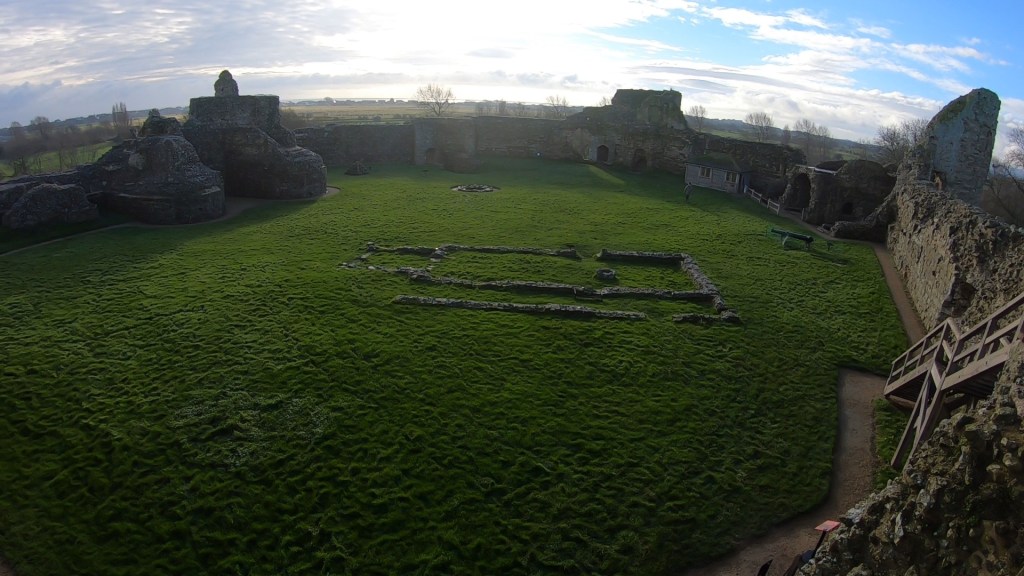
It is not known for certain when the stone buildings of Pevensey Castle’s Inner Ward were built but a series of regular payments by Richard I in the 1190s suggest substantial building activity at this time. It is possible the Great Keep was one of these buildings or, if it already existed, it was certainly substantially modified at this time. However, the castle was probably slighted by the forces of King John in 1216 during the First Barons’ War, when south-east England fell under the control of Prince Louis of France. The damage was repaired after the war and in 1230 the castle was granted to Gilbert Marshal, Earl of Pembroke
The castle played no part in the Wars of the Roses and was allowed to fall into decay and ruin although its role as a regional prison continued. Inmates included a number of high status magnates including King James I of Scotland, who had been captured in 1406, and Henry IV’s widowed queen, Joan of Navarre. By the sixteenth century the castle itself was ruinous although in 1587, faced with the threat of a Spanish invasion, emergency repairs were made by Elizabeth I.

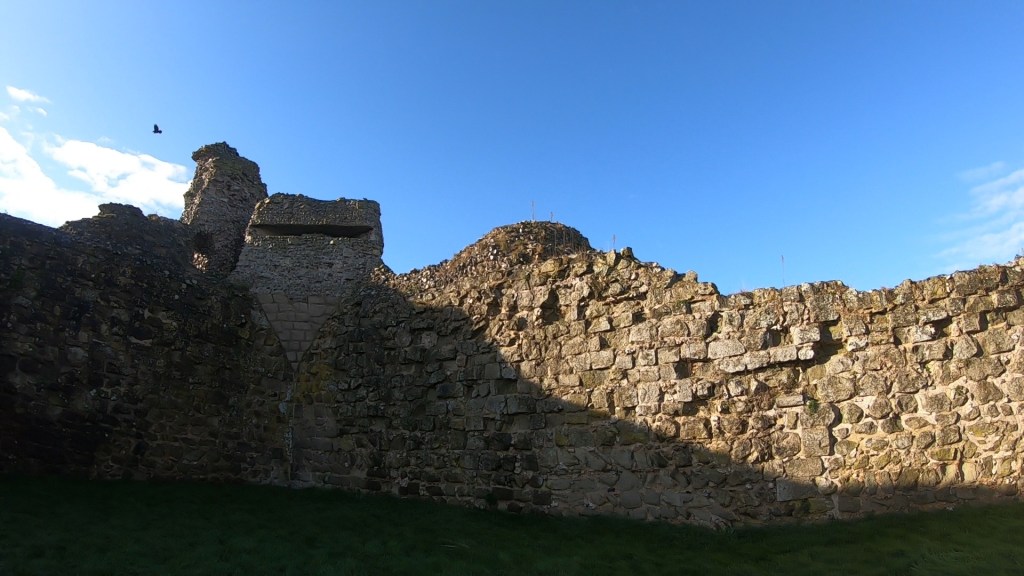
After the fall of France in World War II in 1940, Pevensey again became a potential location for invading England from the south. As a result of this a command and observation post were created within the castle, perimeter defences refortified with modern machine gun pill boxes, as well as addition of blockhouse for anti-tank weapons at the Roman West Gate. Moreover, the castle was refitted to serve as barracks for a garrison during the war. The machine gun pill boxes within the medieval castle walls were left intact to serve as a reminder of the castle’s history.

The relics of those desperate times still tell their stories to willing listeners today, the Pevensey Cannon, which guarded Pevensey from 1587 onwards, still survives, this red cannon remains from the times of Elizabeth the 1st and its twin I on show at the Tower of London.

Our must see bits are standing inside the inner bailey – its impressive to see the site surround you. The roman walls – let the fact that these walls have stood in the site since the 5th century, its impressive enough that it makes these walls over 1500 years old, The WWII defences – spot these as you wander the site with the installation of pillboxes, walk around the back of the keep and you’ll spot the pillbox.
The Exhibition inside the east tower with its interpretation how the Second World War gave a twist to Pevensey castles history and the Dungeon – you can step down into a dark and dingy dungeon where common prisoners where held.
If you liked the blog please hit that like button, watch the full video below and consider subscribing if you haven’t already.
Till Next Time!
 Pinned on Places
Leave a comment