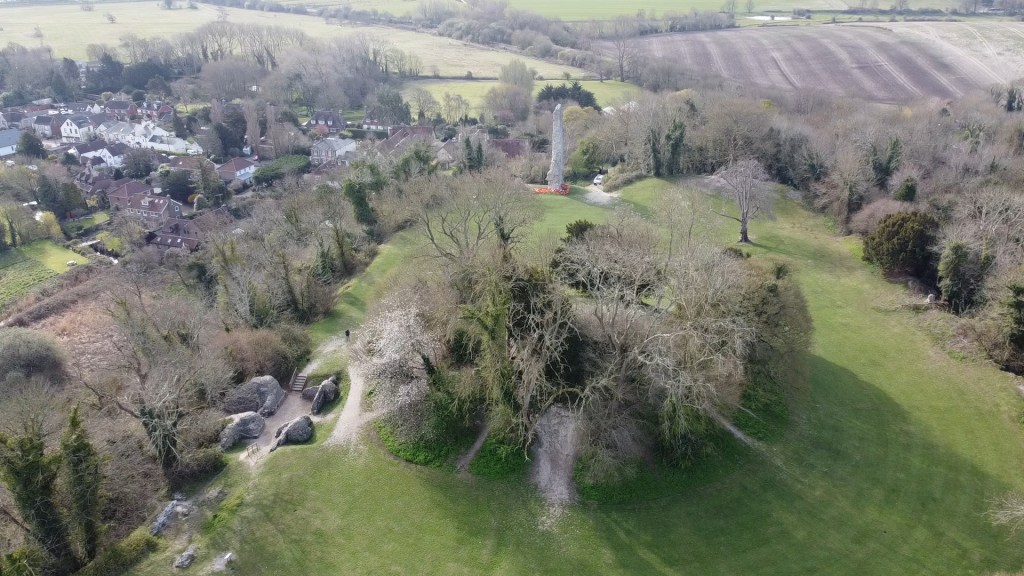
This time we’re at Bramber Castle, situated in West Sussex, located in the village of the same name and what was once a Norman motte-and-bailey castle, the barebone remains of Bramber might give you a small uninspiring picture of what once stood here, but what there is here is an abundance of interesting history and that’s what we would love to walk and show you today.
The ruins of Bramber Castle are significant in our county’s history and if you’re in the area, they are well worth a visit. After all, William the Conqueror left his mark here. The castle is one of the first Norman castles to be created shortly after the Norman invasion of 1066 and was one of many that sprung up across Sussex as a display of the wealth, strength and power of the new Norman regime.

It was built by William De Braose who constructed the motte and bailey castle at Bramber in 1070, along with the Norman church, and most of the surviving masonry dates from this time. William was a baron who accompanied William the conqueror and fought at Hastings, he was then rewarded with land in Sussex and he built Bramber as a centre of administration and to guard the important port of Steyning which is close by.
Except for a period of confiscation during the reign of King John, Bramber Castle remained in the ownership of the De Braose family until the line died out in 1324. During Norman times the coastline would have been much further inland, and at high tide the water would have reached the castle walls. Despite very little surviving, the basic layout of some areas of the castle can still be identified.
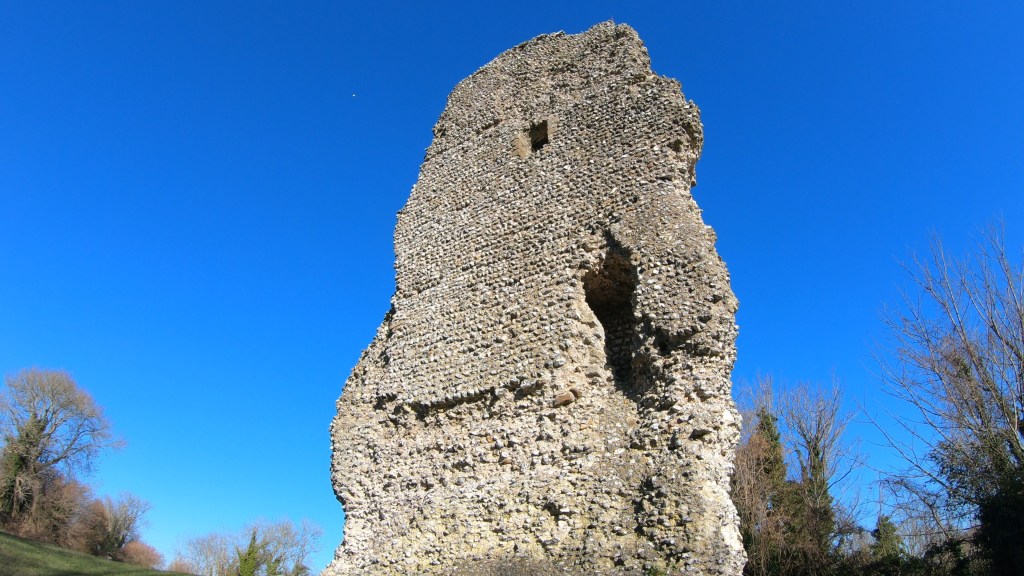

The most prominent feature is a large, rugged lump of stone, and this is all that remains of the Gatehouse tower. Still standing to almost its full height, a single window, and some floor joist holes, are clearly visible within the structure. It stands at 70 foot tall and 5 foot thick, made from flint and chalk, but probably encased in stone to make it unconquerable.
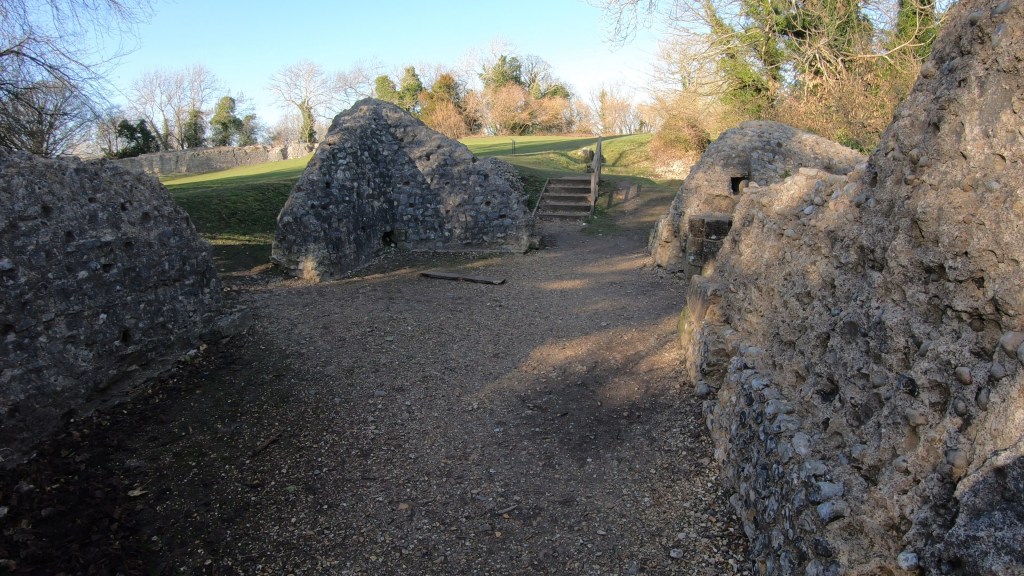
Beyond the Gatehouse are the existing foundations of what is believed to have been living quarters and a guardhouse. The dressed pillars of an entrance can be made out, but the bulk of the remaining walls now consist of only the basic rough stone infill, the better quality dressing stone having long since been quarried away for use elsewhere.
Lying to the north of the gatehouse is the original castle motte, it’s earthen mound rising to a height of some 30ft , now covered in trees, this motte is a man made hill, not built by the Normans however, it was much earlier than that, the Saxons had their stronghold at Bramber, well before the Normans invaded. A short distance away is a section of the curtain wall and, again, this survives to a reasonable height, up to 10ft in places.

Just north of the South Downs and not far from the pretty town of Steyning, Bramber used to hold an important position on the busy River Adur, as it made its way to Steyning’s port. The river has long since silted up and changed course, but clues as to Bramber’s historical significance still remain.
Apart from its role in Norman history, legend has it that Elizabeth I may have stayed in Bramber at St. Mary’s (a privately owned house) as part of a tour through the south of England. During the Civil War, Bramber was a Parliamentary stronghold and in December 1643, a skirmish took place nearby when a Royalist force unsuccessfully tried to secure the bridge over the River Adur. It’s believed that this may be when Charles II narrowly avoided capture as he pushed through the crowds in disguise and tried to make his escape to the coast along what is now called Monarch’s Way.
We’ve mentioned already that Bramber sits on what is now Monarch’s Way. It also joins the Downs Link and is a short distance from the South Downs Way, making it the perfect destination for some walking if you’re interested.


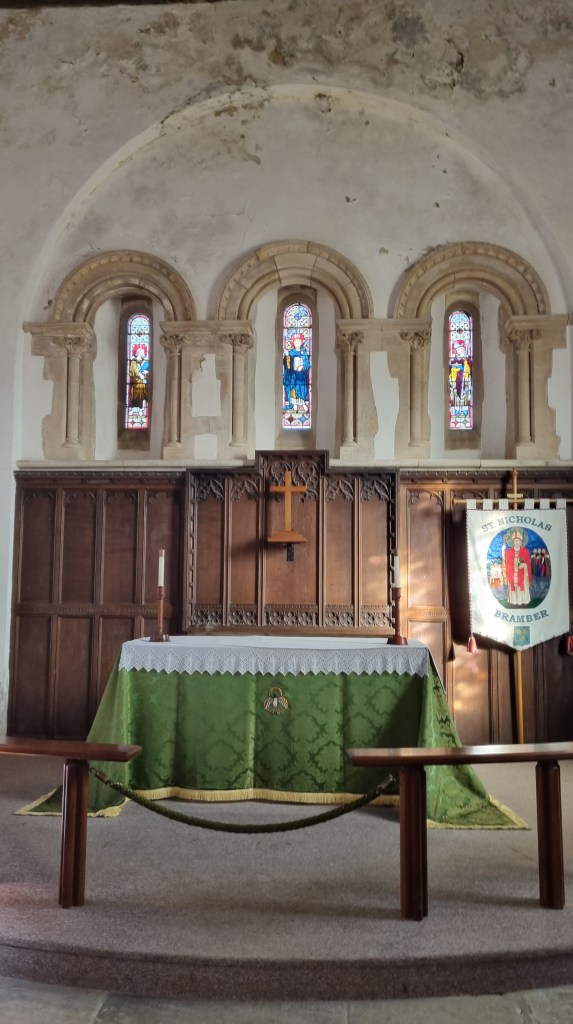
Just below the castle sits the delightful little church of St Nicolas built at the same time as the castle, making this the oldest Norman church in Sussex and still intact in which we can wander today. It was originally built for secular canons, but by the mid 13th century, it was given over to the parish church of Bramber. The church was used as a gun emplacement for attacking the castle during the Civil War in 1642, and was ruinous by the mid-18th Century, It was then thankfully restored in the 19th century to what we see today.
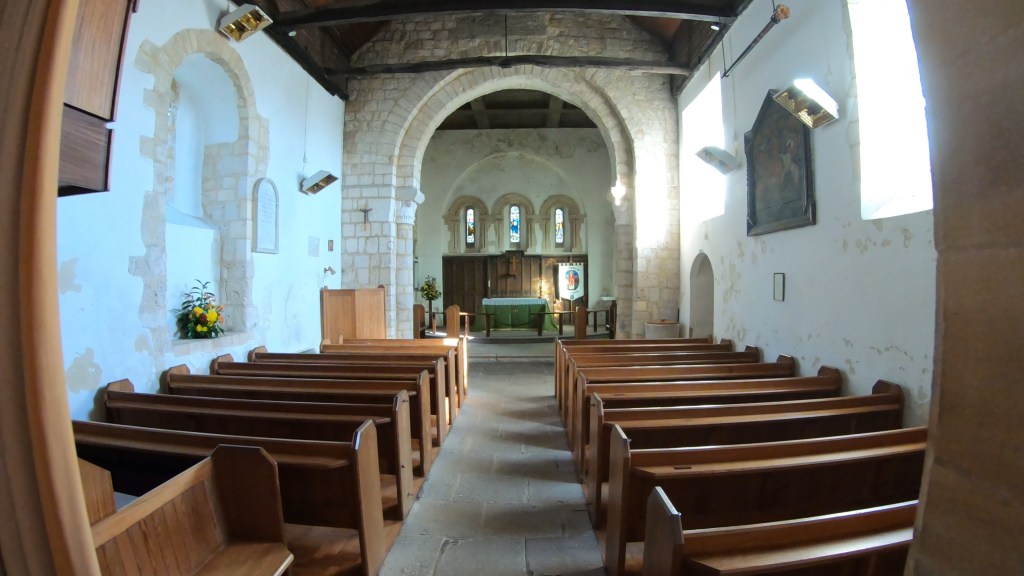
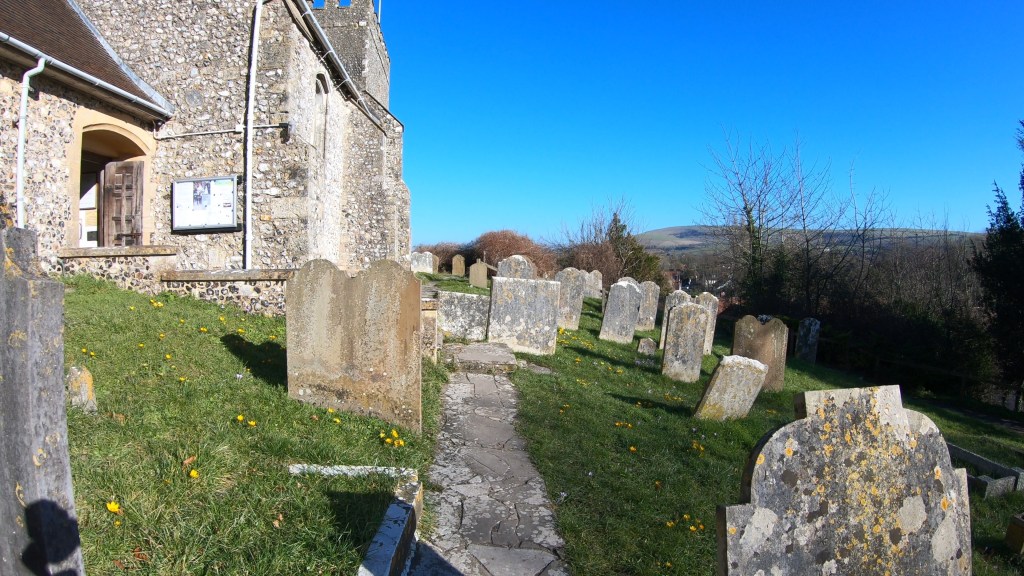
The original nave still stands along with the chancel arch and the overall quality and finish of the stonework suggested that the church was built by Norman masons who were brought to England to work on Williams castle. Some of the interesting features inside are the capitals that support the chancel arch, carved in a rustic Norman style, with heads and a panel depicting the biblical story of the fox and geese, this is worth looking out for if you get the time. Wandering the church it really is such a quiet and beautiful setting, the church itself is quite atmospheric.
If you liked the blog please hit that like button, watch the full video below and consider subscribing if you haven’t already.
Till Next Time!
 Pinned on Places
Leave a comment