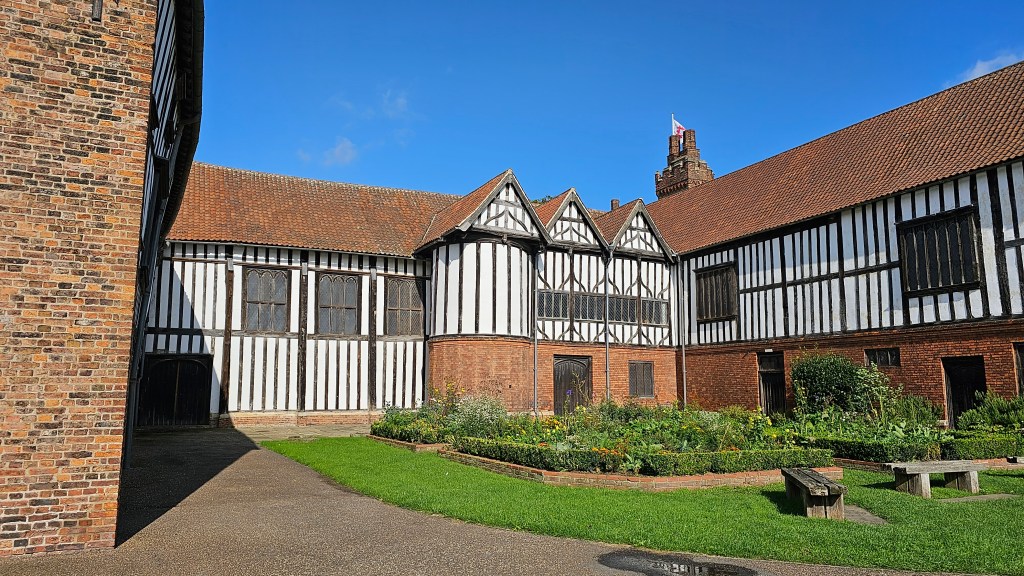
Today, we get to explore a complete Tudor time capsule, going back in time to the 15th century, our story with Gainsborough Old Hall starts with a powerful charismatic character named Thomas Burgh. Starting off as a soldier as a Yorkist in the soon to be King Edward’s army, Thomas was knighted when Edward was crowned king, and rewarded for his loyalty with land throughout Lincolnshire, including here at Gainsborough old hall, this hall is over five hundred years old and one of the best preserved medieval manor houses in England, So why not join us for a wander.
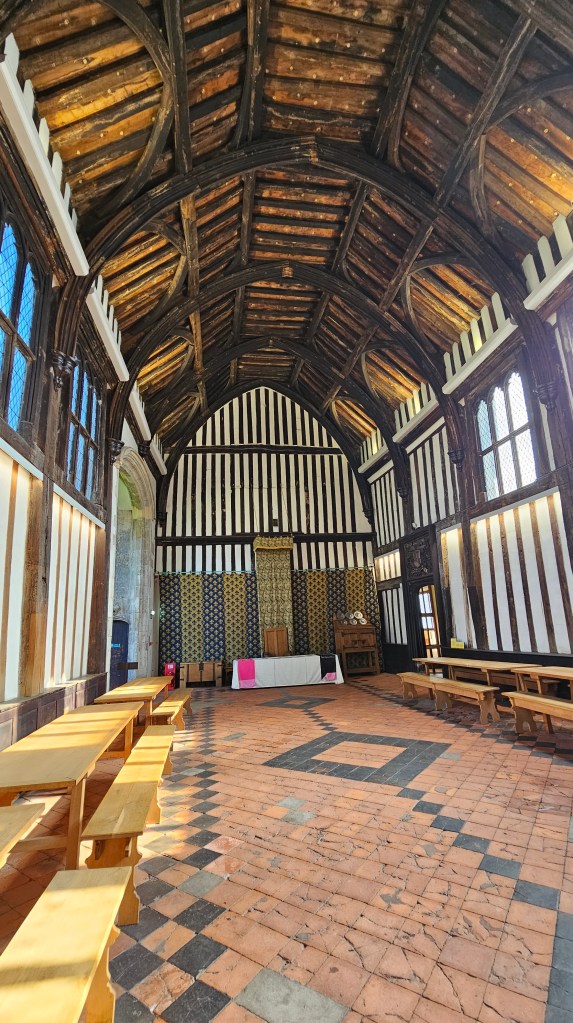

The first room and for us first wow moment that we get to enjoy is the incredible great hall, It was built in the 1460’s and really is a masterpiece of 15th century timber construction and craftsmanship. The sheer size of the hall is monumental, you can see how it would have looked set up for the lord and his family at the top of the hall whilst they were waiting for their grand feasts, with their plates and trophy’s placed next to his seat showing off his royalties and achievements for his guests to be impressed by aswell as having the room covered in beautiful tapestries and painted ceilings all around him.
As with castles and historical buildings, the great hall is the practical and social heart of the manor, it was used for entertaining, eating and carrying out the administrative functions of the estate. This hall really is up there with one of the most beautiful we’ve seen to date. Giving quite a few of the other places we’ve seen a run for its money. The architecture is super interesting and its amazing how well built the hall is, there are so many incredible features that are worth taking the time to look at.
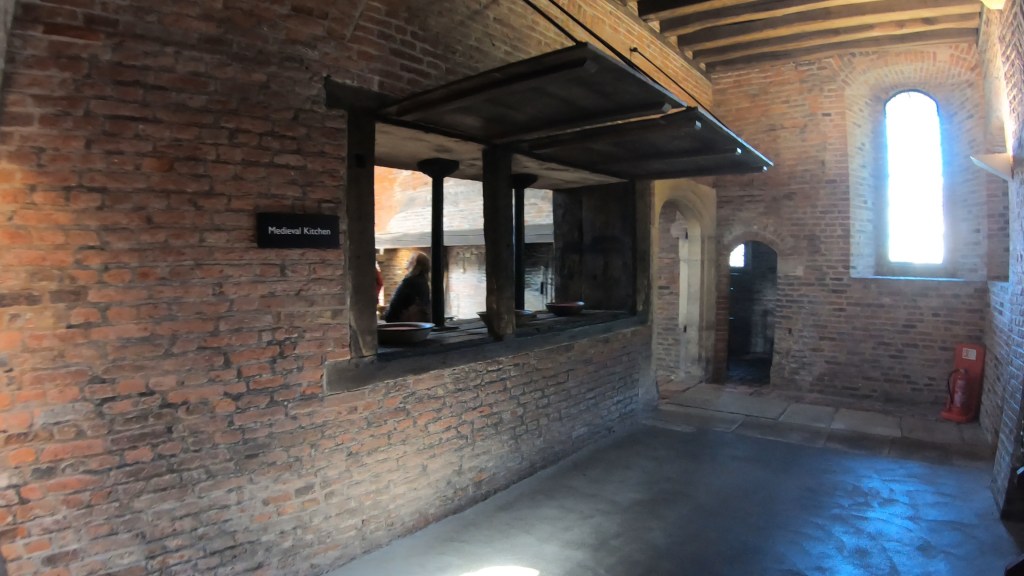


Now onto perhaps the most impressive of this beautiful building, in our opinion but the incredibly unique and interesting vast kitchen, this happens to be one of the largest and most complete to survive from the middle ages. It dates back to Thomas Burgh II’s final building campaign in the 1480’s but it’s something that I’ve personally never seen before, still standing as it would have all those centuries ago when the cooks and servants would be cooking up a storm.
Firstly you’re drawn to the huge open hatchway as you walk inside which was a serving and dressing hatch, this was when the meals could be finished here on a dressing board, to then be plated and ready to be taken into the hall for the lord’s acceptance. Just next to the hatch is whats known as the dressing office, with it’s two doors, one overlooking the kitchen side and one overlooking the hatch side and seated inside was a clerk who kept the accounts of supplies coming and going and of all the dishes going out. Overseeing the whole process from a gallery in the west wall over the ovens was the head cook, who chamber was in the North West corner over the boiling house, this was reached by the ladders, this space offered the head cook warm and relatively private accommodation.
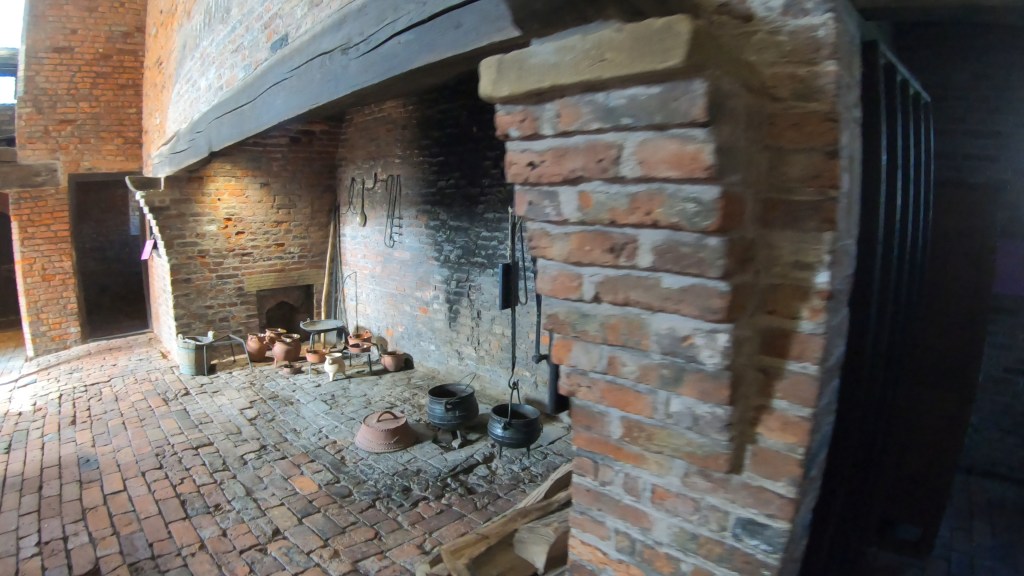
The kitchen was the lead focal point of food preparation at the hall, this room was supported by a series of subsidiary buildings including stores for foodstuffs and fuel, with a bakehouse, brewhouse and dairy, even including a smithy and other facilities that would ensure efficient food supply for its household of 50-100 people or more if the lord decided to entertain, nevertheless, the kitchen was always very busy and extremely hot. In the middle ages, in the bustle of the morning rush the kitchen would be predominately a male environment, each with clearly defined roles, a structure would be followed to ensure efficient production day in and day out.
Two wide hearths dominate the kitchens, one for stewing meat and making thick soup, the other was the roasting hearth and could house 12 foot iron spits. These would have massive beasts on them, turned slowly by young boys crouched in the shallowed niches on each side to ensure the meat was cooked evenly. Drip trays would be placed beneath the meat so it could be used as valuable fats used for cooking. It truly does give an excellent glimpse into the daily life of the Tudor Manor. It’s easy to imagine the hustle and bustle of servants preparing meals for lavish feasts, all doing their part and working together all in order to keep their lord happy.
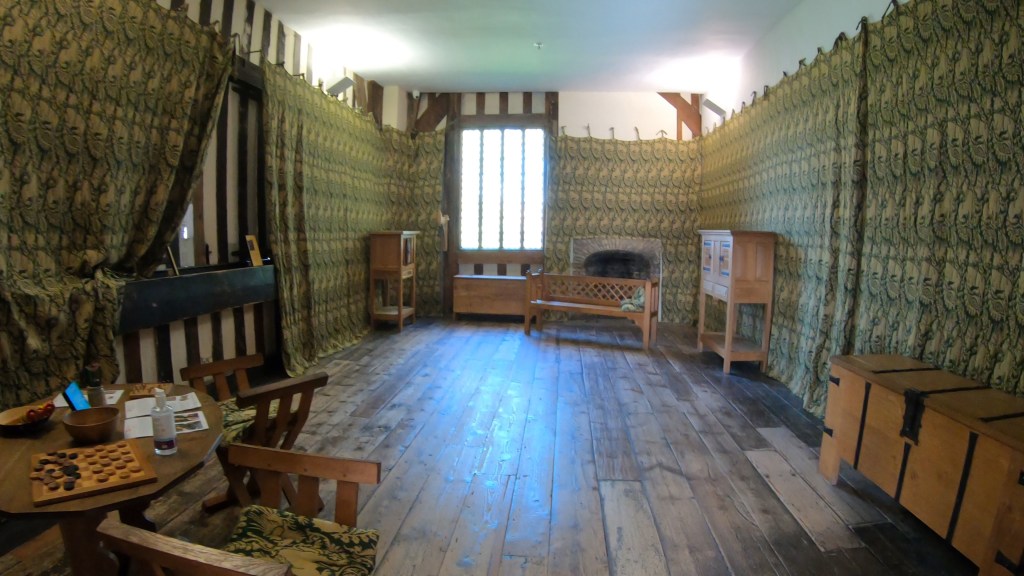
Making our way towards the east range of the house we walk up the newel stair that was built by Thomas II’s great great grandson, also named Thomas who added a enclosed stairway and gallery in the north east corner. This basically gave access between the great hall and the private quarters of the east range. Thomas IV’s stair was centred on a huge newel post that rises to a wide south facing first floor gallery with lovely large windows to gaze out across towards the town.
The gallery chamber was off the newel stairs and it was near enough likened to a solar room, an upper room at the high end of the hall that provided more private withdrawing space for the lord and his family. What I like about this room is how elegant and interesting it would be decorated, with wall hangings and a large fireplace to keep them warm but also a secluded space where they could not be disturbed by the crowds below.


The two first floor rooms in the northern half of the east range formed into a bridge between the public arena of the great hall and the fully private spaces of the tower. In the mid 19th century the rooms were joined to form a single large chamber. Originally the great chamber had served almost as a second, more intimate, private hall where only the lord could dine with his family members and receive special guests or those lucky enough from the household staff to get an invite and the high status of this room is more than likely indicated by the elegant posts in the corridor outside.
Whilst the great chamber had a semi-public role, the chamber beyond, allowed the lord to fully withdraw. It was suggested that the decoration of the great chambers were filled with incredible interiors, richly dressed, large fireplaces, carpets and paintings and tapestry showing off their great wealth. The two of the chambers served similar purposes and roles when the Hickman owners were here between 1596 and 1730. Over the winter of 148 the two medieval chambers were re modelled into a single assembly room for the town, an existing ceiling in the smaller chamber was raised and then replicated across the great chamber. The walls were lined with studwork and plastered and the current rows of gorgeous chandeliers were hung making it look elegant and beautiful.
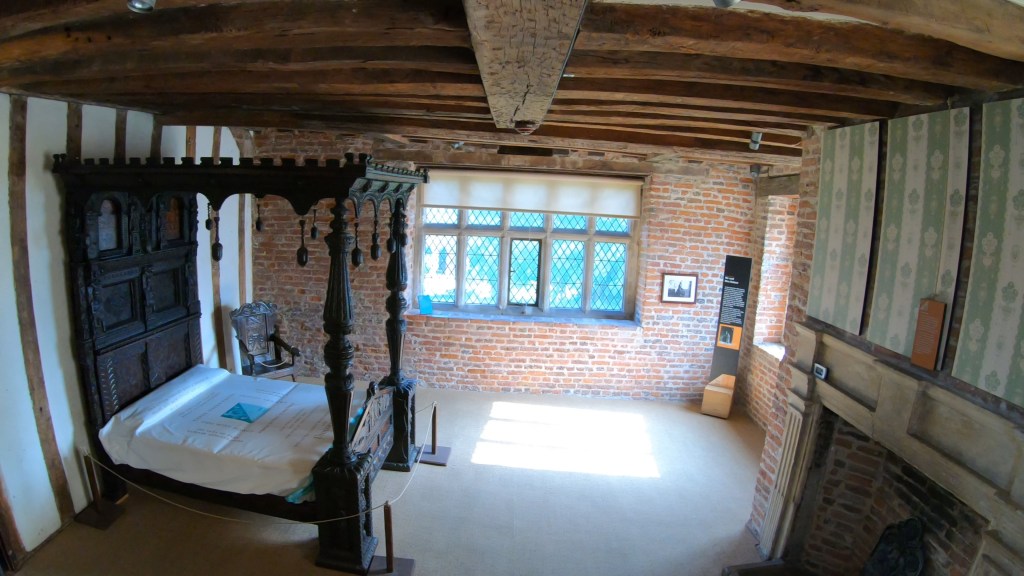
The final rooms we manage to visit were reconfigured in the 17th century. William Hickman created a main chamber and a side closet on each of the three floors, whilst still keeping the 15th century two storey corridor arrangement. The upper level was actually been used as a nursery and the mid level used as his own bedchamber. It’s amazing to see the large chamber, well lit by wide windows and a stone fireplace heating the rooms, Sir William also had a curtained four poster bed along with a jewellery cabinet that contained some of the finest diamonds, pearls and rubies.
There is plenty to see and to keep you occupied here, and a visit here is a true glimpse into Tudor life, a glimpse into the treasure that has been beautifully kept throughout time and echoes its history throughout its walls. We would 100% encourage you to put Gainsborough Old Hall on your list for a visit. They also have a lovely café inside and an English hertige souviner shop to remember your visit by.
If you liked the blog please hit that like button, watch the full video below and consider subscribing if you haven’t already.
Till Next Time!
 Pinned on Places
Leave a comment