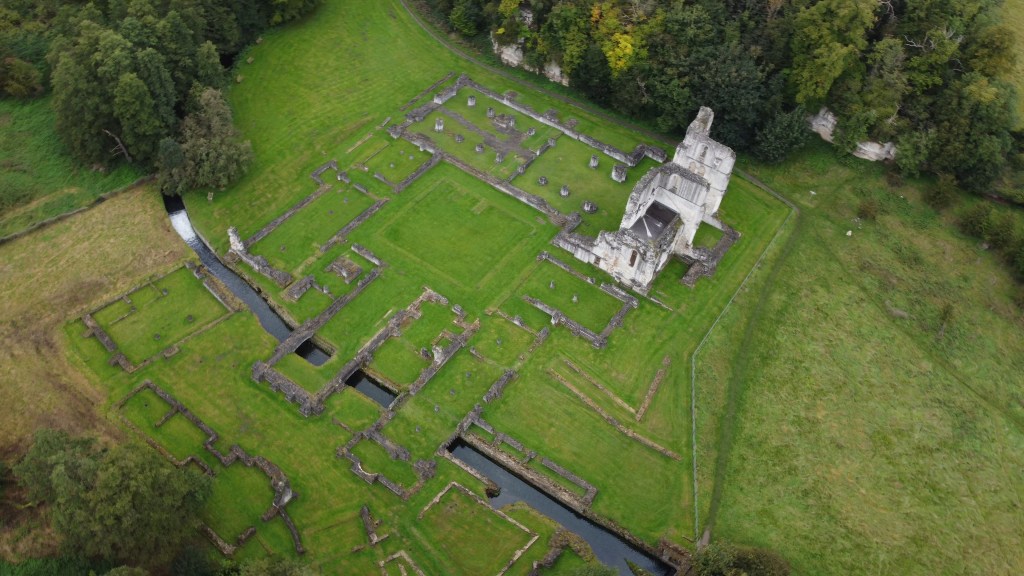
The wonderful yet eerie remains Roche Abbey, a Monastery that lies in the wooded valley of the Maltby Beck, about 9 miles from Doncaster and close to Sheffield in South Yorkshire. Now only a small part of the eastern end of the abbey church remains standing to any height. But this was once a splendid twelfth-century church, one of the earliest built in the New Gothic style in northern England. So join us as we explore the remains that scar this forgotten ruin.

Roche was founded in 1147 and building began on the stone church in about 1170. Although never a large or wealthy abbey, the abbey built up a moderate collection of land-holdings during the twelfth and thirteenth century and played a significant part in the history of the region in the later middle ages. Like other monastic houses, Roche was suppressed in the reign of Henry VIII, the monks dispersed and the abbey buildings were very much destroyed.
The abbey was founded in 1147 by Richard de Busli, The Lord of Tickhill, who was probably the great-nephew of the first Roger de Busli, the Norman builder of nearby Tickhill Castle, and Richard FitzTurgis. Its first monks came from the abbey at Newminster, in Northumberland and it was them who chose the beck side site. The abbey became a place of pilgrimage due to one of the rocks at Roche bearing a resemblance to the Cross.

One unusual feature here is that the church was never remodelled or rebuilt, making it an almost unaltered example of a 12th-century abbey church. The best-preserved building is the 14th-century gatehouse, which stands upon the foundations of a still earlier gatehouse structure. Situated on both banks of Maltby Beck.
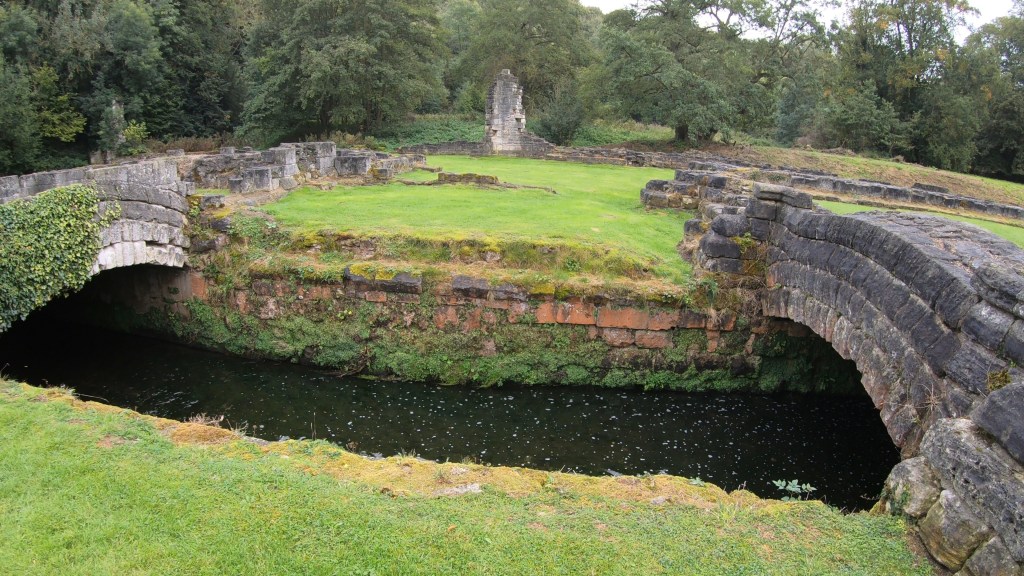
The site is protected by steep cliffs to the north, from which the name, meaning ‘by the rocks’ derives. The church, chapterhouse, cloister and the Dorter’s and Fraters of the monks and the lay brothers are on the north side of the beck, while the monks’ Dorter and frater extend over Maltby Beck on bridges, The infirmary, abbot’s lodgings and kitchens, and other buildings stand on the south bank of the beck. The abbey stands in 18th-century parkland designed by famed landscape gardener Lancelot ‘Brown. The abbey has one of the best-preserved ground-plans of any Cistercian monastic site, enabling you to readily see the layout of the abbey buildings.

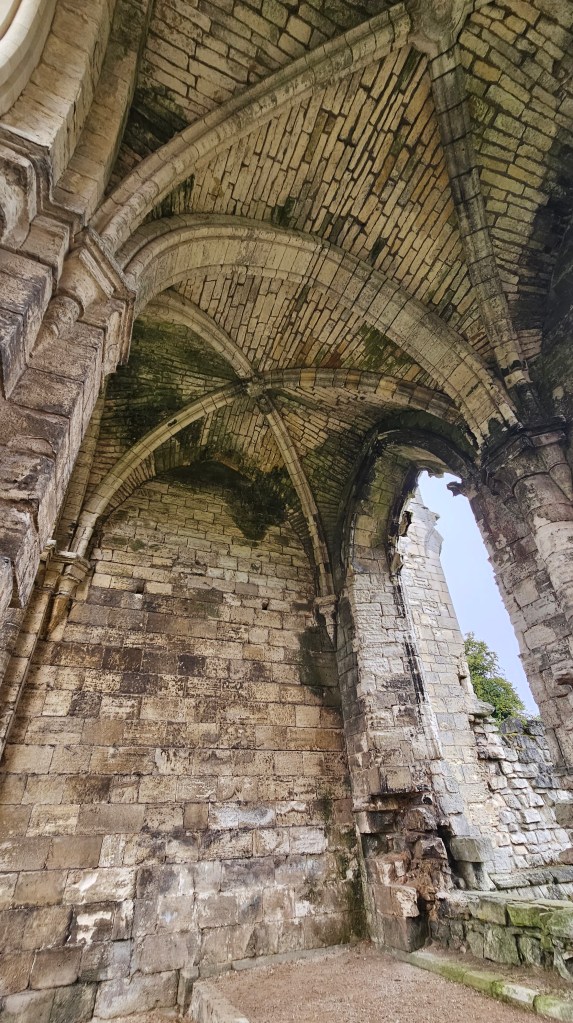
By using your imagination, the beauty of the whole structure really comes to life whilst you’re walking around, the two well-proportioned pointed arches on the north and south transept of the church which rest upon clustered columns, with plain capitals rise above and take centre stage. The architecture here at Roche is distinctively gothic and invented and developed in and around Paris in the 1140s. Normally the style would be single structural features, like the pointed arches and rib vaults here at Roche.
This is often compared with the Romanesque style that has been in use since 1066, but the gothic look is brighter and often favoured larger window openings. Inside the south wall, are the remains of a piscina, or Basin, that would be used for the washing of mass vessels and to the west, is the remains of the seats for the priests who were officiating at the mass. On the north side are the traces of a tomb of some unknown bene factor to the abbey. The architecture of these remains indicate that this was towards the end of the 12th century as the time of construction of the church.


Roche was home to an Order of Cistercian Monks and it was quite advanced for a monastery of the medieval period. Later developments included a kitchen and other buildings, including the Abbott’s rooms across the river from the Abbey, which were reached by a small bridge. Also taking position over the water were a set of latrines which emptied directly into the stream, which the monks had dammed further upstream, in order to provide a faster run of water, this is super impressive to be able to look around, its great that much of the underground water system is still very much intact and you can still see where water was drawn, where the toilet facilities would have been and the washing platforms.
The once proud Abbey remained hidden from view for nearly a century and a half, until 1920, when it was excavated and claimed as a monument by English Heritage along with the remains of the medieval woodland it sits alongside. The stone bridge remains over the river, and the huge walls of the North and South Transepts rise up alone quite suddenly from the valley below as you drive the modern road that runs along the cliff edge, when you turn your head backwards for a glimpse as it cuts away. The robbed out walls have been picked out and re-laid extensively to give an accurate interpretation of the extent of the fine building that Roche Abbey once was.

We very much enjoyed our visit, it was completely tranquil and perfect for an explore, the abbey site sits at the end of an attractive limestone gorge, and the ruins are extra atmospheric during foggy days but even on good days it’s a wonderful area to be able to enjoy a drink or a picnic.
There are also several walks and trails in the area that are worth thinking about. What I really liked about the abbey was how quiet it was, you couldn’t even hear any traffic or another person. The only sound was the nearby stream. A Great place to go for a walk and to reflect.
If you liked the blog please hit that like button, watch the full video below and consider subscribing if you haven’t already.
Till Next Time!
 Pinned on Places
Leave a comment