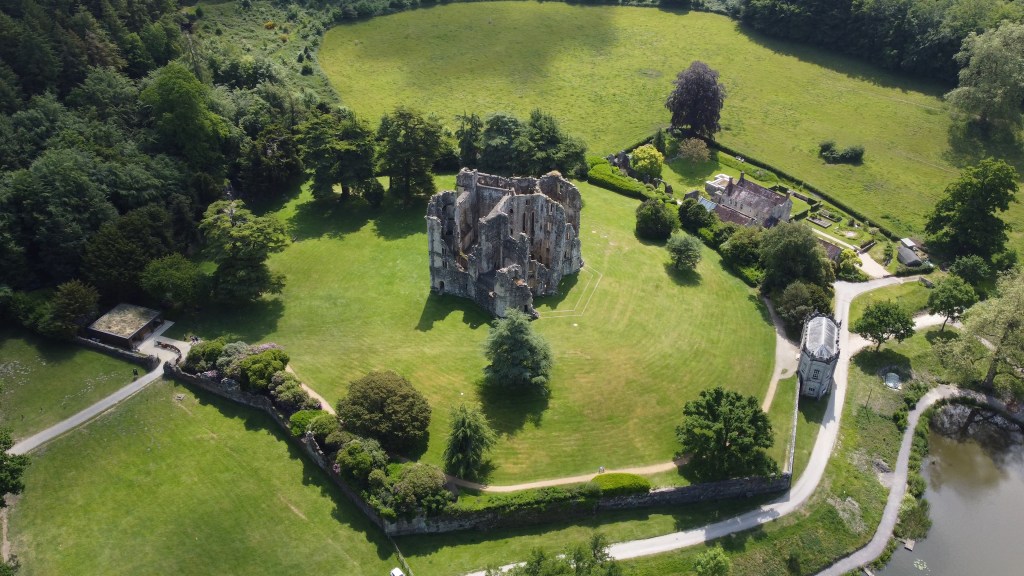
Near the village of Tisbury and west of Salisbury towards one of the Nadder Valley’s best kept secrets – the magnificent Old Wardour Castle. Today the unusual hexagonal ruins of Old Wardour stand serenely in their lakeside setting, protected by acres of wood. This was not always the case and the ruin testifies to bitter disputes in the past. So why not join us whilst we explore and discover Old Wardour Castle.
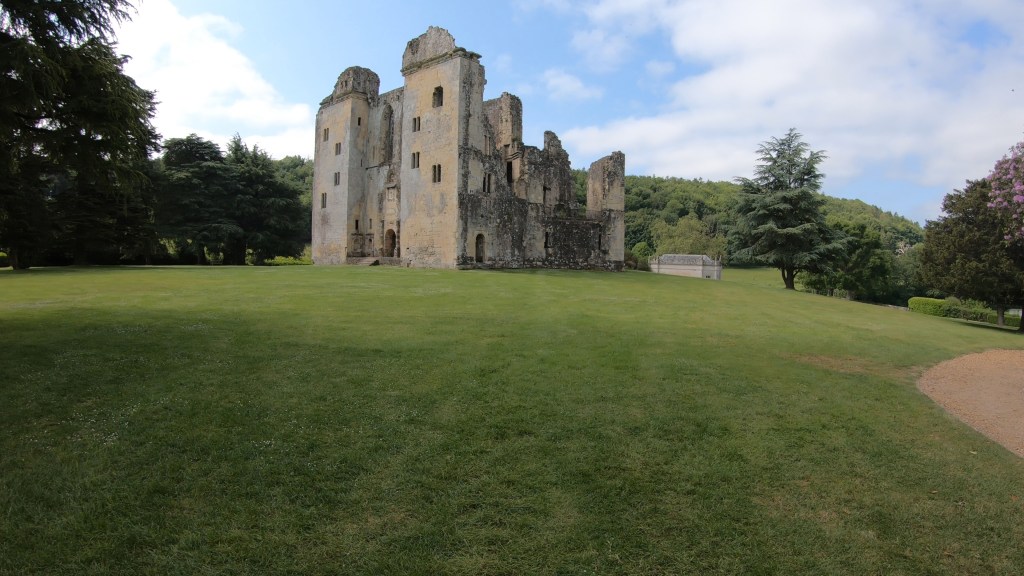
Recorded in the Domesday Book of 1086, the manor of Wardour was modest by most standards, only covering 120 acres of land. Apparently, the Kings of Wessex in around the year 900 occupied the site and Alfred the Great gave judgement in the chamber there. Some sort of manor must have therefore existed at Wardour since that time, but where it was, how large it was and where it was situated is unknown. But by the time of the Norman Conquest, it had been granted to Wilton Abbey, a Benedictine nunnery about ten miles away. Eventually, ownership passed by right of marriage to John and Maud Lovell, who owned vast estates throughout England, including Minster Lovell, their ancestral home.
The castle is set in a beautifully secluded place with no military importance, set below a hill instead of on top, no drawbridge, ditch or moat as the pond was used for fish and behind the entrance front it was topped by decorative features. In all its glory, this was the home, a grand stately and luxurious home of a great man.
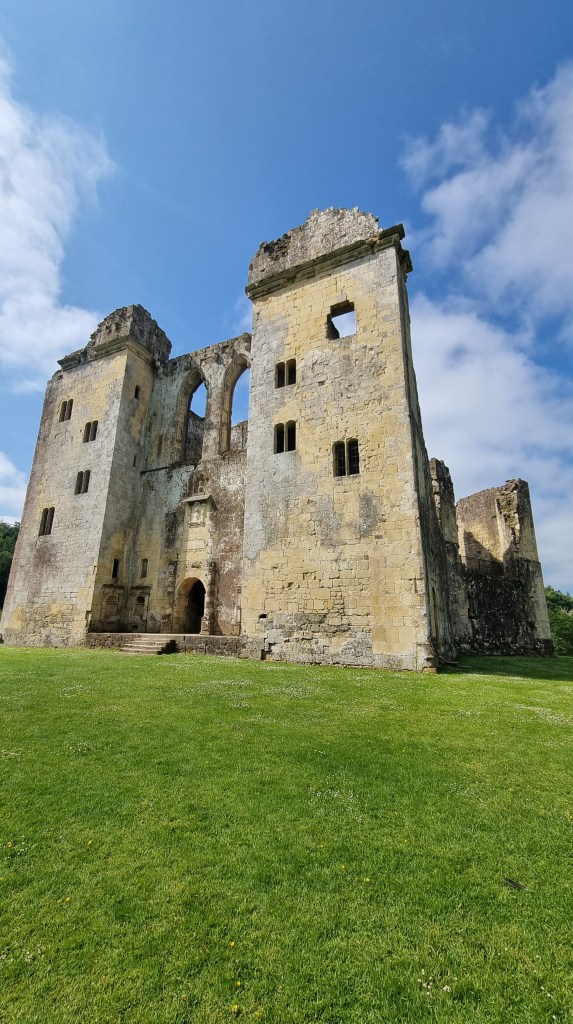
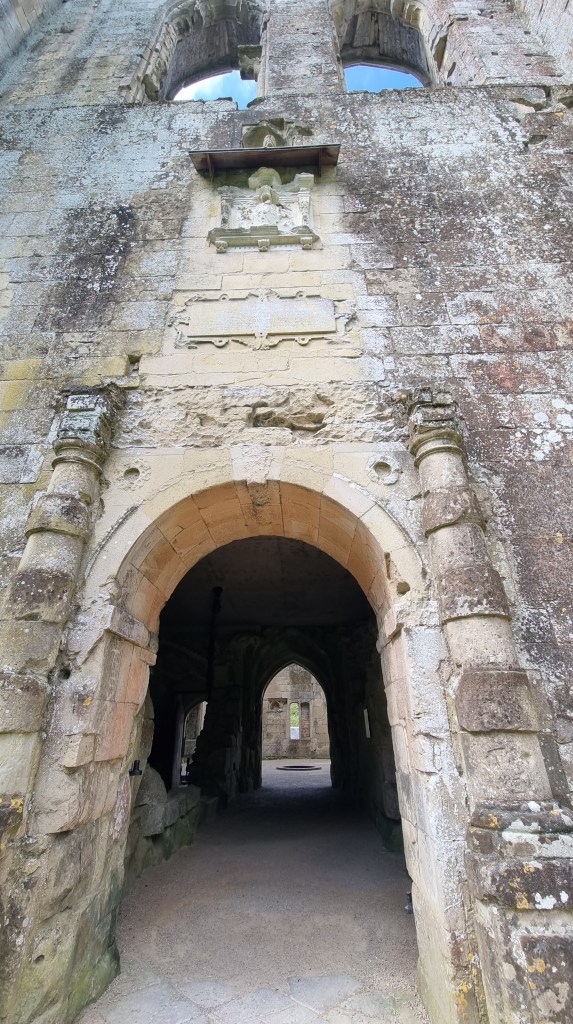
John Lovell was also determined to create something spectacular and unusual. Though tower houses are far from unusual, Wardour Castle with its hexagonal shape is quite unique. It’s thought that John’s inspiration draws from southern Italy and France with research linking various chateaus and castles to Wardour’s design. It’s said that John Lovell was not in the same league as the builders of the castles that were cited as possible inspirations for Wardour Castle, as he was an enormously rich baron.
Wardour Castle remained in the hands of the Lovel family until 1461, when Edward IV ordered the seizure of the Lovel estates in retaliation for John Lovel’s support of the Lancastrian cause during the Wars of the Roses. This John Lovell was the great-grandson of the John Lovel who built the castle 70 years earlier. In 1547, Sir Thomas Arundel, from Cornwall, purchased Wardour Castle, and it remained the property of the Arundel’s until its demise after the Civil War.


The castle once had more than a dozen bedchamber that were arranged in suites for the family, guests and senior staff, many of those chambers and rooms were destroyed though in the Civil War. Most of the lodgings were on the upper floors, again complete with a fireplace, large windows to gaze from, private latrines and some even contained a separate inner chamber. Most richly decorated with various paintings and wall hangings, but an inventory from 1605 revealed that the lodgings were more decorated than once thought, the rooms had tapestries from northern Europe and beautiful rugs from turkey or the middle east, guests would have been able to indulge in a good nights sleep on feather beds underneath satin quilts.
During the 18th century, the Arundel’s built New Wardour, which is visible in the distance. They hired the famous landscape architect, Lancelot Brown, to transform the grounds and several lakes and a new banqueting house which soon appeared in the shadow of the ruins. In the 19th century, Old Wardour Castle became a popular destination for visitors who enjoyed the romanticism of the ruins, and in 1944 it was taken over by the State when the last Lord Arundell died.
Today, Old Wardour Castle remains a really stunning ruin. At the northern end of the property, two unusual features complete the lingering impression of a romantic era long since past. An 18th century stone grotto serves as a nesting place for birds, while the remains of a prehistoric stone circle hide in the woodland behind the English heritage shop.
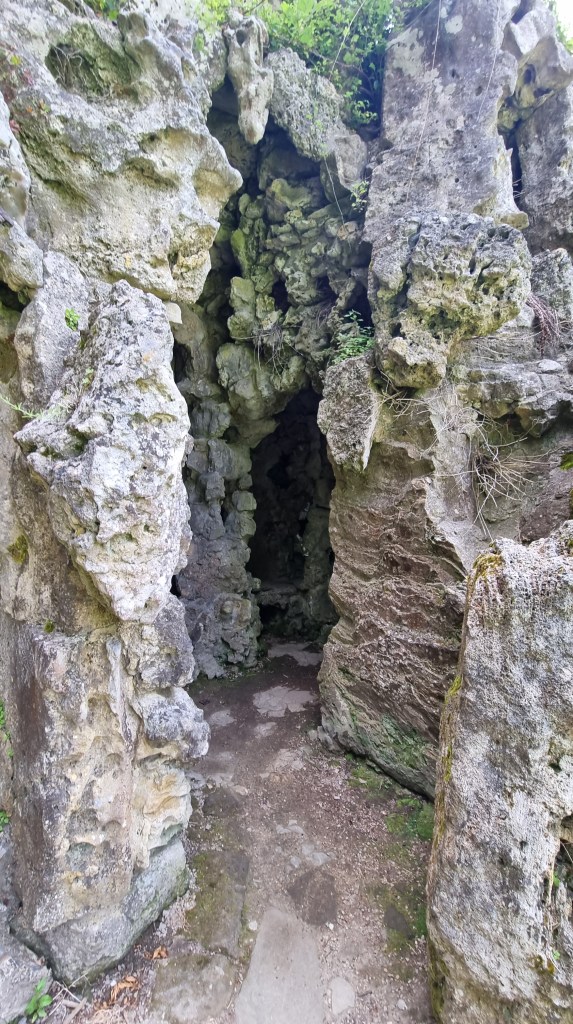


The Grotto of Old Wardour Castle was the last addition to the landscape. It was built in 1792 by Josiah Lane of Tisbury, who at the time was a well-known builder of garden ornaments and other grottos in the area. He was commissioned to build the artificial cave, complete with dripping water, fossils and ferns from brick, plaster and stone from the ruins of the castle. The grotto and related structures also incorporates three prehistoric standing stones, thought to be removed from the stone circle at Tisbury as part of a larger stone circle or chambered tomb, but unfortunately no other trace remains.
During the 1990s, the castle was the setting for the movie Robin Hood, Prince of Thieves, starring Kevin Costner and morgan freeman. You’ll be able to spot the two towers of the castle in a brief scene in the official trailer, but its no wonder they filmed a great classic movie in the stunning setting here.
We spent such a great amount of time really exploring and enjoying Old Wardour Castle, it’s one of those places you find yourself completely drawn too, we have been here a few times now and with each visit we learn and enjoy something new, there is so much to see and do here, it’s worth a day out in the stunning Wiltshire region.
If you liked the blog please hit that like button, watch the full video below and consider subscribing if you haven’t already.
Till Next Time!
 Pinned on Places
Leave a comment