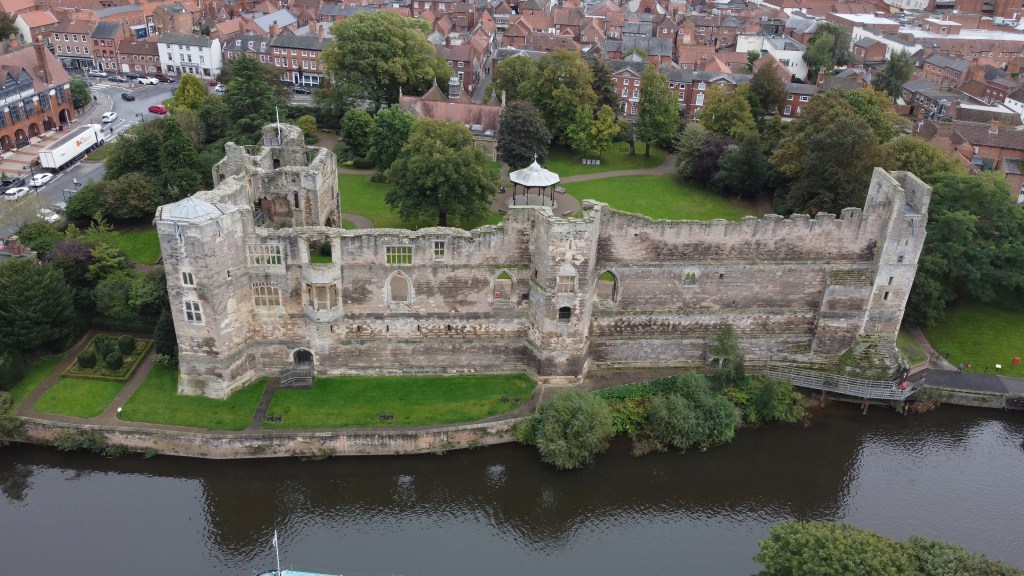
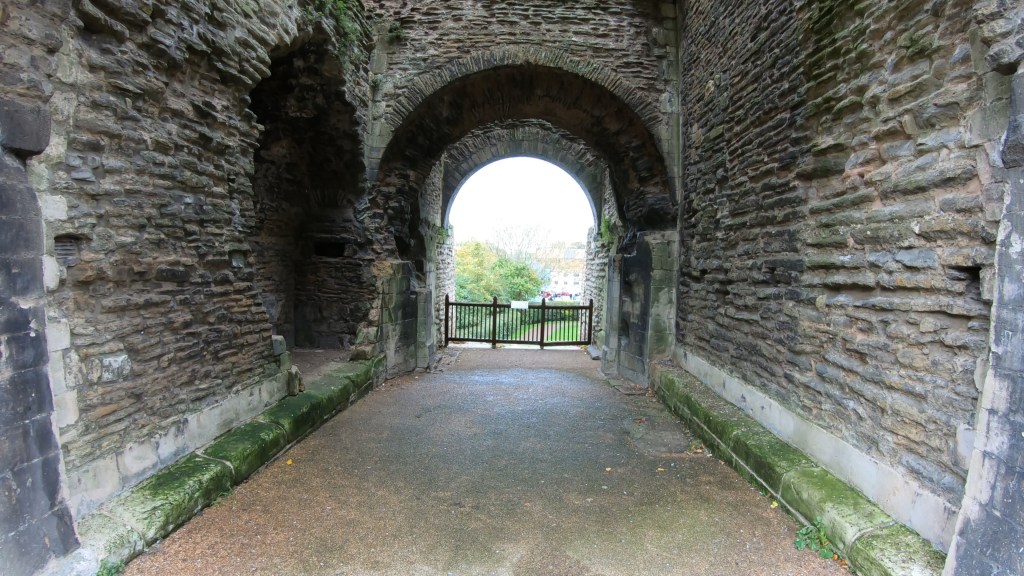
Standing proudly on the banks of the River Trent, the Castle has weathered many historic storms since it was built nearly 900 years ago and is the site where notoriously famed ‘Bad King John’ took his last breath. Although partially destroyed during the Civil War, the remains still boast the largest gateway of any Castle in England and enough of the impressive structure still stands for us to fully appreciate its worthy nickname of ‘The Guardian of the Trent’.
Newark was built originally around the year of 1070 as a Norman Motte and Bailey earthwork fortress to replace an earlier Saxon fortified manor that had existed on the site in Nottinghamshire since the 10th century. The castle developed around 1133 – 35 when Henry I granted Bishop Alexander of Lincoln – who was the Lord of the Manor of Newark – permission to build a castle this developed into a stone construction towards the end of the 12th century.
The castle is most famous as the location in which King John died of dysentery on the 19th October 1216, although legend says that he was poisoned. John had been on campaign immediately before his death, his kingdom was being torn apart by war with two enemy armies opposing him on English soil.
The first of these was the army of the French Prince Louis, the later King Louis VIII of France, in alliance with rebel English barons who had invited the French invasion. And, from the north, a Scottish army led by its king, Alexander II, was marching south to pay respect to Louis. John was taken ill at King’s Lynn in Norfolk and had lost a great deal of his baggage, including his crown jewels, in the tidal channels and mudflats of the Wash on his way to Newark.
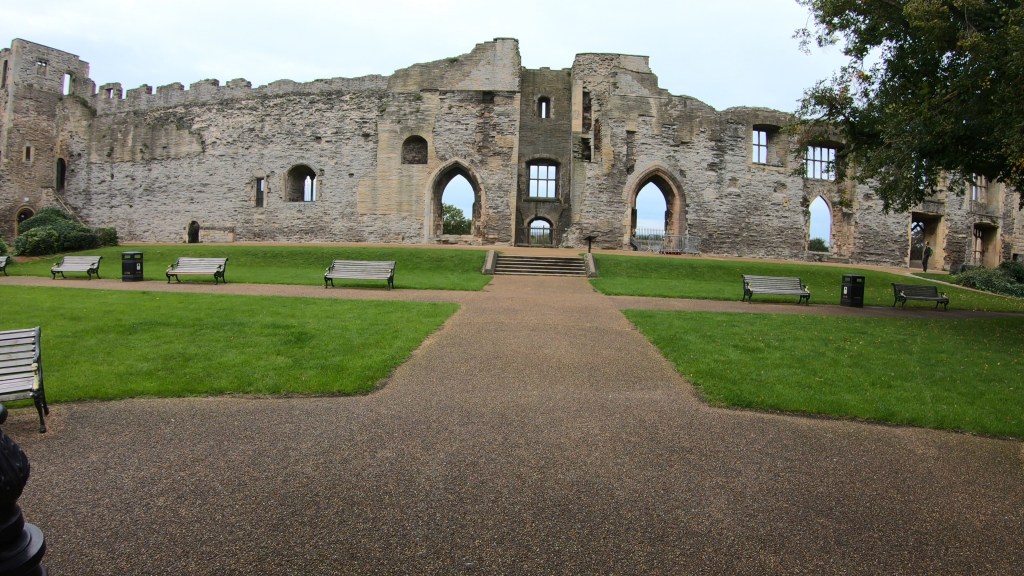
Newark was held for the king during the Civil War because it controlled one of the main north/south routes. The castle was considered to be of immense strategic importance and Parliament besieged it on 3 occasions. King John had entrusted Newark Castle to one of his mercenaries, Robert de Gaughy. Following John’s death, the new king, Henry III (John’s nine-year old son) ordered de Gaughy to give up the castle to the Bishop of Lincoln.
De Gaughy ignored this instruction, as well as several no-nonsense royal reminders, and in 1218 a strong force was despatched to take the fortress by force. After a week’s siege, de Gaughy was persuaded to leave in return for £100 of silver. Sometime after the siege, probably around the end of the 13th century, Newark Castle’s river curtain wall was rebuilt and several other improvements made.
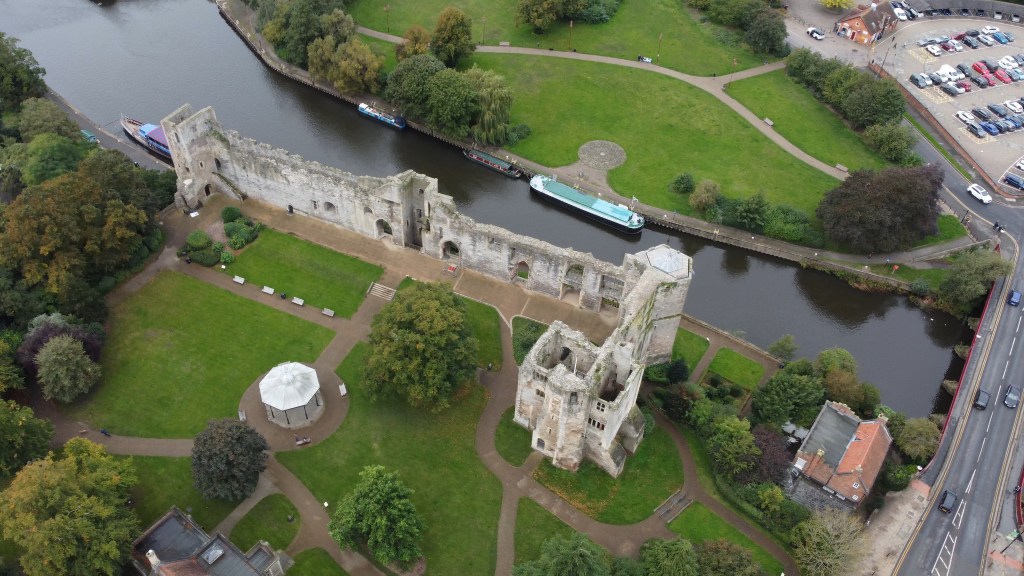
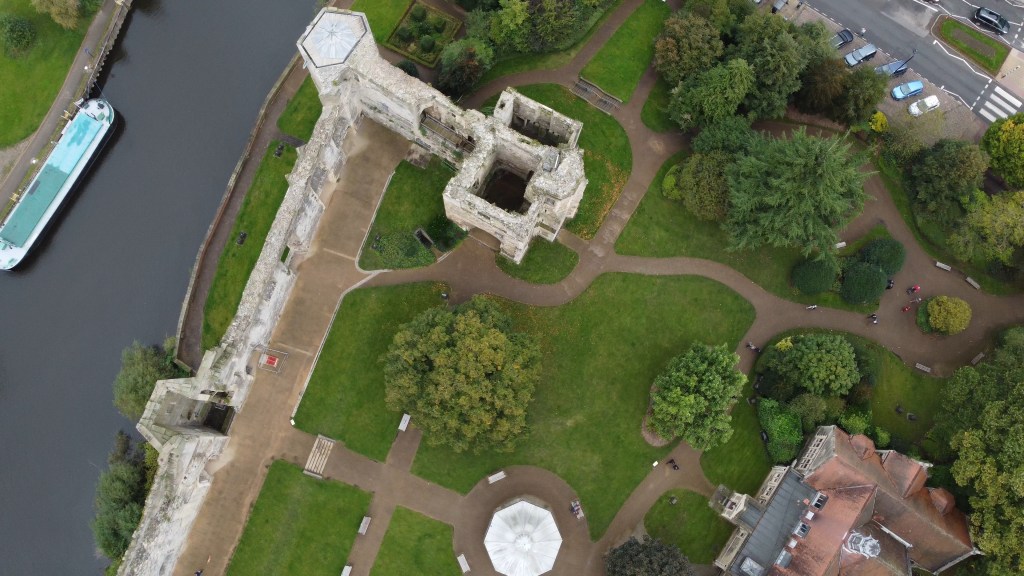
In later years, Newark Castle became derelict, many of its stones re-used elsewhere by the town’s residents. It was occupied by squatters, had cottages built in its courtyard and eventually became the site of a cattle market. However, it was restored again between 1845 and 1848 by architect Anthony Salvin. In 1889 the Corporation of Newark opened a landscaped public garden on the site of the castle’s former courtyard, in honour of Queen Victoria’s Golden Jubilee of 1887.
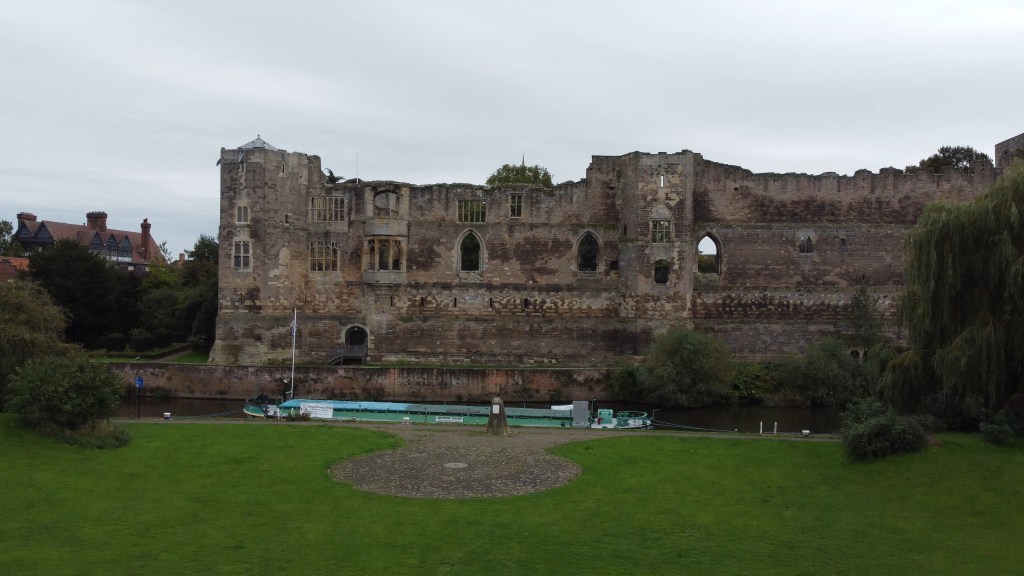
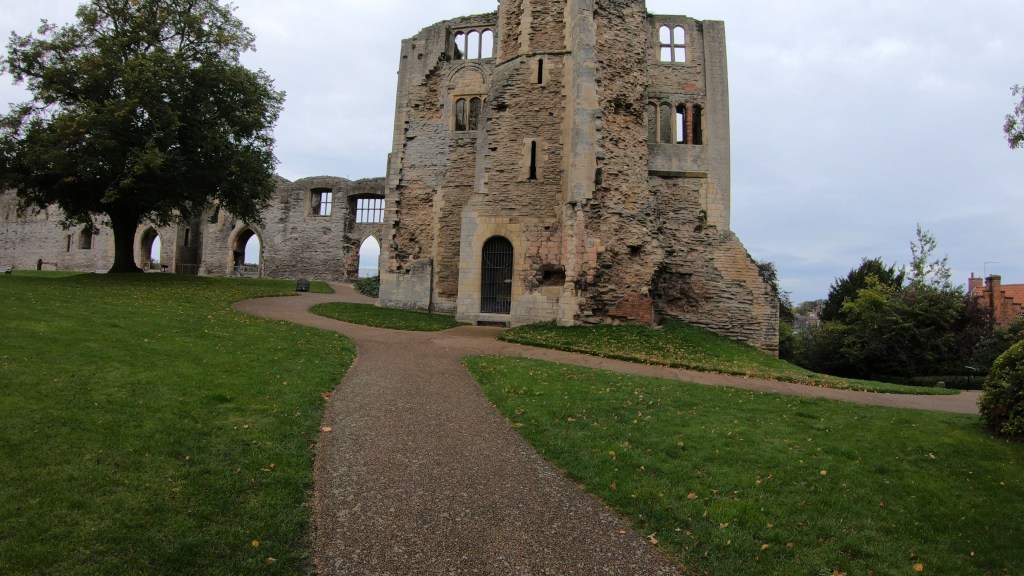
From the riverside the Castle looks very impressive, looming above the water like a barrier. But it’s only when you approach from the town that you realise how ‘one-sided’ the structure is. For on the town side, there are almost no remaining walls, though the towers and gatehouse are still impressive and not forgetting the windows and architecture, it’s a very beautiful structure and incredible even one sided how much still manages to show off the once grandeur Newark Castle had.
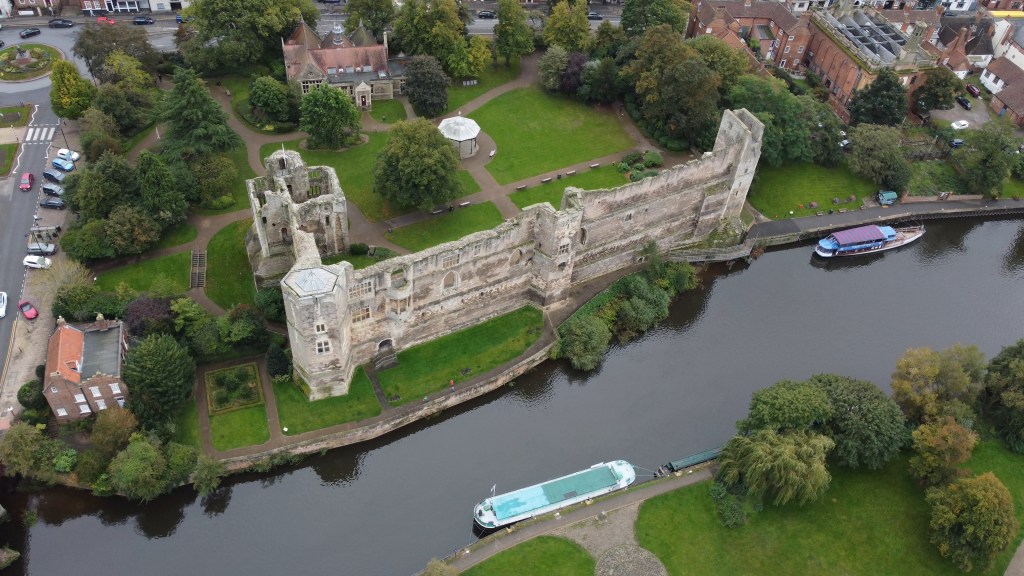
The town of Newark is just a stones throw from the castle and the beautiful gardens, we walked along the river and had a look at the various canal boats passing through and then onto the pub at the end of the walkway, but just a 3-5 minute walk will take you from the castle to the high street where you will find plenty to keep you fed and happy. We really enjoyed our visit here and would love to come back to see down in those dungeons, but we would definitely want to encourage anyone interested and in the area of Nottinghamshire to go give this castle a chance.
If you liked the blog please hit that like button, watch the full video below and consider subscribing if you haven’t already.
Till Next Time!
 Pinned on Places
Leave a comment