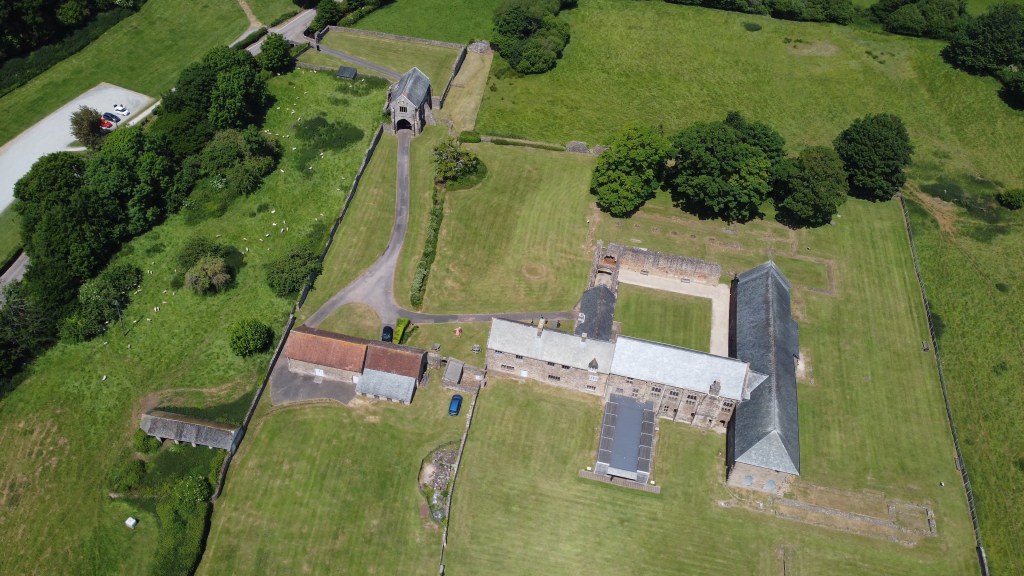
This wonderful location occupies a unique status among British medieval monasteries. Nowhere else can you find so many of the original monastic buildings relatively unaltered and complete. These ruins are steeped in a rich, fascinating history, going back nearly a thousand years. Situated in the east of Exmoor, just outside of Washford, it’s a must-see for this beautiful quiet part of the world.
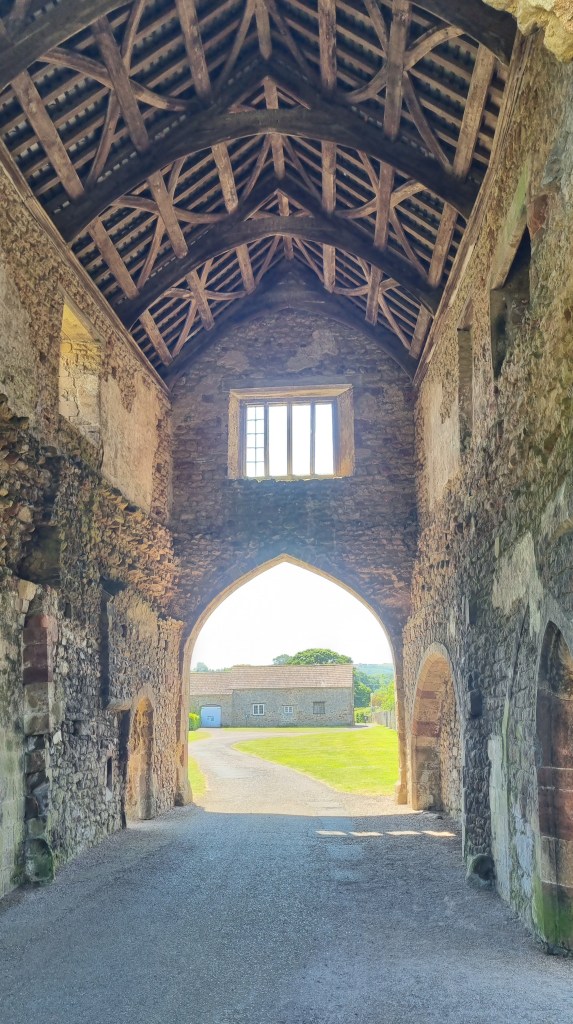
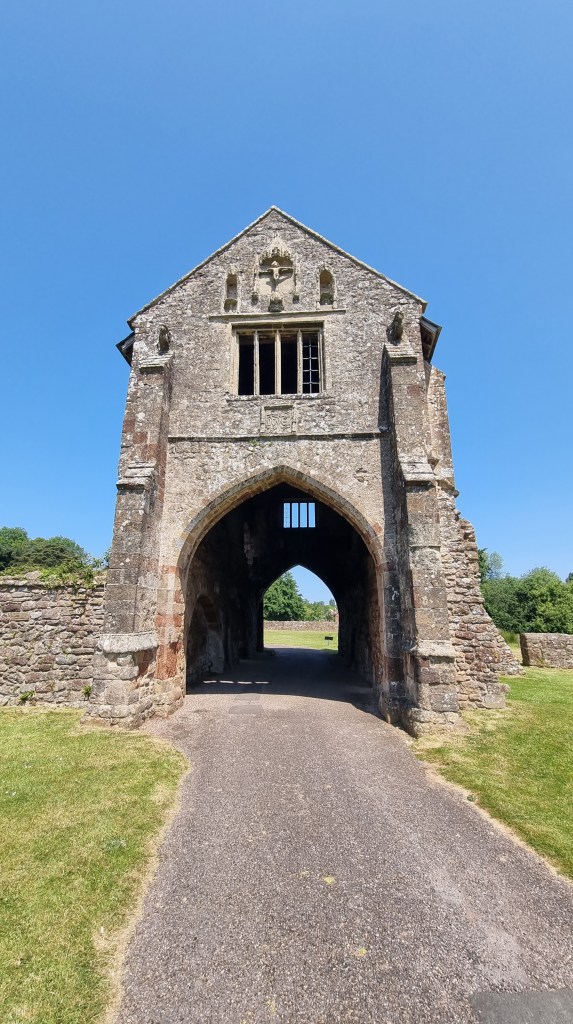
When first exploring the site, unlike many English heritage sites you are normally met with a ticket office and shop before entering inside, except Cleeve has a slightly different layout. We walk inside and underneath the Gatehouse Court into the medieval abbey precinct. This gatehouse is one of the most complete in the country, being built in the 13th century and remodelled twice; this gatehouse would have once contained a chapel and a guesthouse for the poor.
Established in the year 1198, Cleeve Abbey was a Cistercian monastery for 339 years. The Cistercian order was one of the most successful monastic reform movements of the middle ages. It was founded by William Earl of Roumare sometime between 1186 and 1191 as a daughter house of Revesby in Lincolnshire. Formal colonisation did not take place until 1198 by which time wooden buildings would have been erected. Building work in stone probably started soon after but took up to a century to complete. The original name of the abbey was Vallis Florida which translated to the (Valley of Flowers) but it later became known as Cleeve Abbey after the nearby village of that name. Cleeve was not a terribly prosperous house; it never reached the heights of other Cistercian houses like that at Glastonbury. Even at its height it never had more than 28 monks in residence.

The abbey church was demolished during the Dissolution of the Monasteries under Henry VIII, and now little can be seen of it beyond foundation outlines. The rest of the abbey, however, escaped relatively unscathed from the attentions of Henry’s men. That is because it was immediately converted for use as a home, and later, as a complex of farm buildings. Amazingly, Cleeve managed to escape the collapse into ruin of so many other grand monastic settlements.
Immediately to the south of the chapter house is a doorway that is open to the day stairs, which the monks would use for access to the dormitory for a short rest following their main meal at noon. The day stairs were originally at the east end of the southern range, but when this was remodelled later in the 15th century, they were moved to their present position. The 13th century doorway might have been reused from the original day stairs. Right at the bottom of the stairs just by the door there is several drawings and medieval graffiti of sailing ships dating from after the suppression. To conserve space, the staircase winds around to the right and then to the left before opening up to this extremely impressive room.

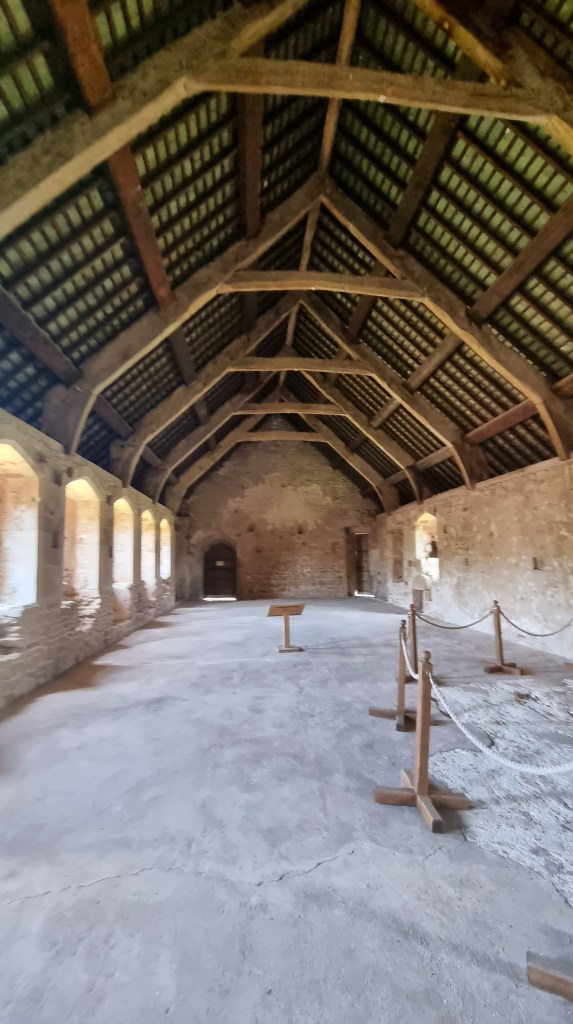
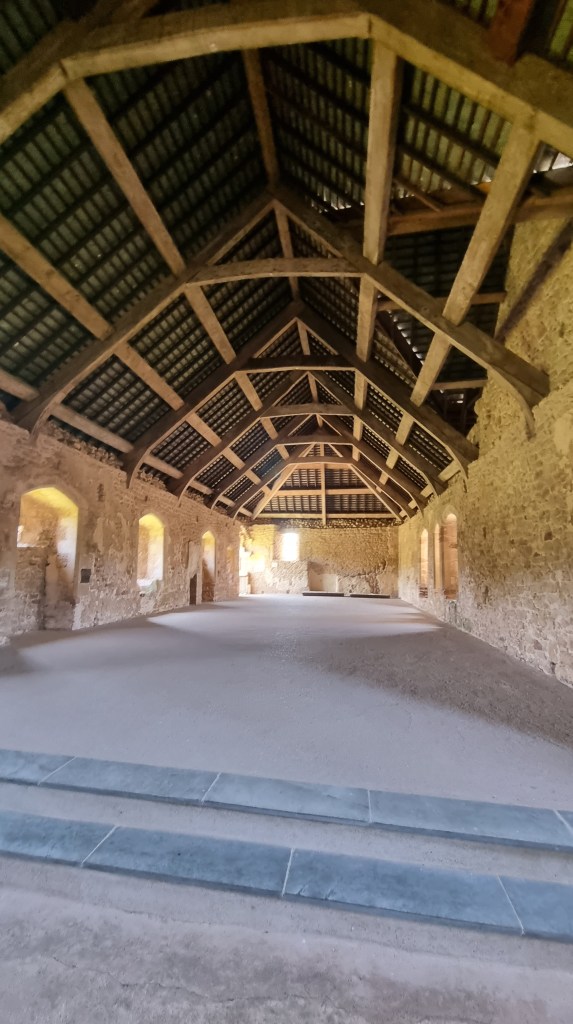
Known as one of the finest examples to have survived in their complete and original state, this monastic dormitory is incredible to be able to wander around. The only part of this dormitory that is not original and was rebuilt is the roof, it dates to the 17th and 18th century but has been carved as a typical example of how the roof would have looked in that period. The monks would have slept on mattresses and at the end of their mattress would be a timber locker or chest at each end, which they would have their clothing inside. The size of the room would have suggested that it was built to house up to 36 monks, later in the 15th century it was subdivided by timber partitions to give the monks individual type cells and more privacy.

The beautiful cloister was the area where the monks would spend most of their time when they weren’t attending services in the church, it’s a square court that is enclosed by large ranges of buildings. The west alley of the cloister was rebuilt in the late 15th century, it’s now part of the farmhouse and in the southern room on the western wall it contains two fireplaces, one with a bread oven and the other with a large timber lintel. At the end of the room is a partition wall which was built of timber studding and straw, it’s been partly exposed to be able to showcase how it’s constructed, it’s a really interesting feature here.

Considering Cleeve abbey is classed as a ruin, we were very impressed with the fact that so much still stands, in original condition with original features but also that the site is really well looked after too. It’s such a great insight into how the monks lived and went about their day to day aswell as the area itself, in the beautiful rural county of Somerset, the abbey has plenty of stories to tell and is worth visiting if planning a day out in the South West of England.
If you liked the blog please hit that like button, watch the full video below and consider subscribing if you haven’t already.
Till Next Time!
 Pinned on Places
Leave a comment