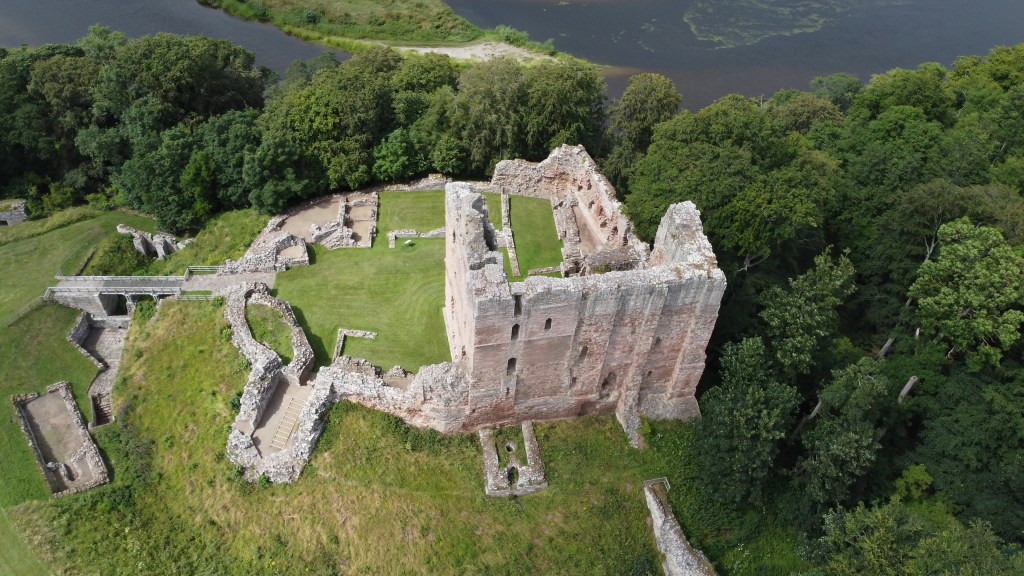
Today, we explore the remains of a Stronghold caught up in the border wars and set in a strategic position; settled above the banks of the River Tweed are the ruins of an commanding, important and striking Norman fortress. The walls echo the stories of the bloody battles, invasions and are scarred with over nine centuries of history. Join us to explore, Norham castle.
The story here begins in 1121, when Norham castle was commissioned by Bishop Ranulf Flambard of Durham; he was an extremely influential character and government minister of King William Rufus of England. His nickname, ‘Flambard’ meant torch bearer and this may have referred back to his personality, he started of his career under King William I of England and was more than likely involved in the Doomsday Book of 1086 as well as being the keeper of the king’s seal. It was Ranulf that saw the opportunity and recognised the need to protect and guard the vital border crossing between England and Scotland and conceived the idea of Norham castle.
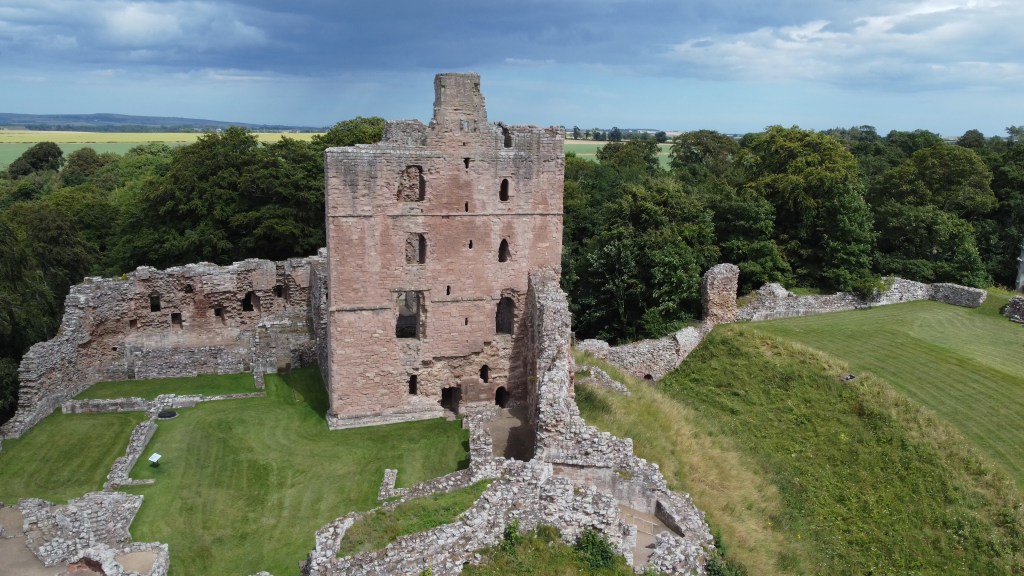
From a viewpoint across you can see Scotland and its borders, you can only imagine being a gatekeeper or a guardian and seeing around to the many armies that would gather on the horizon ready for battle on the borders. The region could be wild and lawless, and sometimes erupted into open conflict. In wartime Norham’s English garrison defended the Tweed fords, an easy crossing point into England.
The most noteworthy event in Norham Castles history took place in May 1291, when Bishop Anthony Beck entertained King Edward and his advisers at the castle while the King adjudicated between 13 competitors for the Scottish throne. This was known in history as as the Great Cause; Judgement was made in favour of John Baliol in 1292 at Berwick Castle, and three days later Baliol paid homage to Edward in the great hall here at Norham. Their accord was short lived though, and King Edward subsequently claimed the throne of Scotland himself, which in turn launched a prolonged period of border warfare.


The castle’s true test and defences came in the late 13th century during the first war of Scottish independence. In 1297 the Scots who were led by Braveheart, or William Wallace as we know him unsuccessfully besieged Norham, and then again in 1319, Robert the Bruce tried his hands to seize it, but this castle remained powerful enough to deter him and his armies. The keep became a refuge amidst all the chaos brewing outside the walls. But it would only take a short amount of time before the cracks would eventually show and this powerful fortress would be slowly destroyed considering the amount of battle’s it was part of.
In 1497 King James IV of Scotland attacked Norham as part of his support for Perkin Warbeck’s rather suspect claim to the English throne. The Scots bombarded the castle with artillery, including the famous Mons Meg, the huge siege gun that is now on display at Edinburgh Castle. The castle held out for two weeks before an English army arrived to force the Scots into retreat.
The castle had been so badly damaged by the Scottish bombardment that it required a massive rebuilding effort. The medieval fortress was transformed into a fortress strong enough to withstand the new threat of artillery. Military engineers created covered gunnery platforms and strengthened the base of the castle walls with earth to absorb cannon shot.

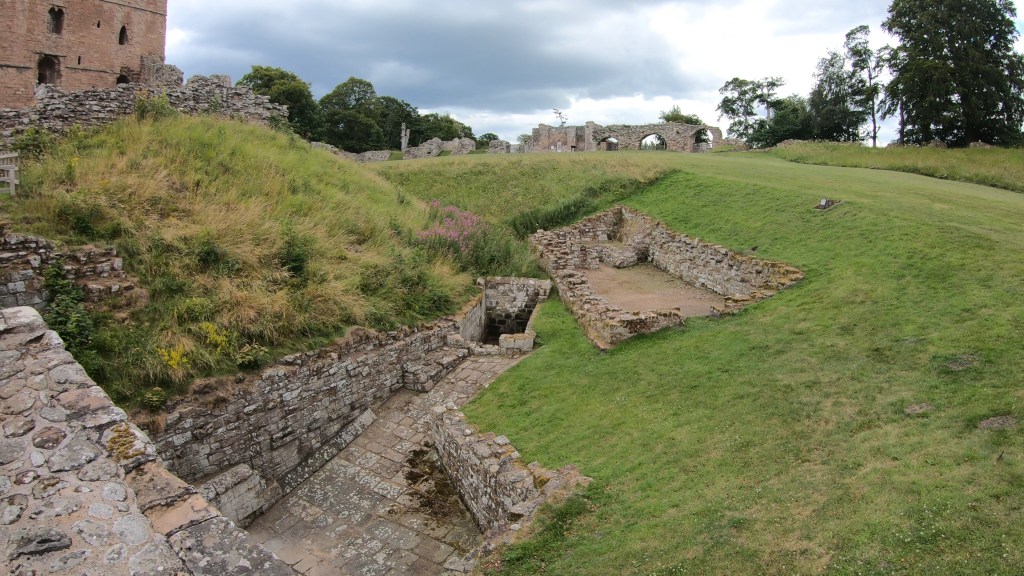
As you explore the site you can see the outer ward structures which were made up of constructed gun towers which incorporated arched gun positions, from these positions enemy heavy guns could be attacked and the whole of the area outside the castle could be swept with gunfire and archery to try and prevent the enemy from getting close. The gun towers were very clever and they enabled three levels of archers, hand gunners and gunners all manning large guns that could fire all at once at an approaching force.
The state of the castle today isn’t much different as it has been for several centuries. It still features some elements of what were once amazing defences. The castle was built on the south of the River Tweed and is protected by a steep slope on that side. A ravine protected the east side and the south and west sides were protected by an artificial moat. Further features of the castle were an inner and outer ward. Accessing the inner ward could only be done via a drawbridge and a fortified gate referred to as “Marmion’s Gate.” Which we entered as we first arrived at the site.
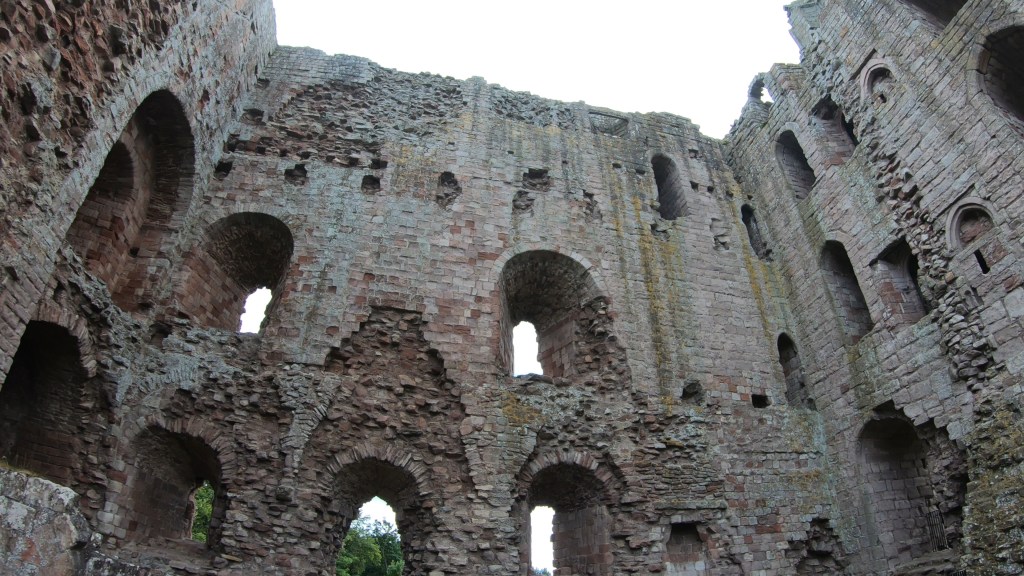

The most impressive and prominent feature of visiting here at the castle is the keep which still partially stands today, and possibly dates back to the 12th century, the enormous structure had dimensions of 84 x 60 feet and stood 88 feet tall but the most impressive is the thickness of the walls of this medieval keep, at over 28 feet thick. It was originally 3 storeys high but later in 1422 the keep was rebuilt and 2 more stories were added to the building giving it its grandeur.

There is an abundance of discovery here at Norham, the history and the feeling you get whilst visiting here is so atmospheric. It’s one castle in Northumberland we think you would be mad to miss. The site is free to roam and open most of the year, there is ample parking at either of the entrances giving you quick and easy access in and out, but our recommendation is to spend a few hours here exploring and wondering these scarred ruins, have a sit down up on the banks and imagine the people wandering in and out of this important fortress.
If you liked the blog please hit that like button, watch the full video below and consider subscribing if you haven’t already.
Till Next Time!
 Pinned on Places
Leave a comment