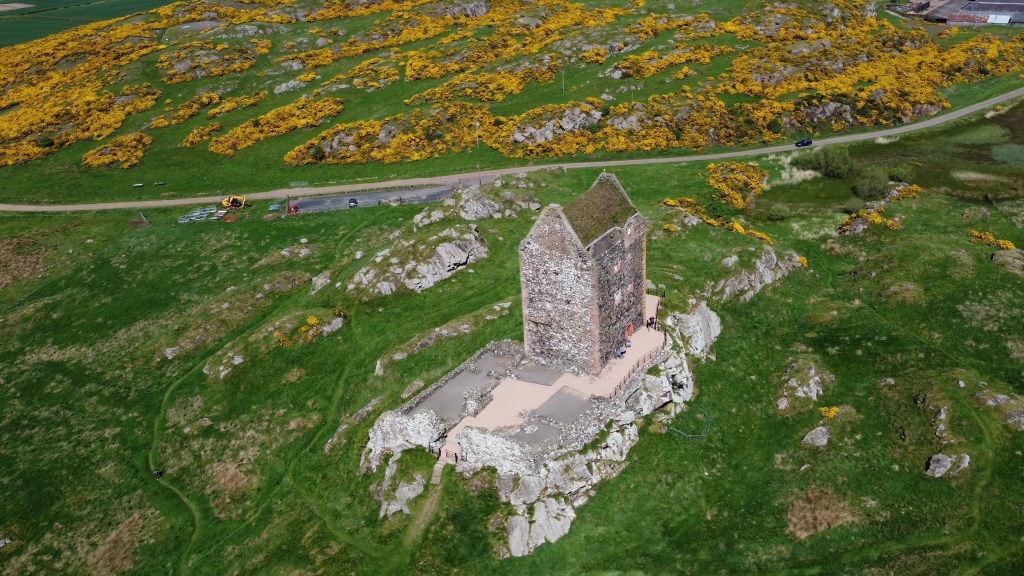
We ventured to one of the most evocative and remarkable sights on the Scottish borders. This peel tower scales high up on a hill and dominates over the tweed valley, what’s more interesting about this particular tower is the story behind it, the story which I will tell you as we explore. So why not join us as we discover Smailholm Tower.
After a short but steep hike to reach the towers entrance you see the outskirts of the land across the way for miles, this view is absolutely incredible and it only gets better from above but back in its heyday this view would have been dreary, with little to no buildings or homes or signs of life, with vast and unforgiving open moorlands. After all, this was the land of the border revivers. The border reivers were lost raiders who were amongst the Anglo-Scottish border from the 13th to the 17th century. They had little regard for nationality and were made up from both Scottish and English people.

The term Reiver, means to Raid, rob and plunder, they proudly wore steel bonnets and a quilted jacket of leather, sewn in with plates of metal or horn to protect their bodies during battle. Normally a reiver would carry a variety of weapons including swords, axes and daggers but typically the preferred weapon of choice was the border lance or long spear. The history of the Border Reivers has many similarities to that of the American Wild West. It produced its share of outlaws and broken men, corrupt officials, greed, misery and struggle all for survival. Arson, murder, raiding were a commonplace.
Built in the 15th century, like all Scottish peel towers, it was designed to protect occupants from English raids. Despite its violent past, it is now one of the best-preserved peel towers in Scotland. The peel tower also served as a watchtower, to be able to look out for any English attacks, where the fires would be lit by the English army in the distance. Smailholm Tower was originally constructed as a defensive stronghold during a turbulent era of border conflicts by the Pringles of Smailholm. The Pringles were a powerful local family who hold a profitable position of authority in the area, they were squires of the powerful Black Douglass’s who ruled much of the Borders. The style of Smailholm is very similar to the Douglas’s own over at Newark Castle, highlighting the ties between the Pringles and their lords and it seems that the Pringles obtained a license in their own right to their estates in 1455-1459.
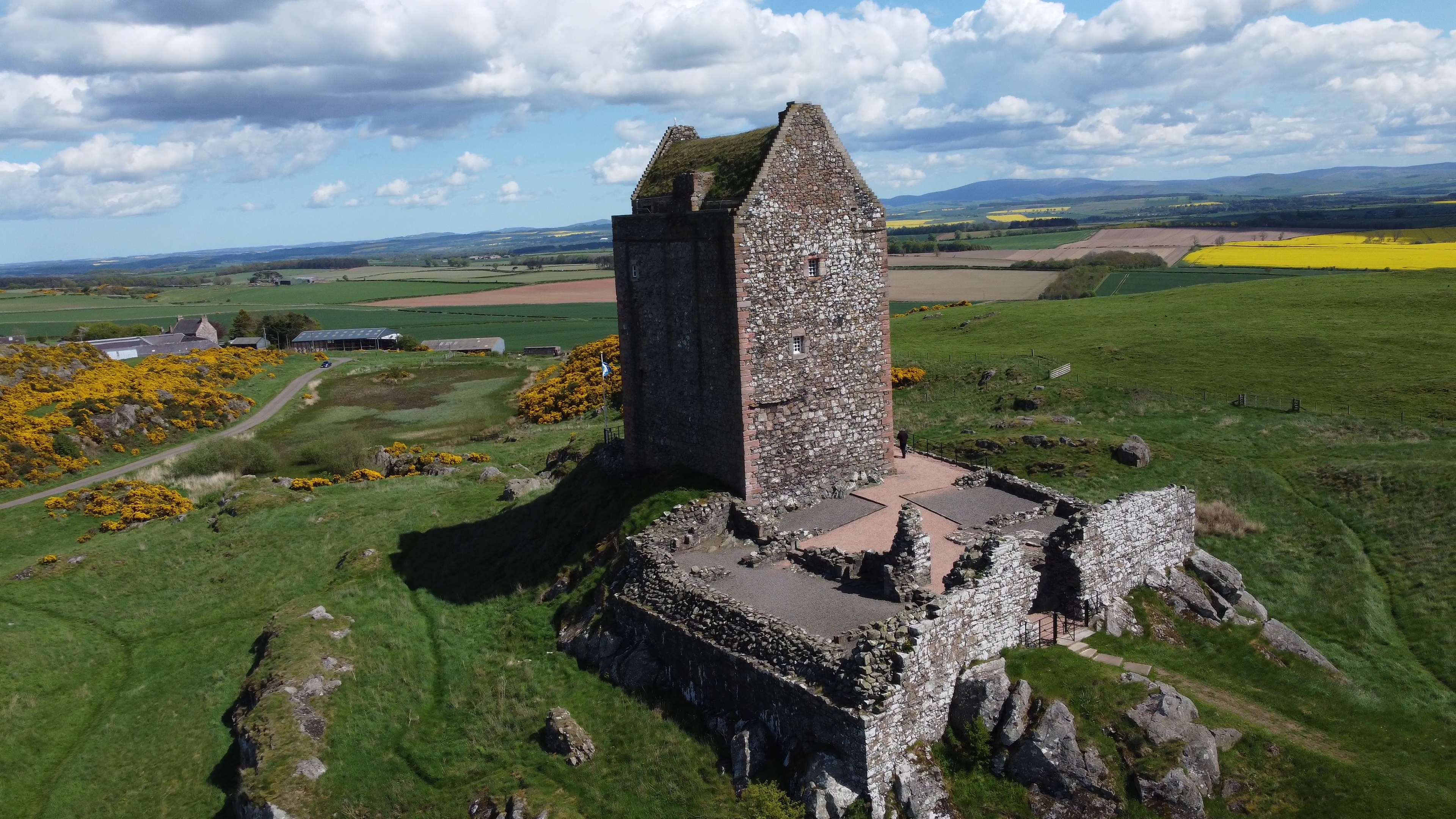
The tower stands five storeys high; reaching 65 feet, on a rectangular plan, with thick walls over 2 metres dense. The material used was roughly cut black volcanic rock, dressed with red sandstone at the corners, on the doors and windows and some of the other features. Smailholm tower was built with security being the top most priority as it only had one entrance at ground level through the southern wall. This was protected once by an outer wooden door and an inner iron gate which we walk through today. What’s interesting is throughout the visit we’ll be able to peek out the windows for wonderful views across but these windows were always small and most of them had iron grilles for extra protection.
As we entered inside, we were met with the ticket office, where we were given a short intro into Smailholm tower and were able to take a wander around the small onsite exhibition that Historic Scotland have cleverly put on for people to view.

Smailholm has five floors altogether, the lowest of the two were used many for storage and were accessible from the entrance doorway, but the upper floors were reached by the spiral staircase that we use now in the south east corner of the tower. The clockwise upward direction of the stair is commonly believed to have given the advantage to the sword wielding defender if need be.
The stores on the lower two floors were separated from the living area by a stone vault. The stone vault helps stabilise the lofty tower but it also reduced the risk of fire. What’s interesting about access to the upper floors is that they installed a hatch through the vault that enabled the servants of the tower to move important items between the floors and up to the hall above. The hall on the third floor served as the main public room, it was an all-purpose chamber used for meals, socialising, and administration.

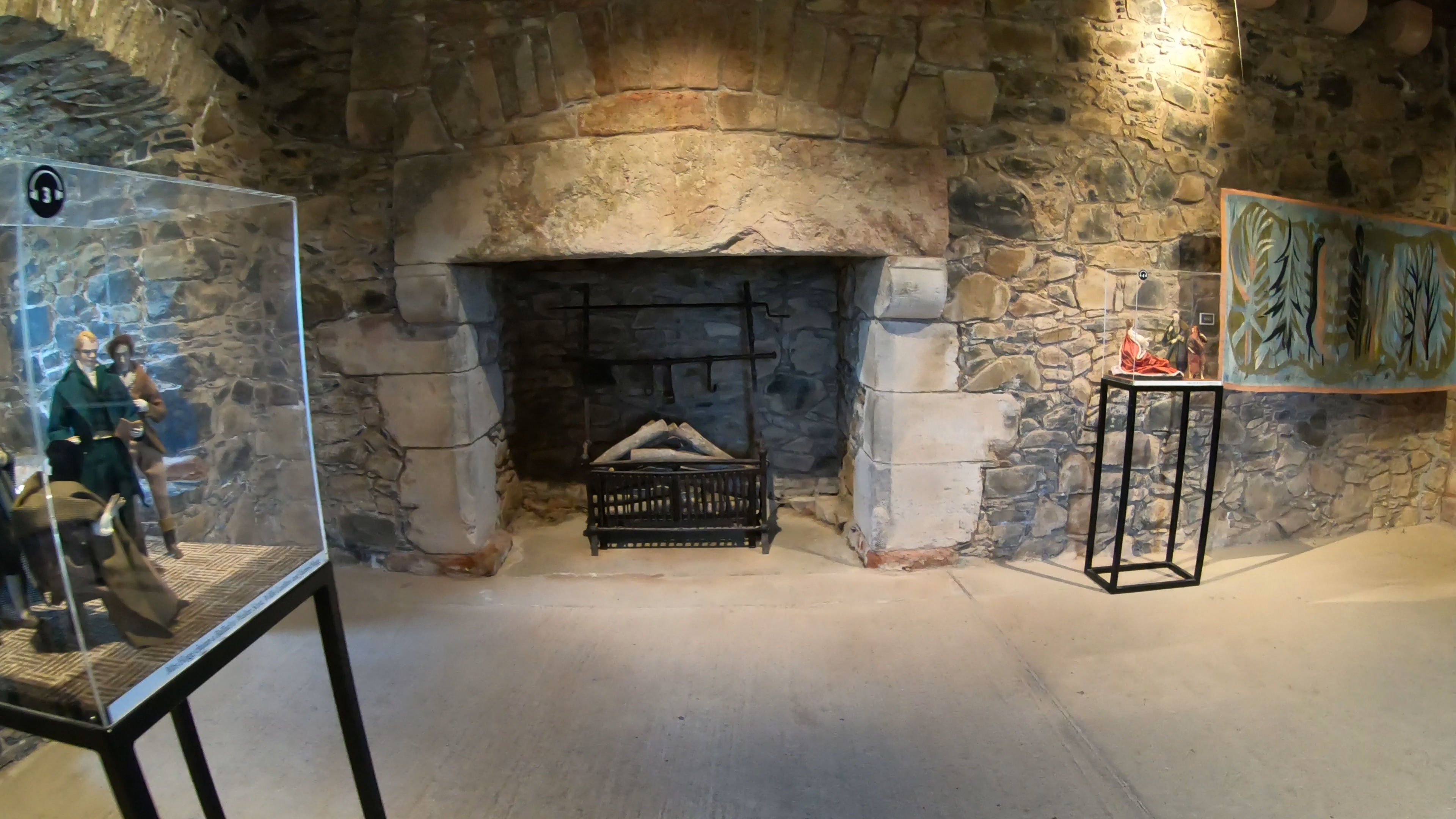
Mostly used by the lord and his family for dining, it was also generously lit by windows that were fitted with lovely stone seats, perfect to sit and see the outside, this was with exception to the northern side where there is a large beautiful stone fireplace which is by far the most attractive and beautiful feature in the hall. Living in the tower house provided its owners with a private and reasonably secure suite of rooms just for their exclusive use, these would have been sparsely furnished but would have had everyone one could need. The floor above the hall would have been the lords private chamber, very similar in layout to the hall downstairs but without an east facing window and with a much smaller fireplace, you definitely can see how small and intimate this room would be, but as a private chamber that’s exactly what you would want.
The top floor dates from the rebuilding of the mid 1500’s but like I mentioned earlier there is no evidence for the original layout. But this top floor more than likely was a place where rooms would be provided for additional guests staying or other members of the family needing their own space, it also gave access to the battlements. The views from up here really are something, we were completely in awe seeing out over the moors with the beautiful colours and the flag flying proudly in the wind, it was a great moment.

On beautiful days like today you can see across to Hume castle and even the mighty Bamburgh Castle in Northumberland over 33 miles away. The main purpose of the battlements is very much evident on the northern side where there is a seat for a watchman, craftily and cleverly made from the chimney stack and a recess for his lantern. The lords of Smailholm along with all of his peers in the Scottish borders were required to keep watch night and day, with no exceptions.
This addition was likely in response to an Act of Council of 1587, which required every landowner in the Borders to keep watch day and night and light a beacon fire to warn of trouble. In the early 17th century Smailholm was purchased by the Scott family of Harden. The Scots built another, smaller dwelling inside the Barmkin, probably replacing the earlier guest houses and kitchen.
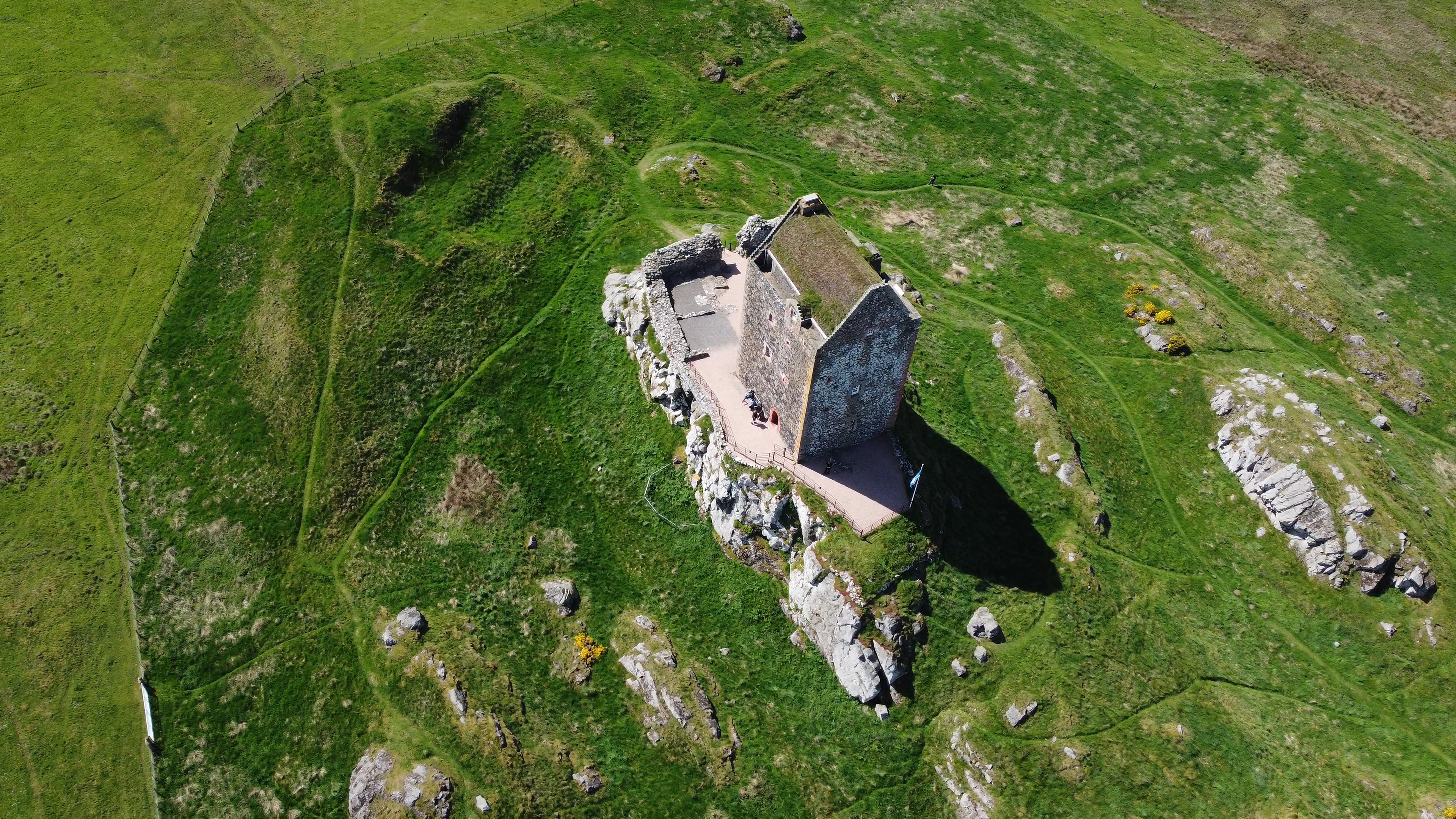
Smailholm really blew my mind, this place is full to the brim with stories, tales and turbulence from the border years but it is also such a beautiful place to enjoy a day out, wondering in the footsteps of some fascinating people but also getting to experience how incredible the power of this tower actually once was, giving you a trip back in time to those frightful and unforgiving times. Even if you decide not to take a trip inside, the twist-and-turn walker trails make you feel like you’ve set off on a mini castle adventure and are ready to explore the unknown, that in itself is a great experience.
If you liked the blog please hit that like button, watch the full video below and consider subscribing if you haven’t already.
Till Next Time!

 Pinned on Places
Leave a comment