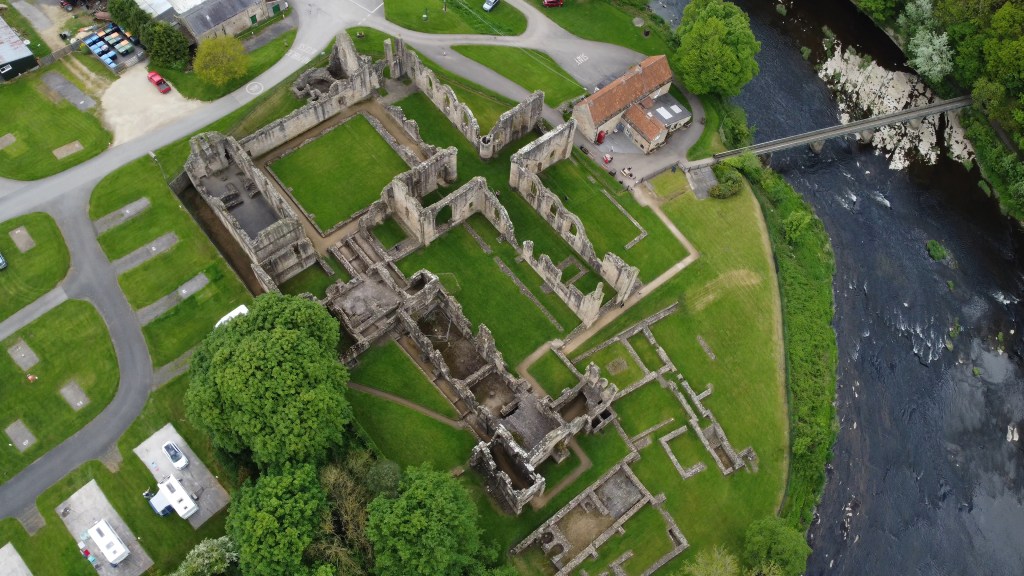
In today’s peaceful visit. We explore the remains of a 13th century Benedictine monastery, On the banks of the River Wear, in a beautiful wooded setting, stand the extensive remains of Finchale Priory. It was founded in 1196 on the site of the hermitage of St Godric, a retired sailor and merchant, who settled here after a life of adventure and travel. The priory was an outpost of Durham Cathedral and functioned as a holiday retreat for the monks of Durham up until its Dissolution in 1538.
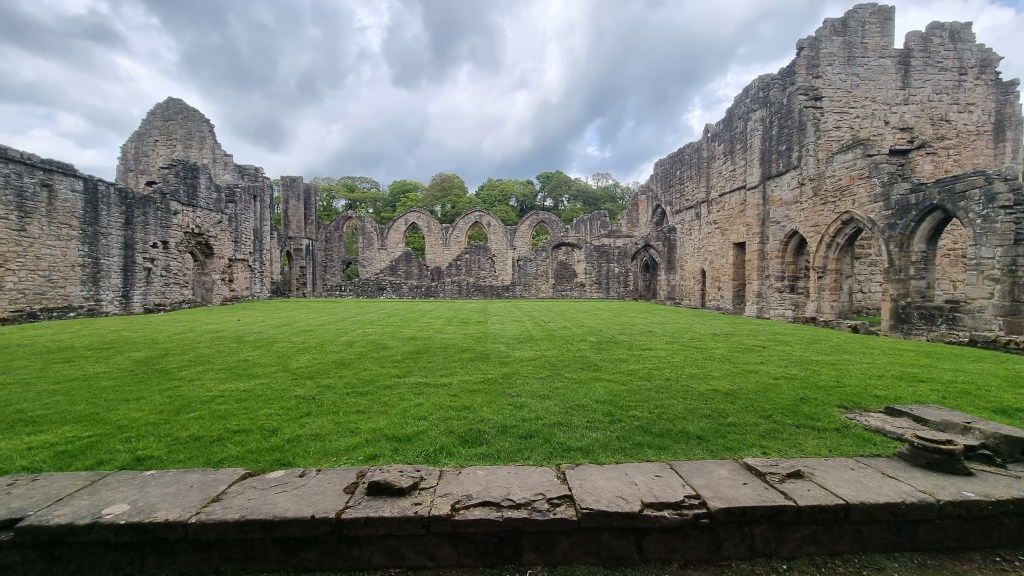
Halfway between Sunderland’s outer border and the city of Durham peacefully sits the expansive remains of a former monastery, hidden amongst crowded woodlands, now next to a fantastic camping and caravan site and perched on the banks of the River going by the name of Finchale Priory. Although spelt like Fin-Chale it’s actually pronounced Finkle, which has occupied the site as early as 1196 and derived from an English catholic saint known as ‘Godric of Finchale’ or ‘St. Godric’, after he claimed seeing a vision of St. Cuthburt. He devoted his life to Christianity and by serving others, he was known for his kindness towards animals, living a hermit lifestyle and adopting vegetarianism by living on nuts, honey and apples, Godric made many pilgrimages, including one to Jerusalem.
St. Godric was an interesting character, one which drew in plenty of intrigue with how he chose to live his life. He was a sailor, a merchant, pilgrim, hermit and writer of religious verse, born in Walpole in Norfolk in 1070. He became a ships captain and part owner of two vessels, making several pilgrimages to Rome, Jerusalem and Santiago, whilst out in the waters, Godric also visited Farne Island which is off the coast to Lindisfarne, where St. Cuthburt had sought seclusion, this then inspired Godric to become a hermit.


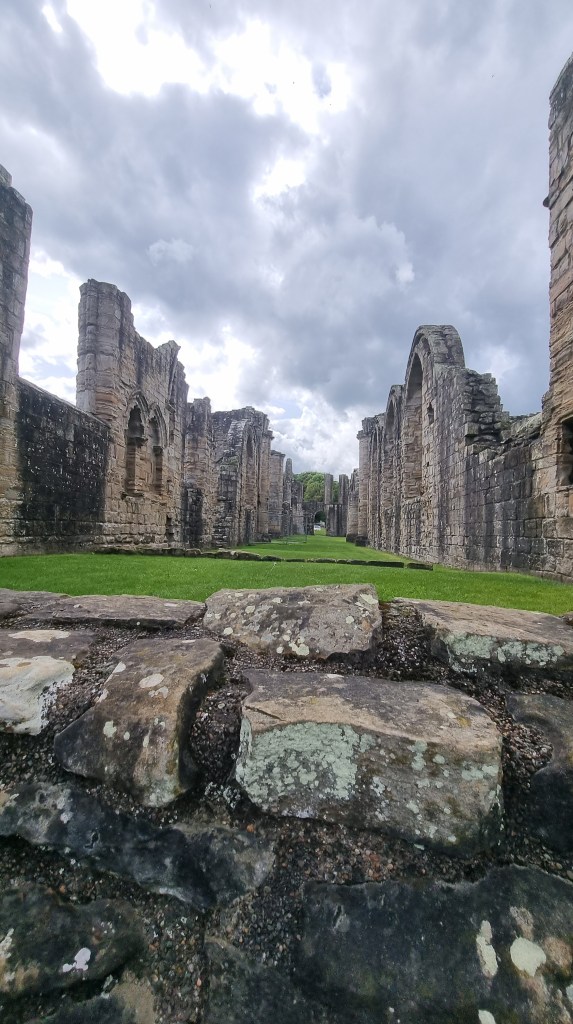
Eventually he found peace at Finchale around 1112, it was here at Godric wanted to pay for his past sins by living his life with austerity. His diet initially consisted of roots and berries but then later he cultivated barley and vegetables, but would only eat these when they were dry and mouldy. He was dedicated to the Virgin Mary, he had cleared forests to build himself a wooden oratory, in which he had a barrel in it’s floor and filled it with freezing water, to then immerse himself into it. He later built a stone chapel and dedicated that to St. John the Baptist, whose life in the desert provided Godric inspiration for medieval hermits.
He nearly lost his life, firstly to a deadly flood and secondly in the hands of Scottish soldiers who were searching for treasure. But other visitors had much more peaceful intentions when seeing Godric, as it was thought that he had the ability to heal the sick and give power of prophecy. He was best remembered for his kindness toward animals. It is said that his handmade hut was a place of shelter for animals seeking refuge from hunters and the weather. Historians have written how Godric was small in stature but he had exceptional strength and was full of energy all the time.

It was not until he had completed sixty years of retirement from the world did he pass away, it was on the 21st of May in 1170 at the ripe age of a 105 years old after a long illness. His tomb became a shrine where many miracles were performed. Like many medieval saints, Godric was never formally canonised. Instead his devoutness was shown to by those who knew him and his story continued to be told by the monks of Durham and now through us and other lovers of history to tell his story.
After Godric’s death the Durham community sent two monks, Reginald and Henry, to occupy his hermitage. In effect, Finchale became a small, minor monastery of Durham. In 1196 it became a priory in its own right when the monks of Durham persuaded Henry du Puiset, the son of Bishop Hugh du Puiset of Durham, to endow it with possessions he had previously granted on another monastery. The priory prospered as a place of pilgrimage. Initially it seems to have had ten monks, but a grant made in 1278 specified that there should be five more, to help entertain the pilgrims and poor people who were flocking to Godric’s shrine.

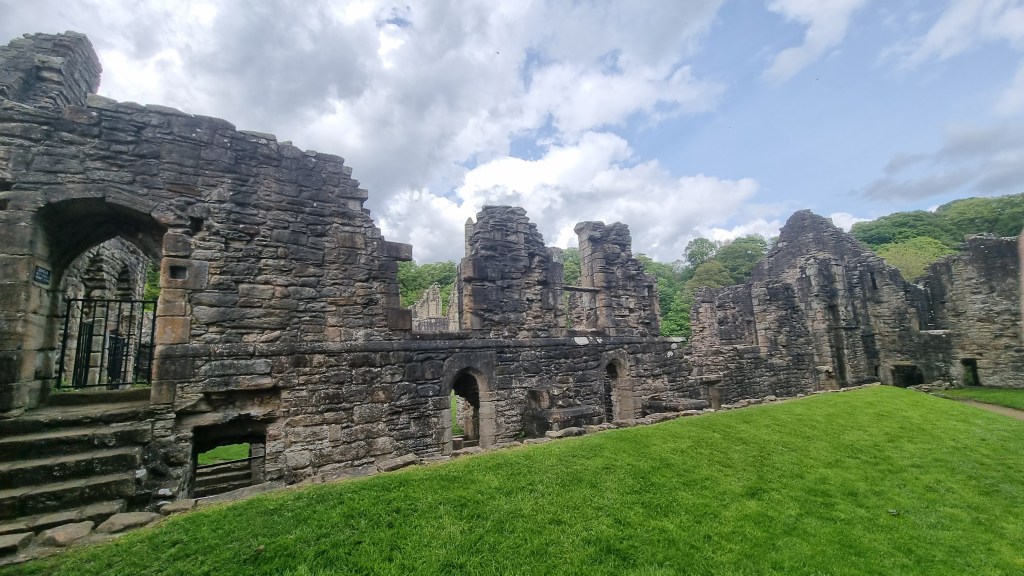
After it’s Dissolution in 1538, little is known about what actually happened to the buildings but some parts remained is some sort of use, but mostly they all fell into ruin and there was stone robbed from the priory buildings that can be seen in the nearby farm buildings. Of course there is questions on some selective landscaping through demolition in the 18th century to improve and inspire the sites appearance at the time when ruins became the latest thing and romantic ruins became the perfect setting and backdrops for novels and artists.
Some excavations were done in the 1920s, from the office of works, who are a predecessor of the English heritage who had taken the priory into state guardianship, there were traces of Godrics church of St John inside the east end of the 13th century church, where they uncovered a stone coffin where St. Godric is said to have laid to rest.
The coffin was around 5ft 2 inches long inside with a tapered end, reminding us of Godrics frail and small stature after his long illness, it was made of stone with a lid of polished marble, appeared to fit the hermit’s tiny frame but was completely empty when they unearthed it. Questions are still asked but this was also around the time when grave robbers came and took as they pleased but other theories are that his body and soul was spirited away in another miracle.

The priory itself might be described as a mysterious, isolated and tranquil place to visit that has an air of discovery about it, but it really is a fantastic place to come and explore some of the north east’s hidden ruins. The location is utterly wonderful, and you can see why Finchale was considered a place for the monks to rest and recharge their batteries. When visiting here please note that the priory is in the care of the English heritage, and free to enter, but it’s on private land right next to a camping and caravanning spot with a gated entrance system.
It was £3 at the time of our visit which when you consider entering the priory, being able to visit the local shop and toilets and having a leisurely walk and picnic along the super scenic river it’s worth it to help with the upkeep of these stunning areas.

For those wanting to pinch the pennies though there is a footbridge over the river on the far bank where you can indulge in some walking trails and still oversea the remains in the distance all you need to do is find Cocken Road where you’ll find free parking avalible in a layby and then follow down a charming trail to the ruins.
If you liked the blog please hit that like button, watch the full video below and consider subscribing if you haven’t already.
Till Next Time!
 Pinned on Places
Leave a comment