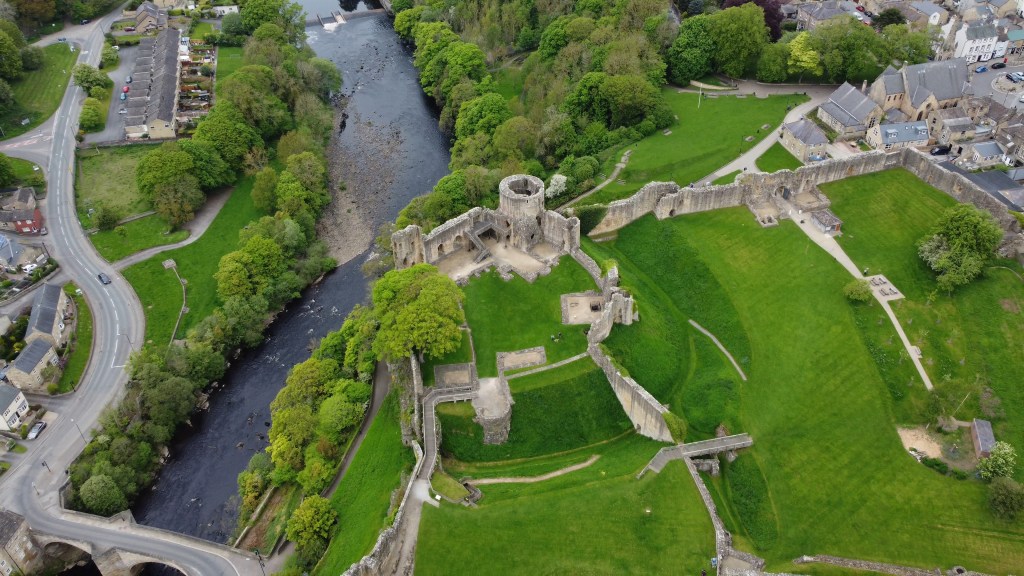
Today, we visit Barnard Castle; the castle, not the town, although sharing the same name – is one of the most historic castles in the north of England. It has been fought over, won and lost, by some of the most famous figures in English history. It has also been claimed by nobles, bishops, and kings. Occupying a naturally defensive site overlooking the wooded gorge of the River Tees, the romantic ruins of Barnard Castle are a reminder of the importance and power of the north in medieval times.
The land now occupied by the castle was owned by the church as early as the 9th century, but in the 11th century the Earls of Northumberland seized it. The Earls then rebelled unsuccessfully against William II and the crown seized the land, and in 1095 granted it to guy de Baliol. The church argued that William had no right to grant the land, and this dispute over ownership simmered on and off for centuries. Guy de Baliol did not hesitate, and shortly after taking possession of the land he began construction of a ringwork defence that now forms the Inner Ward. In 1125 his son Bernard rebuilt and expanded the original wooden structure. Bernard also founded the town outside the castle walls, and granted it a charter.


Later members of the Baliol family fell on hard times, this was possibly due to the expense of maintaining the castle, and in 1190 the Bishop of Durham held the castle as security for a loan to the current Baliol owner and later In 1212 King John ordered the castle to be returned to the Baliol’s.
After walking through the quiet orchard and the castles sensory garden, we have a look at some flowers that are planted ready for the summer and we make our way across the now modern bridge between the town ward and the middle ward. It replaces the original bridge that stood here. It’s here you really get to see and visualise this once great fortress.
Heading across the south west of the middle ward are the stunning remains of the constables tower. A once substantial gatehouse that controlled entry from the outer ward. The keeper of the tower was the principal official of the castle and was always in charge when the lord was absent, he would be lodged here in the tower with fantastic vantage points to control admission, the constable would have more than likely been a member of the nobility to the lord to for his important work. The plan of the tower was essentially in a rectangular shape with a central gate passageway; it had three storeys with two barrel vaulted ground floor rooms which were entered via the gate passage.


From here we walk over the great ditch and into the inner ward, but not before taking a look at the stunning viewpoint from here. The views really make this castle stand out with the dramatic sight of the castle perched on the side overlooking the river tees, the castle is such a picturesque place to see and enjoy. After enjoying the sights we head inside the castles inner ward. Back in the 12th century we would have entered via another gatehouse, this one would have been made from timber before being rebuilt in stone at a later date with a stone wall added to enclose the ward.
But now, as we wander the remains, the first outline we see is from the west range, this part of the castle is unexcavated but they have documented that they are from the 14th century, it seems to have contained a number of offices and apartment buildings as well as the kitchens, which were probably at it’s north end, it’s thought that from here in these kitchens the food would have been taken to a serving hatch in the south east wall of the Mortham tower, where it would have been conveyed to the great hall, keeping it under cover and hidden.

Adjoining the Mortham tower on the left and the remains of the 14th century great hall, we make our way up to see an overview of the great chamber. It was on the first floor here and it’s only real architectural feature that still survives is the incredible oriel window in the outer wall. This is dated back to the term when Richard III lived here, his heraldic symbol of a wild boar is carved on the underside of the lintel.
There was also a grand fireplace on the first floor, which was directly above the fireplace on the ground floor. This then leads directly into the round tower, we walk inside and above the two buildings that have been integrated together. The tower is at the north west end and forms part of the curtain wall, it rises to four storeys, mostly cylindrical with a single store annex to the south east. We make our way up the service stairs and from the top you can see the various staircases, the windows and the fireplace which all suggest residential sleeping quarters.
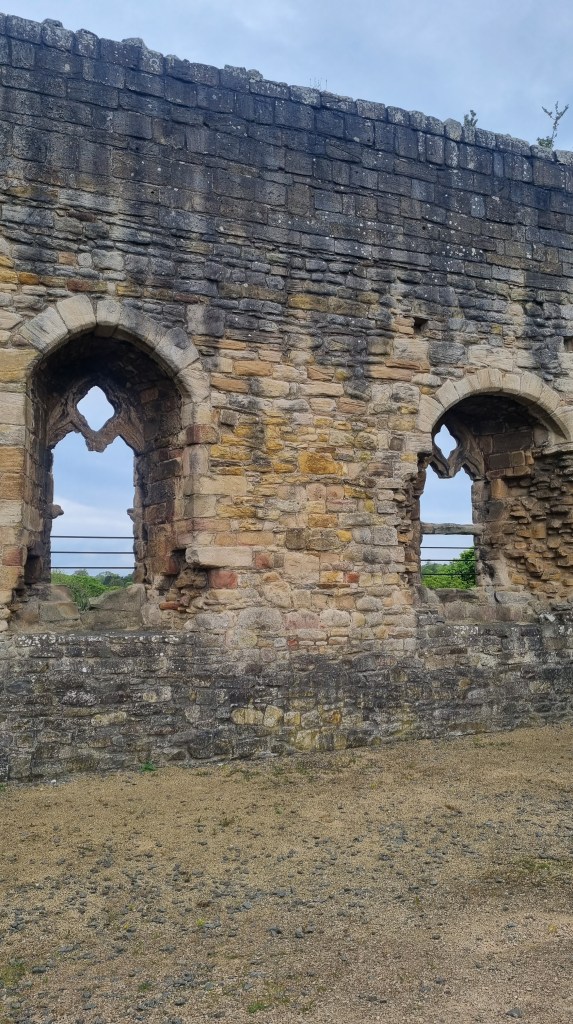


Our final building is named the Brackenbury Tower, a two storied tower that took it name from a servant of Richard III, Sir Robert Brackenbury who lived in Denton, just 10 miles from Barnard and was lieutenant of the tower of London during the reign of Richard. The barrel vaulted basement would have more than likely been entered from the courtyard and was lit by a single loop high in the curtain wall.
Two doorways are at the west ends of the north and south walls and would have given access to a latrine and a staircase which would have led to the upper floor. On the first floor was a single chamber, equipped with a fireplace and a latrine, given suggestions that this room was used for domestic and residential purposes.
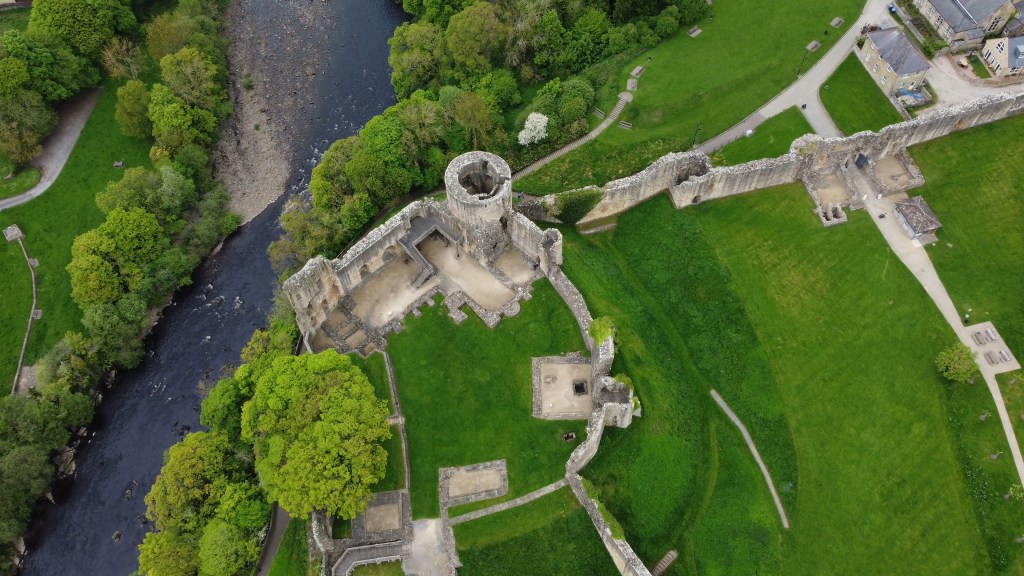
A visit to Barnard is a fantastic one, we honestly couldn’t recommend this castle more highly, the views, the atmosphere, the history that lived and fought here and the surroundings are just wonderful and worth a visit if not just for the castle but for the town and the surrounding walks too.
If you liked the blog please hit that like button, watch the full video below and consider subscribing if you haven’t already.
Till Next Time!
 Pinned on Places
Leave a comment