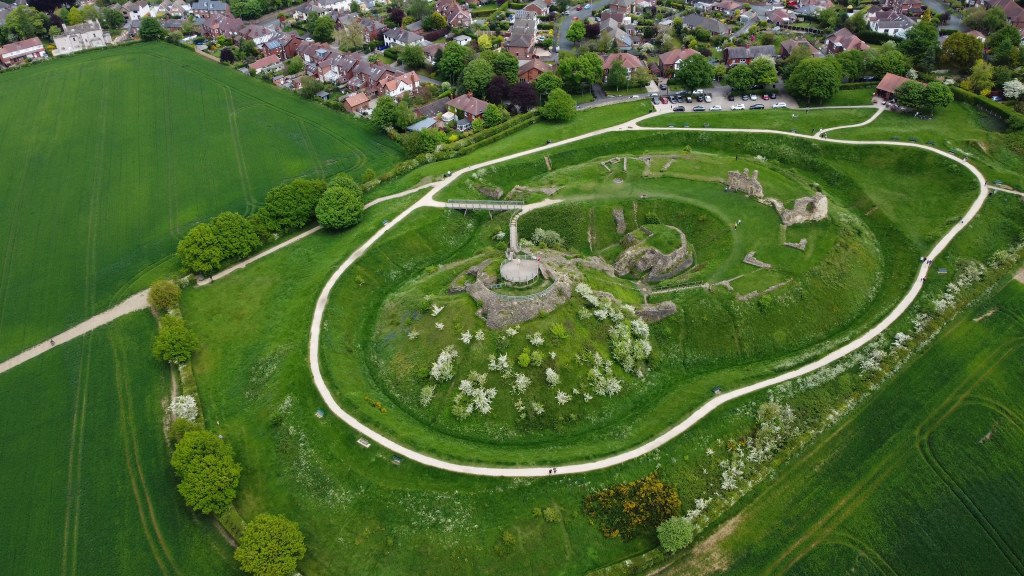
We travelled from down South to the North of England for a trip to Sandal castle. Located in the town of Wakefield in Yorkshire, it is quite the mystery to those who choose to visit this amazing site. So much has now disappeared that we have to use our imagination to remember this once majestic fortress that would have overlooked the town of Wakefield and dominated the surroundings aswell as having it’s moment in history with the battle of Wakefield fought nearby, so join us as we explore and find its lost history.


In its beginnings, the original castle would have been a wooden structure built on top of the artificial earthwork mound or motte with a wooden palisade surrounding it, the castle was originally built by William de Warenne who had received the manor of Wakefield from the then king Henry 1st in 1106.
After this time there wasn’t much evidence to suggest the exact date of the stone castle structure we see today, but there are some references to stone supply between 1270 and 1275 so it’s known that construction was done in that time period. It was one of two built to defend the crossing point of the River Calder, the other castle on Lowe Hill can be seen in the distance from sandal but the first record of a castle here at Sandal comes in around the 12th century.
The motte at Sandal Castle was raised to 10 metres and a 7 metre deep moat surrounding it, timber motte and bailey castles were often converted into stone if they were used for long periods and sandal creates a great example of this. It should be remembered that castles were tax gathering centres as well as defensive structures for the surrounding lands. William The Conqueror was the first to ‘popularise’ the Inland Revenue.
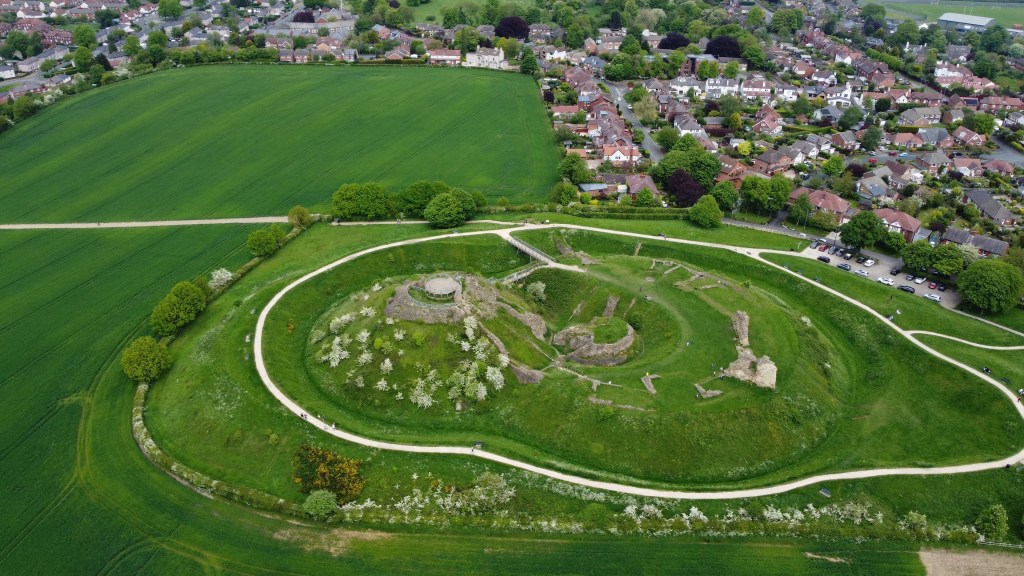
Once walking around the gravel paths, a glance on the right hand side shows you a large farmer’s field, this was actually part of the battlefield site, which once on the 30th December was a place for destruction and death, and it’s quite odd now to see the fields bare and lifeless. The first ditch we encounter is whilst we walk the now modern walkway to the bailey and the earlier buildings.
The castle builders and owners were the powerful de Warenne family, the earls of surrey, who held the castle right up till 1361 to then be put into royal ownership of Edward III. They were one family with 8 generations and over 300 years of history. The family has a fascinating history right at the heart of English politics with strategic marriages forging links with some of the greatest families in England, Scotland and France.
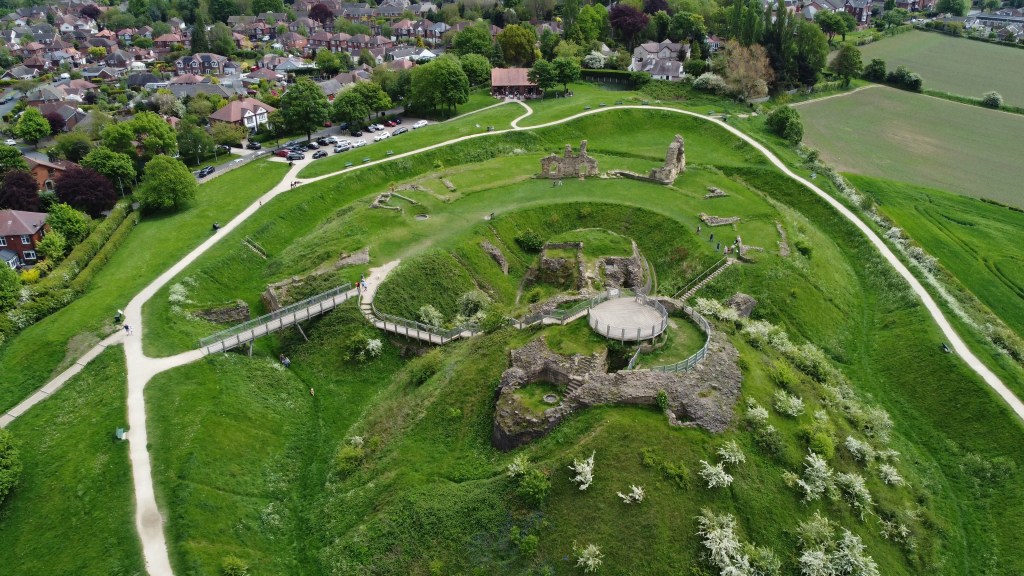
The main earthworks that were made from stone were constructed around 1240 and it consists of a privy chamber, a great hall, a great chamber and various lodging chambers, most of the stone walls have since disappeared but the west wall of the great hall and the south west wall of the lodging chamber still remain. At one end of the chambers is a turret that once provided access to the curtain wall and a rooftop walkway.
The original stone keep was circular with four towers each that were four stories high, with two of them close together to be able to form a gatehouse. Inside the east tower it contained a well that was 37 metres deep. The double walled keep would have had your usual guardrooms, servants quarters and storerooms. All of the tower rooms had garderobes that were designed to flow on the outer walls of the keep.
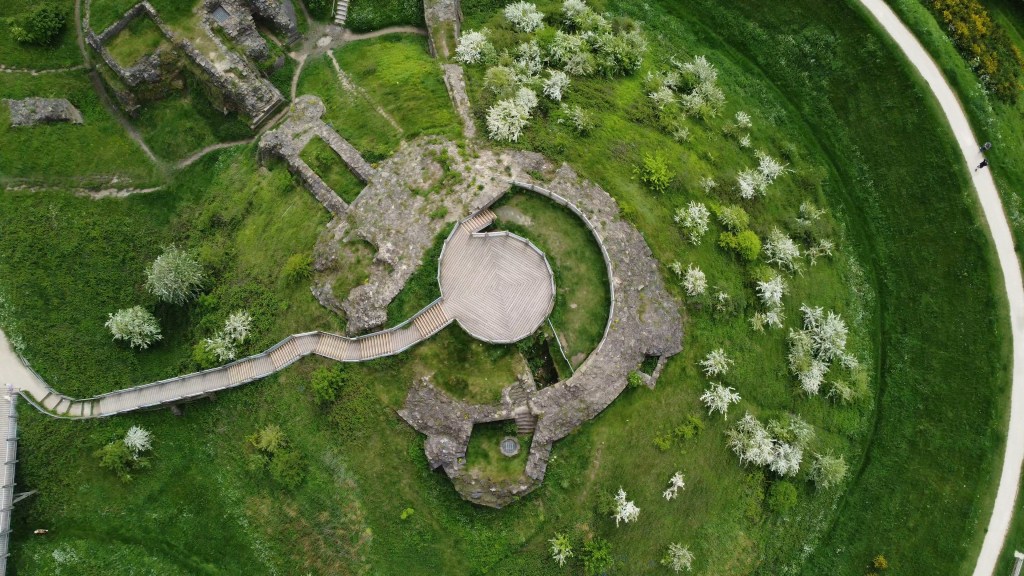
Although sandal wasn’t the grandest of castles in the land, it was still unique and special in its own rights, because of its strategic position, the high vantage point allowed for early warning signs of an oncoming enemy. Especially on a good day you can really see why they built the castle here, you’re able to see in all directions for miles across. What I loved about visiting here is that its completely free and perfect for all the family to come enjoy or just have a wander by yourself to soak in the surroundings. Another added bonus was the free parking and the fact that it’s wheelchair accessible apart from the bailey and the barbican, but the area is quite extensive that you’re still able to get a good idea of how it looks.
If you liked the blog please hit that like button, watch the full video below and consider subscribing if you haven’t already.
Till Next Time!
 Pinned on Places
Leave a comment