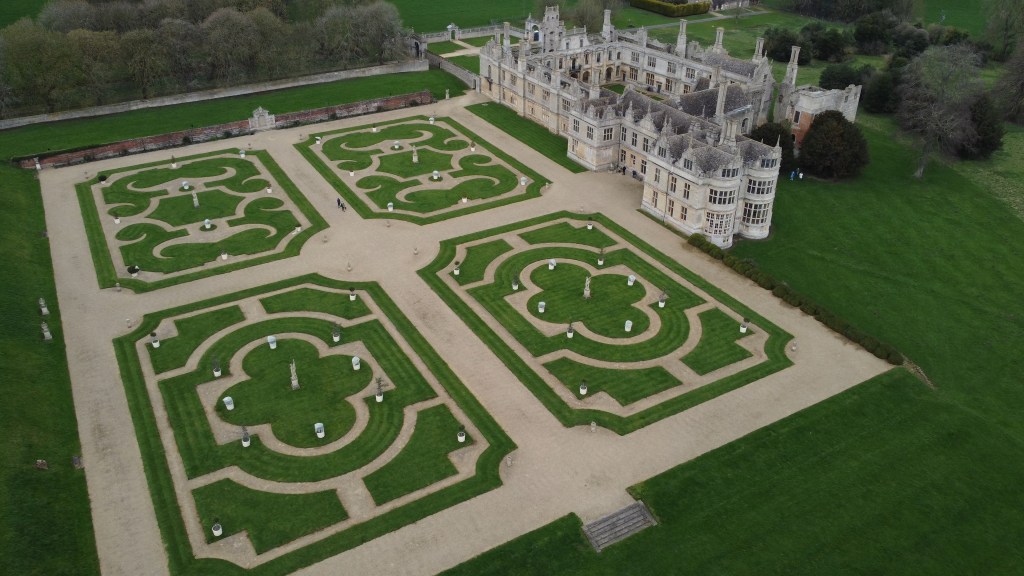
This week we visit Kirby Hall, one of England’s greatest Elizabethan and 17th-century houses, Built by Sir Humphrey Stafford but then passing ownership to Sir Christopher Hatton, who was the Lord Chancellor to Queen Elizabeth I.
It was a large stone house that was built towards the end of the 16th century but modified in several different campaigns within the first hundred years of its history and then sadly abandoned in the early 19th century. Although this enormous mansion is partly roofless, the walls show the exceptionally rich decoration that proclaims that its successive owners were always at the forefront of new ideas about architecture and design.
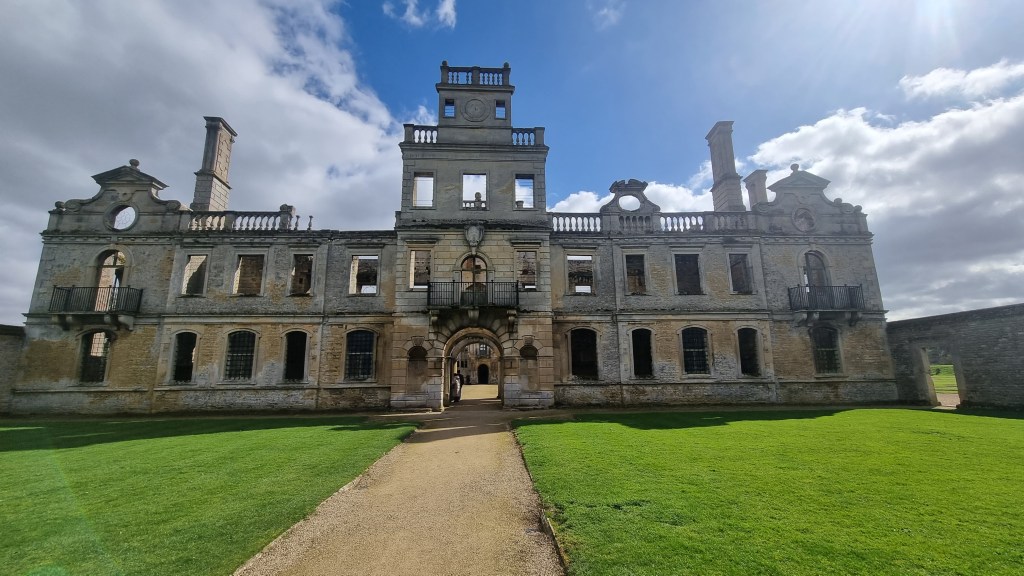
It’s first owner Sir Humphrey Stafford has the motto in French ‘I will be loyal’ he made sure this motto and the dates of 1572 were carved over the porch of the great hall amongst other incredible carvings to look our for. The plan of the building was so over ambitious in it’s concept, and it took five years to build, perhaps too long for it’s owner Humphrey who died just before it was ready to be lived in. The house was then passed to Humphrey’s son who decided that he already had a beautiful home in Blatherwick around 5 miles away so sold the property to Sir Christopher Hatton, an English politician, who was a favourite of Elizabeth I of England.
Sir Christopher never married, but Kirby remained with his heirs and his successor who was into the fashion of the day, employed Inigo Jones who was the first significant architect in England and Wales in the early modern period, he was known for his proportion and symmetry in his buildings and was famously known for introducing classical architecture of Rome and the Italian renaissance into Britain.

He was brought in to redecorate the exterior in 1640, and on the north side of the rather spacious courtyard that occupied the centre of the building. Inigo’s work along with the work of John Thorpe was blended together to create a masterpiece of beautiful architecture that makes you want to gaze at the building in awe. It is laid out in four different ranges around a courtyard, with an outer court containing two archways that are joined by a stone wall in a way that makes a smaller gateway. Entry into the main courtyard was through the northern range, three of the four courtyard ranges are unroofed and the remaining court has a roof over part of its building.
What I like about Kirby Hall right away was the symmetry that was clearly an important element in the design and build of the hall, with all its courtyard facades facing forward. The main materials used was coursed rubble Limestone, Barnack stone to give its iconic look and ashlar that was used for the courtyard facades and for the beautiful architectural detailing around the hall.


Throughout the whole of Kirby hall you will see many masons marks, which was an engraved symbol or pattern that would be found on dressed stone on buildings. You will be able to see the various marks that have been cut on the mouldings of the doors, windows, sections of the frieze and on the staircase handrails, really showcasing the finest decoration.
Just before we enter inside the house, one of the most impressive views is the porch into the banqueting hall. It’s just so amazing to see the delicate renaissance carving across the capitals of the columns that alternate with the tall windows, it really does represent some of the most fantastic Elizabethan architecture of the 15th century and its mind blowing that pieces like this exist outside in the elements untouched.


I have to say, one of my favourite places was inside the great hall. Not only was I astounded with how large and gorgeous this room was but it was so great to see this medieval hall coming to life. Built by Humphrey Stafford in 1570 and like much of the house it was refitted in the 1670s.
It was incredible walking inside the house too, after the great hall you are able to walk through a number of important rooms, a few that has been turned into a museum, showcasing the long history Kirby Hall has been through and the various people that have lived here and also showing how some of the rooms would have looked. Including the King’s stateroom or bedroom, although the original is not there you are able to get an understanding with how lavish and stately even the bed was, it was everything to the Hatton’s to make sure they oozed royalty.
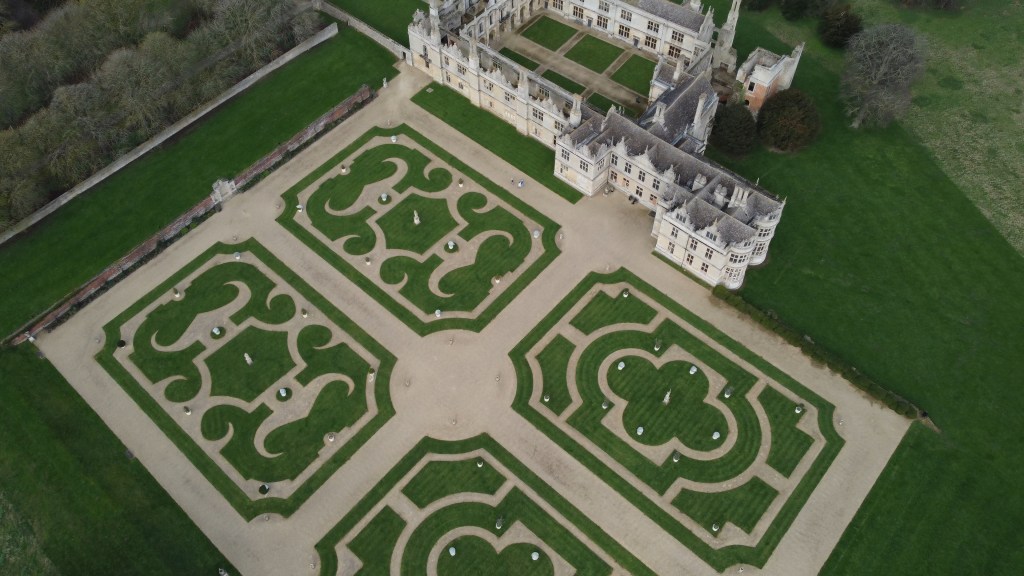
At it’s peak in the 1700’s the gardens at Kirby covered a total of 15 acres of land, to the south of the house a system of terraces extended to the stream and stretched almost 1700 feet and then a planned ‘wilderness’ at the top of the valley slope. The walled gardens would have been used for growing fruits and vegetables that needed the protection of the walls, the fruit trees in particular were grown against the walls to take advantage of the warming effect of the sun on the bricks.
Back its day, the fourth Christopher Hatton really enjoyed his garden and filled it with the most exotic and interesting plants that he could get his hands on, including 300 almond trees, pomegranates and a hyacinth of Peru. These would have looked so beautiful on a summers day.
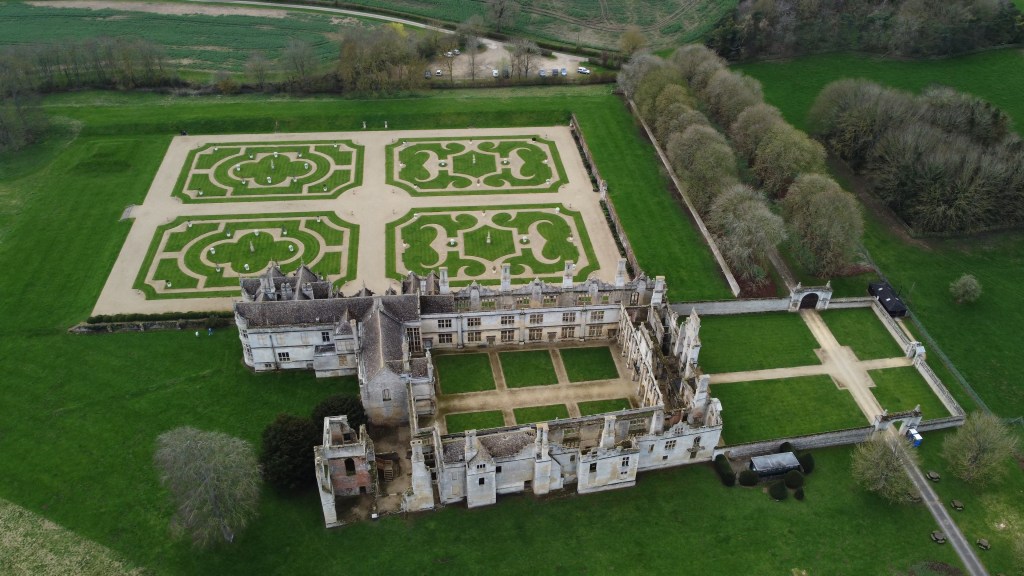
Today the hall and its gardens are still owned by the Earl of Winchelsea, but it’s managed and maintained by the English heritage as with many of the sites that we visit. Your visit can take you as long as you would like, we spent a few hours enjoying the rooms and the sites here and were completely blown away how much of this house still exists.
There are toilets and a shop to grab a coffee whilst you sit and enjoy the views in the gardens, and another added bonus to your visit are the peacocks that wonder freely around the site. We would encourage you to visit Kirby Hall if you’re travelling around Northamptonshire.
If you liked the blog please hit that like button, watch the full video below and consider subscribing if you haven’t already.
Till Next Time!
 Pinned on Places
Leave a comment