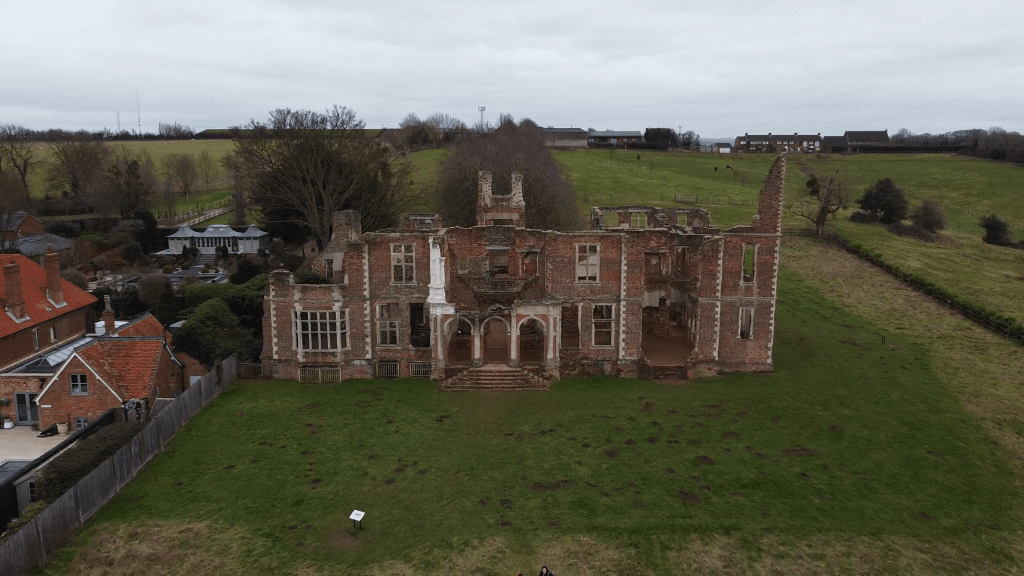
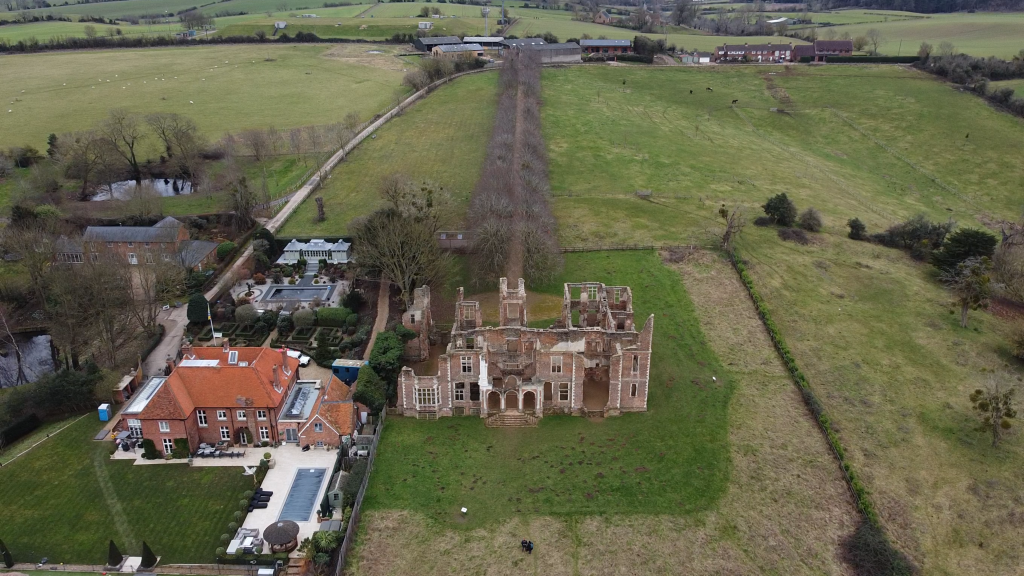
This time we venture to Bedfordshire, at a ruined elegant mansion house positioned inside the beautiful landscapes of the countryside that surrounds you. We take a short walk towards the entrance of the ruins, once a Jacobean hunting lodge and now today a magnificent and majestic mansion shell, come join us for a walk around the iconic Houghton House.
King James I of England granted Houghton House to Mary Herbert who was also known as lady Pembroke, she was a talented writer, English patron and translator. Some historians say that she built the House and King James-I only granted the land for it. However, John Thorpe and Inigo Jones have recorded architects who gave the mansion the Jacobean tradition look during 1615s construction. Both Thorpe and Jones introduced the mansion to a classical style of architecture into England, as you wander around you’ll notice hints of Greek and roman architecture as well as Elizabethan styles with decorated round arch arcades and a range of masonry techniques to have its own stamp on things.
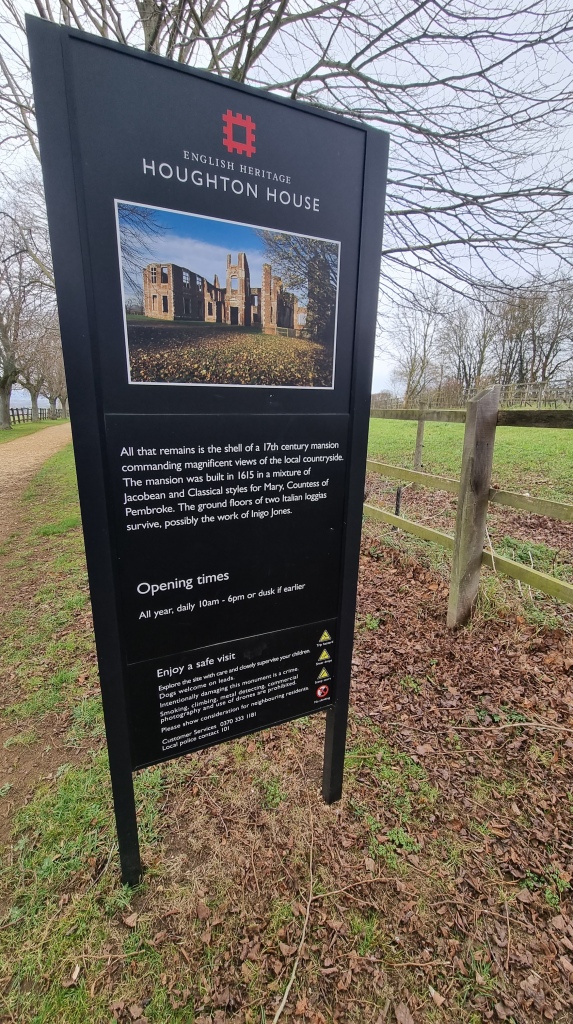

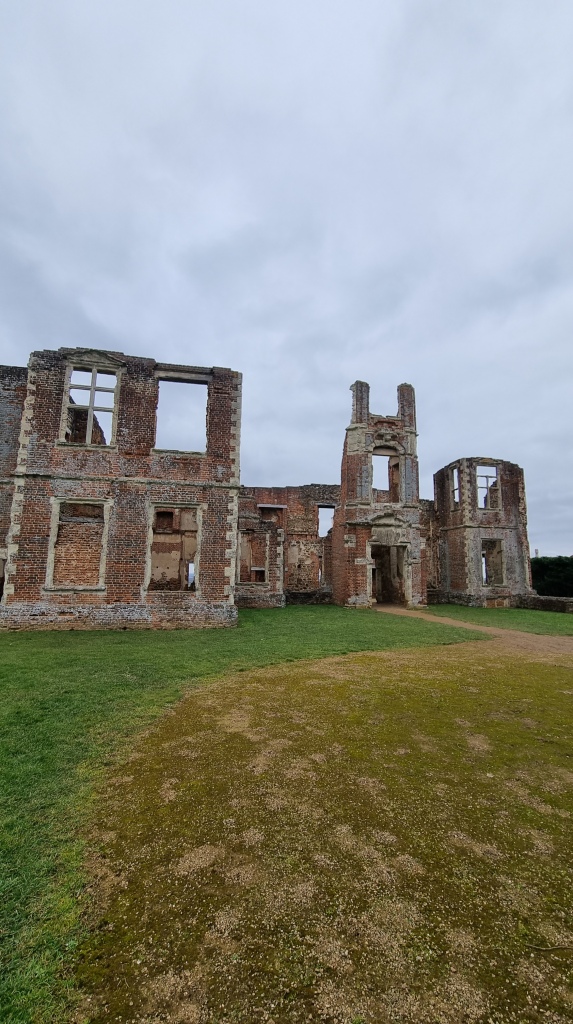
After the death of Mary Herbert, Houghton House’s acquisition was legally reverted back to King James-I who later in 1624, granted the enchanting estate to 1st Earl of Elgin, Thomas Bruce. From being passed onto the Bruce family, a little later in 1696, Thomas Bruce retired overseas in exile due to his loyalty to English King James II. He never returned to England, and in 1739 sold Houghton House to John Russell, 4th Duke of Bedford. The Duke lost his son and successor, who fell from his horse during a riding accident, and so it passed the house down to his grandson, Francis Russell.
It seems that Francis may have held the house responsible for the untimely death of his father, and in 1794 he removed all furniture from the house as well as the roof. The Duke never married, nor produced any children and died in 1802. By this time, the house had fallen into serious disrepair. It is a sad tale, as it seems the house was never fully enjoyed as was intended. What’s interesting about the mansion, is that throughout its life it had been altered in layout and room functions to suit the needs, aspirations and vanity of it’s many different owners, all looking to make their own impression on things and show off.
The house is built on a traditional H plan, with projecting towers at each corner, the walls have huge bay windows, which of course were a symbol of wealth, the entrance today is through the southern front, the beautiful ruin invites you in and it really shows how impressive it must have been when it was first built. Through its main entrance it opened onto the great hall, the largest space in the house and the most used, on many different special occasions the great hall would have also functioned as the dining room for the entire household too. It eventually received a partition to create a private and elegant dining room for the family at the very far end.

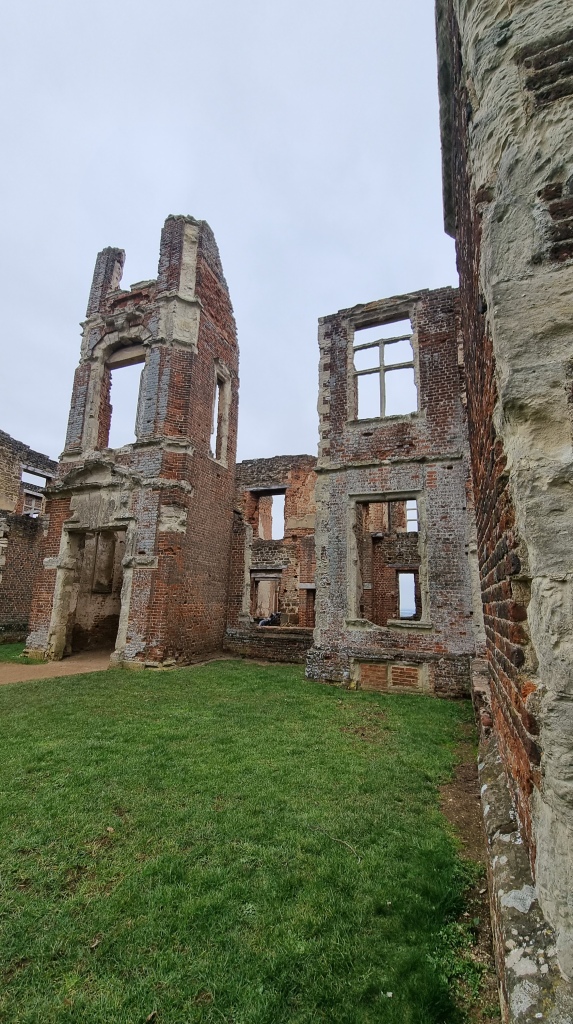
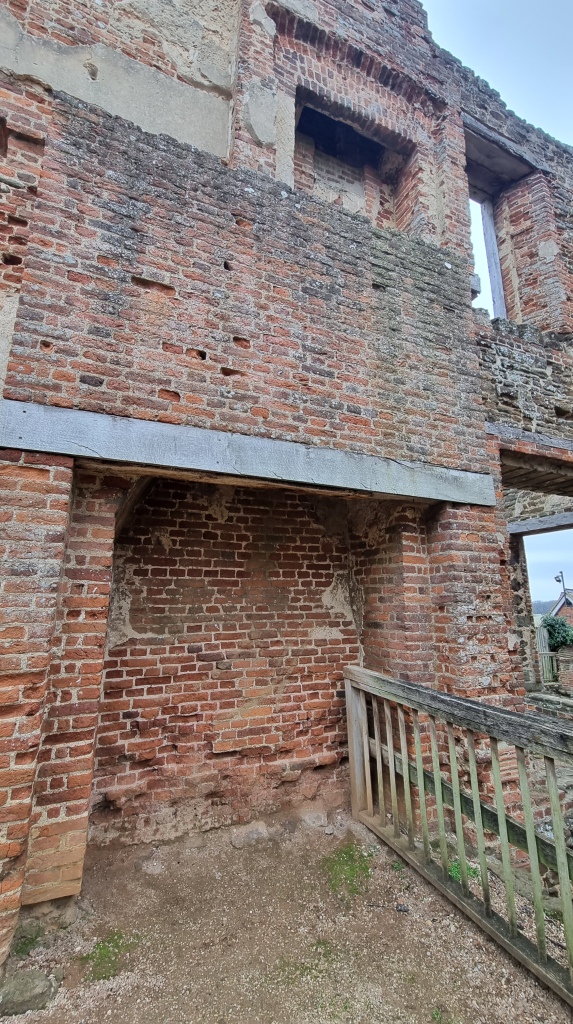
Just above the great hall would have been the great chamber, it was both a reception room and a private dining area for more important and private functions. When it was owned by the Bedford family the great chamber actually was converted into a library. Mainly, the family would have lived and slept in the grand apartments on the first floor, somewhere to overlook the beautiful countryside, the then deer park and the gardens, whilst the servants would have found comfort in the garret rooms also known as the attic rooms, traditionally small, cramped and oddly shaped, but they would have had comfort in the warm surroundings of the household.
Built as a hunting lodge, the original staircases were built into the corner turrets of the house as the Bruce family needed a traditional route between the hall and the great chamber just above it, so they designed and built a grand staircase in the stone hall. This wasn’t any old staircase, it was made beautifully and with elaborate carvings in the wood, the decorative plaster work is still visible if you have a good look. The original staircases would have then became just service stairs or private ones, but when the house was later dismantled, the great stair was moved into the Swan Hotel in Bedford, amazingly where it can still be seen.

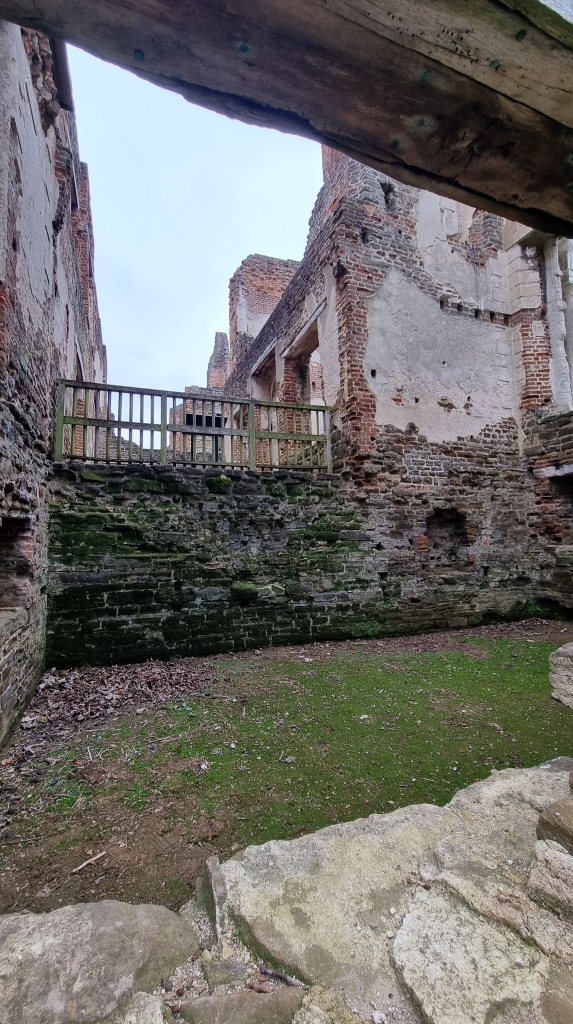
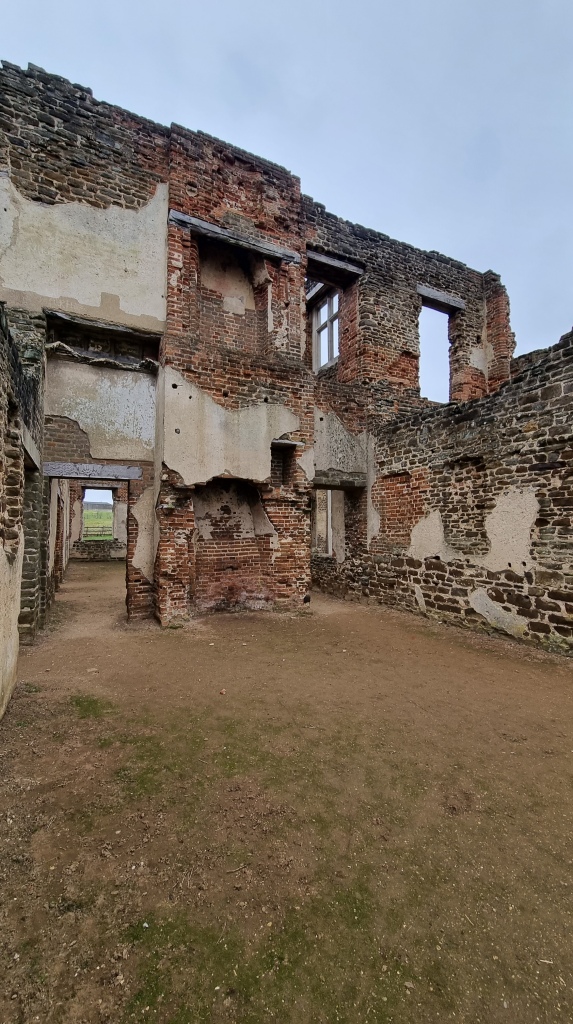
Behind the great hall contained the service wing, it’s now been completely demolished, but it had a kitchen, a brewhouse, a stillroom which was used by the servants for the storage of cakes, liquors and preserves and a scullery, which was a small room in the wing where the washing of dishes and cooking utensils took place, all out of the way and kept private from the main buildings. A servery plan was done of the park and its surroundings and a original plan shows just how extensive the service wing was. Studies show that the house was very expensive and grand to maintain, through some of Robert Bruce’s accounts, in 1678 show that he spent £3,464 pounds from his household accounts, this would have been very very pricy nowadays.
As we make our way throughout the various rooms, from broken door to door, you can explore the grand mansion as it once would have been, one of the best views is of the Italian classical design on the north front of the house. Back when it was grandly built, this north front was not actually the main entrance as you would assume, but it was designed to be the most visually striking and appealing to guests and beyond. The open sided gallery right in front of us is called a loggia, a loggia is the Italian word for Lodge and is typically an outdoor corridor or a gallery with a fully covered roof and an outer wall that is open to the elements, they normally run along the front of the building, but like this one, it stands as a feature. The design of the loggia was designed by Inigo Jones who I mentioned earlier, it’s got the features of early neo classical architecture, and for it’s time it was very rare and appealing. The Italian style became very popular in the higher circles of wealth and was mainly used to show off that you had impeccable taste, the loggias provided sheltered access to the gardens and the first floor balconies which were also used as dining chambers if they fancied a change or for lighter meals with spiced wine.


On the outside of the loggia, you’ll be able to see some decorative carvings, the symbols all relate to Mary Herbert and her beloved family, right at the top of the façade was Mary’s coat of arms and unfortunately quite a lot of these carvings and symbols have since weathered and worn away. For me, and I think most will agree, this side of the house is just beautiful, it’s fascinating to see the different styles merged together and also how atmospheric and charming this building is from these small features, another thing that is wonderful about seeing the front is the old graffiti carved into the stone.
The hunting park and the gardens were so important to the design of Houghton House, in a survey of the fields, they had a bowling green, orchards, fields and dog kennels, but immediately surrounding the house was the formal gardens in walled courts that would have been showstopping to the complex. Each of the gardens had a different purpose, typically the best and most visited garden was by the formal entrance which was of course beautifully maintained and had ponds and lawns surrounding it. Next to the service wing they had a cherry garden for easy picking.
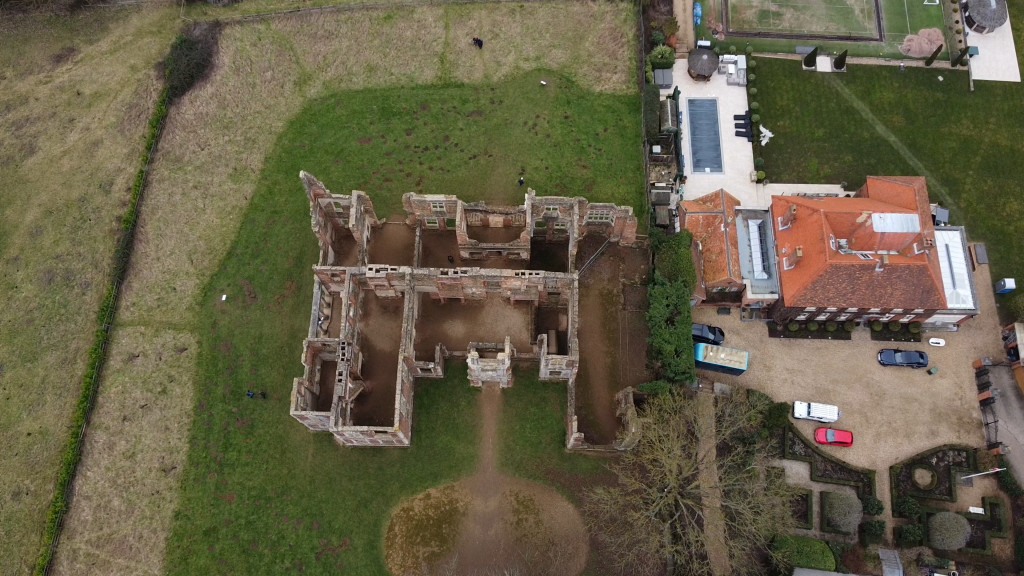
I truly love place’s like Houghton house, it’s so cool to be able to wander inside a derelict mansion and imagine life for the rich and famous and appreciate how much work went into the designing here, I think again even in roofless ruins, it’s still very impressive. There is something very special about the house, you actually really don’t need a lot of imagination to envisage how comfy life would have been for the families.
Just look around and see the many, many fireplaces on the first and ground floors surrounding the house, it just shows how much they valued comfort too. Many of the rooms feature the original windows and window frames and it’s amazing how much it adds to the character of the place. When we were exploring, I’ll be honest, it was one of those wow moments, there is plenty to see here. The surroundings are super quiet and peaceful and it really adds to the atmosphere here.
To be able to explore the ruins, head over to the English Heritage website where they give you detailed directions, but It is very easy to find it and there is free parking too in a small carpark with a short, gentle and pleasant walk to the house, people with mobility issues would have no trouble visiting here, although a small part of the ruins can be accessed by a set of wooden steps, but in all honesty, with the layout of the house you would have no trouble being able to see everything from ground level. There aren’t any facilities around, so take a picnic with you and enjoy a few hours exploring here.
If you liked the blog please hit that like button, watch the full video below and consider subscribing if you haven’t already.
Till Next Time!
 Pinned on Places
Leave a comment