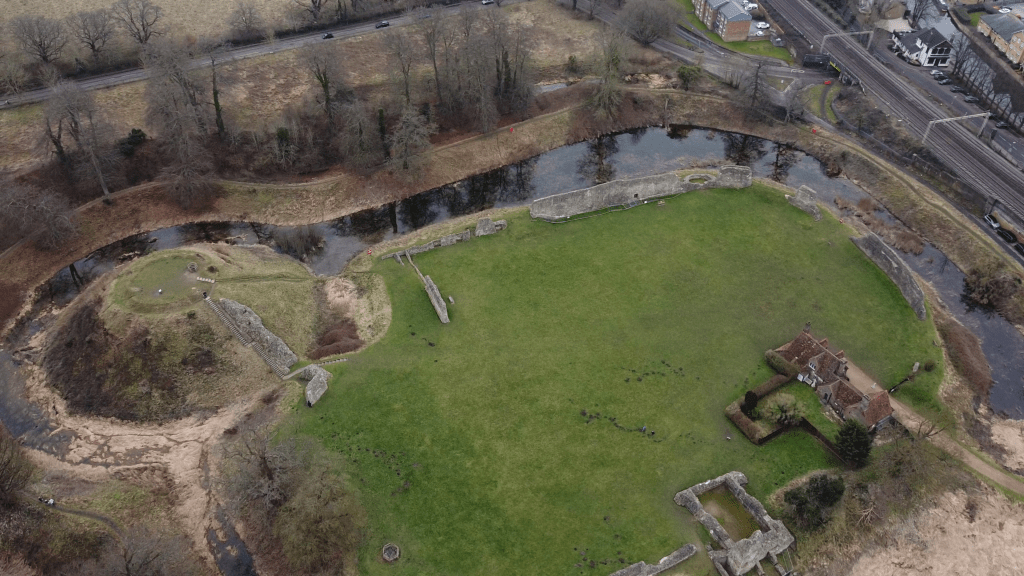
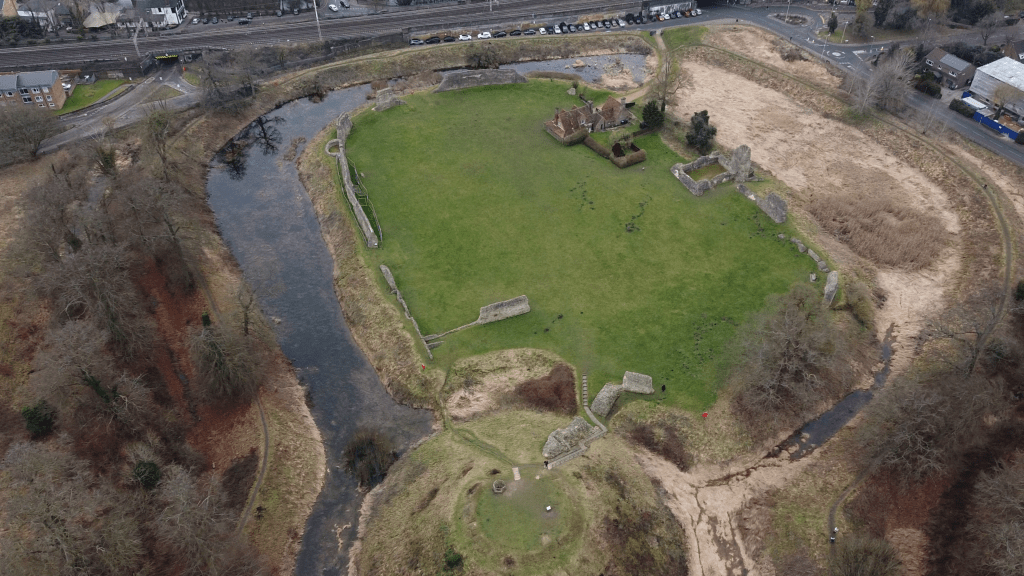
Although today in ruins, we’re are able to trace the dramatic earthworks and stone remains of what was once a thriving medieval palace with almost a thousand years’ worth of history on this site, from its humble beginnings back in 1066 and right through its extensive expansion over the following years, join us for an explore here at Berkhamsted castle.
Whilst today, it’s still in ruin, Berkhamsted Castle marks a location of one of England’s history’s most significant moments. It was in this very place that William the Conqueror, officially received the surrender of the English in 1066. After the Normans victory at Battle, in Sussex, their next point of call was to take over London, but instead of speeding to the capital, William decided to capture as much of Southern England as he could along the way. He then went on to control and take over Dover, Canterbury and Rochester.
Upon reaching London, William had noticed the only route into the capital was across the Thames at London bridge, but unfortunately it was blocked and very well defended, so instead decided to carry on and headed down south towards Winchester, where the treasury was kept and a place where he met with reinforcements from France. He then went onto Wallingford in Oxfordshire where he received the surrender of the archbishop of Canterbury, then further north to here at Berkhamsted, he met with the Archbishop of York and Edgar Ethling, who was the Saxon claimant to the throne, whom, after many negotiations, surrendered to William and his ever growing Norman army.
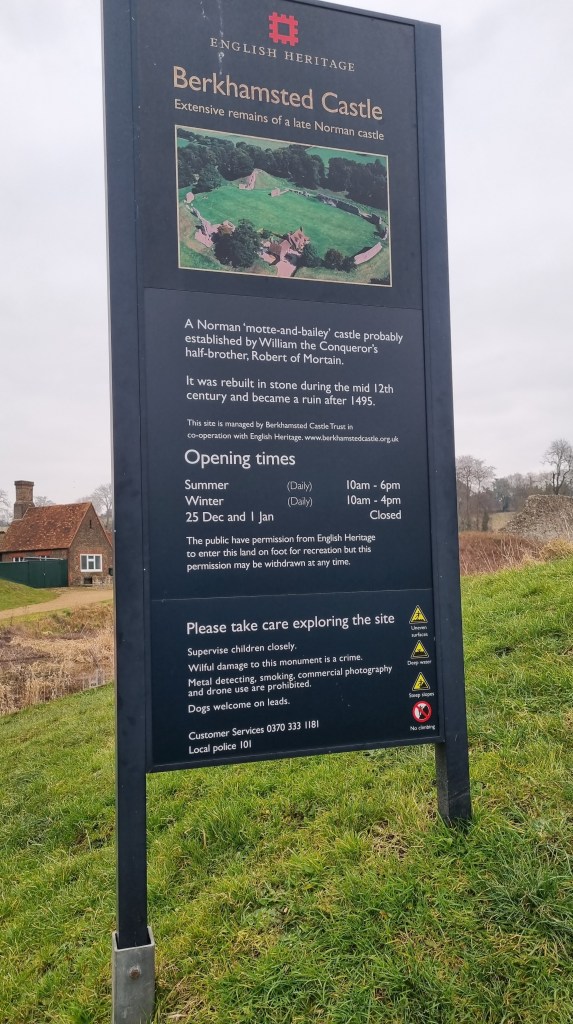
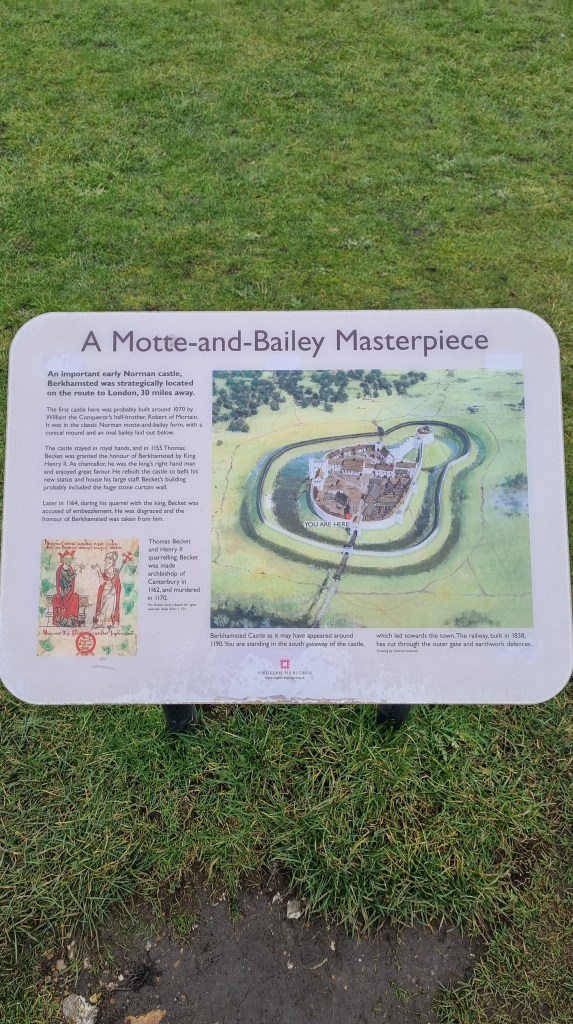
From here, this was where William and his mighty army marched south into the city of London, but before this, he obstructed his half-brother, Robert of Mortain, to oversea the construction of a new castle here at Berkhamsted, the purpose of the castle was to defend the northern entry into London against anybody that might have tried to stand in Williams way. The Castle began its life as a timber structure, It joins a long list of castles constructed in the aftermath of William’s success in the Battle of Hastings, all designed to secure his hold on England.
It was located in the strategically important area of Berkhamsted, this wooden motte and bailey castle was a vital stronghold. Following a rebellion by Robert of Mortain’s son against king Henry I however, it was seized from the family and eventually landed in the hands of Thomas Becket in 1155. It was likely during Becket’s ownership that the castle was rebuilt in stone and extended to accommodate his large household, yet by 1164 he had fallen from favour and was accused of embezzlement so Henry II took Berkhamsted for himself.
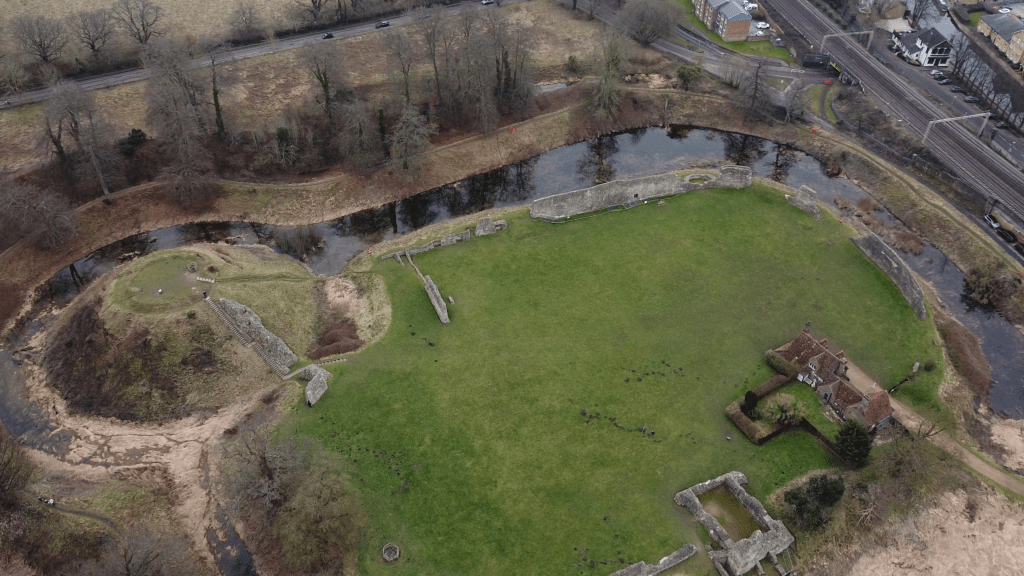
Later in the 13th century the castle found itself besieged for 20 days by the future Louis VIII of France, following his support of the Barons’ War against King John. Louis battered the site with huge stones flung from siege weapons, the castle eventually surrendered on the instructions of the new king. The following year however, forces loyal to the new King Henry III retook Berkhamsted, returning it into royal hands. Over the next three centuries a number of England’s kings lived at Berkhamsted, including Edward II and his notorious favourite Piers Gaveston, Edward III and his son the Black Prince, and Henry IV, during which time renowned poet Geoffrey Chaucer oversaw the renovation work on the castle.
By the late 15th century however, Berkhamsted was significantly out of fashion and after the death of its last occupant, it was abandoned, eventually falling to ruin. Even during the English civil war of the 1640s, the castle played no part and saw no known conflict and later in the 1830s, plans were set to provide a railway connection between London and Birmingham and they wanted to run it through the middle of the castle remains, fortunately many concerns about the castles status, heritage and history helped in its favour and the railway was rerouted. Berkhamsted was actually one of the first in Britain to receive such protection, however in 1834 some engineering works started and the original castle gate house was destroyed.
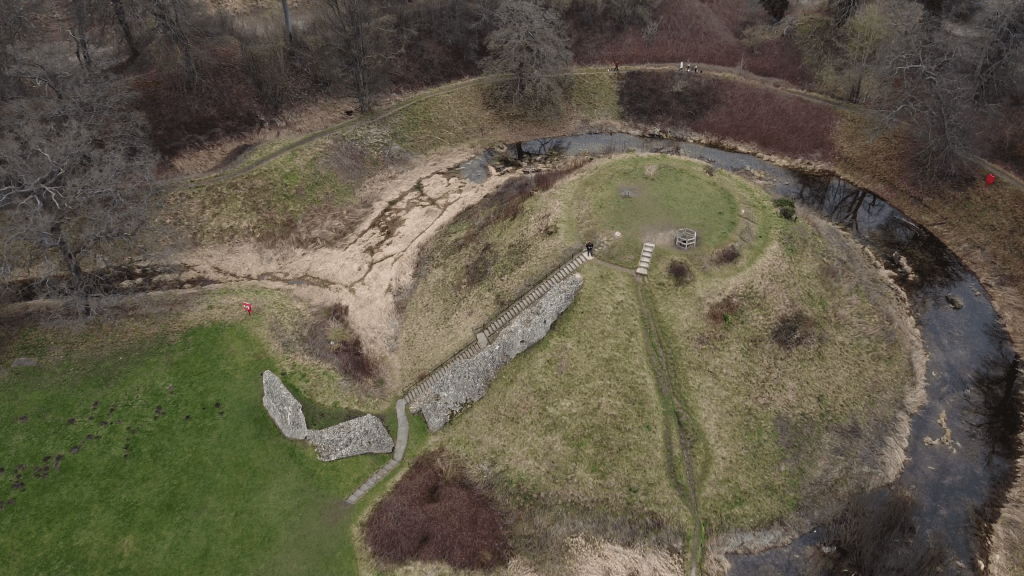
We make our way to the top of the motte, walking up a number of stone steps to really get a look over the once grand site of the castle grounds and you can begin to see just how well fortified the structure was and how they would have been able to defend themselves. Up here is a well, an important source for castle life and something that would have played a massive role when the castle was being sieged.
There is also another well down in the bailey. It is likely that the constable at the castle was aware of the approach of a hostile force of French mercenaries. He will have hastily arranged for plentiful food supplies to be brought in: bread, cheese, eggs and meat. The wells in the bailey and on the motte provided an overflowing amount of water and they would have hunkered down, ready for the attack. A large deer park was established around the castle to provide hunting grounds as was a vineyard that was well maintained that ran alongside the castle. Upon some excavations done to the site, a crossbow was found in the mud of the inner ditch of the castle, which they presume would have dated from the siege of 1216, the earthworks themselves are also very impressive, you can walk the entire circuit and it really does make for a nice walk and you can get a great overview of the inner moat, and see where it would have once been, full of water.
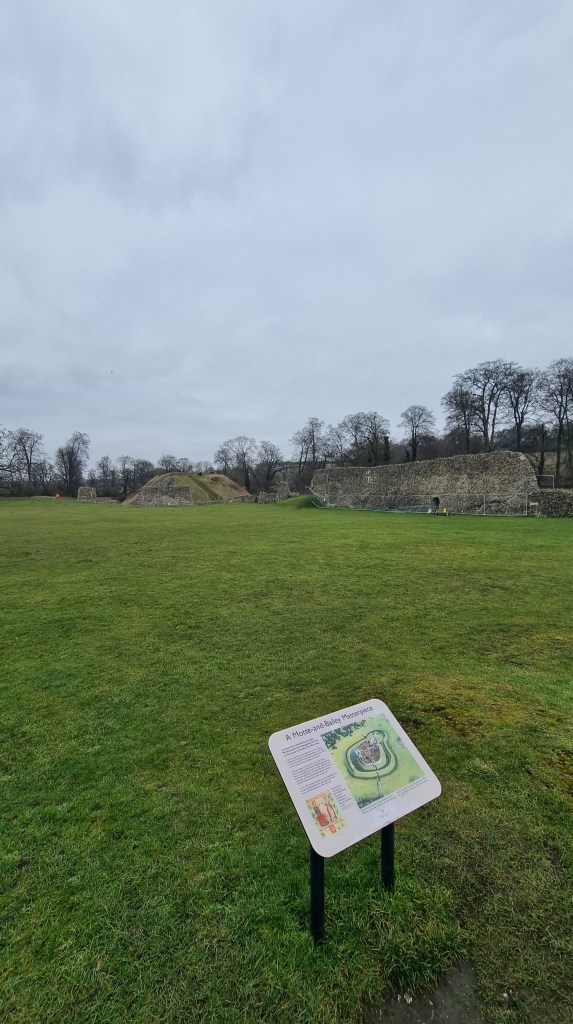
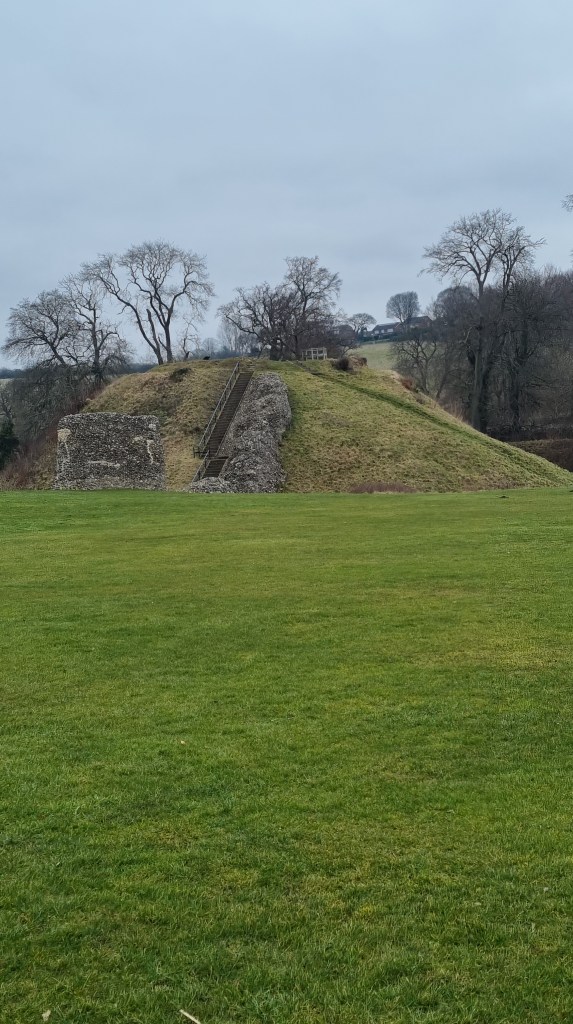
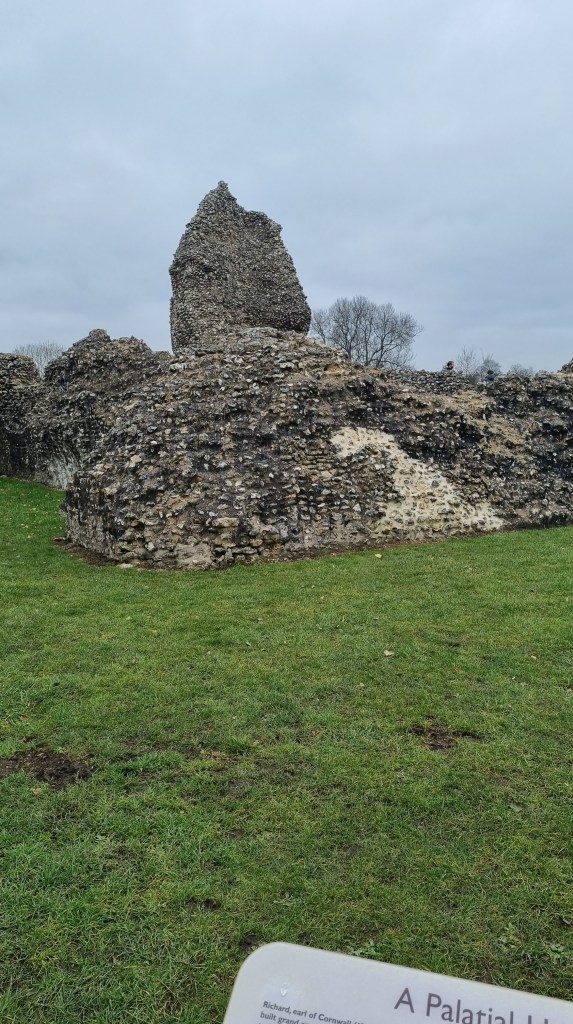
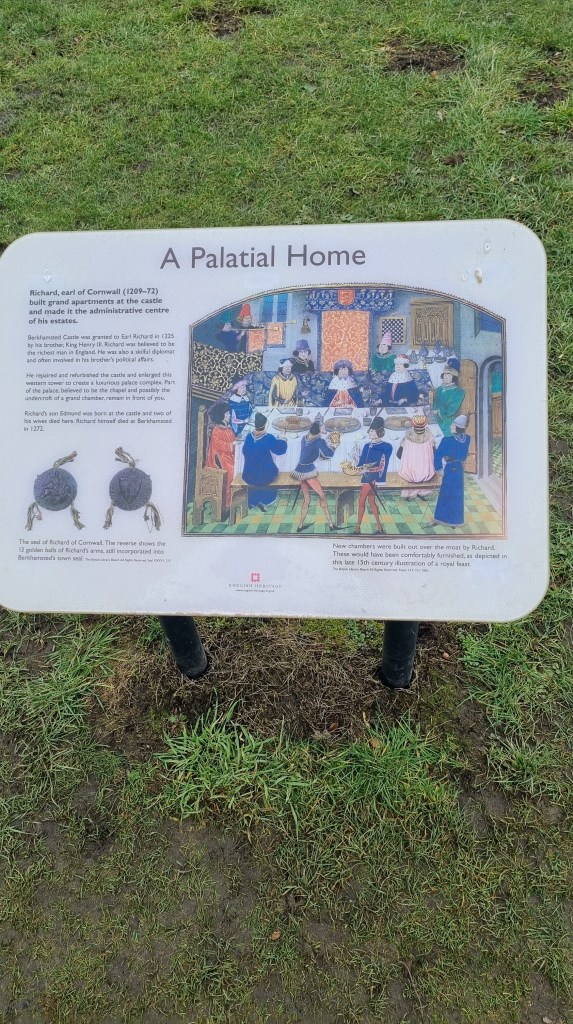
Some of the other buildings you’re able to see here are the remains of the kitchen and brewhouse that was built into the outer walls of the castle, complete with fireplaces and oven remains. Another building we walk around are the ruins of the royal apartments, a place where the VIP guests would stay. It was Richard, the earl of Cornwall who built the grand apartments and made the building the administrative centre of his estates. Richard repaired and refurbished the castle and created a luxurious palace like complex. Quite hard to make out now as it is very ruinous, but this area was believed to have also had the chapel and an under croft of a grand chamber surrounding the apartments.
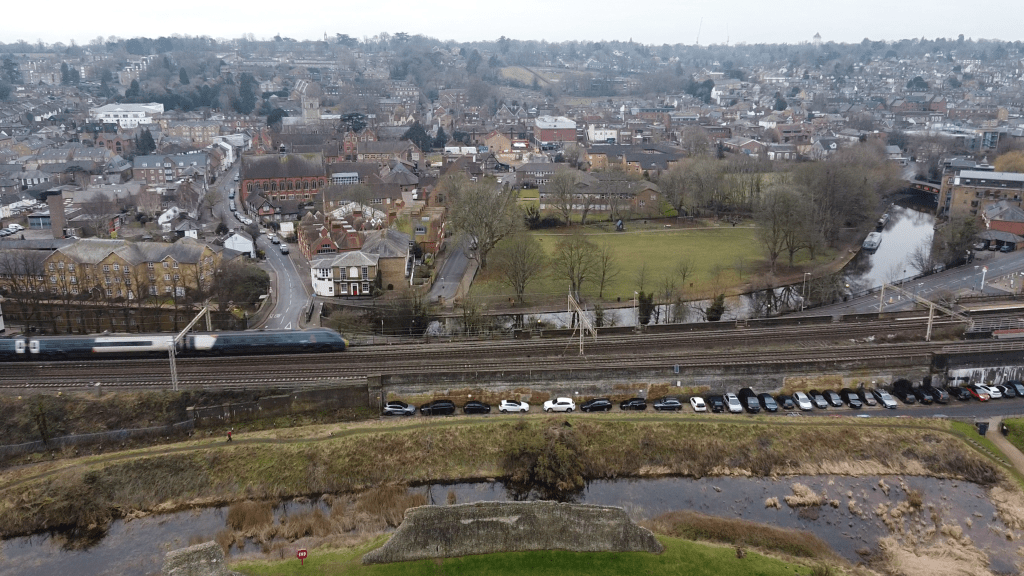
So, although not much physically remains, its still a very remarkable and sizeable motte and bailey castle with a abundance of long serving and important history. I think that in itself sells the castle to us. Thankfully, the site is run and maintained by English Heritage and is a open space to come explore and have some down time, in the summer months they hold car events, plays and heritage open days so it’s somewhere to pop on the list and the best thing about getting here is if you’re using the train, the railway station a stone’s throw from the entrance, or they have easy parking just outside the gates which was free to park, plentiful and on a busy walking route.
If you liked the blog please hit that like button, watch the full video below and consider subscribing if you haven’t already.
Till Next Time!
 Pinned on Places
Leave a comment